Commercial vs Residential Construction: Key Differences and Requirements
Construction Cost & Requirement Estimator
Critical Requirements:
Enter square footage and click calculate to see the cost and legal requirements comparison.
Key Takeaways
- Commercial projects have much stricter safety and accessibility codes (like ADA) than homes.
- Materials in business builds are chosen for durability and fire resistance, not just looks.
- Zoning laws dictate where you can build a shop versus where you can build a bedroom.
- Funding and contracts for commercial work are far more complex and involve more stakeholders.
The Legal Maze: Zoning and Building Codes
If you build a shed in your backyard, you might need a simple permit. If you build a warehouse, you're dealing with a level of bureaucracy that can make your head spin. This is because of Zoning Laws, which are local government rules that separate land into residential, commercial, and industrial zones. You can't just decide to open a loud manufacturing plant in the middle of a quiet suburb; the city simply won't allow it to protect the quality of life for residents.
Then there are the building codes. While residential codes focus on the safety of a single family, commercial codes are obsessed with public safety. For instance, The Americans with Disabilities Act (ADA) in the US, or similar accessibility standards globally, requires commercial buildings to have specific ramp slopes, wide doorways, and specialized restroom layouts. In a home, you might choose to add a ramp for a relative; in a business, it's a non-negotiable legal requirement from day one.
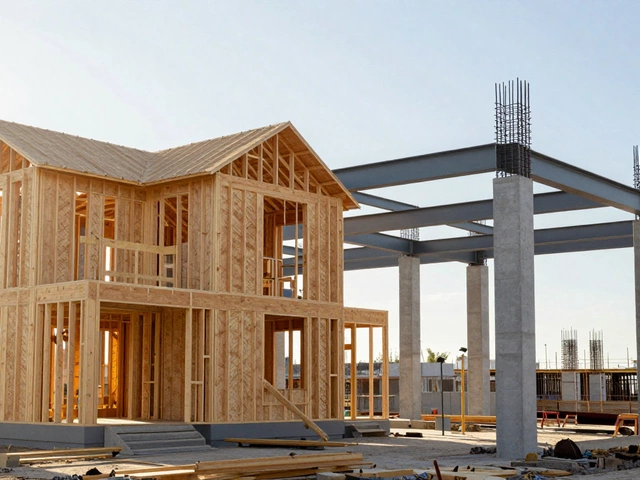
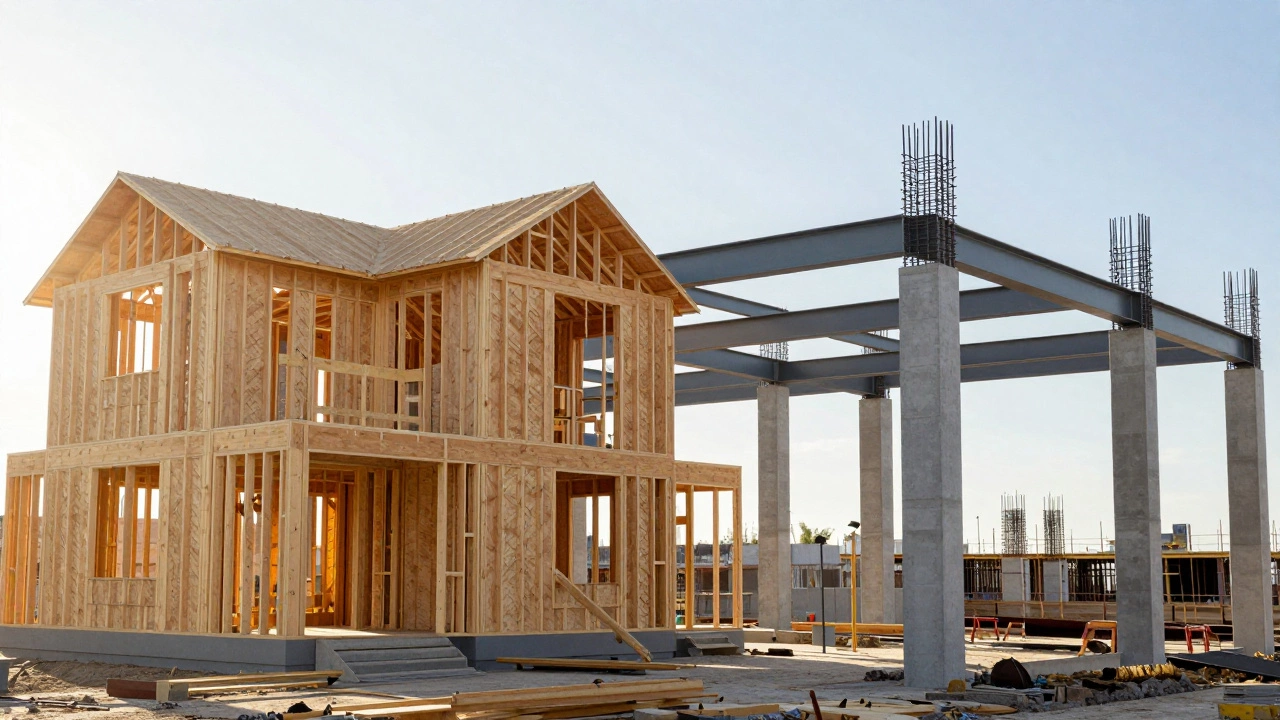
Fire safety is another massive differentiator. Residential homes often use wood-frame construction. However, large commercial buildings often utilize Steel Frame Construction or reinforced concrete to prevent the entire structure from collapsing during a fire. They also require complex sprinkler systems and multiple designated exit routes that are clearly marked and kept clear at all times.
Materials: Durability vs. Aesthetics
When you're renovating a living room, you might pick a hardwood floor because it looks warm and inviting. In a busy airport terminal or a hospital hallway, that hardwood would be shredded in a week. Commercial projects prioritize "industrial grade" materials. This means flooring that can withstand thousands of footsteps a day and paint that can be scrubbed with harsh chemicals without peeling.
| Feature | Residential Choice | Commercial Choice | Why the Difference? |
|---|---|---|---|
| Framing | Wood (2x4 studs) | Steel or Reinforced Concrete | Fire rating and load-bearing capacity |
| Flooring | Carpet, Hardwood, Tile | Polished Concrete, Luxury Vinyl Tile (LVT) | High foot traffic and durability |
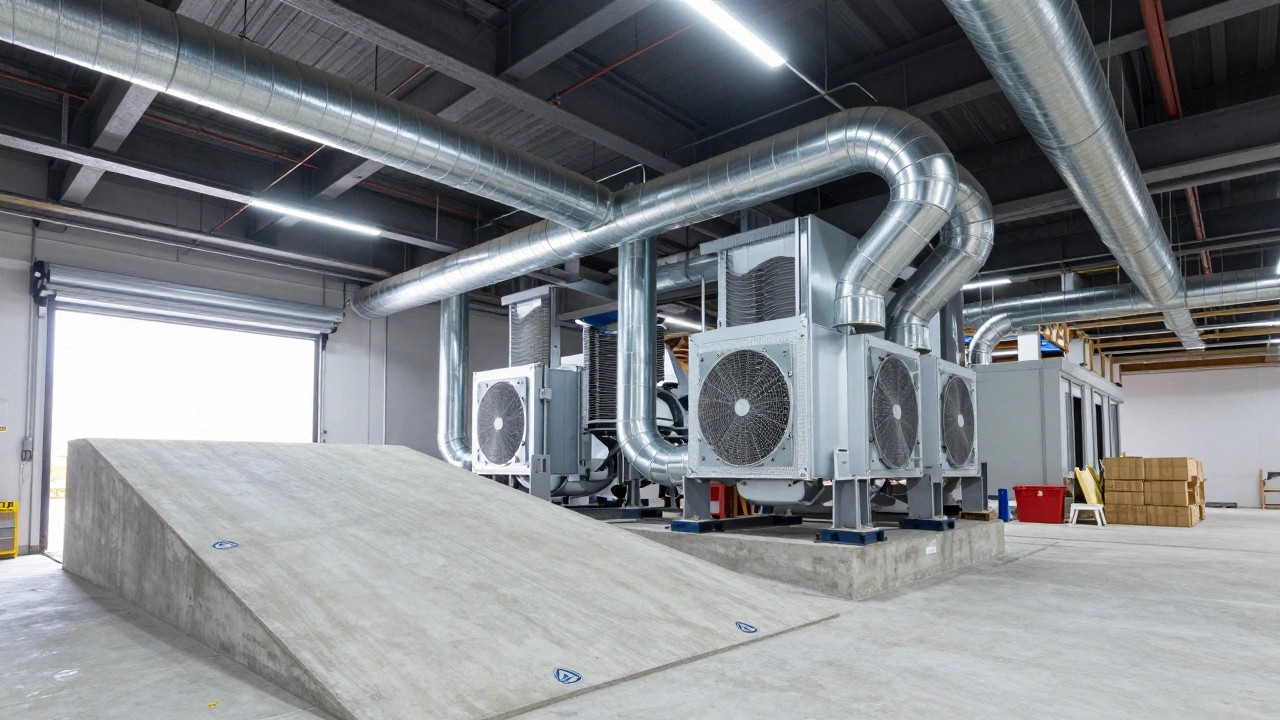
| HVAC | Single-unit furnace/AC | Rooftop Units (RTUs) / Central Chillers | Scale of air volume and zoning needs |
| Glass | Standard double-pane | Tempered or Impact-resistant glass | Public safety and energy efficiency laws |
Scale, Complexity, and HVAC Systems
A house usually has one thermostat and a few vents. A commercial office building is a different beast entirely. You're dealing with HVAC (Heating, Ventilation, and Air Conditioning) systems that must move massive amounts of air to keep hundreds of people comfortable. These systems often involve complex ductwork, chillers, and boilers that require professional maintenance contracts just to keep them running.
The plumbing is also on a different scale. While a home has a few bathrooms and a kitchen, a commercial project might need 50 toilets, industrial grease traps for a restaurant, or specialized medical gas lines for a clinic. This complexity requires a much tighter coordination between the architect and the mechanical engineers to ensure pipes don't clash with structural beams.
Project Management and Funding
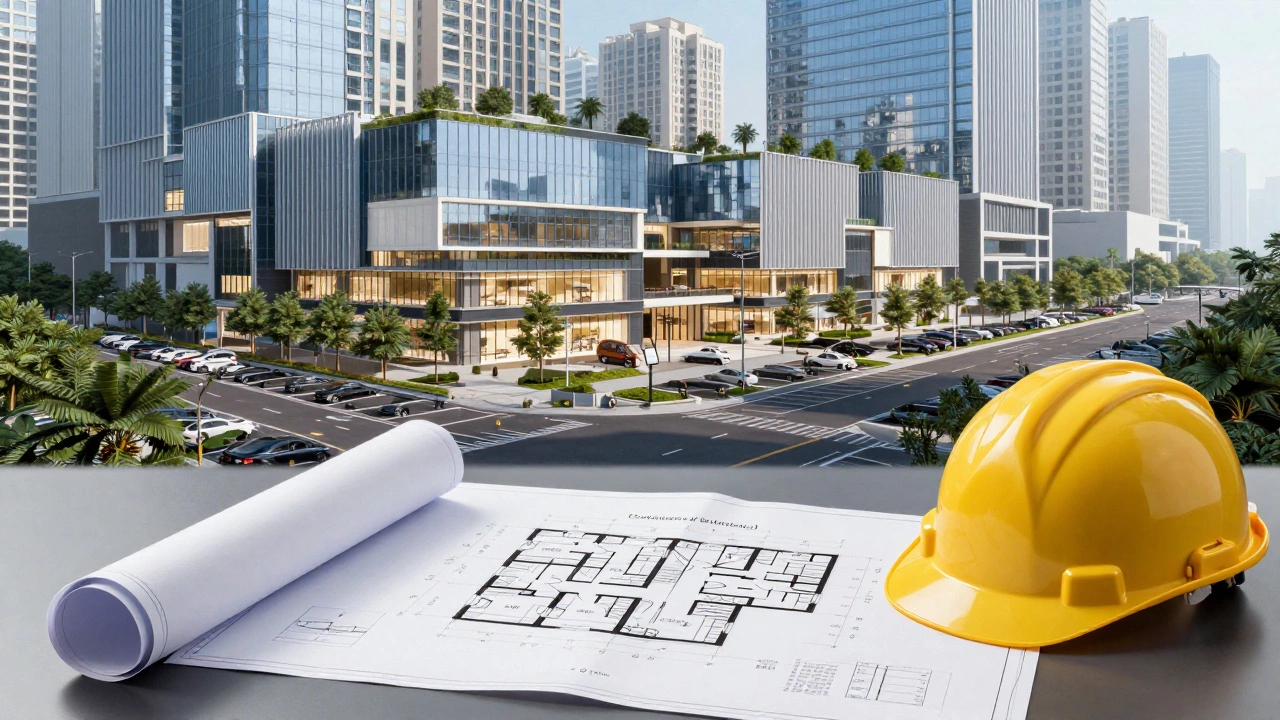
Building a house is often a personal journey. You work with a builder, maybe a few subcontractors, and you pay using a personal mortgage. Commercial projects are corporate ventures. They involve General Contractors who manage a massive army of specialized subcontractors, from electricians to elevator technicians.
Funding is also far more rigorous. A business owner doesn't just get a home loan; they present a detailed pro forma to a bank, proving that the building will generate enough revenue to pay back the loan. This leads to a higher emphasis on "time to market." If a retail store opens two months late, that's two months of lost revenue, which can be catastrophic for a new business. In residential work, a two-month delay is frustrating; in commercial work, it's a financial disaster.
The Human Element: Occupancy and Usage
The way people use a space changes how it's built. A home is a sanctuary meant for privacy and relaxation. A commercial space is a tool for productivity or profit. This means things like lighting are handled differently. Commercial spaces use high-output LED arrays to keep employees alert and productive, whereas home lighting is designed for mood and comfort.
Parking is another huge factor. A residential project cares about a driveway and maybe a garage. A commercial project must calculate "parking ratios" based on the square footage of the building. If the city says you need one parking spot for every 300 square feet of retail space, and you don't provide it, you won't get your Certificate of Occupancy, and you can't open for business.
Can I convert my house into a commercial space?
Yes, but it's not as simple as putting up a sign. You'll need to apply for a zoning change or a "conditional use permit" from your local planning department. You'll also likely need to upgrade your bathrooms to meet ADA accessibility standards and potentially install a commercial fire alarm system before the city will grant you a permit to operate a business.
Which one is more expensive per square foot?
Generally, commercial construction is more expensive per square foot. This is due to the higher cost of industrial materials, the complexity of the HVAC and electrical systems, and the rigorous permit and inspection process required for public safety.
Do commercial buildings last longer than houses?
In terms of the primary structure, yes. Because they use steel and reinforced concrete instead of wood, the "bones" of a commercial building can last much longer. However, the interior finishes are often replaced more frequently because they wear out faster due to high traffic.
What is a Certificate of Occupancy?
It is a legal document issued by a local government agency certifying that a building is compliant with all applicable building codes and zoning laws and is safe for people to inhabit or use for business.
Do I need a different type of insurance for commercial projects?
Absolutely. Commercial projects require General Liability insurance and often a "Builder's Risk" policy that is much more comprehensive than a standard homeowner's policy. This covers the high risks associated with public access and the larger scale of the construction site.
Next Steps for Project Planning
If you're moving from residential to commercial work, don't try to wing it. Start by hiring a licensed architect who specializes in commercial zoning; they know the local officials and the specific requirements for your industry. Next, get a detailed cost estimate that includes a 15-20% contingency fund for the unexpected permit changes that almost always happen in business builds.
If you're a homeowner looking to add a commercial element (like a home office for clients), check your neighborhood's restrictive covenants. Some homeowners' associations (HOAs) strictly forbid business signage or excessive client traffic, regardless of what the city zoning laws allow.