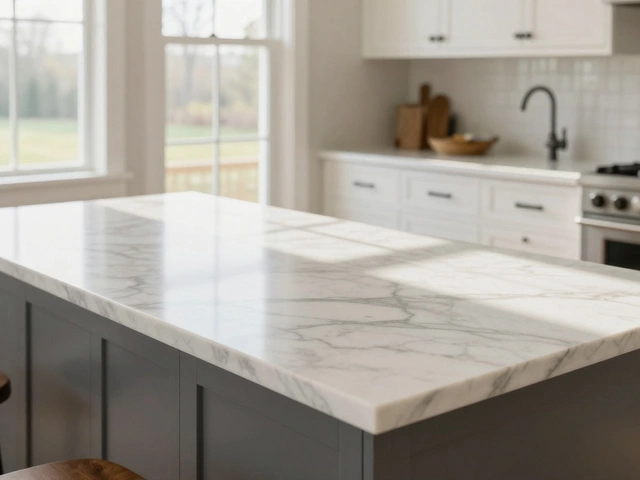
Joanna Gaines Countertops: The Exact Materials and Styles She Uses
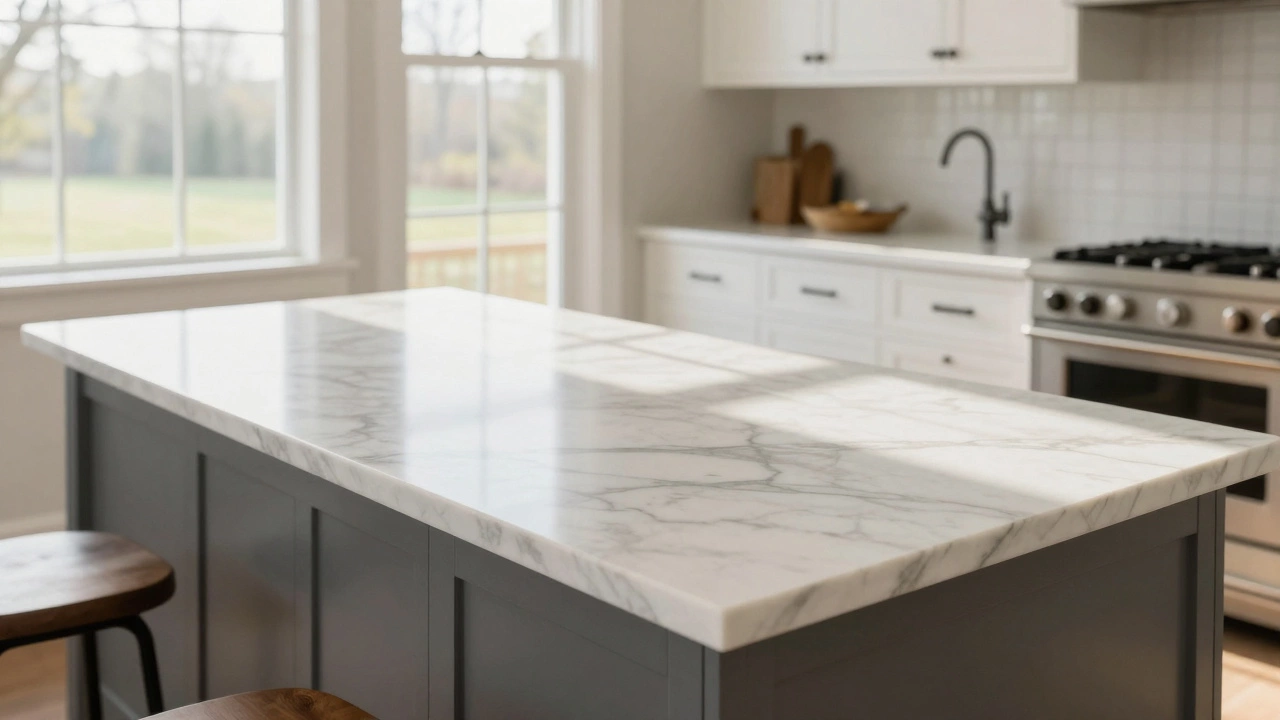
Find Your Perfect Farmhouse Countertop
Select the option that best describes your needs for each category to find your ideal material match.
Maximum
High traffic, heavy useModerate
Normal family lifeLow Priority
Light use, easy repair okSet & Forget
No sealing, just wipeSome Care
Occasional oiling/sealingDedicated Care
Love patina & upkeepBudget Friendly
$ - $$Mid-Range
$$ - $$$Luxury
$$$ - $$$$Clean & Consistent
Uniform patternsUnique & Dramatic
Bold veiningWarm & Rustic
Natural wood grainYour Ideal Countertop Material
Why this matches you:
Key Characteristics:
Ever walked into a kitchen that feels instantly warm, lived-in, and effortlessly stylish? That is the hallmark of Joanna Gaines, the designer behind Magnolia House and host of Fixer Upper. Her aesthetic, often called modern farmhouse, has dominated home decor trends for over a decade. If you are renovating your kitchen or bathroom, you probably want to know exactly what materials she uses to achieve that look. Specifically, when people ask about her countertops, they are usually looking for durability mixed with that soft, natural texture she is famous for.
The short answer is that Joanna Gaines rarely sticks to just one material. However, her go-to choices revolve around three main contenders: Quartz, an engineered stone surface known for consistency and low maintenance, Marble, a natural stone prized for its unique veining and classic elegance, and occasionally Butcher Block, solid wood countertops that add warmth and rustic charm. Understanding why she picks these materials will help you decide if this style fits your lifestyle.
Why Quartz Is Her Top Pick for Daily Use
If you watch enough episodes of Fixer Upper or browse through Magnolia Market, the retail store and brand owned by Chip and Joanna Gaines in Waco, Texas, you will notice a pattern. While marble gets all the glamour shots, quartz is the workhorse of most Gaines-designed homes. Why? Because real life happens in kitchens. Kids spill juice, pots get hot, and dinner prep involves chopping, not just posing.
Quartz is an engineered stone made from crushed natural quartz crystals bound together with resin. This composition makes it non-porous, meaning it does not need sealing like natural stone does. For a family home, this is a game-changer. Joanna often chooses light-colored quartz with subtle grey or beige veining. These patterns mimic the look of expensive marble but without the high-maintenance headaches. Brands like Caesarstone or Silestone are frequently cited in projects aiming for this aesthetic, offering colors like 'Calacatta' or 'Statuario' looks that feel airy and bright.
The beauty of quartz lies in its consistency. When you buy a slab of marble, you never know exactly what veins you will get until it is cut. With quartz, the pattern repeats predictably. This allows Joanna to match countertop slabs across different rooms or ensure the island matches the perimeter counters perfectly. It creates a cohesive flow that is hard to achieve with random natural stone variations.
The Allure of Marble in High-End Projects
That said, do not count out marble. In larger, more luxurious renovations, Joanna does use real marble. She loves the organic movement of the stone. No two slabs are alike, which adds character and uniqueness to a space. The key here is managing expectations. Marble is softer than quartz and granite. It etches when exposed to acids like lemon juice or vinegar, and it can stain if spills are not wiped up immediately.
How does she handle this? By embracing the patina. Joanna often talks about how marble ages beautifully. A few etch marks tell a story of meals cooked and families gathered. If you choose marble, pick a honed finish rather than a polished one. Honed marble has a matte texture that hides scratches and etching better than a glossy shine. Common varieties used in her designs include Carrara marble, known for its soft grey veining on a white background, and Calacatta marble, which features bolder, dramatic veins. These stones bring a timeless elegance that synthetic materials sometimes struggle to replicate fully.
Butcher Block: Adding Warmth and Function
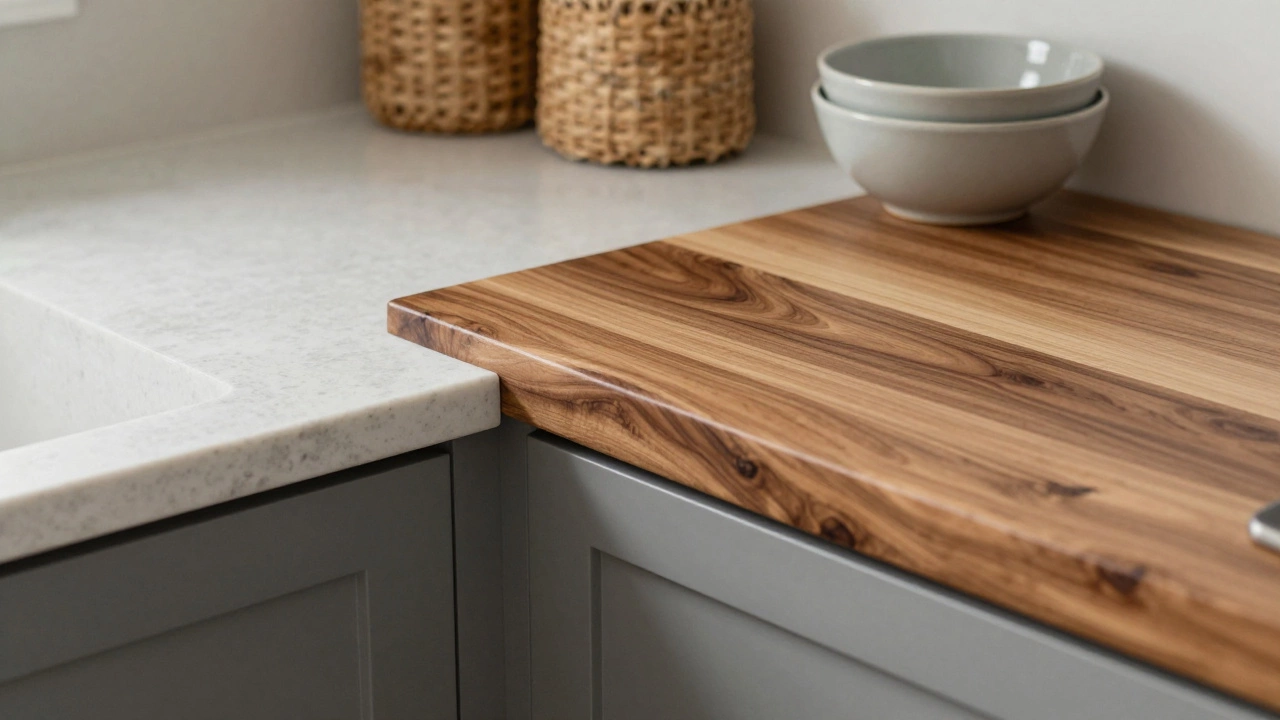
In true farmhouse fashion, Joanna also incorporates butcher block countertops, especially in secondary kitchens, mudrooms, or as accents on islands. Wood brings immediate warmth to a space that might otherwise feel too cold with stone. It is gentle on cookware, so you can set down a hot pot (with caution) or chop vegetables directly on the surface.
Butcher block requires regular oiling to maintain its luster and prevent drying out. However, if it gets damaged, you can sand it down and refinish it. This repairability is something stone cannot offer. In many of her designs, you will see a mix: quartz or marble on the main perimeter counters for easy cleaning, and butcher block on the island for food prep. This combination offers the best of both worlds-durability where you need it and functionality where you cook.
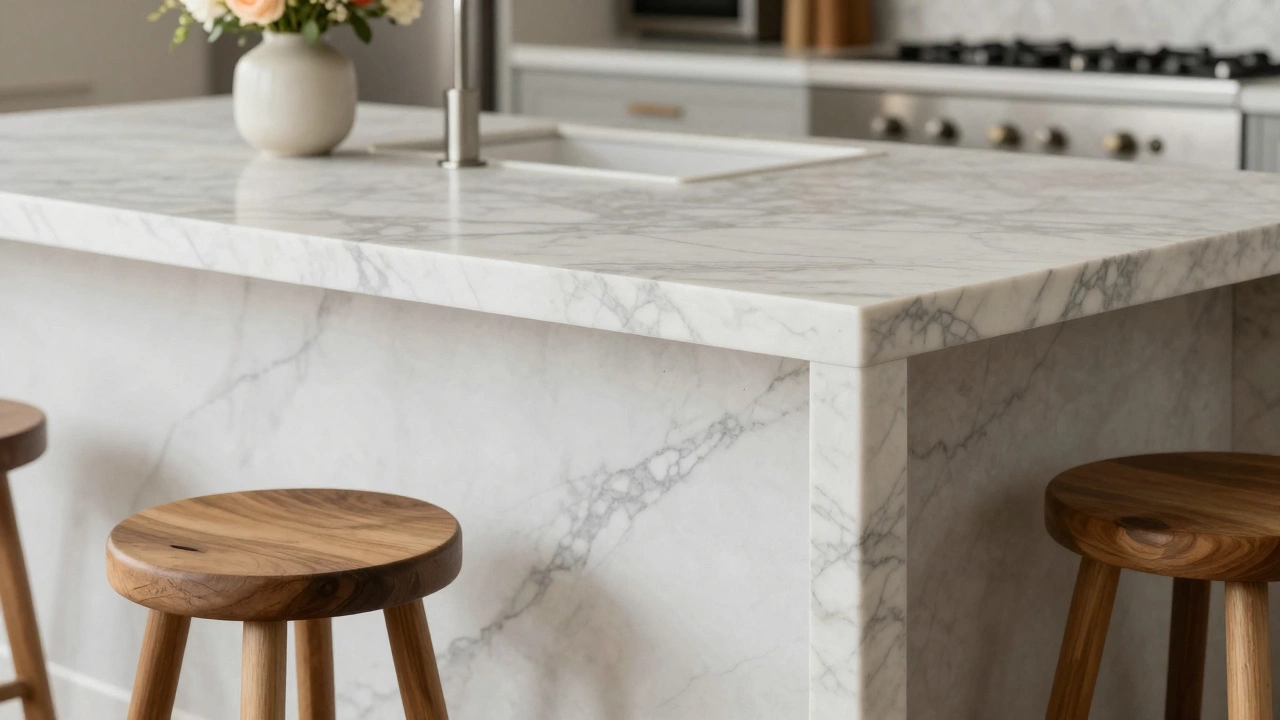
Color Palette: Keeping It Light and Airy
Regardless of the material, the color choice is crucial to achieving the Joanna Gaines look. She almost exclusively favors light neutrals. White, cream, off-white, and soft greys dominate her portfolios. Dark countertops tend to make spaces feel smaller and heavier, which goes against the open, airy vibe she aims for. Light countertops reflect natural light, making even small kitchens feel spacious and inviting.
Pair these light surfaces with darker elements to create contrast. Think black cabinet hardware, dark wood cabinets, or a navy blue island. This contrast grounds the space and prevents it from looking sterile. The goal is balance. Too much white can feel clinical; too much dark can feel oppressive. Joanna strikes this balance by using light countertops as a canvas and adding depth through other design elements.
Comparing Countertop Options: A Quick Guide
| Material | Durability | Maintenance | Aesthetic | Cost Range |
|---|---|---|---|---|
| Quartz | High | Low (No sealing) | Consistent, versatile | $$ - $$$ |
| Marble | Medium | High (Sealing required) | Unique, elegant | $$$ - $$$$ |
| Butcher Block | Medium | Medium (Oiling required) | Warm, rustic | $ - $$ |
| Granite | Very High | Medium (Sealing required) | Natural, varied | $$ - $$$ |
Design Tips Beyond the Countertop
To truly capture the essence of Joanna Gaines' style, the countertop is only part of the equation. You need to consider how it interacts with the rest of the kitchen. First, focus on the backsplash. Subway tiles in white or light grey are a staple. They are simple, clean, and let the countertop and cabinets shine. Avoid busy patterns that compete with the stone's natural veining.
Second, think about lighting. Pendant lights over the island should be simple and industrial or rustic, depending on the overall theme. Brass or black finishes work well. Third, incorporate natural textures. Woven baskets, wooden stools, and fresh flowers soften the hard surfaces of stone and metal. These touches make the kitchen feel welcoming and lived-in, which is the core of the modern farmhouse aesthetic.
Finally, do not forget the sink. An apron-front farmhouse sink is iconic in her designs. It adds a vintage touch and pairs beautifully with both quartz and marble countertops. Choose a material that complements your countertop-white porcelain for a classic look or stainless steel for a more utilitarian feel.
Common Mistakes to Avoid
When trying to replicate this style, many homeowners make a few common errors. One big mistake is choosing a countertop with too much pattern. If your cabinets have detailed molding or your floors have bold herringbone patterns, a busy countertop will overwhelm the eye. Stick to simpler veining if other elements are complex.
Another error is ignoring the edge profile. Joanna often uses simple edges like eased or beveled edges. Ornate ogee or bullnose edges can look dated and clash with the clean lines of modern farmhouse design. Keep it simple. Let the material speak for itself.
Lastly, do not skimp on installation. Even the best-looking quartz or marble can fail if not installed correctly. Ensure your installer has experience with large slabs and proper seam placement. Visible seams in awkward places can ruin the seamless look you are aiming for.
Does Joanna Gaines use granite countertops?
While granite is durable and popular, it is less common in Joanna Gaines' recent designs compared to quartz and marble. Granite often has speckled patterns that can feel busier than the smooth, veined looks she prefers. However, lighter granites with subtle movements may appear in some projects, especially where budget constraints require a more affordable natural stone option.
What is the best countertop for a farmhouse kitchen?
The best countertop depends on your lifestyle. For low maintenance and durability, quartz is ideal. If you love natural beauty and don't mind upkeep, marble is stunning. For warmth and function, butcher block is excellent. Many designers combine materials, using quartz for general areas and butcher block for the island.
Can I use laminate to achieve a Joanna Gaines look?
Yes, high-quality laminate has improved significantly. There are now laminates that convincingly mimic quartz and marble. If you are on a tight budget, laminate is a viable option. Just ensure you choose a thick edge profile to hide the layered sides, giving it a more substantial appearance similar to stone.
What color cabinets pair best with Joanna Gaines' countertops?
Light countertops pair beautifully with a variety of cabinet colors. White shaker cabinets are a classic choice for a bright, airy feel. Navy blue or sage green cabinets add a pop of color while maintaining the neutral backdrop. Dark wood cabinets provide rich contrast and warmth, grounding the light surfaces.
Is quartz heat resistant?
Quartz is moderately heat resistant, but it is not immune to damage. The resin binder can discolor or burn if exposed to extreme heat. Always use trivets or hot pads when placing hot pots and pans on quartz countertops to preserve their appearance. Marble is similarly sensitive to thermal shock.