Commercial vs. Industrial Construction: Key Differences Explained
Commercial vs. Industrial Construction Classifier
Select the characteristics that best describe your planned project.
Result
Key Characteristics:
Select options above and click "Analyze" to see which construction type fits your needs.
Walk past a shiny new office tower and then drive by a sprawling warehouse complex with loading docks and smokestacks. They’re both buildings, sure. But they are worlds apart in how they are designed, built, and used. Confusing commercial construction is the process of building structures intended for business activities where people gather to work or shop. with industrial construction is the specialized building of facilities designed for manufacturing, production, storage, or distribution of goods. can lead to costly mistakes in planning, budgeting, and compliance.
If you are looking to build a new facility, understanding this distinction is your first step. One focuses on customer experience and aesthetics; the other prioritizes heavy-duty functionality and safety. Let’s break down exactly what sets them apart so you know which path fits your project.
The Core Purpose: People vs. Processes
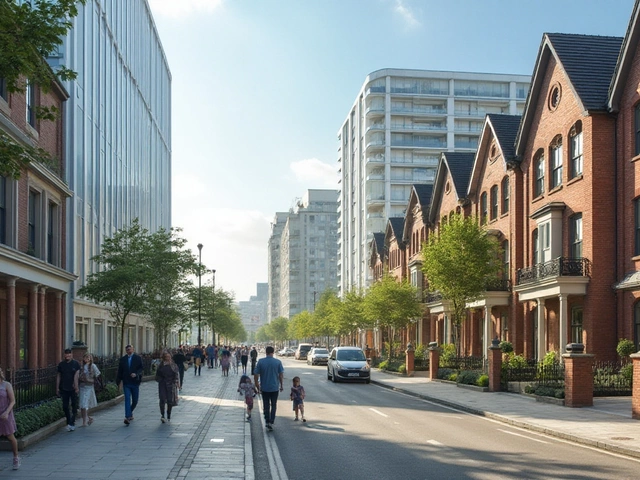
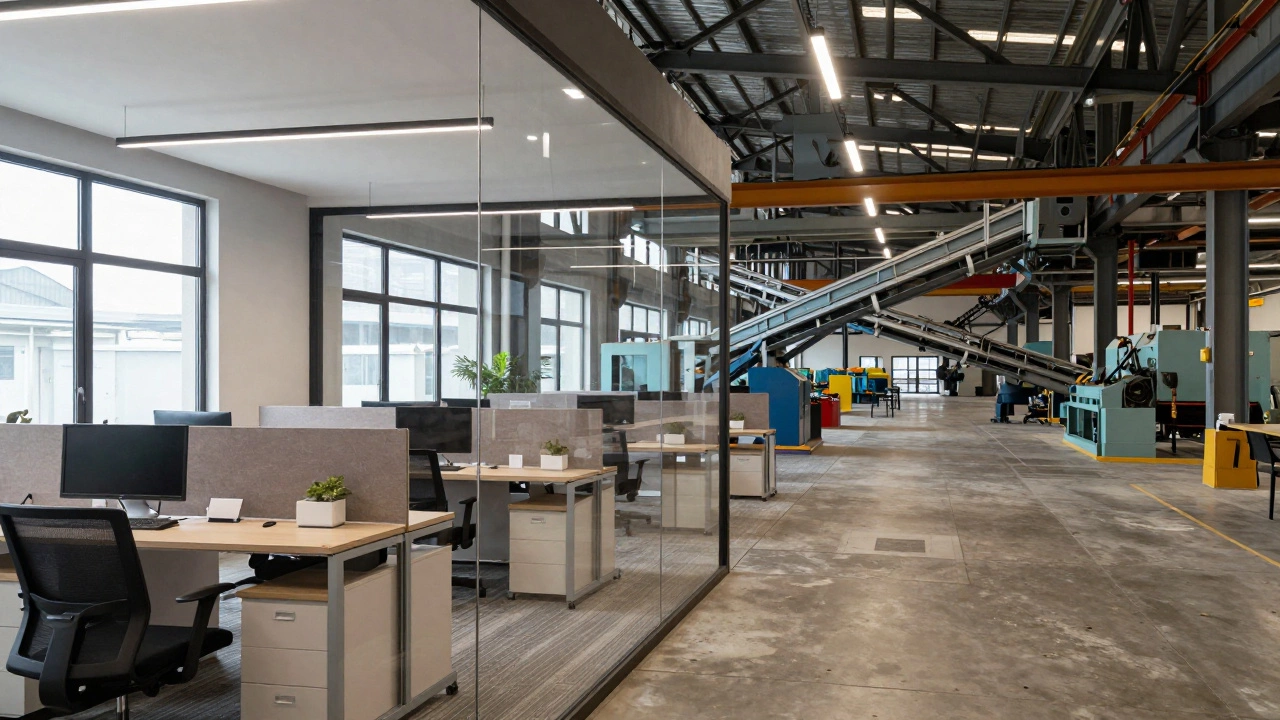
The biggest difference lies in who-or what-the building is built for. Commercial construction creates spaces for human interaction. Think about retail stores, hotels, hospitals, and office parks. The goal is to attract customers, comfort employees, and facilitate services. The design revolves around foot traffic, natural light, and visual appeal.
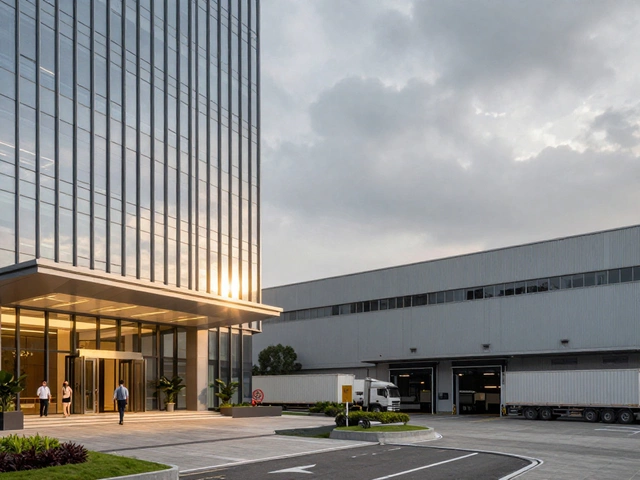
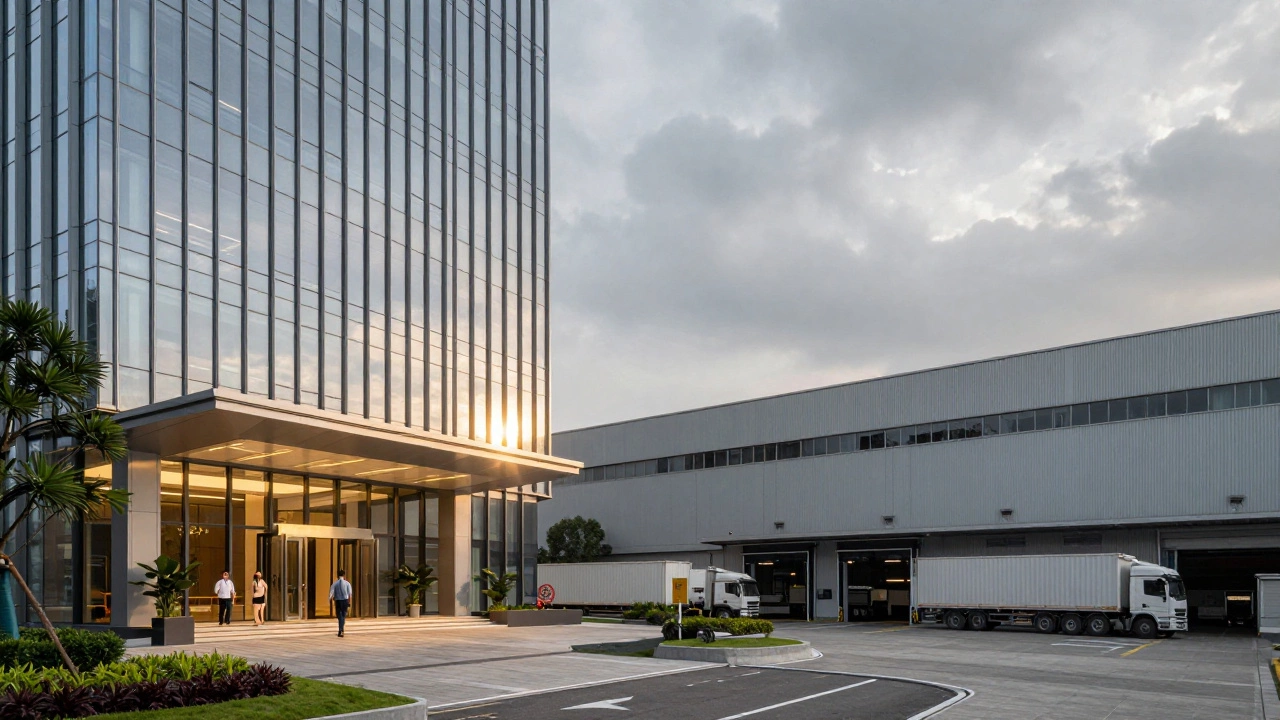
Industrial construction, on the other hand, builds environments for machinery and processes. These are factories, power plants, refineries, and large-scale warehouses. The primary occupants aren’t shoppers; they are conveyor belts, assembly lines, and heavy equipment. While workers are present, their numbers are often lower relative to the square footage, and their safety around hazardous materials or moving parts is the top priority.
- Commercial: Designed for public access, sales, and professional services.
- Industrial: Designed for production, manufacturing, and logistics.
This fundamental difference dictates everything else about the project, from the type of concrete poured to the permits required.
Design Complexity and Aesthetics
In commercial projects, aesthetics matter immensely. You want a lobby that impresses clients or a storefront that draws shoppers off the street. This means hiring architects to create unique facades, selecting high-end finishes, and ensuring comfortable interior layouts. The complexity comes from the variety of systems needed: sophisticated HVAC for climate control, elegant lighting, and soundproofing for offices.
Industrial buildings are utilitarian. A factory doesn’t need a marble lobby; it needs wide doors for trucks and reinforced floors to support ten-ton presses. The design is driven by efficiency and durability. Walls might be simple corrugated metal or precast concrete panels because they are cheap and strong. The "look" is secondary to function. If a machine needs to move from point A to point B without hitting a pillar, the layout changes to accommodate that, not the other way around.
| Feature | Commercial Construction | Industrial Construction |
|---|---|---|
| Aesthetics | High priority (curb appeal) | Low priority (function over form) |
| Interior Finishes | Custom, decorative, varied | Basic, durable, easy to clean |
| Layout Driver | Human flow and comfort | Machinery workflow and logistics |
| Roof Structure | Complex shapes, multiple levels | Simple, wide-span, flat or low-slope |
Materials and Structural Requirements
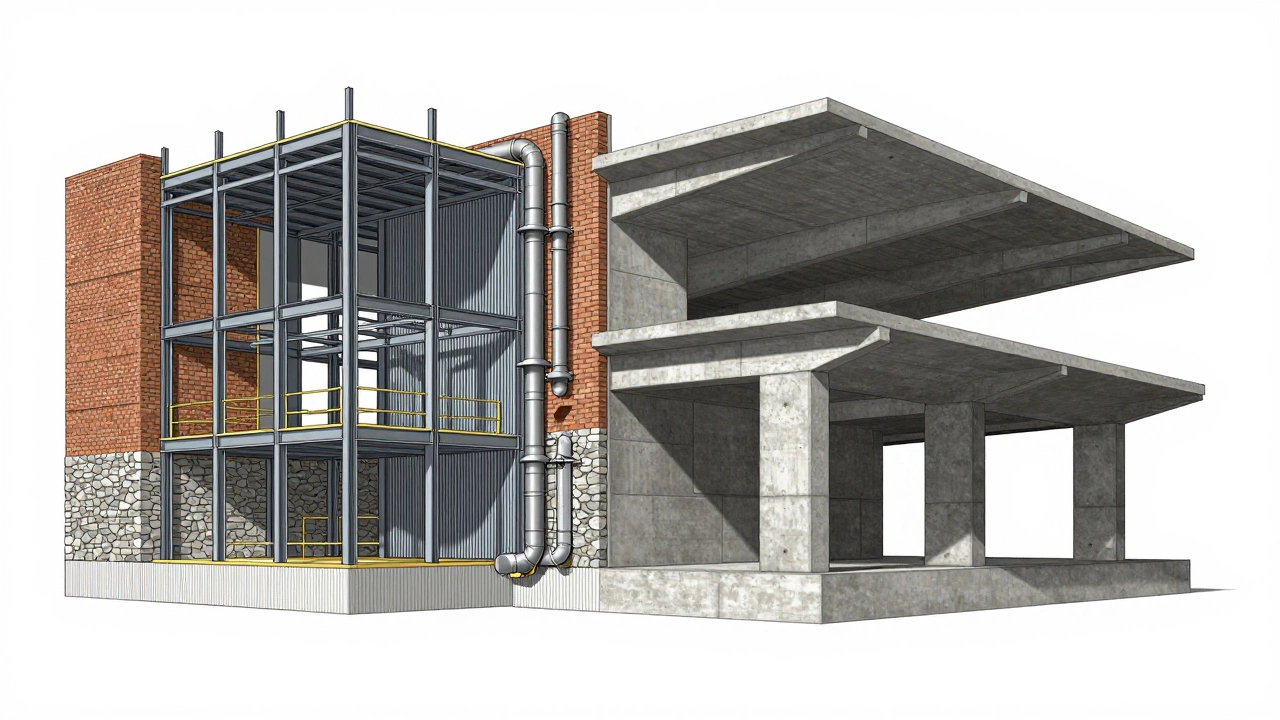
The stuff you build with tells a story about the building’s job. Commercial buildings often use steel frames wrapped in glass, brick, or stone. The structure needs to be flexible enough to allow for open floor plans that can be reconfigured as businesses change. Load-bearing walls are less common because adaptability is key.
Industrial facilities require brute strength. The floors must withstand heavy dynamic loads-think forklifts bouncing pallets or massive vats of liquid. Concrete slabs in industrial settings are thicker and often include post-tensioning cables to prevent cracking. Roofs are designed to span vast distances without internal columns, maximizing usable space for production lines. Materials like chemical-resistant coatings or explosion-proof fixtures are standard in many industrial sites, adding layers of complexity that commercial builders rarely encounter.
Regulatory Hurdles and Permits
Every construction project faces red tape, but the color of the tape differs. Commercial projects deal heavily with zoning laws related to density, parking ratios, and accessibility standards (like ADA compliance in the US or equivalent local codes). Fire safety is critical, but focused on evacuation routes and sprinkler systems for people.
Industrial construction faces stricter environmental and safety regulations. If you are building a chemical plant, you aren’t just worried about fire; you are worried about toxic leaks, wastewater disposal, and air quality. Agencies like the EPA (Environmental Protection Agency) or local equivalents have significant say in these projects. Permitting can take longer because inspectors need to verify that the facility won’t harm the surrounding community or environment. Noise pollution controls are also more stringent for industrial zones.
Timeline and Budget Variations
Generally, commercial projects have shorter timelines but higher costs per square foot. Why? Because of the finishings. Installing drywall, painting, laying hardwood floors, and fitting out restrooms takes time and skilled labor. A boutique hotel room costs significantly more to finish than a bare warehouse bay.
Industrial projects might take longer to plan due to engineering requirements, but the actual construction phase can be faster once started. Erecting a steel-frame warehouse is relatively quick compared to finishing an office suite. However, the total budget can be enormous due to the cost of specialized equipment integration, such as installing cranes, ventilation hoods, or automated sorting systems. The cost per square foot is often lower, but the total scale is larger.
Who Builds What?
You wouldn’t hire a chef to perform brain surgery, and you shouldn’t hire a general commercial contractor to build a semiconductor fab. Commercial contractors specialize in working with architects, interior designers, and tradespeople like electricians and plumbers who focus on residential-style systems scaled up.
Industrial contractors need engineers on site. They work closely with mechanical, electrical, and civil engineers to ensure that the building supports the specific machinery it houses. They understand process piping, high-voltage electrical systems, and industrial waste management. Their teams often include specialists in welding, heavy lifting, and hazard mitigation.
Choosing the Right Path for Your Project
So, which one do you need? Ask yourself what happens inside the walls.
- Are you selling goods or services directly to consumers? If yes, you likely need commercial construction. This includes restaurants, shops, banks, and clinics.
- Are you making products, storing bulk inventory, or processing raw materials? If yes, you are looking at industrial construction. This includes manufacturing plants, distribution centers, and utility stations.
- Do you need heavy machinery or hazardous material handling? Definitely industrial. The safety codes alone will dictate the construction method.
Mixing these up can be disastrous. Trying to run a small manufacturing operation in a leased commercial office space will likely violate fire codes and lease agreements. Conversely, trying to host a retail store in a raw industrial shell requires extensive retrofitting that could have been avoided by choosing the right initial build type.
Understanding these differences helps you ask the right questions during the bidding process. It ensures you get accurate estimates, realistic timelines, and a final building that actually serves its purpose. Whether you are building a place for people to buy coffee or a place to make the cups, knowing the difference saves money and headaches.
Can a building be both commercial and industrial?
Yes, these are often called mixed-use developments. For example, a building might have retail shops on the ground floor (commercial) and a light manufacturing workshop on the upper floors (industrial). However, the construction methods must satisfy the stricter requirements of the industrial portion, particularly regarding structural load and fire separation between the two zones.
Is industrial construction more expensive than commercial?
Not necessarily per square foot. Industrial buildings often have lower costs per square foot because they lack expensive finishes like marble lobbies or custom cabinetry. However, the total project cost can be higher due to the sheer size of the facility and the cost of integrating specialized industrial equipment and environmental controls.
What are the biggest risks in industrial construction?
The biggest risks involve safety and regulatory compliance. Industrial sites often deal with hazardous materials, high-voltage electricity, and heavy machinery during the build phase. Failure to adhere to strict safety protocols can result in severe accidents, project delays, and massive fines from environmental agencies.
How long does it take to build a commercial vs. industrial facility?
Timelines vary widely based on size. A small commercial office fit-out might take 6-12 months. A large industrial plant can take 18-36 months due to complex engineering and permitting. Generally, industrial projects have longer pre-construction phases but potentially faster physical erection times for the shell compared to the detailed finishing work in commercial projects.
Do I need a special license for industrial construction?
Contractors need general construction licenses, but industrial projects often require specialized certifications for handling hazardous materials, high-pressure piping, or specific electrical systems. Always verify that your contractor has experience and the necessary credentials for the specific type of industrial facility you are building.