Closet vs Wardrobe: The Key Differences Explained
Closet vs. Wardrobe Suitability Calculator
Answer these questions to find out if you should invest in permanent closets or flexible wardrobes.
Your Storage Profile
Result
Description goes here.
Why this fits you:
You walk into a bedroom and see clothes hanging in the corner. Is that a closet or a wardrobe? It sounds like splitting hairs, but the distinction matters when you are buying furniture or renovating your home. One is part of the building; the other is something you can pick up and move.
Confusing these two terms leads to frustration. You might search for a "wardrobe" online only to find architectural blueprints for recessed wall spaces. Or you might ask a contractor to install a "closet" and end up with a standalone piece of furniture. Let’s clear this up once and for all.
The Core Difference: Fixed vs. Freestanding
The simplest way to tell them apart is by asking one question: Can you move it?
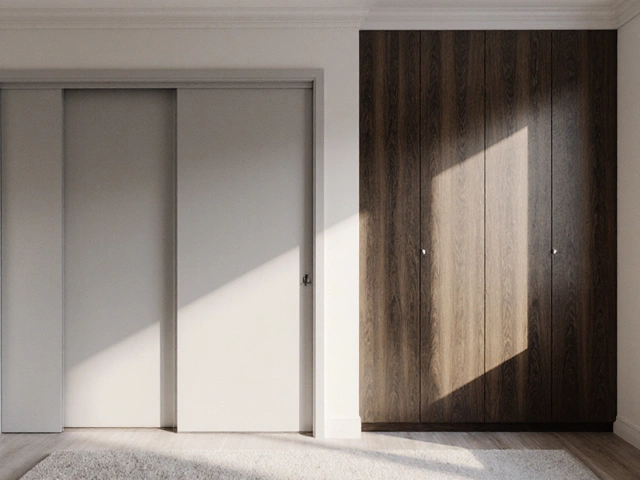
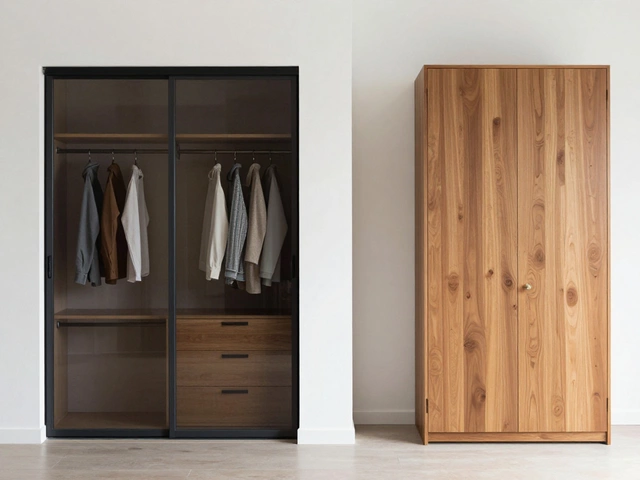
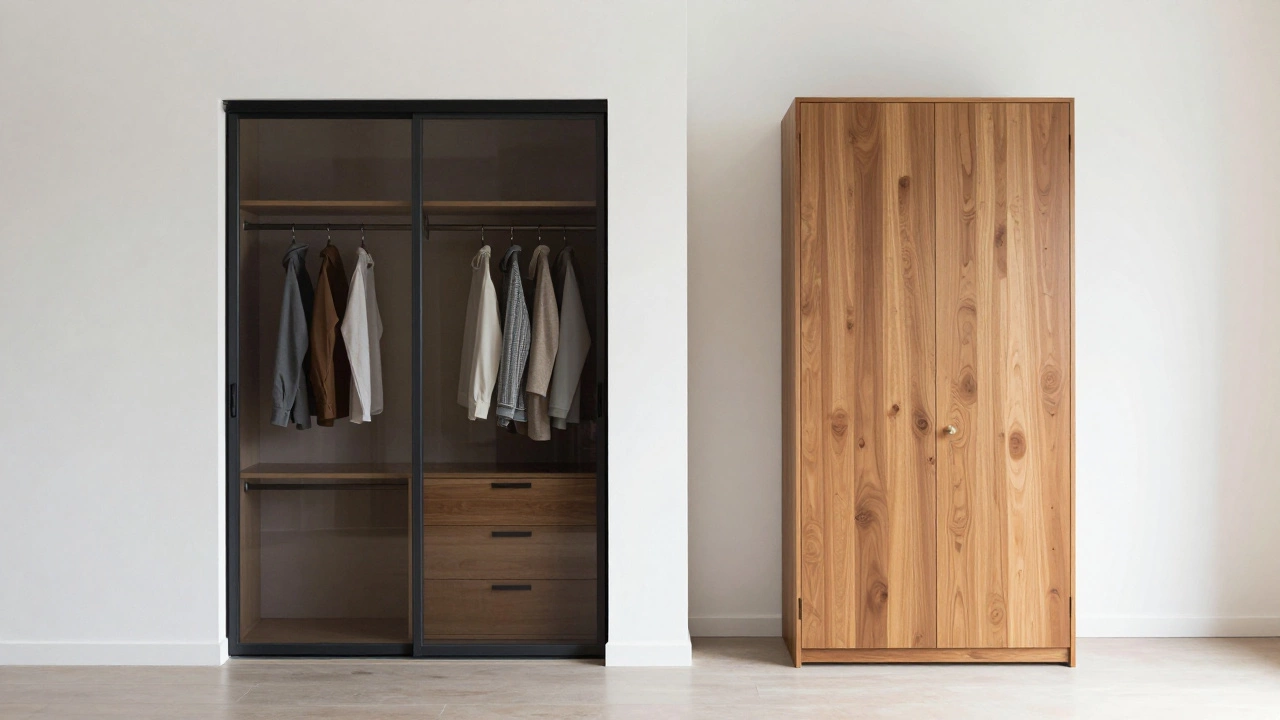
A closet is a permanent storage space built into the structure of a house or apartment. It is essentially a small room without doors (or with sliding/hinged doors) that is framed by walls, floor, and ceiling. If you knock down the wall, the closet disappears. It is fixed real estate.
A wardrobe is a large, tall chest of drawers or cabinet used for storing clothes. It is a piece of furniture. You buy it from a store, assemble it, and place it in your room. If you move houses, you take your wardrobe with you. It is personal property.
This fundamental difference dictates everything else about how they function, how much they cost, and where they fit in your life.
Historical Context: Why Do We Have Both?
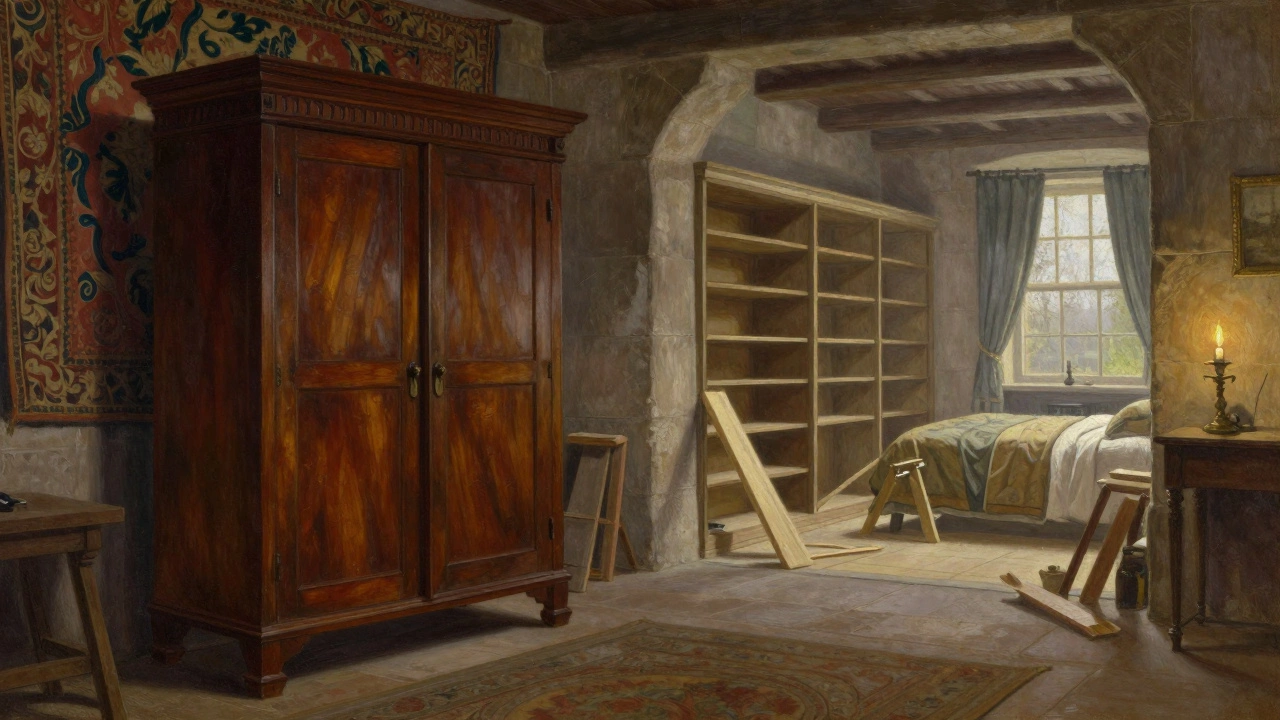
To understand why these two distinct solutions exist, we have to look back at how housing evolved. In medieval Europe and earlier, homes were often single-room structures or had very few rooms. Privacy was scarce. People needed a way to hide their valuables and keep their clothes off damp floors.
The wardrobe emerged as a solution. Early wardrobes were massive wooden boxes, sometimes as big as a modern fridge, placed against a wall. They provided security and organization within an open living space. The word itself comes from Old French *guardefrue*, meaning "guardian of fresh things," referring to the preservation of clothing.
Closets, on the other hand, are a relatively modern invention in the context of residential architecture. Before the 19th century, most homes did not have dedicated storage rooms. As housing became more standardized and complex during the Victorian era, builders began incorporating small alcoves into bedroom walls. These "closets" (from the French *clos*, meaning closed) allowed for better air circulation around clothes and maximized the usable floor space of the room.
In New Zealand, where I live in Auckland, older Edwardian and Art Deco homes often feature deep, built-in linen closets and coat cupboards. Modern apartments, however, frequently rely on freestanding wardrobes because the floor plans are tighter and less flexible.
Design and Structural Features
Because one is built-in and the other is movable, their design constraints differ significantly.
| Feature | Closet (Built-in) | Wardrobe (Freestanding) |
|---|---|---|
| Mobility | Fixed to the building structure | Movable; portable between homes |
| Space Usage | Uses dead space within walls | Takes up active floor space |
| Customization | Highly customizable during construction | Limited to manufacturer designs |
| Cost | Part of construction/renovation budget | Separate furniture purchase |
| Installation | Requires carpentry/construction work | DIY assembly or delivery placement |
Closets are defined by their integration with the room. A reach-in closet typically has a width of 24 inches (60 cm) minimum, while a walk-in closet requires a floor area of at least 30-50 square feet. They often include specific hardware like tension rods, shelves, and drawers that are installed directly into the framing.
Wardrobes come in various styles: double-door, sliding door, and open rail systems. They are self-contained units. A standard double-door wardrobe might be 180 cm high, 120 cm wide, and 60 cm deep. Because they sit on the floor, they can create gaps behind them where dust bunnies accumulate, whereas closets seal flush against the wall if fitted correctly.
Pros and Cons: Which Suits Your Lifestyle?
Choosing between relying on closets or investing in wardrobes depends on your housing situation and long-term plans.
Advantages of Closets
- Maximized Floor Space: Since closets are tucked into walls, they don’t obstruct the flow of the room. This is crucial in smaller bedrooms where every square meter counts.
- Property Value: Built-in storage adds to the resale value of a home. Buyers expect functional closets in bedrooms and hallways.
- Durability: Constructed from drywall, plaster, or wood framing, closets last as long as the house does. They don’t wobble or get damaged during moves.
- Custom Fit: During renovation, you can design a closet system that utilizes awkward angles, sloped ceilings, or narrow nooks that a standard wardrobe couldn’t fill.
Disadvantages of Closets
- Lack of Flexibility: You cannot change the size or location of a closet without major construction. If your needs change, you’re stuck with the existing layout.
- Renovation Cost: Adding a closet to a room that doesn’t have one involves framing, electrical work (if lighting is added), and finishing. It’s expensive.
- Ventilation Issues: Poorly designed closets can trap moisture, leading to mold or mildew on clothes, especially in humid climates like Auckland’s.
Advantages of Wardrobes
- Portability: Renters love wardrobes. When you move out, you take your storage with you. There’s no need to leave valuable assets behind.
- Immediate Availability: You can buy a wardrobe today and have it assembled tomorrow. No contractors, no permits, no waiting for renovations.
- Aesthetic Variety: Wardrobes act as decor. You can choose finishes, colors, and styles that match your interior design theme. A sleek, mirrored wardrobe can make a small room feel larger.
- Modularity: Many modern wardrobes offer modular components. You can add shelves, drawers, or hanging rails as your needs evolve.
Disadvantages of Wardrobes
- Floor Space Consumption: A large wardrobe takes up significant room. In a tight studio apartment, this can make the space feel cramped.
- Quality Variance: Cheap particleboard wardrobes can sag, break, or emit formaldehyde fumes. High-quality solid wood wardrobes are expensive.
- Gap Management: Unless perfectly sized, wardrobes leave gaps against walls and ceilings, which can collect dust and reduce storage efficiency.
Hybrid Solutions: The Best of Both Worlds
What if you want the space-saving benefits of a closet but the flexibility of a wardrobe? Enter the hybrid approach.
Fitted Wardrobes: These are custom-built cabinets that sit flush against a wall but are not structurally integrated into the house’s framing. They look like closets but are technically furniture. They are popular in modern apartments where developers provide bare walls, and residents hire carpenters to build bespoke storage solutions.
Sliding Door Systems: Installing sliding doors on a simple wire shelving unit can transform an open closet into a sleek, space-efficient storage area. This mimics the functionality of a high-end wardrobe without the bulk.
Open Closet Systems: Some people opt for open rail systems with decorative baskets and bins. This eliminates the need for doors entirely, reducing clutter and making access easier. It’s a stylistic choice that blurs the line between built-in and freestanding.
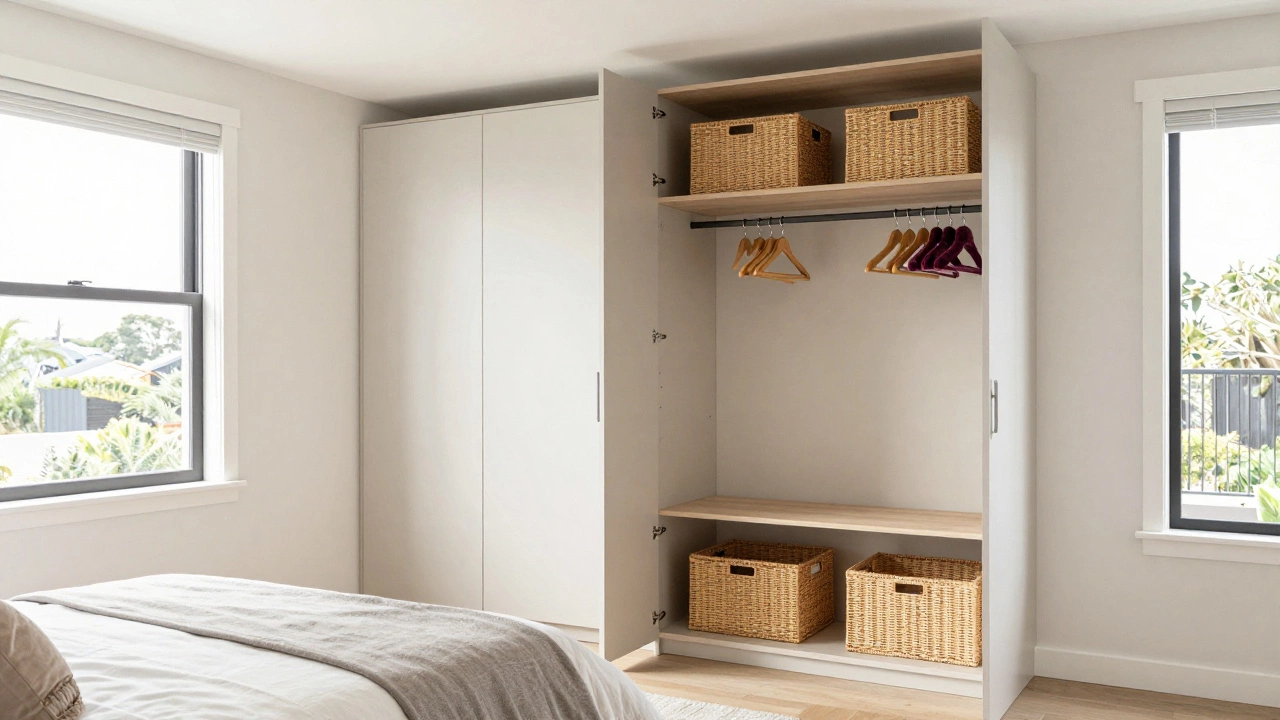
Practical Tips for Maximizing Storage
Whether you have a closet or a wardrobe, efficient organization is key. Here are some practical tips:
- Use Vertical Space: Install higher shelves in closets to store seasonal items. Use over-the-door organizers in wardrobes for accessories.
- Invest in Good Hangers: Uniform, slim hangers save significant space. Velvet hangers, for example, prevent slipping and take up less width than plastic ones.
- Declutter Regularly: Both closets and wardrobes suffer from overcrowding. Adopt a "one in, one out" rule to maintain order.
- Lighting Matters: Add LED strip lights inside closets or wardrobes. It makes finding items easier and enhances the perceived quality of the space.
- Consider Climate Control: In humid areas, use silica gel packets or small dehumidifiers inside enclosed storage to protect fabrics.
Conclusion: Making the Right Choice
So, what is the difference between a closet and a wardrobe? A closet is a permanent architectural feature built into your home, saving floor space and adding property value. A wardrobe is a movable piece of furniture that offers flexibility, style, and portability.
If you own your home and plan to stay put, investing in well-designed built-in closets is usually the smarter long-term decision. If you rent, move frequently, or want to update your decor easily, a high-quality wardrobe is your best bet.
Understanding this distinction helps you communicate clearly with designers, contractors, and retailers. It ensures you get the storage solution that actually fits your life, not just the term you heard in a movie.
Can I convert a closet into a wardrobe?
Not exactly. You can remove the doors and shelving of a closet to create an open storage area, but you cannot turn a built-in closet into a freestanding wardrobe. However, you can install a wardrobe-style cabinet inside a large walk-in closet to organize specific items.
Which is better for small apartments?
Built-in closets are generally better for small apartments because they utilize wall space rather than floor space. However, if your apartment lacks closets, a slimline wardrobe with sliding doors is a good alternative to minimize footprint.
Do wardrobes add value to a home?
Freestanding wardrobes do not add structural value to a home since they are considered personal property. Built-in closets, however, are part of the real estate and can increase the appeal and value of a property.
What is the average depth of a closet vs a wardrobe?
A standard reach-in closet is typically 24 inches (60 cm) deep. A standard freestanding wardrobe is also usually 60 cm deep, though some models may be shallower (50 cm) or deeper (70 cm) depending on the design.
Are fitted wardrobes considered fixtures?
In many legal contexts, fitted wardrobes that are bolted to the floor or wall are considered fixtures and remain with the house upon sale. Freestanding wardrobes are chattels and can be removed. Check local laws for specific definitions.