What is the Shape of a Modern House? Beyond Boxes and Flat Roofs
Modern House Shape Selector
Select a shape to explore its characteristics, or use the questionnaire below to find your ideal match.
Rectangular Box
Clean lines, maximum efficiency
L-Shape
Courtyard living, natural zoning
U-Shape
Privacy-focused, enclosed outdoor space
Stepped Form
Hillside mastery, terraced views
Find Your Ideal Shape
Your Recommended Shape
Why This Shape Works For You
Design Characteristics
Best Suited For
Roof Recommendation
How It Aligns With Modern Design Principles
When you picture a modern house is a residence defined by clean lines, functional spaces, and a connection to nature, often featuring geometric shapes and minimal ornamentation, do you see a stark white box? A sharp pyramid? Or something entirely different? The truth is, there isn’t one single "shape" for a modern home. If anything, modern architecture is defined by what it *isn’t*-it’s not cluttered with decorative trim, steep gables, or heavy symmetry.
In Auckland, where I live, the wind and rain have taught us that form must follow function. Here, a modern home might look like a series of interconnected pavilions designed to catch the breeze and block the nor’westerly gusts. But globally, the "shape" of a modern house has evolved into a language of geometry, volume, and transparency. It’s less about a static silhouette and more about how space flows between walls, floors, and the landscape outside.
The Dominant Geometries: Boxes, L-Shapes, and Beyond
At its core, modern architecture relies on simple, primary forms. These aren’t just aesthetic choices; they are structural efficiencies that allow for larger windows, better insulation, and easier construction.
- The Rectangular Box: This is the most recognizable shape. Think of a cube or a rectangular prism. It offers maximum interior efficiency with minimal exterior surface area, which helps with heating and cooling costs. The key here is proportion. A low, wide rectangle feels grounded and stable, while a tall, narrow tower creates a dramatic vertical presence.
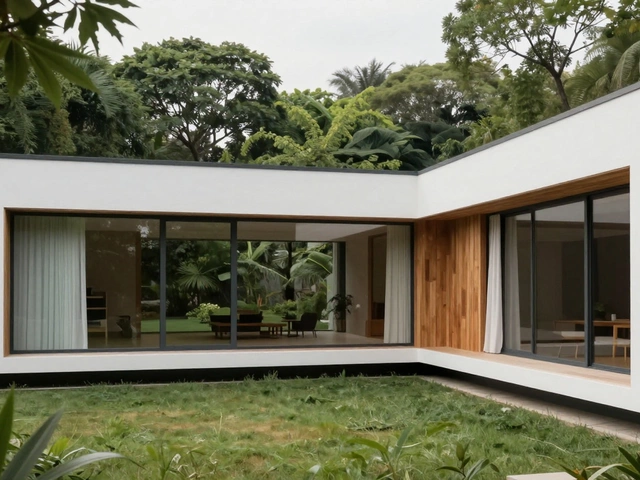
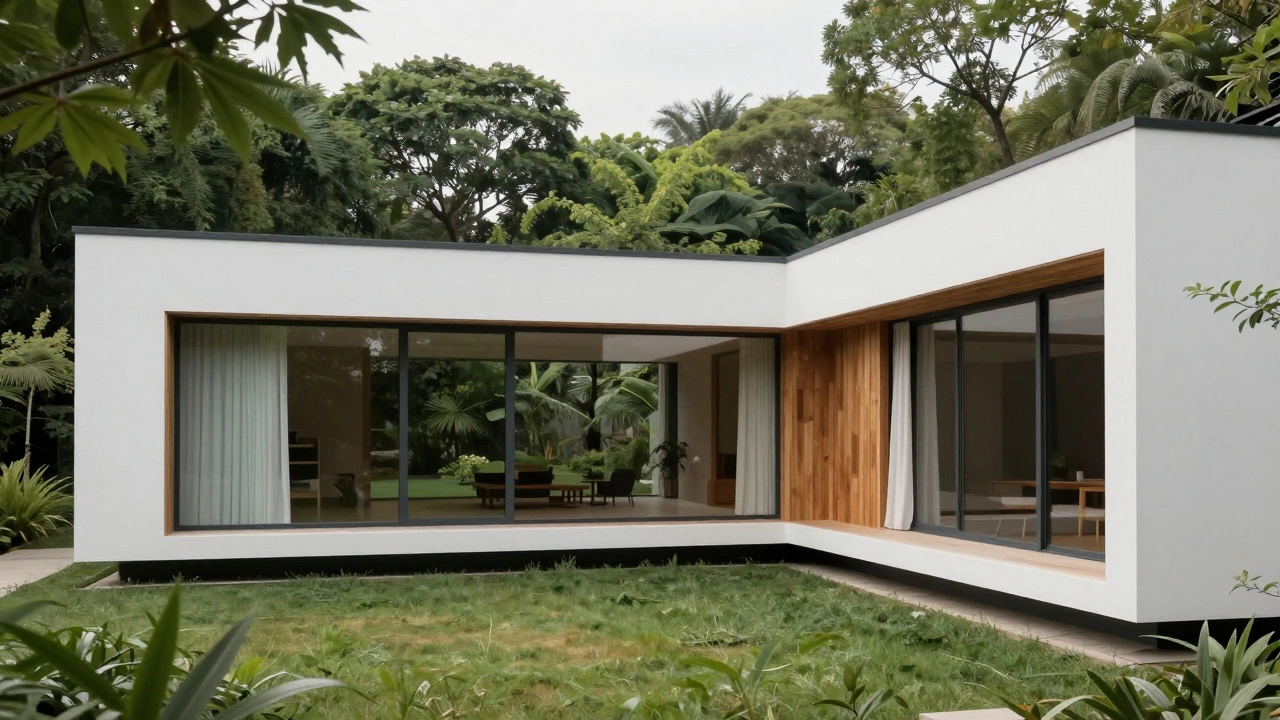
- The L-Shape: Far more common than you’d think, the L-shape wraps around a central courtyard or garden. This creates a natural separation between public living areas and private bedrooms while maintaining visual connectivity. It’s perfect for corner lots or properties with tricky topography.
- The U-Shape: Similar to the L-shape but enclosing a space on three sides. This creates an intimate outdoor room-a protected patio or garden that becomes an extension of the living space. In colder climates, this shape captures solar heat; in warmer ones, it provides shade.
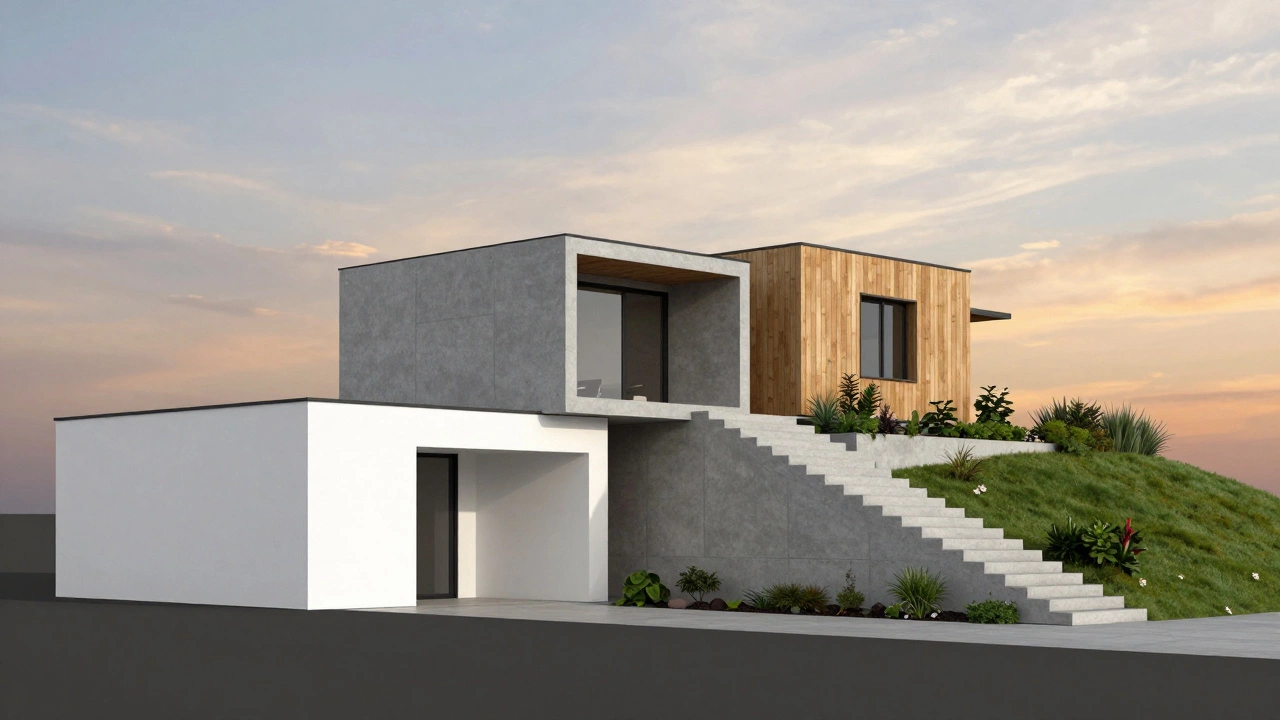
- The Stepped Form: Imagine a ziggurat or a set of stairs. Each level steps back from the one below it. This is brilliant for hillside properties, as it allows each floor to have its own terrace and view without blocking neighbors’ sightlines.
These shapes aren’t mutually exclusive. Many contemporary homes combine them-perhaps an L-shaped main body with a rectangular annex for the garage or studio. The goal is always clarity. You should be able to trace the logic of the building’s footprint easily.
Rooflines: The Flat Roof Revolution
If there’s one feature that screams "modern," it’s the flat roof. But don’t mistake "flat" for perfectly horizontal. Modern flat roofs have a slight pitch (usually 1:80) to ensure water drainage. They’re not just a stylistic choice; they serve several practical purposes.
First, they maximize usable space. That rooftop can become a deck, a garden, or a solar panel array. Second, they simplify the structure. Without complex rafters and trusses needed for pitched roofs, the upper floor slab can be extended further, creating those signature overhangs that shade windows from high summer sun. Third, they contribute to the clean, horizontal emphasis that defines modern aesthetics.
However, flat roofs require careful detailing. Flashing, waterproofing membranes, and drainage systems must be robust. In places like Auckland, where we get intense rainfall, a poorly detailed flat roof is a recipe for leaks. So, while the shape looks effortless, the engineering behind it is precise.
Volume and Massing: Playing with Space
Modern houses rarely feel like solid blocks. Instead, they play with volume-creating voids, cantilevers, and overlapping planes. This makes the house feel lighter and more dynamic.
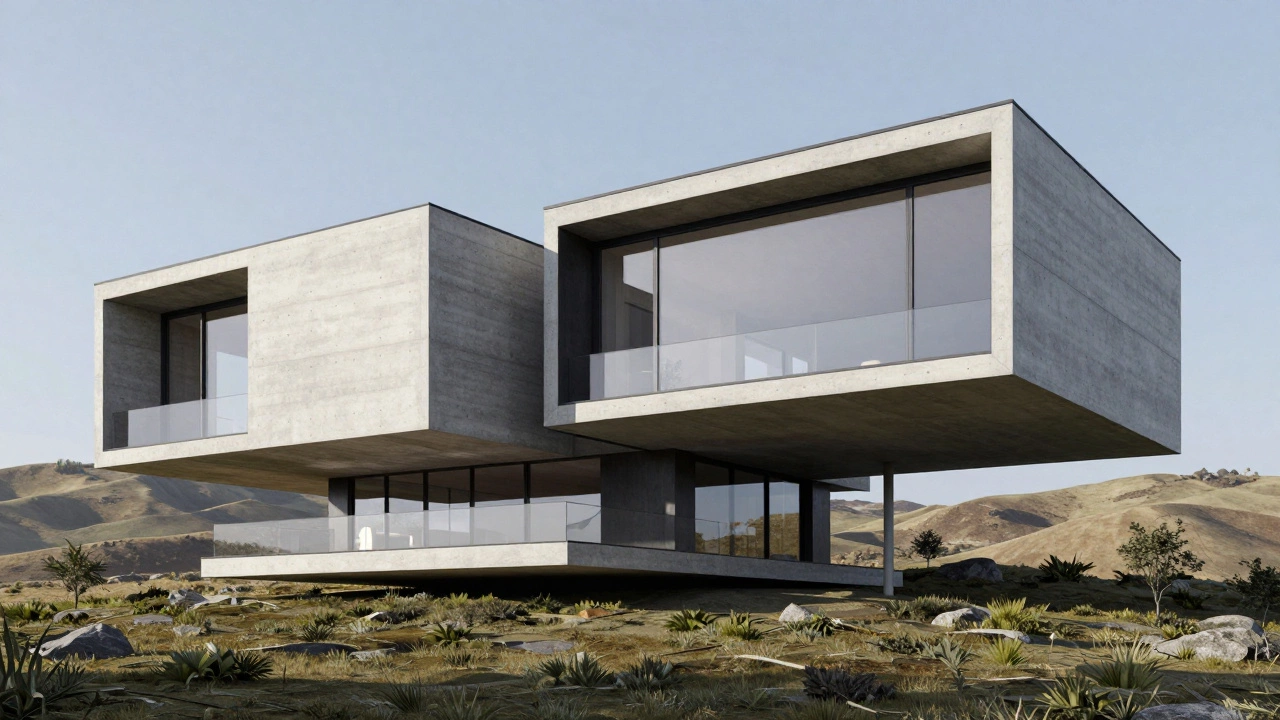
Cantilevers, where a section of the building extends beyond its support, are a hallmark of modern design. Picture a second-floor bedroom jutting out over a ground-floor living room. This creates sheltered outdoor spaces underneath and emphasizes the horizontal spread of the home. It also allows for large, uninterrupted windows on the underside of the cantilever, flooding the lower level with light.
Another technique is the use of "floating" volumes. By separating the foundation from the main structure with slender columns or stilts, the house appears to hover above the ground. This is particularly effective on sloping sites or flood-prone areas. It preserves the natural landscape beneath and reduces the visual impact of the building on the environment.
The Role of Windows and Walls
In traditional homes, walls are barriers. In modern homes, they are screens. The shape of a modern house is heavily influenced by its fenestration-the arrangement of windows and doors.
Large, floor-to-ceiling glass panels blur the boundary between inside and outside. This doesn’t mean the house is all glass; rather, solid walls are used strategically to provide privacy, thermal mass, and acoustic insulation. The interplay between opaque and transparent surfaces creates depth and interest.
Consider the "screen wall." A solid wall might stand parallel to the main living area, separated by a gap. This screen blocks direct views from the street or neighbors while allowing light and air to pass through. It adds another layer to the house’s silhouette, making it more complex and intriguing from the outside.
Materiality and Texture
The shape of a modern house is also defined by its materials. Clean lines demand smooth, uniform surfaces. Common choices include:
- Concrete: Provides thermal mass and a sleek, industrial look. Board-marked concrete adds texture without breaking the line.
- Glass: Essential for transparency and light.
- Timber: Often used as cladding or screening. It softens the hard edges of concrete and steel, adding warmth and natural variation.
- Metal: Steel frames allow for long spans and thin columns. Corrugated metal or zinc cladding adds a crisp, reflective quality.
The combination of these materials creates contrast. Smooth concrete against rough timber, or dark steel against bright white plaster. This textural variety prevents the house from feeling sterile or cold.
Sustainability and Orientation
Today, the shape of a modern house is increasingly dictated by sustainability. Passive design principles influence everything from orientation to window placement.
In the Northern Hemisphere, modern homes often face south to capture winter sun. Large south-facing windows let in heat during cold months, while deep overhangs block the high summer sun. In the Southern Hemisphere, like in New Zealand, the opposite applies: north-facing windows are prioritized.
The shape also affects energy efficiency. Compact forms (like cubes) have less surface area relative to volume, reducing heat loss. However, modern designs often prioritize daylight and ventilation over pure compactness, using smart shading and insulation to compensate.
| Shape | Best For | Key Advantage | Potential Drawback |
|---|---|---|---|
| Rectangular Box | Flat lots, urban settings | Structural simplicity, cost-effective | Can feel monotonous if not detailed well |
| L-Shape | Corner lots, family homes | Natural zoning, outdoor courtyard | More complex roofing junctions |
| U-Shape | Privacy-focused designs | Enclosed outdoor space, wind protection | Larger footprint, higher material cost |
| Stepped Form | Hillside or sloping sites | Maximizes views, terraced gardens | Complex foundation work |
Common Misconceptions About Modern Shapes
One big myth is that modern houses are all cold and impersonal. The reality is that the clean shapes provide a neutral backdrop for your life. Art, furniture, and plants pop against simple backgrounds. Another misconception is that they’re expensive. While custom details add cost, the basic geometries of modern homes are often cheaper to build than complex Victorian or Craftsman styles with their intricate trimwork and multiple roof pitches.
Also, modern doesn’t mean minimalist. You can have a modern-shaped house filled with rich textures, bold colors, and eclectic decor. The architecture provides the stage; you bring the performance.
Is a flat roof really better for modern homes?
Flat roofs offer a cleaner aesthetic and allow for rooftop usage, but they require rigorous maintenance and waterproofing. They are ideal for modern designs due to their ability to create large overhangs and simplify the structural grid. However, in areas with heavy snowfall, pitched roofs may be safer.
Why do modern houses often lack chimneys?
Chimneys disrupt the clean lines and flat roof profiles characteristic of modern architecture. Additionally, modern heating systems like ducted gas or electric heat pumps are more efficient and don’t require bulky flues. If a fireplace is desired, it’s often a freestanding wood burner integrated into the interior design rather than a dominant exterior feature.
Can a modern house have a pitched roof?
Yes. Some modern architects use shallow-pitched roofs to blend with local vernacular or to improve drainage. The key is keeping the lines simple and unadorned. A mono-pitch (single slope) roof is a popular compromise that maintains modern aesthetics while offering better water runoff than a completely flat roof.
How does the shape affect energy efficiency?
Compact shapes like cubes minimize surface area, reducing heat loss. However, modern design often prioritizes orientation and window placement over pure compactness. Strategic overhangs and insulated walls help manage temperature, making even complex shapes energy-efficient when designed correctly.
Are modern houses harder to maintain?
Not necessarily. Simple geometric shapes mean fewer corners and joints where dirt can accumulate. Flat roofs need regular inspection for leaks, but otherwise, modern materials like fiber-cement cladding and aluminum windows are durable and low-maintenance compared to painted wood or brick.