What Is the Trend in Corner Sofas in 2024?
Corner Sofa Style Finder
Find Your Perfect Corner Sofa
Answer a few questions to discover which 2024 corner sofa trend matches your lifestyle and space requirements.
What's your primary living space size?
What's your main sofa usage?
Which features are most important to you?
Your Recommended Style
Corner sofas aren’t just furniture anymore-they’re the new centerpiece of the modern living room. In 2024, the way we sit, relax, and gather has shifted, and corner sofas have evolved to match. No longer just a space-saver for small apartments, they’re now designed for comfort, flexibility, and style that turns a corner into a statement.
Modular is the new standard
Forget the fixed L-shape. Today’s top-selling corner sofas are modular. That means you can rearrange them like building blocks. Want to turn your L into a U-shape for movie nights? Slide a section over. Need a chaise for napping? Swap out the armrest. Brands like IKEA, Article, and local New Zealand makers like The Sleep Company have all jumped on this. Modular designs let you adapt your sofa to your life, not the other way around.
What’s driving this? People are spending more time at home. And they want furniture that changes with their mood. A 2023 survey by the New Zealand Home Furnishings Association found that 68% of buyers under 40 chose modular sofas because they could reconfigure them after moving or after a lifestyle change-like having a baby or working from home full-time.
Low-profile frames are in
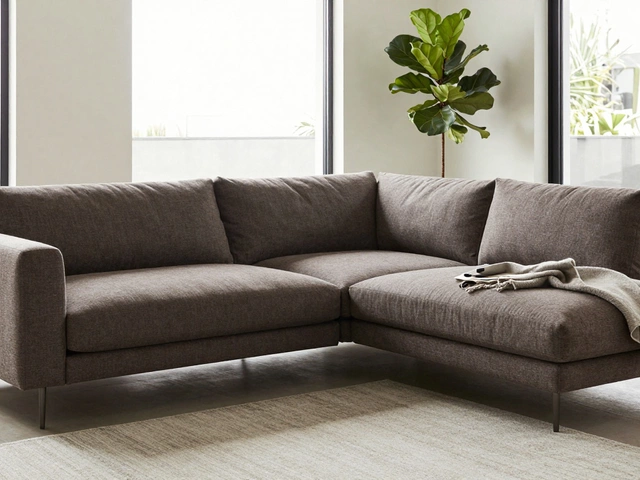
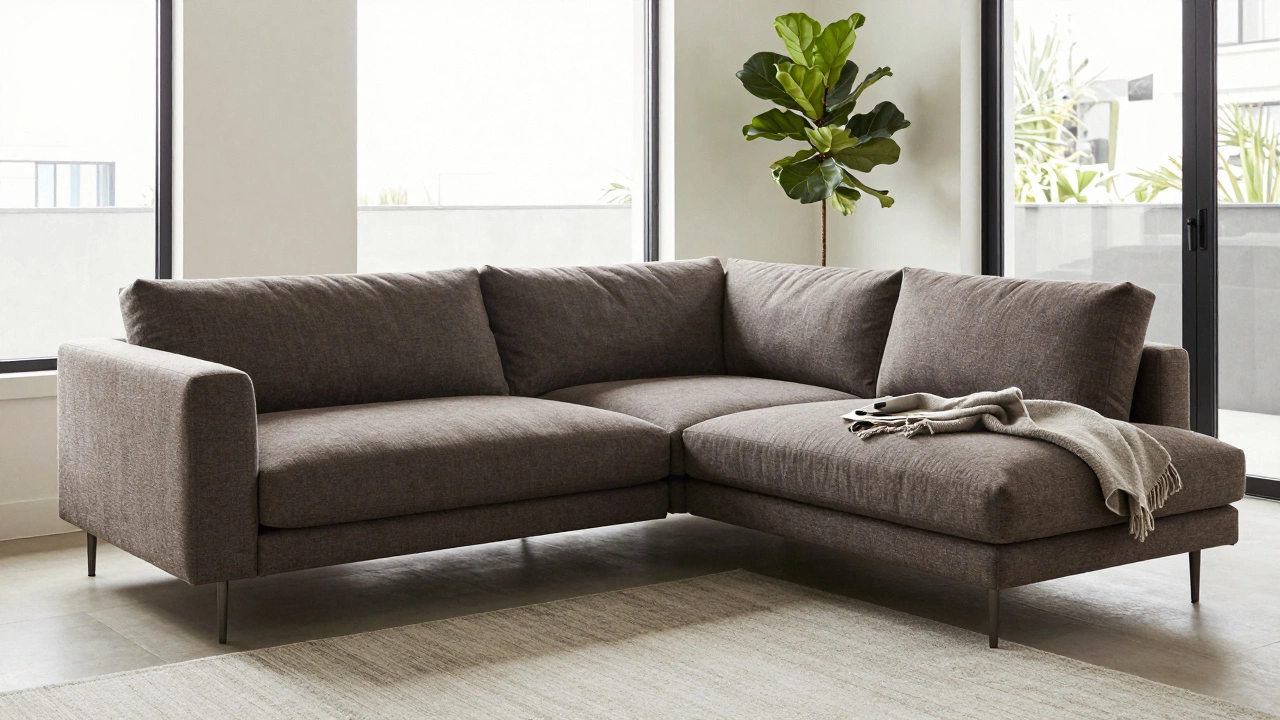
High-back, bulky corner sofas from the 2010s are fading. In 2024, the trend is clean, low-slung frames. Think of them as the minimalist cousin of the classic sectional. They sit closer to the floor, making rooms feel bigger and more open. This style works especially well in Auckland’s modern apartments and bungalows, where ceiling height and natural light matter.
These low-profile designs often come with hidden legs-sometimes just thin metal or wood strips-that give the illusion the sofa is floating. The seat depth is deeper too, around 24 to 26 inches, so you can really sink in. But the backrest? It’s lower, usually 28 inches or less. This isn’t just about looks. It makes it easier to stand up, which matters as more people are aging in place or have mobility concerns.
Texture matters more than color
Color? Neutral is still king-charcoal, oat, warm grey. But what’s changing is the fabric. In 2024, texture is the new color. Velvet, bouclé, and performance-grade linen dominate the market. These aren’t just pretty-they’re practical. Velvet feels luxurious but resists pilling if it’s a blend with polyester. Bouclé adds visual depth and softness without trapping dust like shaggy fabrics. And performance linen? It’s stain-resistant, breathable, and holds up to kids and pets.
One Auckland designer told me she stopped offering solid-colored cotton sofas last year. “People don’t want to baby their furniture,” she said. “They want something that looks good and survives life.” That’s why brands like Ligne Roset and local makers like Fable & Co. now offer 90% of their corner sofas in textured weaves.
Storage is no longer optional
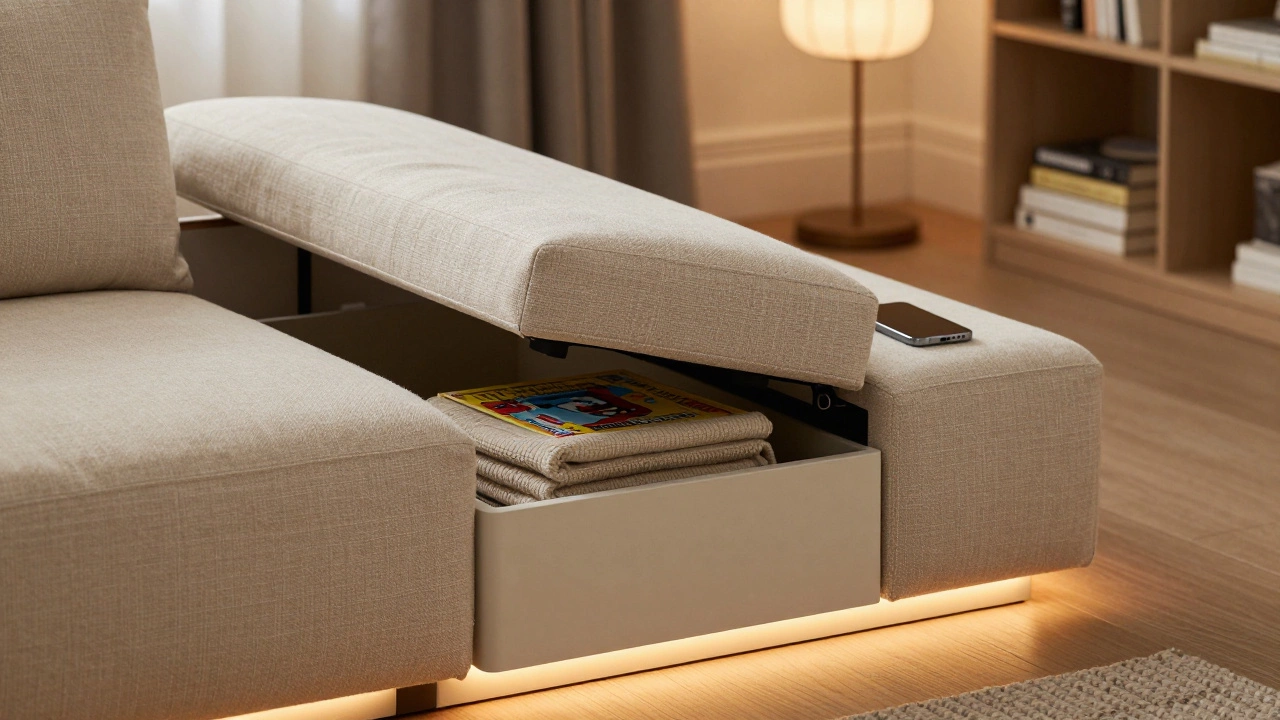
Here’s a quiet revolution: corner sofas with built-in storage. Not just a hidden drawer under the seat. Think full-length ottomans that lift to reveal space for blankets, board games, or kids’ toys. Some models even have side compartments with USB charging ports inside the armrests.
This isn’t a luxury-it’s a necessity in small homes. A 2024 study by the Auckland Housing Research Group found that 73% of urban households under 80 square meters use their sofa as a primary storage solution. People are tired of cluttered shelves and extra side tables. A corner sofa that doubles as a storage unit saves space, reduces visual noise, and keeps essentials close at hand.
Smart features are quietly creeping in
You won’t find a corner sofa with a built-in TV in 2024. But you will find ones with hidden tech. Wireless charging pads embedded in the armrests. LED lighting strips along the base that change color with your mood. Some high-end models even have vibration settings for relaxation-think gentle massage, not full-blown spa.
These features aren’t gimmicks. They’re responses to how we live now. We’re tired of cords. We want comfort that adapts. And we’re willing to pay more for it. Brands like Herman Miller and local innovators like Sleepwell NZ are testing these features in limited runs. They’re still pricey-around $4,000 to $6,000-but sales are growing 30% year over year.
What’s out of style?
Let’s be clear: some trends are dead.
- **Bright primary colors**-red, electric blue, neon green-are fading fast. They feel dated next to the calm, earthy tones dominating 2024.
- **Plastic or vinyl upholstery** is being replaced by natural fibers. People are avoiding anything that feels cheap or makes a crinkly sound when you sit.
- **Fixed, non-modular designs** are losing ground. If your sofa can’t be rearranged, it’s already outdated.
- **Heavy, ornate wood legs** are out. Thin, minimalist legs or no legs at all are in.
Who should buy a corner sofa in 2024?
Corner sofas aren’t for everyone-but they’re perfect for some.
- If you live in a small space-studio, apartment, or narrow home-this is your best bet for maximizing seating without crowding the room.
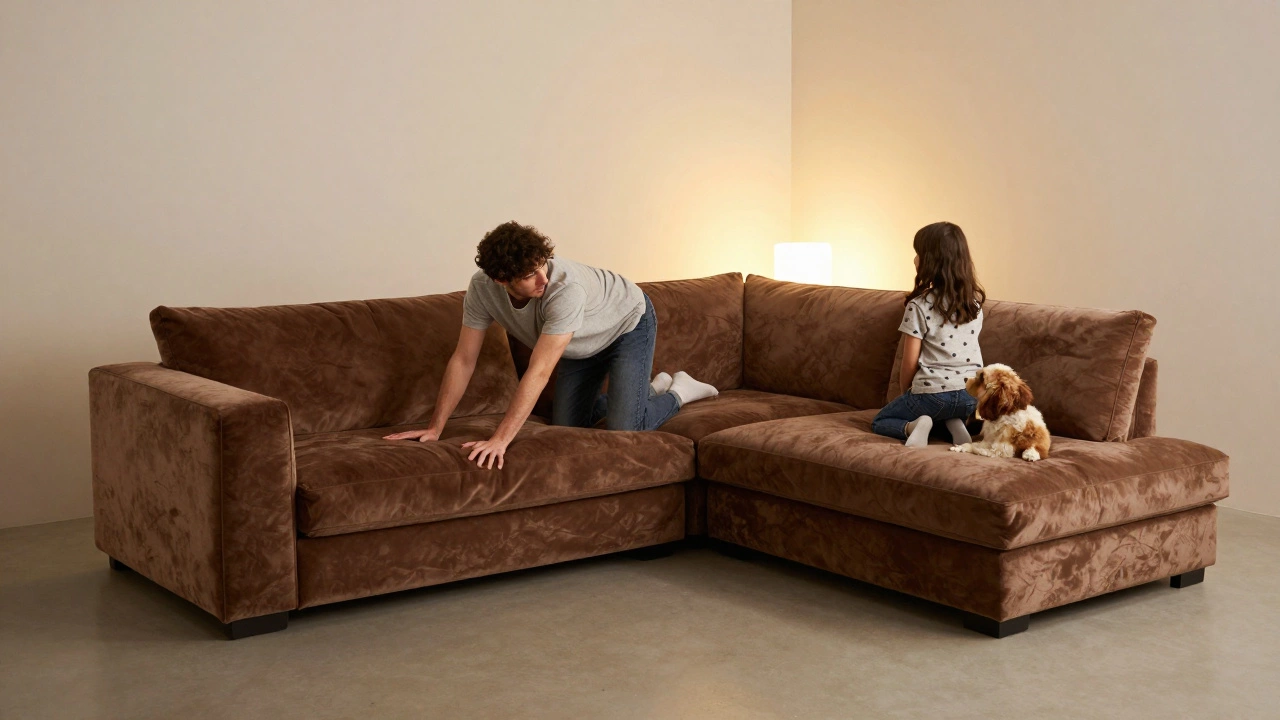
- If you have kids or pets-go for performance fabrics. They clean easily and don’t show wear like cotton.
- If you work from home-a corner sofa with a built-in side table or charging port can become your casual meeting spot or afternoon reading nook.
- If you entertain often-a modular L-shape gives you flexible seating for guests, and a chaise section lets people stretch out.
But if you’re in a large open-plan home with plenty of space, you might be better off with two separate armchairs and a loveseat. A corner sofa can make a big room feel boxed in.
What to look for when buying
Here’s what actually matters when you’re shopping:
- Frame material-Hardwood (like oak or beech) is best. Avoid particleboard or plywood. It won’t last.
- Cushion fill-High-resilience foam with a down blend gives you support and softness. All-foam feels too stiff. All-down feels too flat.
- Modular flexibility-Can you add or remove sections? Can you flip the chaise? Ask before you buy.
- Warranty-Look for at least 5 years on the frame and 2 years on the fabric. Anything less means they don’t believe in it.
- Delivery and assembly-Most corner sofas arrive in 2-4 pieces. Make sure your doorways and stairs can handle them.
Test the sofa in person if you can. Sit like you would at home-lean back, stretch your legs, shift your weight. If it feels good after five minutes, it’ll last.
Final thought: It’s about how you live
The best corner sofa in 2024 isn’t the most expensive one. It’s the one that fits your habits. Do you curl up with a book? Look for deep seats. Do you host game nights? Go for modular. Do you have dogs that shed? Choose a tight weave. The trend isn’t about what looks cool on Instagram. It’s about what makes your life easier, more comfortable, and more yours.
Are corner sofas still popular in 2024?
Yes, more than ever. Corner sofas are now the top-selling living room furniture item in New Zealand, especially in urban areas. Their ability to maximize space, offer flexible seating, and blend with modern interiors keeps them in high demand.
What’s the difference between a corner sofa and a sectional?
All corner sofas are sectionals, but not all sectionals are corner sofas. A corner sofa specifically refers to an L-shaped or U-shaped arrangement designed to fit snugly into a room’s corner. Sectional is the broader term-it can include straight pieces, chaises, or even curved designs that don’t necessarily use a corner.
Can you put a corner sofa in a small living room?
Yes, but choose carefully. Low-profile, modular corner sofas with slim arms and open legs create the illusion of more space. Avoid bulky, high-back designs. Measure your room and doorways first-many people regret buying one that won’t fit through the hallway.
How do you clean a corner sofa in 2024?
Most modern corner sofas use performance fabrics that can be spot-cleaned with mild soap and water. Check the care tag-some are machine-washable if the covers are removable. Avoid steam cleaners unless the manufacturer says it’s safe. For velvet or bouclé, use a soft brush to lift fibers after cleaning.
Is it worth spending more on a modular corner sofa?
If you plan to keep it for more than five years, yes. Modular sofas cost more upfront, but you can replace a single section if it wears out, rather than buying a whole new sofa. They also adapt to life changes-moving, family growth, or even redecorating. That long-term flexibility makes them a smarter investment.