Can a Coffee Table Be Too Big? Here’s What Really Matters
Coffee Table Size Calculator
Find your perfect coffee table size using the golden rule: coffee table should be about two-thirds the length of your sofa.
Ideal Dimensions
Coffee Table Length
Coffee Table Height
Room Flow Guide
Walk around your living room like you normally would. If you find yourself hesitating or adjusting your path, your table is too big.
Ever walked into a living room and felt like the coffee table was staring back at you? Like it was taking up more space than the sofa? You’re not imagining it. A coffee table can absolutely be too big - and it’s not just about looks. It’s about function, flow, and whether you can actually walk around your own furniture without doing a side-step dance.
Most people think bigger means better. More surface for drinks, books, remote controls, and snacks. But when the table eats up half the floor, it doesn’t feel spacious - it feels cramped. And that’s the real problem. A coffee table that’s too large doesn’t make your room look grand. It makes it feel like a museum exhibit where you’re not allowed to sit down.
What’s the right size for a coffee table?
The golden rule is simple: your coffee table should be about two-thirds the length of your sofa. So if your sofa is 84 inches long, aim for a table around 56 inches. That leaves enough room on either side for walking, reaching, and not knocking over your lamp when you get up for more snacks.
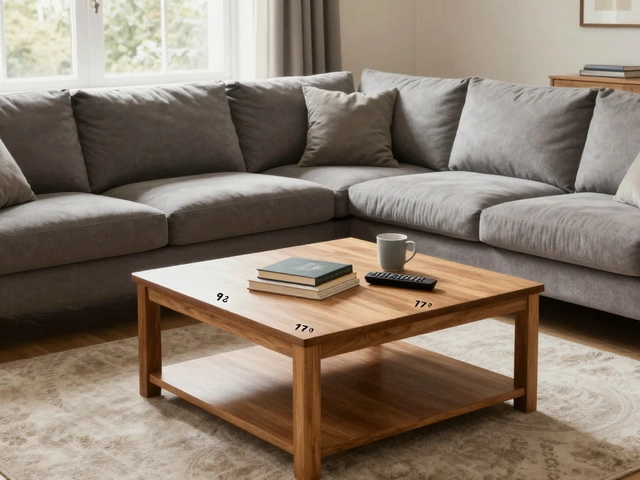
Height matters too. The top of your coffee table should be about the same height as your sofa cushions - give or take an inch. If it’s too tall, you’ll be reaching up to grab your coffee. Too low, and you’ll be bending like you’re tying your shoes every time you set something down. A table that’s 16 to 18 inches tall works for most standard sofas.
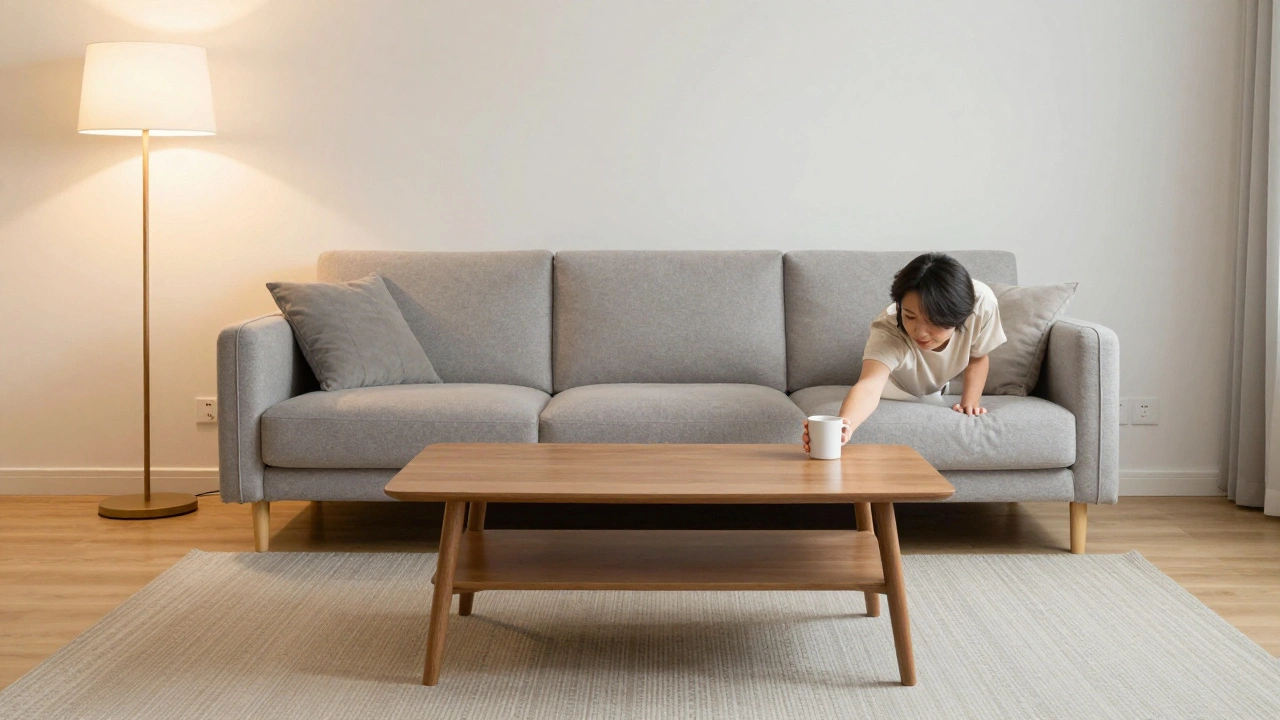
And don’t forget the space around it. You need at least 18 inches of clearance between the coffee table and your sofa or chairs. That’s about the width of a standard footstep. Less than that, and you’ll be constantly bumping knees or tripping over legs. More than 24 inches, and you’ll feel like you’re sitting across the room from your own table.
Why bigger isn’t always better
Big coffee tables are trendy. You see them in magazines, on Instagram, in showrooms. They look sleek. They look expensive. But here’s the truth: they work in about 10% of homes. The rest? They’re just obstacles.
Think about your daily life. Do you sit on the floor with your kids? Do you have pets that dart under furniture? Do you host game nights or movie marathons? A giant table might look great for a single coffee cup on a Sunday morning. But when you’ve got four people, two dogs, three remote controls, and a bowl of popcorn, that table becomes a bottleneck.
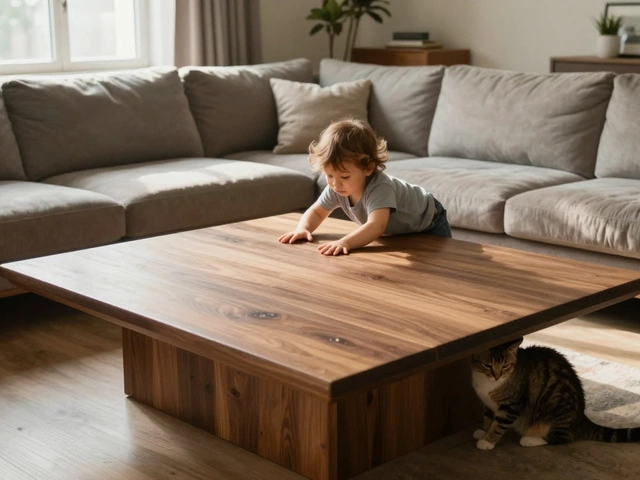
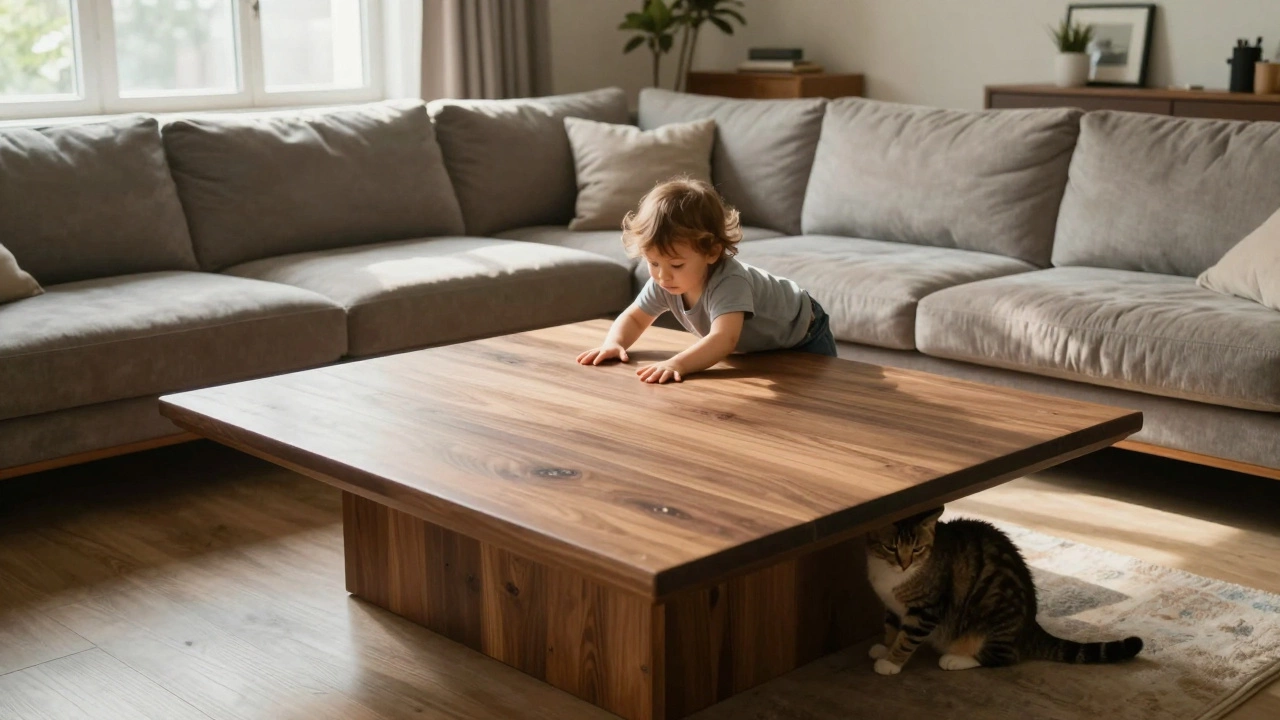
One client in Auckland had a 72-inch walnut coffee table - gorgeous, heavy, handcrafted. But their L-shaped sectional was only 68 inches long. The table overhung on both sides. Their toddler kept bumping into it. Their cat got stuck between the table and the sofa. They ended up moving it to the side and using a small round tray instead. The room suddenly felt 30% more open.
Size isn’t just about measurements. It’s about rhythm. A room should breathe. Furniture should invite movement, not block it. A coffee table that’s too big doesn’t just take up floor space - it steals energy from the whole room.
When a big table actually works
Let’s be fair: there are times when a large coffee table makes sense.
If you have a massive, open-plan living area - think 400 square feet or more - and a long, low sectional, then a bigger table can anchor the space. It can tie together seating zones and create a visual anchor. A 78-inch table in a room that’s 20 feet wide? That’s fine. A 78-inch table in a 12-foot-wide room? That’s a traffic jam.
Also, if your coffee table doubles as a dining surface - say, you work from the couch, or you have a family that eats dinner on the floor - then extra surface area is useful. But even then, you need room to move. A 60-inch table with 20 inches of clearance on all sides? That’s workable. A 72-inch table with only 12 inches of space? You’re just asking for spilled drinks and sore shins.
Another exception: low-profile, open designs. A glass-top table or one with thin legs can feel less heavy, even if it’s large. It doesn’t block sightlines. It lets light pass through. It doesn’t make the room feel smaller. So size isn’t the only factor - shape and material matter too.
How to test if your table is too big
Here’s a simple trick: stand up. Walk around your living room like you normally would - from the sofa to the TV, from the chair to the side table, to the door. Now imagine someone carrying a tray of drinks, or your kid running with a toy, or your dog darting to the window.
If you find yourself hesitating - if you have to adjust your path, if you feel like you’re navigating a minefield - then your coffee table is too big.
Another test: try to fit a standard-sized rug under your seating area. Most living room rugs are 8x10 or 9x12. If your coffee table hangs off the edge of the rug by more than 12 inches on any side, it’s visually unbalanced. That’s a red flag.
And here’s one more: sit on your sofa and reach for the table. Can you grab your mug without leaning forward? Can you put your feet up without hitting the edge? If the answer is no, you’re fighting with your furniture.

What to do if your coffee table is too big
Don’t panic. You don’t have to buy a new one.
First, try moving it. Shift it a few inches forward or backward. Sometimes, just a small adjustment creates breathing room. Try angling it slightly - not centered, but offset. It changes the whole feel.
Second, use it differently. If it’s too wide, don’t use the whole surface. Clear everything off except one lamp, one book, one plant. Let it breathe. A minimalist approach makes even a large table feel intentional, not overwhelming.
Third, consider a smaller secondary table. A narrow side table or a round ottoman beside the sofa can handle overflow items. It gives you flexibility. And it keeps the main table from being a dumping ground.
Finally, if all else fails - swap it out. A 50-inch table is far more versatile than a 72-inch one. And you’ll be amazed how much more comfortable your room feels.
Final thought: furniture should serve you, not the other way around
There’s no magic number for coffee table size. It depends on your room, your lifestyle, your habits. But the principle is the same: don’t let aesthetics override function. A beautiful table that blocks your path isn’t beautiful - it’s a nuisance.
Choose a table that fits your life, not your Pinterest board. You’ll thank yourself every time you grab a drink, sit down for a movie, or just walk across the room without thinking about it.
Can a coffee table be too big for a small living room?
Yes, absolutely. In small living rooms - under 200 square feet - a coffee table larger than 48 inches will dominate the space and make it feel cramped. Stick to tables under 40 inches wide and keep at least 20 inches of clearance on all sides. Low-profile designs and glass tops help maintain openness.
What’s the best shape for a large coffee table?
For large spaces, oval or rectangular tables work best because they follow the natural lines of a sofa. Round tables can feel too small in big rooms and may not anchor the seating properly. But if you have a lot of foot traffic, a round table reduces the risk of bumping into sharp corners - especially with kids or pets.
Is it okay to have two coffee tables?
Yes, and it’s often smarter. In L-shaped or U-shaped seating areas, two smaller tables (like one at each end) create balance and flexibility. One can hold drinks, the other books or decor. It prevents clutter and keeps movement clear. Just make sure they’re similar in height and style.
Does the material of the coffee table affect how big it should be?
Yes. Heavy materials like solid wood or stone can make a table feel even larger visually, even if it’s the same size as a lighter one. Glass, acrylic, or tables with thin legs create the illusion of space. So if you have a smaller room, go for a larger table in glass rather than a smaller one in solid oak.
How do I measure my living room for the right coffee table size?
Measure the length of your sofa, then take two-thirds of that number - that’s your ideal table length. Then, measure the distance from the sofa to the nearest wall or other furniture. You need at least 18 inches of walking space. If that space is less than 18 inches, go smaller. Always test with tape on the floor before buying.