What Is a Kakebuton? The Japanese Secret to Comfortable Sofa Beds
Kakebuton Size Calculator
Find Your Perfect Kakebuton Size
Measure your sofa bed mattress and find out if it matches standard kakebuton dimensions.
Your Sofa Bed Measurements
Results
A kakebuton isn’t just another throw pillow or mattress pad. It’s a traditional Japanese cushion designed to transform any flat surface into a comfortable sleeping spot - especially when used with a sofa bed or tatami floor. If you’ve ever slept on a Japanese-style futon or noticed how effortlessly people in Japan turn their living room into a bedroom, you’ve seen the kakebuton in action. But what exactly is it, and why does it matter today?
What Exactly Is a Kakebuton?
The word kakebuton (掛け布団) breaks down into two parts: kake (掛ける) meaning "to hang" or "to lay over," and buton (布団) meaning "bedding." So literally, it’s a "covering quilt" or "top mattress." Unlike Western mattresses that sit on frames, the kakebuton is a thin, padded layer placed on top of a base - whether that’s a tatami mat, a low platform, or even a sofa bed frame.
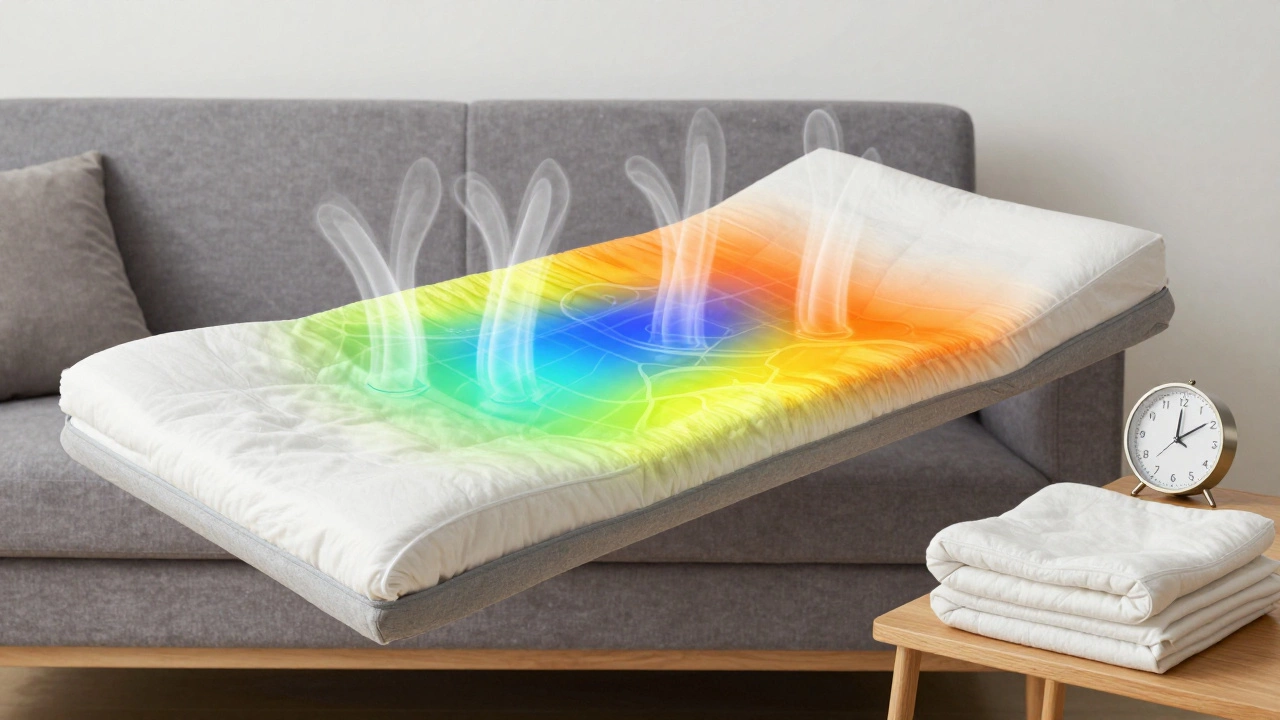
It’s typically made from cotton or synthetic fibers, quilted in a simple grid pattern, and filled with a lightweight, breathable material like polyester batting or cotton wadding. It’s not meant to be thick - usually between 2 to 4 centimeters - because its job isn’t to support your spine like a memory foam mattress. Instead, it adds just enough cushioning to make hard surfaces comfortable without trapping heat.
One of its defining features? It’s designed to be folded, rolled, or stored away easily. No bulky box springs. No heavy frames. Just slip it on when you need it, tuck it into a closet when you don’t.
How It Works With Sofa Beds
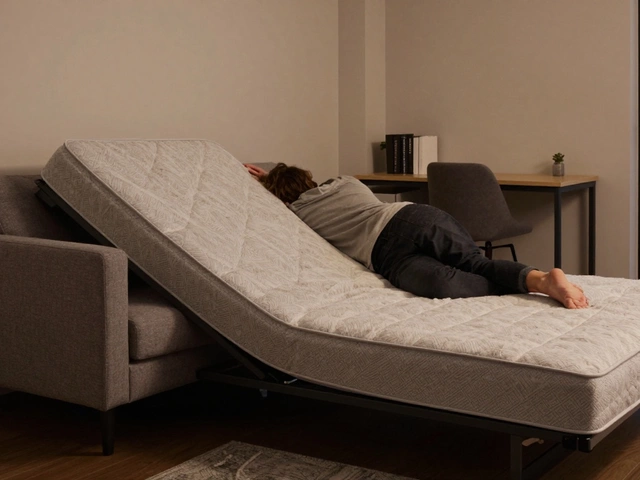
If you own a sofa bed, you know the struggle: the mattress is either too thin, too stiff, or too hot. A kakebuton solves this by acting as a comfort layer on top of your existing sofa bed mattress. Place it over the mattress before sleeping, and suddenly, you’re not lying on a thin foam pad with metal bars underneath. You’re resting on a soft, breathable surface that moves with your body.
Unlike Western mattress toppers that add inches of foam, the kakebuton stays flat and light. It doesn’t make the sofa harder to fold back into a couch. It doesn’t trap sweat. And because it’s so thin, it won’t interfere with the sofa’s mechanism. In fact, many Japanese households use sofa beds with kakebutons because they’re ideal for small spaces - combining living room and bedroom function without sacrificing comfort.
In Auckland apartments, where space is tight and multi-function furniture is common, this setup is gaining traction. People who live in one-bedroom units or studio flats are discovering that a kakebuton turns their day sofa into a genuinely restful night bed - without buying a new mattress.
Why It’s Better Than a Regular Mattress Topper
Most mattress toppers sold in New Zealand or the U.S. are made of memory foam, latex, or gel-infused foam. They’re marketed as "luxury upgrades," but they often come with downsides: they retain heat, they’re heavy, and they can sag over time. A kakebuton doesn’t have those problems.
- Lightweight: You can lift and store it with one hand.
- Breathable: Cotton and polyester fillings allow air to flow, keeping you cooler.
- Durable: No foam to break down - just a stitched quilt that lasts for years.
- Easy to clean: Most come with removable, machine-washable covers.
- Non-slip: The flat, quilted design stays put on smooth surfaces.
It’s not about adding thickness - it’s about adding comfort without bulk. Think of it like a high-quality blanket, but with padding built in. And because it’s so simple, there’s no gimmick. No electric heating. No adjustable firmness settings. Just pure, functional design.
Where It Comes From - And Why It’s Still Used Today
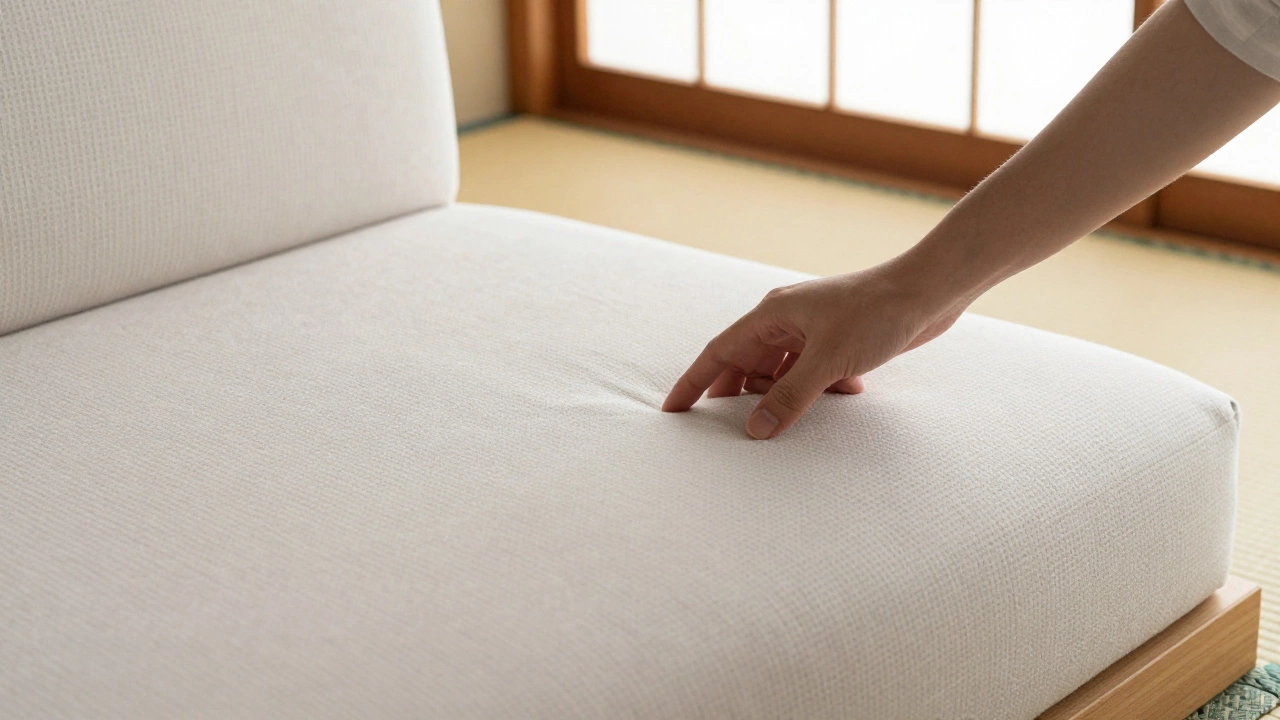
The kakebuton evolved from centuries of Japanese sleeping traditions. In traditional homes, people slept on tatami mats - woven rice straw floors that are firm, clean, and naturally cool. To sleep comfortably, they used two layers: a shikibuton (a thin under-mattress) and a kakebuton (the top quilt). This system worked because it was adaptable, space-efficient, and suited to Japan’s climate - warm summers, chilly winters, and humid conditions.
Today, even in modern Japanese apartments, many people still use this system. Why? Because it’s practical. It lets them clear the floor in the morning, store bedding neatly, and avoid the clutter of permanent beds. It also reduces mold risk - unlike Western beds that trap moisture underneath, the kakebuton and shikibuton are aired out daily.
Western designers are starting to notice. Companies like Muji and IKEA now offer similar products labeled as "Japanese-style mattress overlays." But true kakebutons - made with traditional quilting, natural fillings, and removable covers - are still mostly imported from Japan.
How to Use a Kakebuton on Your Sofa Bed
Using a kakebuton is simple, but there are a few tips to get the most out of it:
- Choose the right size: Match it to your sofa bed mattress. Standard sizes are 140cm x 200cm (twin) or 160cm x 200cm (full). Measure your mattress before buying.
- Place it flat: Lay it directly on top of the sofa bed mattress. Don’t fold or bunch it - it works best when flat.
- Use a fitted sheet: Put a fitted sheet over the kakebuton to keep it clean and secure. It won’t slip if you do this.
- Air it out: Every morning, fold the kakebuton and leave it on a chair or shelf for an hour. This prevents moisture buildup.
- Wash the cover: Most kakebutons have zip-off covers. Wash them every 2-4 weeks in cold water and air dry.
Pro tip: If your sofa bed mattress feels too firm, try layering two kakebutons - one on top of the other. It won’t add bulk, but it will soften the surface noticeably.
Where to Buy One
True kakebutons aren’t commonly found in big-box stores. You’ll usually find them through:
- Japanese home goods retailers: Muji, Nitori, and online shops like Rakuten or Japanican.
- Etsy sellers: Many artisans make handmade kakebutons using traditional techniques.
- Specialty bedding stores: Some New Zealand and Australian shops that focus on minimalist or Japanese design carry them.
Expect to pay between NZ$80 and NZ$150 for a quality kakebuton. Cheaper ones (under $50) often use low-density polyester that flattens quickly. Invest in one with a cotton cover and double-stitched seams - it’ll last 5-10 years with care.
Who Benefits Most From a Kakebuton?
You’ll love a kakebuton if:
- You live in a small apartment or studio.
- You use a sofa bed regularly and hate how stiff it feels.
- You sleep hot and want something cooler than memory foam.
- You like the idea of decluttering your bedroom at night.
- You value simple, long-lasting design over flashy features.
If you’re someone who buys a new mattress every few years because yours feels uncomfortable, a kakebuton might be the cheapest, smartest upgrade you’ve never considered.
Common Myths About Kakebutons
There’s a lot of confusion around them. Here’s the truth:
- Myth: "It’s just a blanket."
Truth: It’s a structured, quilted cushion with consistent thickness - not a loose blanket. - Myth: "You need a tatami floor to use it."
Truth: It works perfectly on foam, spring, or memory foam mattresses. - Myth: "It’s too thin to be comfortable."
Truth: Thin doesn’t mean useless. It’s designed to complement, not replace, your base mattress. - Myth: "It’s only for Japanese homes."
Truth: It’s ideal for any space where you need flexibility, comfort, and simplicity.
Can I use a kakebuton on a regular bed?
Yes, but it’s not necessary. A kakebuton is designed for firm surfaces like sofa beds or tatami mats. On a traditional bed with a thick mattress, it adds minimal comfort and might feel redundant. It’s best used where the base mattress is thin or firm.
Is a kakebuton the same as a futon?
No. A futon (shikibuton) is the bottom layer - a thin mattress that goes directly on the floor or platform. The kakebuton is the top layer - the quilted blanket that goes over it. Together, they form a complete sleeping system. In Western terms, think of the shikibuton as the mattress and the kakebuton as the topper.
Do I need a special cover for my kakebuton?
Not necessarily, but it’s highly recommended. Most kakebutons come with a removable, washable cover. If yours doesn’t, you can buy a standard fitted sheet in the same size. A cover protects it from sweat, dust, and spills - and makes cleaning easier.
Can I machine wash a kakebuton?
Only the cover - not the inner padding. Most kakebutons have zip-off cotton covers that can be washed in cold water and air-dried. The inner quilt should be spot-cleaned or aired out. Never put the whole thing in the washer - it can damage the stitching and clump the filling.
Why don’t more people use kakebutons in New Zealand?
Most people haven’t heard of them. Western bedding culture focuses on thick mattresses and heavy toppers. The kakebuton’s minimalist, space-saving design doesn’t fit the typical marketing narrative. But as more Kiwis live in small urban homes and adopt minimalist lifestyles, interest is growing - especially among renters and apartment dwellers.
Final Thought
The kakebuton isn’t a trend. It’s a solution - quiet, smart, and deeply practical. If your sofa bed feels like a compromise, it might not be the mattress’s fault. It might just need a layer of thoughtful design. Sometimes, comfort doesn’t come from more padding. It comes from less clutter - and a simple, well-made cushion that does exactly what it’s supposed to.