Should You Spend a Lot of Money on a Sofa? Real Talk on Value, Comfort, and Long-Term Use

Sofa Value Calculator
Calculate Your Sofa Investment Value
Determine if expensive sofas are worth it based on your lifestyle and usage. Input your scenario to see annual cost comparisons.
Results
How much should you really spend on a sofa? It’s not just about style or color - it’s about how long it’ll last, how it feels after years of use, and whether you’ll still love it when your kids are jumping on it or your dog is sleeping in the same spot every night. In Auckland, where winters are damp and living rooms double as play zones, a cheap sofa doesn’t just wear out - it collapses. And replacing it every two years? That’s not saving money. That’s throwing it away.
What Makes a Sofa Worth the Price?
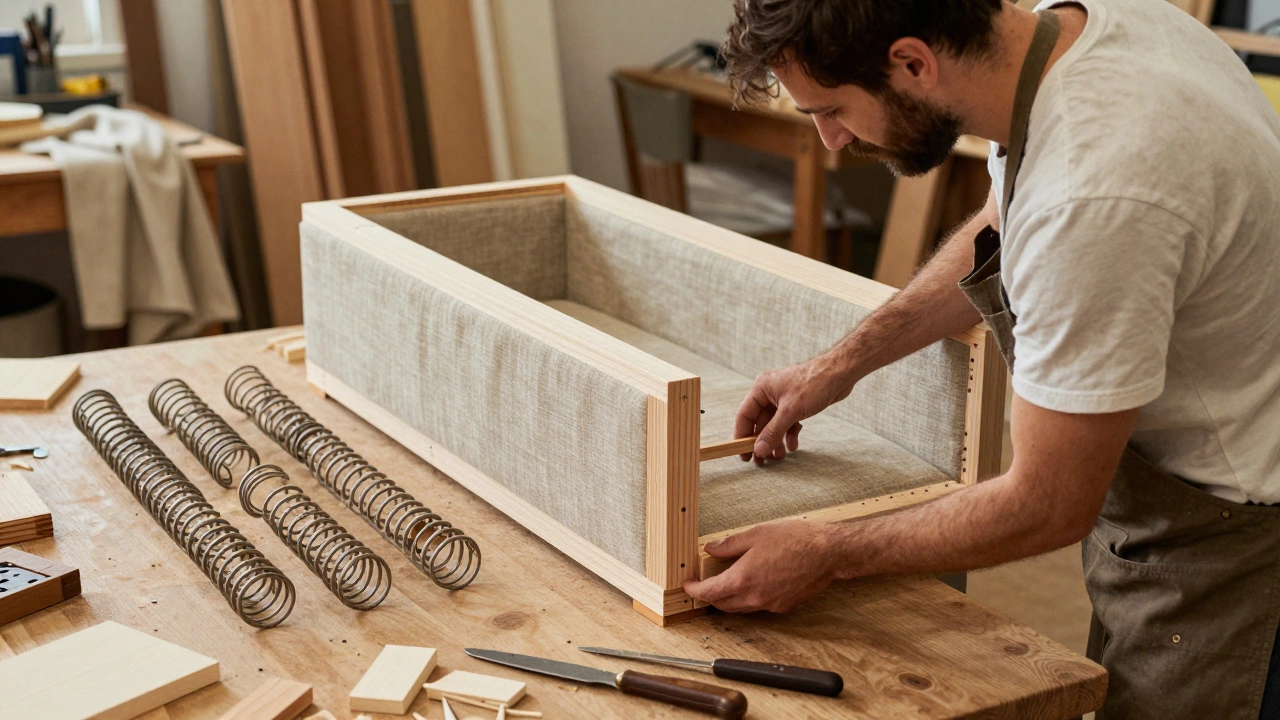
A sofa isn’t just cushions and fabric. The real value is in what’s hidden underneath. Look at the frame. A good frame is made of kiln-dried hardwood - not particleboard or softwood glued together. It should feel solid, not wobbly, when you push on the arms. Cheap sofas use staples or nails to hold the frame together. Quality ones use dowels, screws, and corner blocks. You can’t see this in the store, but you’ll feel it after six months.
The springs matter too. Eight-way hand-tied springs are the gold standard. They flex evenly, don’t sag, and last 15-20 years. If you hear a spring squeak or feel uneven lumps after a year, you got a budget frame with sinuous springs - the kind that flatten out fast. Foam density is another clue. High-density foam (2.5-3.0 lb/ft³) holds shape. Low-density foam (1.5 lb/ft³) turns to mush. Ask for the foam density. Most stores won’t tell you unless you ask.
Why People Regret Buying Cheap Sofas
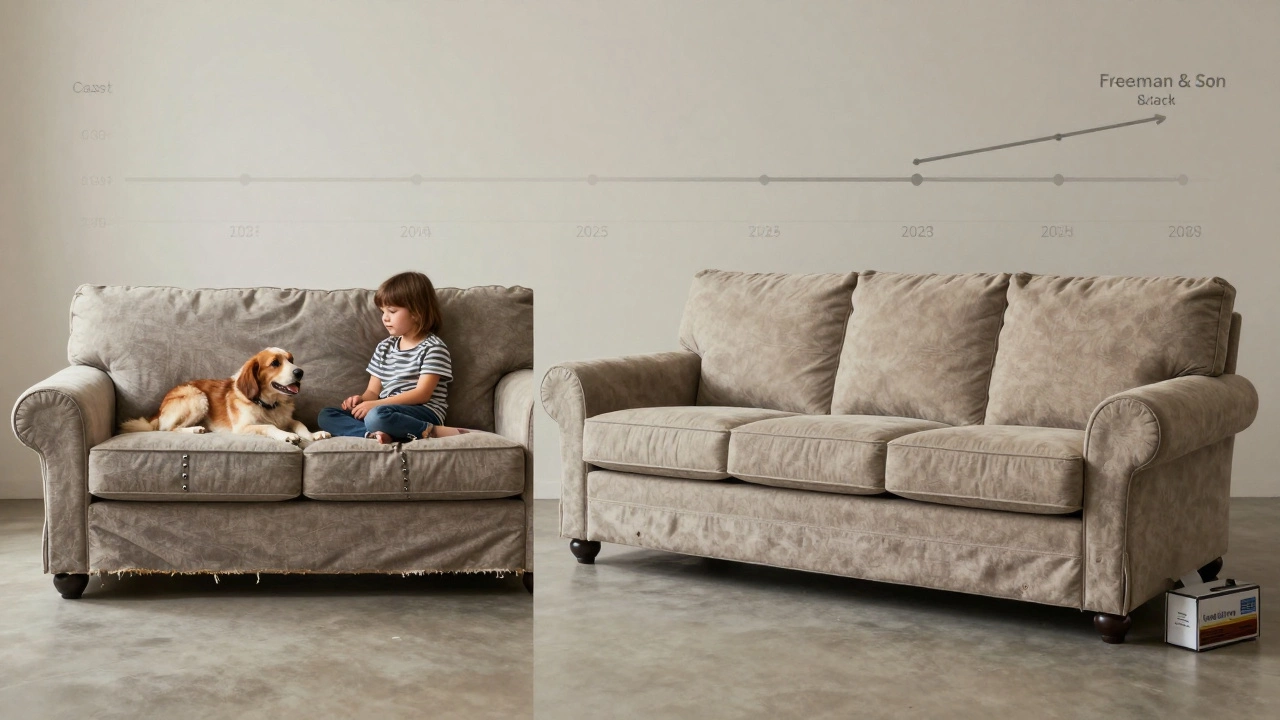
Think about it: a $500 sofa sounds like a steal. But if it starts sinking in six months, stains easily, and looks tired by year two, you’re paying $250 a year just to sit on it. Multiply that by five years - that’s $1,250. Now compare it to a $2,000 sofa that still looks and feels new after ten years. That’s $200 a year. The math doesn’t lie.
Real stories from Auckland homes tell the same tale. A family bought a $400 sofa from a big-box store. Their toddler spilled juice on it weekly. Within 18 months, the fabric was stained, the cushions were flat, and the frame had started to creak. They replaced it with a $1,800 sectional from a local maker. Ten years later? Still comfortable. Still clean. Still used every day.
Low-cost sofas often use synthetic fabrics that pill, fade, or attract pet hair. Natural fibers like linen or cotton blend hold up better. Leather? It’s expensive upfront but ages beautifully. A top-grain leather sofa can last 25+ years if cared for. That’s not just furniture - it’s a long-term asset.
When a High-End Sofa Makes Sense
Not everyone needs a $4,000 sofa. But if you’re planning to stay in your home for more than five years, if you have kids or pets, or if you entertain often - then spending more isn’t luxury. It’s smart. You’re buying durability. You’re buying comfort that doesn’t require constant re-plumping. You’re buying peace of mind.
Here’s a simple rule: if you sit on your sofa for more than an hour a day, you should spend at least $1,200. If you’re a family of four with two dogs and a toddler? Go for $1,800-$2,500. That’s not extravagant. That’s practical. A sofa in this range usually comes with removable, washable covers, high-resilience foam, and a warranty that covers frame and springs for 10 years or more.
Some brands in New Zealand - like Freeman & Son a Wellington-based furniture maker known for handcrafted hardwood frames and natural fabrics - build sofas that are designed to be repaired. Need new cushions? Send them back. A worn cover? Swap it out. This isn’t just sustainable - it’s economical.
What You Can Skip
You don’t need a sofa with built-in USB ports, massage functions, or 12 cushion options. These are gimmicks. They add cost without adding value. What you do need: a solid frame, good springs, high-density foam, and a fabric that resists stains and wear.
Don’t fall for “luxury” labels. A brand name doesn’t mean quality. A $3,000 sofa from a designer chain might use the same frame as a $1,400 one from a local workshop. The difference? Marketing. Ask where it’s made. Who built it? Can you see the inside? If the answer is no, you’re paying for the logo.
Also skip “matching sets.” A sofa, loveseat, and chair from the same collection might look neat, but they’re often made with the same low-grade materials. Buy the sofa first. Then find a chair that fits. You’ll save money and get better quality.
How to Test a Sofa Before You Buy
Don’t just sit on it. Test it like you’re going to live with it for a decade.
- Press into the cushions. Do they spring back slowly? That’s good. Do they stay flat? That’s bad.
- Lean back. Does the backrest feel supportive? Or does it collapse like a beanbag?
- Push down on the arms. If the frame shifts or creaks, walk away.
- Ask for the foam density and frame material. If they don’t know, they’re not selling quality.
- Check the warranty. A 10-year frame warranty is standard for good sofas. Anything less? Red flag.
Try sitting on it for at least 10 minutes. Lie down. Cross your legs. Pretend you’re watching TV after work. If it feels good now, it’ll feel better in five years - if the build is solid.
Alternatives to a New Sofa
Not ready to spend $2,000? You don’t have to. Consider a high-quality secondhand sofa. Many people upgrade every 5-7 years and sell theirs in great condition. Facebook Marketplace, Trade Me, or local thrift stores often have sofas with solid frames and fresh covers. You can reupholster one for $300-$500 and get a custom look.
Or rent. Companies like Rent-a-Sofa a New Zealand-based furniture rental service offering high-end sofas with flexible terms let you rent a premium sofa for $80-$120/month. After 18 months, you own it. No upfront cost. No risk. Great if you’re not sure you’ll stay in the house.
The Bottom Line
You don’t need to spend a fortune. But you shouldn’t treat a sofa like a disposable item. The cheapest option costs more over time. The smartest choice is one that fits your life - not your budget alone.
If you’re in a rental? Spend $800-$1,200 on a durable sofa with removable covers. If you own your home? Go for $1,500-$2,500. You’ll sleep better, sit better, and save money in the long run.
Think of it this way: a sofa is the one piece of furniture you sit on every day. It’s the anchor of your living room. It’s where you unwind, laugh, cry, and nap. It deserves more than a bargain.
Is it worth spending $2,000 on a sofa if I only plan to live in my home for three years?
If you’re only staying three years, spending $2,000 isn’t the best move. Instead, aim for $1,000-$1,400 on a solid, simple sofa with a removable cover. You’ll get quality without overpaying for longevity. When you move, you can sell it or donate it - and still come out ahead compared to replacing a cheap sofa twice.
What’s the best fabric for a sofa with pets?
Microfiber and performance fabrics (like Crypton or Sunbrella) are the top choices. They resist stains, don’t hold pet hair, and are easy to clean with a damp cloth. Avoid velvet, linen, or light-colored cotton - they show every mark. Dark gray or charcoal is the most forgiving color for homes with dogs or cats.
Do expensive sofas come with better warranties?
Yes, and it’s one of the best indicators of quality. A good sofa offers a 10-year warranty on the frame and springs, and 3-5 years on the cushions and fabric. Budget sofas often have 1-year warranties - meaning they expect you to replace it quickly. Always read the fine print. If the warranty doesn’t cover structural damage, it’s not worth much.
Can I fix a sagging sofa instead of replacing it?
Sometimes. If the frame is still solid, you can replace the cushions and reupholster the sofa for $500-$800. That’s about half the cost of a new one. But if the springs are broken or the frame is warped, it’s not worth fixing. A sofa that’s more than 8-10 years old usually isn’t worth the repair cost unless it’s handmade or has sentimental value.
Are there any New Zealand-made sofas that offer good value?
Yes. Brands like Freeman & Son, The Sofa Company, and Loom build sofas in Auckland and Wellington using local timber and fabrics. They offer transparent pricing, repair services, and 10-year warranties. You’re paying for craftsmanship, not import markup. And because they’re made here, delivery is faster and returns are easier.