Best Accent Chair Colors for Gray Couches: A Styling Guide
Gray Couch Accent Chair Styler
Identify your gray couch's undertone and discover recommended accent chair colors that create depth, warmth, and personality.
Hold a pure white paper next to your couch cushion in natural light. Does the gray look bluish/greenish (Cool) or brownish/yellowish (Warm)?
Visual Reference: The swatch above changes to reflect the tone you selected.
Recommendation
Best Material:
Risk Factor:
You have that sleek gray couch sitting in the middle of your living room. It’s modern, it’s safe, and it matches almost everything. But right now? It probably feels a bit like a blank canvas waiting for someone to actually pick up a brush. You’re staring at a showroom catalog or scrolling through Pinterest, wondering which accent chair color will make the space pop without looking like you just threw a random object into the mix.
Here is the truth: gray is not boring. It is neutral. And neutrals are the hardest thing to style because they offer no direction. If you pick the wrong accent chair, your room looks sterile or chaotic. If you pick the right one, you create depth, warmth, and personality. I’ve helped dozens of friends in Auckland figure this out, often dealing with that specific Kiwi light that makes cool grays look even cooler-and sometimes colder-than intended.
Why Your Gray Couch Needs an Accent
A gray sofa is a chameleon. It changes based on what sits next to it. Without a strong accent piece, the eye has nowhere to rest. You need contrast. This isn’t about matching; it’s about complementing. Think of your couch as the bassline in a song. It holds things together, but it needs a melody-the accent chair-to make people want to listen.
The biggest mistake people make is choosing a chair that is too similar in tone to the couch. If you have a charcoal gray sectional and you buy a dark slate blue armchair, they blend into a muddy blob. You want separation. You want the chair to stand on its own while still feeling like part of the family.
The Color Wheel Is Your Best Friend (But Not How You Think)
You don’t need a degree in art theory to get this right. Just remember three simple rules for pairing colors with gray:
- Complementary Colors: These sit opposite each other on the wheel. For gray, think warm tones if your gray is cool, or vice versa.
- Analogous Colors: These sit next to each other. They create harmony but can feel flat if not textured properly.
- Monochromatic with Texture: Same color family, different materials. This is subtle but effective.
Most gray couches fall into two categories: Cool Grays (blue, green, or purple undertones) and Warm Grays (brown, beige, or yellow undertones). Identifying yours is step one. Hold a pure white piece of paper next to your cushion. Does the gray look bluish? Cool. Brownish? Warm. This distinction changes everything.
Top Picks for Cool Gray Couches
If your couch has blue or green undertones-which is common in modern homes with north-facing windows-you need warmth to balance the temperature. A cold gray room with a cold blue chair feels like a dentist’s office. Let’s fix that.
| Chair Color | Vibe Created | Best Material | Risk Factor |
|---|---|---|---|
| Cognac Leather | Classic, Masculine, Warm | Full-grain leather | Low - Hard to mess up |
| Mustard Yellow | Bold, Energetic, Modern | Velvet or Wool | Medium - Can look cheap if shiny |
| Terracotta | Earthy, Soft, Trendy | Linen or Cotton | Low - Very forgiving |
| Emerald Green | Luxurious, Deep, Calm | Velvet | Medium - Needs good lighting |
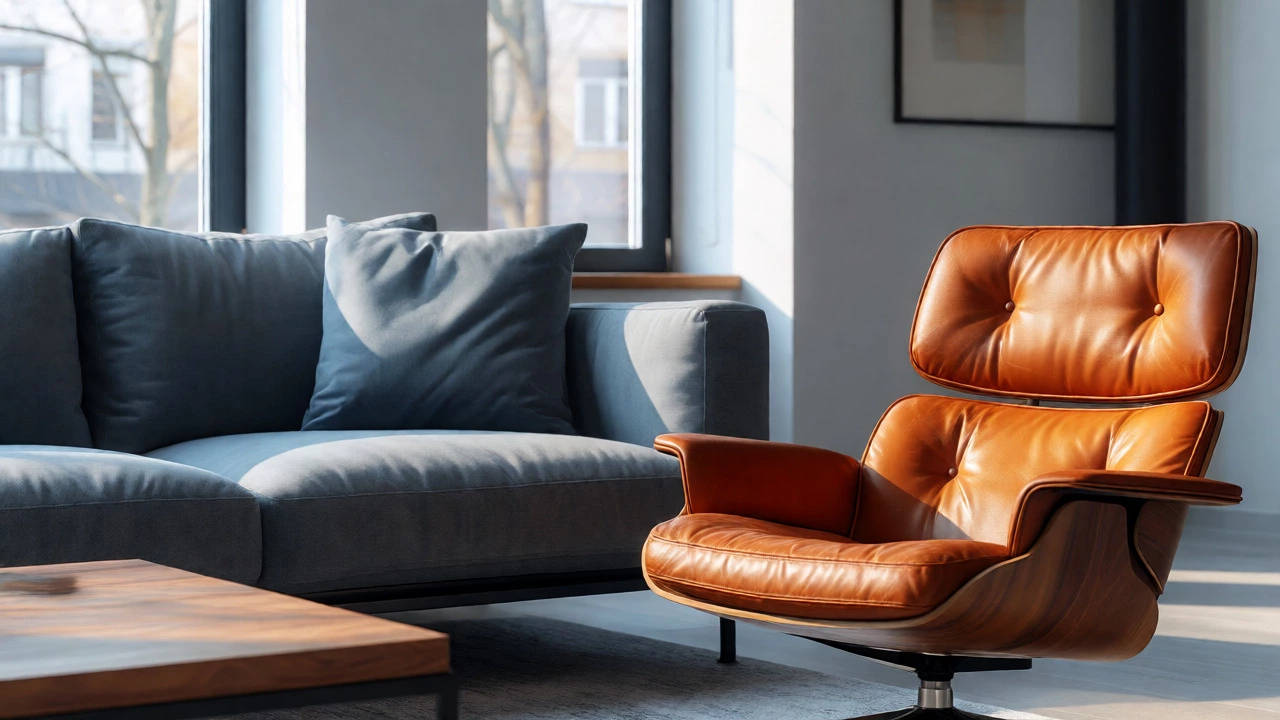
Cognac leather is the gold standard here. Why? Because the orange-brown hue directly complements the blue undertones in cool gray. It adds instant richness. Imagine a mid-century modern gray sofa paired with a tan leather lounge chair. It works in a loft, a suburban home, or a beach house. It ages well, too. Scratches add character rather than damage.
If you want something less traditional, go for mustard yellow. It’s high energy. But be careful: avoid neon yellows. You want a deep, saturated mustard, almost ochre. Pair it with wood tones in your coffee table to ground the brightness. If you shy away from bold, try terracotta. It’s softer, more muted, and brings a natural earthiness that softens the industrial feel of gray fabric.
Best Choices for Warm Gray Couches
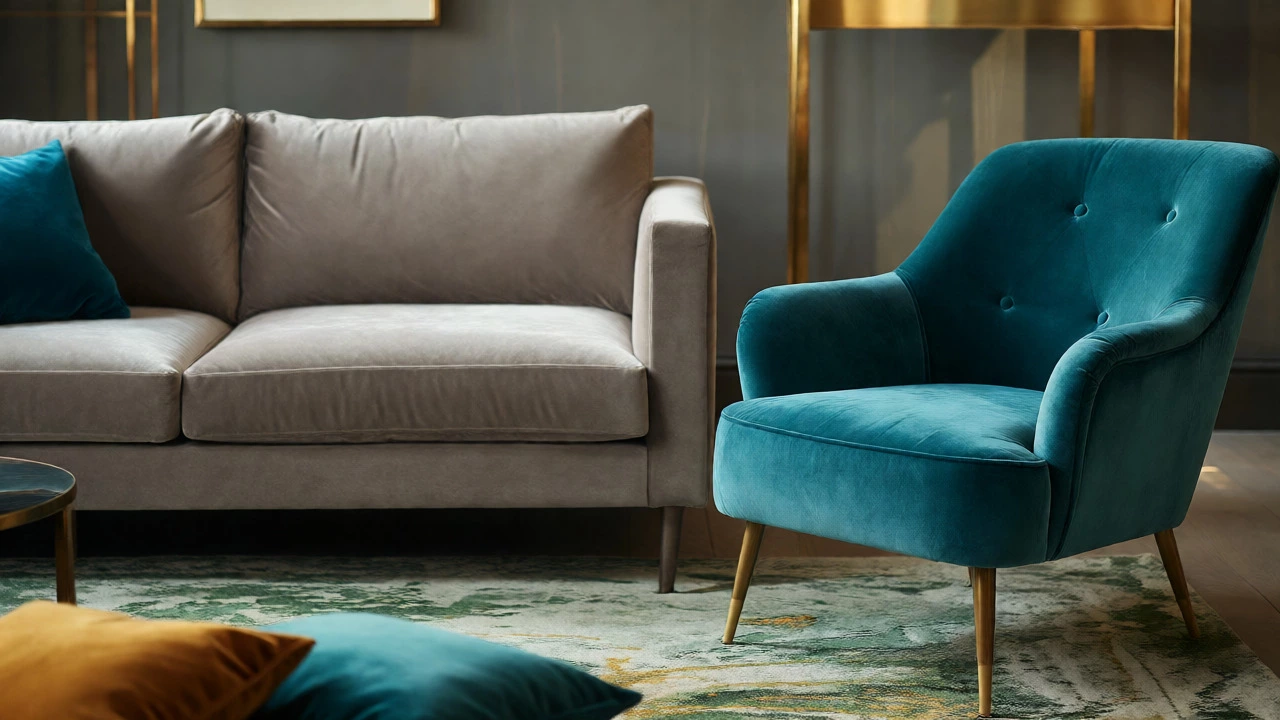
Warm grays (often called greige) are trickier because they already have some brown in them. Adding more brown can make the room look dated or overly rustic unless done carefully. Instead, lean into cooler tones or rich jewel tones to create contrast.
- Navy Blue: Creates a sophisticated, nautical, or preppy vibe. Works beautifully with brass accents.
- Slate Blue: Subtler than navy. Good for smaller rooms where you don’t want visual weight.
- Teal or Turquoise: Adds a splash of coastal freshness. Great for brightening up a dim corner.
- Black: Yes, black. With a warm gray couch, a matte black chair creates sharp, graphic contrast. It’s modern and edgy.
I recently styled a client’s lounge in Ponsonby with a warm taupe-gray sofa. We added a velvet teal accent chair. The result was stunning. The teal pulled out the hidden green notes in the rug, and the gray kept it from feeling like a tropical resort. It felt curated, not costumed.
Texture Matters More Than Color Sometimes
Let’s say you’re afraid of color. You want to stay neutral. That’s fine. But do not buy another gray chair in the same fabric as your couch. You’ll end up with a monochrome disaster that looks like a waiting room.
Instead, play with texture. Here is how to make a neutral accent chair work:
- Contrast the Finish: If your couch is matte fabric, choose a chair with sheen. Velvet, silk, or polished leather reflect light differently.
- Change the Weight: A heavy linen couch pairs well with a light, airy rattan or cane-back chair. This prevents the seating area from looking too heavy.
- Mix Patterns: A solid gray couch allows you to use a patterned chair. Try geometric prints, florals, or animal hides. Just ensure the pattern contains at least one color that echoes the couch or the rug.
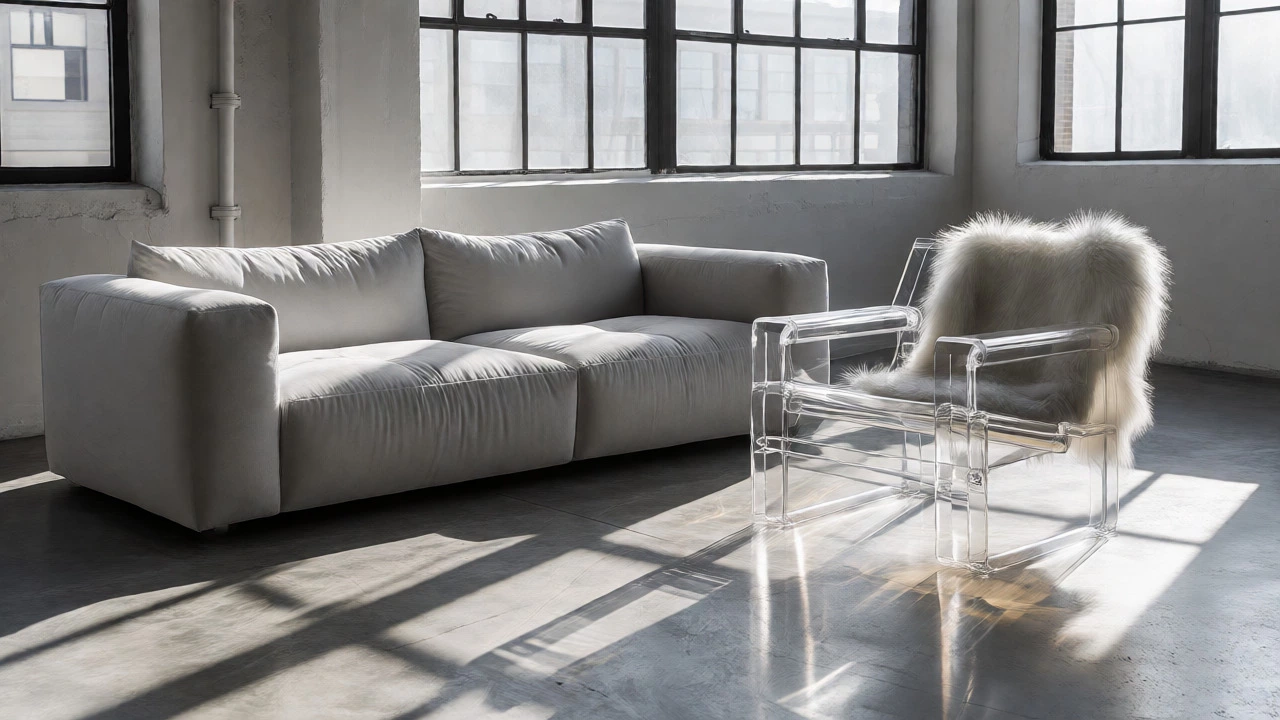
For example, a gray boucle couch looks incredible with a black-and-white striped chair. The stripes break up the roundness of the boucle. Or try a gray microfiber sofa with a faux fur throw draped over a clear acrylic chair. The transparency of the acrylic keeps the space open, while the fur adds cozy volume.
Common Mistakes to Avoid
We all make them. Here are the traps I see most often when people try to accessorize a gray couch.
The "Safe" Beige Trap: Buying a beige chair because it’s neutral. Unless it’s a very distinct shade of beige (like oatmeal vs. cream), it will just look like a dirty version of your couch. There is no visual interest.
Ignoring Scale: A massive oversized armchair next to a compact loveseat overwhelms the space. Conversely, a tiny side chair next to a huge sectional looks insignificant. Measure your space. If your couch is large, go for a substantial chair. If your couch is small, keep the chair delicate.
Matching Metals: If your lamp base is silver, don’t put a gold-legged chair right next to it unless you’re intentionally mixing metals. Generally, stick to one metal finish per zone. If you have chrome legs on your couch, a chair with black or silver legs flows better than one with bright gold.
How to Test Before You Buy
Never buy an accent chair online without seeing the color in your actual light. Screens lie. Paint chips are okay, but fabric swatches are better.
Ask stores for fabric samples. Many places will mail them to you for free or a small fee. Take these samples home. Put them on your couch. Look at them in the morning, at noon, and under artificial light at night. In Auckland, our weather changes fast. One minute it’s sunny, the next it’s overcast. See how the gray couch looks against the chair sample in both conditions. Does the chair disappear in low light? Does it clash in sunlight?
Also, consider the surrounding elements. Your accent chair doesn’t live in a vacuum. It interacts with your rug, your curtains, and your wall color. If your walls are stark white, a dark chair pops. If your walls are dark gray, a light chair provides necessary lift. Map out the whole room before committing to the chair alone.
Real-World Scenarios
Let’s look at three common living room setups and how to solve them.
Scenario 1: The Small Apartment You have a small gray loveseat and limited floor space. You want the room to feel bigger. Solution: Choose a transparent or light-colored chair. Acrylic, lucite, or a pale pink velvet wingback. These materials let light pass through or reflect it, making the footprint feel lighter. Avoid bulky, dark leather chairs that eat up visual space.
Scenario 2: The Family Home You have kids and pets. Your gray couch is durable performance fabric. You need a chair that hides stains but adds style. Solution: Go for a patterned chair in darker tones. A floral print with deep greens and blues, or a geometric print in charcoal and white. Patterns hide crumbs and spills better than solids. Plus, the pattern distracts the eye from minor wear and tear on the couch.
Scenario 3: The Minimalist Loft Concrete floors, big windows, industrial vibe. Gray sectional is the anchor. Solution: Stick to strict geometry and monochrome textures. A black steel-framed chair with gray upholstery, or a white molded plastic chair. Keep lines clean. No frills, no tassels, no busy patterns. Let the architecture speak, and use the chair to define zones within the open plan.
Final Thoughts on Commitment
Choosing an accent chair is an investment. It’s not just about color; it’s about comfort and longevity. Pick a shape you actually like sitting in. A beautiful chair that hurts your back is just a sculpture. Once you’ve picked the color, commit to it. Don’t half-heartedly add pillows that match the chair perfectly. Use the chair as the starting point for your accessories. Throw blankets, cushions, and art should echo the chair’s hue subtly, creating a cohesive narrative throughout the room.
Remember, there is no single "right" answer. There is only what makes your space feel like yours. Start with the undertone of your gray, pick a complementary or contrasting color, and test it in your real-world light. You’ll be surprised how quickly a simple chair change transforms the entire mood of your living room.
Can I use multiple accent chairs with different colors?
Yes, but keep it balanced. If you have two accent chairs, try using two shades of the same color family (e.g., light blue and navy) or two complementary colors (e.g., blue and orange) but vary the intensity. Ensure they share a common element, like leg material or shape, to tie them together visually.
What if my gray couch has a pattern?
If your couch has a subtle pattern (like herringbone or tweed), treat it as a solid color for pairing purposes. Pull one dominant color from the pattern for your accent chair. If the couch has a loud, busy pattern, choose a solid-colored accent chair in a neutral tone or a color that appears minimally in the couch pattern to avoid visual clutter.
Is white a good accent color for a gray couch?
White can work, but it requires care. Pure white can look clinical or show dirt easily. Opt for off-white, cream, or ivory instead. To prevent the room from looking washed out, add texture through materials like sheepskin, chunky knit, or linen. White chairs also help brighten dark corners.
How do I know if my gray is warm or cool?
Place a pure white sheet of paper next to the couch cushion in natural daylight. If the gray looks bluish, purplish, or greenish, it is cool-toned. If it looks brownish, yellowish, or reddish, it is warm-toned. Artificial lighting can distort this, so always check during the day.
Should the accent chair match the rug?
Not necessarily. In fact, exact matching can look staged. Aim for coordination. If your rug has hints of rust, a cognac chair ties in nicely. If the rug is neutral, the chair can introduce new color. The goal is harmony, not uniformity. Let the rug anchor the floor, and let the chair elevate the seating area.