What Type of Foundation Repair Is Most Expensive? Costs Explained
Foundation Repair Cost Calculator
Get Your Repair Estimate
Estimated Repair Cost
Recommended method:
Estimated cost:
Important: This is an estimate based on typical Auckland conditions. Actual costs may vary based on site-specific factors. Always get a professional assessment before proceeding.
When your home’s foundation starts to sink, crack, or shift, you don’t just need a fix-you need the right fix. And not all foundation repairs are created equal. Some are quick and affordable. Others? They can cost more than a new car. If you’re wondering what type of foundation repair is most expensive, the answer isn’t just about materials or labor. It’s about how deep the damage goes, what kind of soil you’re dealing with, and how much of your house has to be lifted off the ground to fix it.
The Most Expensive Foundation Repair: Underpinning
Underpinning is the most expensive foundation repair method you can choose. It’s not just a patch job. It’s a full structural overhaul. Think of it like rebuilding the legs of your house while the house is still standing on them. This method is used when the original foundation has failed completely-usually because of poor soil, water damage, or decades of settling. In Auckland, where clay soils expand and contract with rain and drought, underpinning is often the only option for homes built before 1980 with shallow footings.
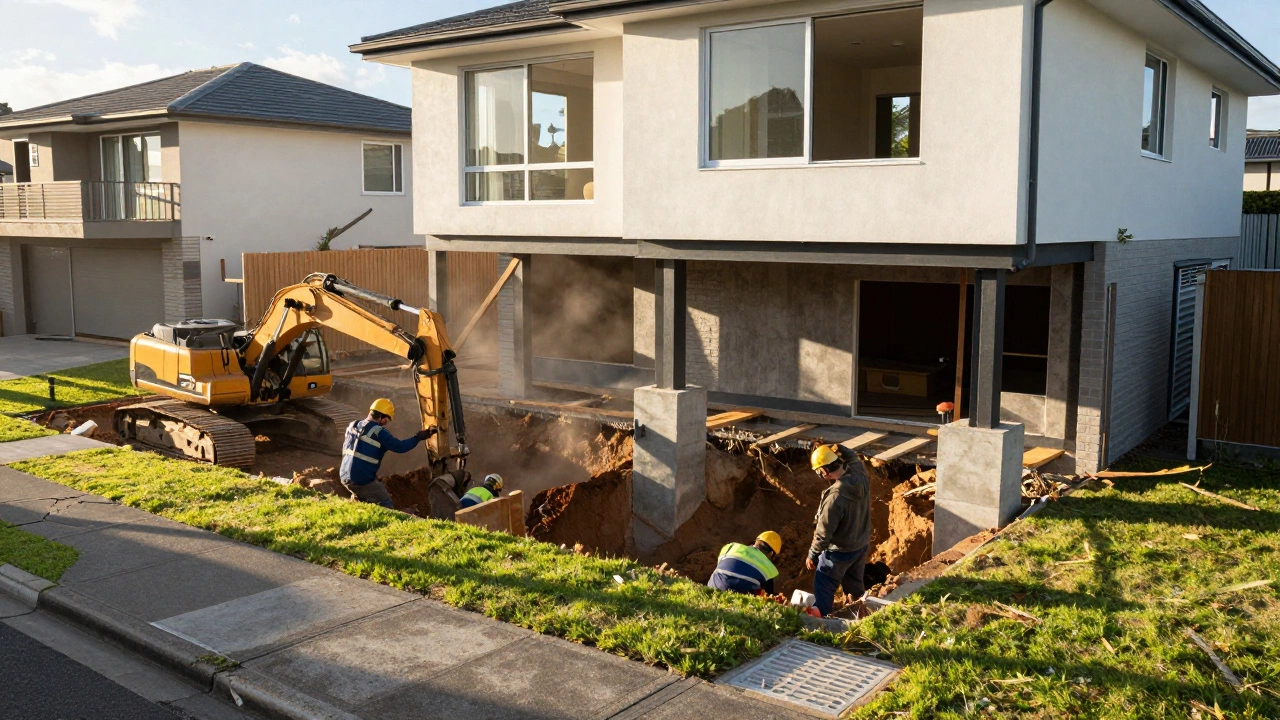
Underpinning involves extending the foundation deeper into stable soil or bedrock. Workers dig small trenches or boreholes under the existing foundation, then pour concrete or install steel supports in stages. Each section is reinforced before moving to the next. This process can take weeks. It requires heavy equipment, engineering oversight, and temporary supports to keep your home from collapsing during the work. Labor alone can run $150-$250 per hour. Add in materials, permits, and inspections, and you’re looking at $20,000 to $70,000 for an average-sized home.
Why so much? Because underpinning isn’t just fixing the foundation-it’s saving the whole structure. If you skip this and try a cheaper fix, you risk walls cracking again, doors jamming, or worse, structural failure. Insurance rarely covers it. Banks won’t lend on a home with an unstable foundation unless underpinning is done. That’s why homeowners in older Auckland suburbs like Mt. Eden or New Lynn often end up paying this price: it’s the only way to make the house safe and sellable.
How Foundation Type Affects Cost
Not all homes have the same kind of foundation. The type you have plays a huge role in how much repair costs. In New Zealand, you’ll mostly see three types: slab-on-grade, pier and beam, and basement foundations.
Slab foundations are common in newer builds. They’re a single layer of concrete poured directly on the ground. When they crack or settle, repairs are usually cheaper-between $5,000 and $15,000. Techniques like mud jacking or polyurethane foam injection can lift the slab back into place without digging deep. But if the slab is severely damaged or the soil beneath it keeps shifting, even slab repairs can turn into underpinning jobs. That’s when costs spike.
Pier and beam foundations, common in older homes and coastal areas, are built on wooden or concrete piers that support a wooden floor frame. These are easier to access, which makes repairs seem cheaper at first. But when the piers rot, sink, or shift, you need to replace them. Steel or concrete piers can cost $1,500-$3,000 each. A home with 12 piers? That’s $18,000 to $36,000 just for replacement. Add in floor leveling, termite damage repairs, and moisture barriers, and you’re easily into the $40,000 range.
Basement foundations are rare in New Zealand but found in some high-end homes in Auckland’s North Shore. Repairing a basement wall that’s bowing or leaking can cost $50,000-$100,000. Why? Because you’re working in a confined space, often with water pressure against the walls. You need waterproofing, drainage systems, carbon fiber straps, and sometimes full wall reinforcement. It’s not just repair-it’s waterproofing, structural engineering, and interior renovation rolled into one.
Why Helical Piers Are a Mid-Range Option
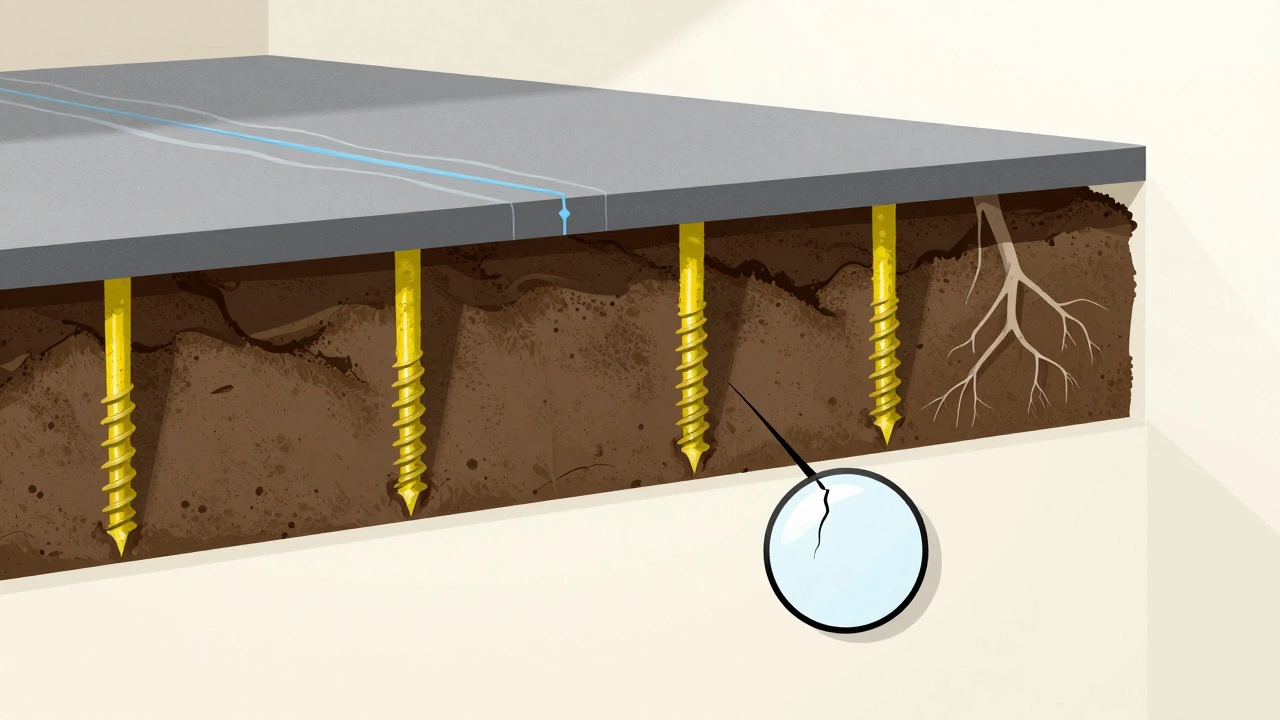
Helical piers are steel screws driven deep into the ground to stabilize sinking foundations. They’re popular because they’re faster than underpinning and less disruptive than digging out entire sections. They work well in clay soils and areas with high water tables-exactly where many Auckland homes struggle.
Each helical pier costs between $1,200 and $2,500 to install. Most homes need 6 to 12 piers. So total cost? $7,000 to $30,000. That’s expensive, but it’s still less than underpinning. The big advantage? Installation takes 1-3 days. No need to move out. No demolition. No weeks of dust and noise. Many homeowners choose helical piers because they offer a solid, long-term fix without the trauma of full underpinning.
But here’s the catch: helical piers don’t fix the cause of the problem. If your house is sinking because of poor drainage, you still need to fix the gutters, downspouts, and grading around your home. Otherwise, the soil will keep shifting, and the piers might need to be re-tightened in a few years.
When the Cost Becomes Unavoidable
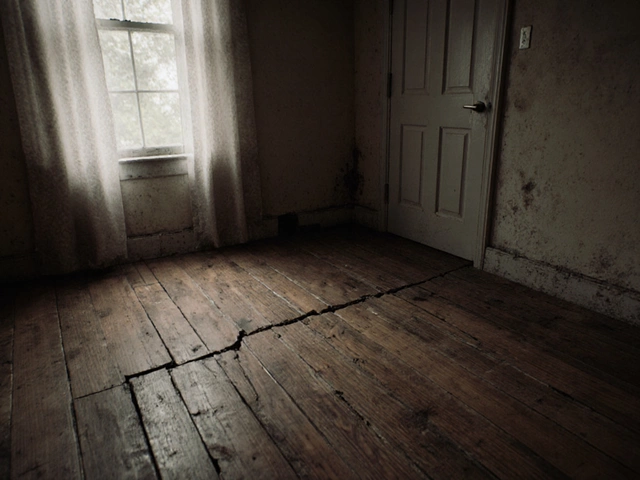
There’s no way around it: if your foundation is moving, the longer you wait, the more expensive it gets. A small crack that costs $2,000 to seal now could become a 10cm gap that requires underpinning in five years. Water damage, tree roots, and poor drainage don’t wait for your budget.
One homeowner in Papakura had a 2cm crack in her living room wall. She ignored it for three years. By the time she called a professional, the floor was sloping, doors wouldn’t close, and the foundation had sunk 8cm on one side. The repair? Full underpinning. Cost: $68,000. She could’ve fixed the crack for $1,800. But she didn’t know the signs.
That’s why early detection matters. Look for these warning signs:
- Cracks wider than 5mm in walls or floors
- Doors or windows that stick or won’t close
- Sloping floors, especially near the center of the house
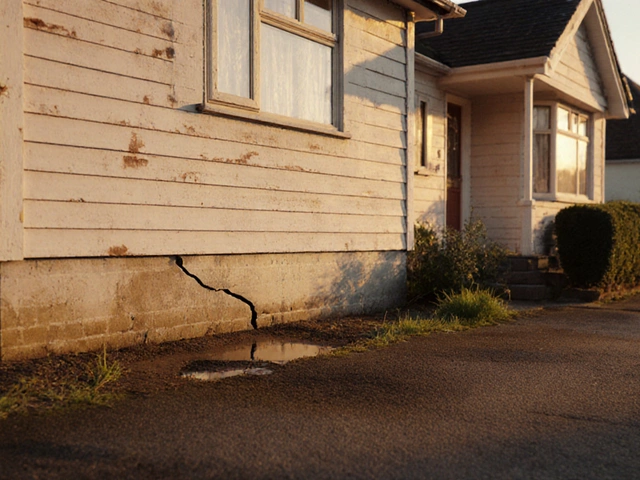
- Crumbling mortar or gaps between brickwork and the foundation
- Water pooling near the house after rain
If you see any of these, get a professional inspection. Most foundation companies in Auckland offer free assessments. They’ll use laser levels, moisture meters, and sometimes even ground-penetrating radar to map the damage. Don’t wait for the crack to turn into a canyon.
What’s Cheaper Than Underpinning? And When It’s a Trap
There are cheaper options out there-polyurethane foam injection, mud jacking, even DIY epoxy kits. But not all of them are right for your situation.
Polyurethane foam injection lifts slabs using expanding foam. It’s fast, clean, and costs $3,000-$10,000. Great for minor settling. But if your foundation is moving because of deep soil instability, foam won’t reach the problem. It just pushes the slab up temporarily. In Auckland’s wet clay, the foam can break down over time. You’ll be back in 3-5 years.
Mud jacking uses a cement slurry to lift slabs. It’s cheaper than foam-$2,000-$8,000-but messier and heavier. It can crack the slab further if not done precisely. And again, it doesn’t fix the root cause.
DIY kits? Avoid them. Epoxy injections for cracks look tempting online. But if the crack is structural-not just cosmetic-you’re masking a symptom, not solving the disease. A $50 bottle of epoxy won’t stop your house from sinking. And if you make the damage worse, insurance might deny your claim.

How to Avoid Being Overcharged
Foundation repair isn’t regulated like plumbing or electrical work. Anyone can hang up a sign and say they fix foundations. That’s why scams exist.
Here’s how to protect yourself:
- Get at least three written quotes. Compare the methods, materials, and warranties.
- Ask for proof of licensing and insurance. In New Zealand, look for registration with the New Zealand Registered Builders (NZRB).
- Check reviews on Google and Trustpilot. Look for before-and-after photos from real jobs.
- Never pay more than 10% upfront. Reputable companies work on progress payments.
- Ask if they use engineers. Underpinning and major repairs should be signed off by a structural engineer.
One Auckland company was fined $15,000 in 2024 for installing helical piers at the wrong depth and charging $35,000 for a job that should’ve cost $18,000. The homeowner didn’t know to ask for engineering drawings. Don’t make that mistake.
Is It Worth It? The Long-Term Value
Yes, foundation repair is expensive. But not fixing it is more expensive.
A home with a damaged foundation can lose 20-40% of its market value. Buyers walk away. Inspectors flag it. Mortgages get denied. If you’re planning to sell, you’ll either have to fix it or sell at a steep discount. Either way, you lose money.
And if you’re staying? Unfixed foundation problems lead to mold, pest infestations, and higher heating bills. Uneven floors strain your appliances. Cracked walls let in cold air. Over time, your comfort and safety erode.
Underpinning might cost $60,000. But it can add $100,000+ to your home’s value. It’s not just a repair. It’s an investment in your home’s future.
What Happens If You Do Nothing?
Ignoring foundation problems doesn’t make them go away. It makes them worse.
Cracks widen. Floors slope further. Walls lean. In extreme cases, parts of the house can collapse. Insurance won’t cover it. Banks won’t lend. You’ll be stuck in a house that’s unsafe and unsellable.
And in Auckland’s climate-with heavy rains, clay soils, and frequent earthquakes-the damage accelerates. What looks like a small issue today could become a full structural crisis in 18 months.
There’s no magic fix. But there is a right path: act early, get professional advice, and choose the repair that matches your foundation’s real needs-not your budget’s limits.
What type of foundation repair is the most expensive?
Underpinning is the most expensive foundation repair method. It involves extending the foundation deeper into stable soil or bedrock to support a sinking structure. Costs range from $20,000 to $70,000 depending on home size, soil conditions, and labor. It’s necessary when the foundation has failed beyond simple lifting or patching.
Why is underpinning so costly?
Underpinning is expensive because it’s a complex, labor-intensive process. It requires digging beneath the existing foundation, installing steel or concrete supports in stages, and using heavy machinery and engineering oversight. The work often takes weeks, and your home must be temporarily supported to prevent collapse. Materials, permits, inspections, and skilled labor all add up quickly.
Can I fix my foundation myself to save money?
DIY foundation repairs like epoxy injections or sealing cracks are only temporary fixes for minor surface issues. If your foundation is sinking, sloping, or showing structural cracks, DIY methods won’t solve the problem. In fact, they can hide damage and make future repairs more expensive. Structural foundation issues require professional assessment and engineered solutions.
How do I know if I need underpinning or just pier installation?
Underpinning is needed when the entire foundation has failed and needs to be extended to stable soil. Helical piers are used when the foundation is sinking but still structurally sound-piercing deep into the ground to stabilize it. A professional inspection using laser levels and soil analysis will determine which method is right. If your home has a 5cm+ settlement over 2 meters, underpinning is likely required.
Will my insurance cover foundation repair?
Most standard home insurance policies in New Zealand don’t cover foundation damage caused by gradual settling, soil movement, or poor drainage. Coverage only applies if the damage was caused by a sudden event like a burst pipe or earthquake. Even then, you’ll need proof it wasn’t pre-existing. Always check your policy wording and consider adding a foundation warranty if you live in a high-risk area.