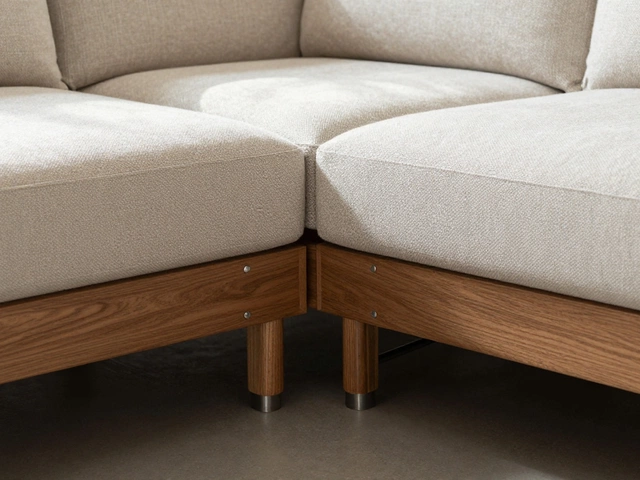
What Is a Corner Couch Called? The Real Names and Types Explained
Sofa Size Calculator
Enter your room measurements to see recommended sofa type and size.
Pro Tip: Measure corner angles carefully - many older homes have non-90° corners that affect sofa fit.
Ever walked into a furniture store and heard someone ask for a corner couch, only to be handed three different names? You’re not alone. People say ‘corner couch,’ ‘L-shaped sofa,’ ‘sectional,’ and sometimes even ‘corner sofa’-but are they all the same thing? The truth is, these terms aren’t just interchangeable slang. Each one points to a specific design, structure, or buying experience. If you’re shopping for one, knowing the real names helps you avoid confusion, get exactly what you want, and even save money.
It’s Not Just a ‘Corner Couch’
Most people call it a corner couch because it fits snugly into a corner. Simple, right? But in the furniture world, that’s like calling all cars ‘four-wheeled vehicles.’ It’s true, but it doesn’t tell you if it’s a sedan, SUV, or pickup. A corner couch is a general term, not a technical one. Manufacturers and designers don’t use it on spec sheets or product labels. If you walk into a store and say ‘I want a corner couch,’ you’ll likely get shown three different styles-each with a different name, price, and setup.The Real Name: L-Shaped Sofa
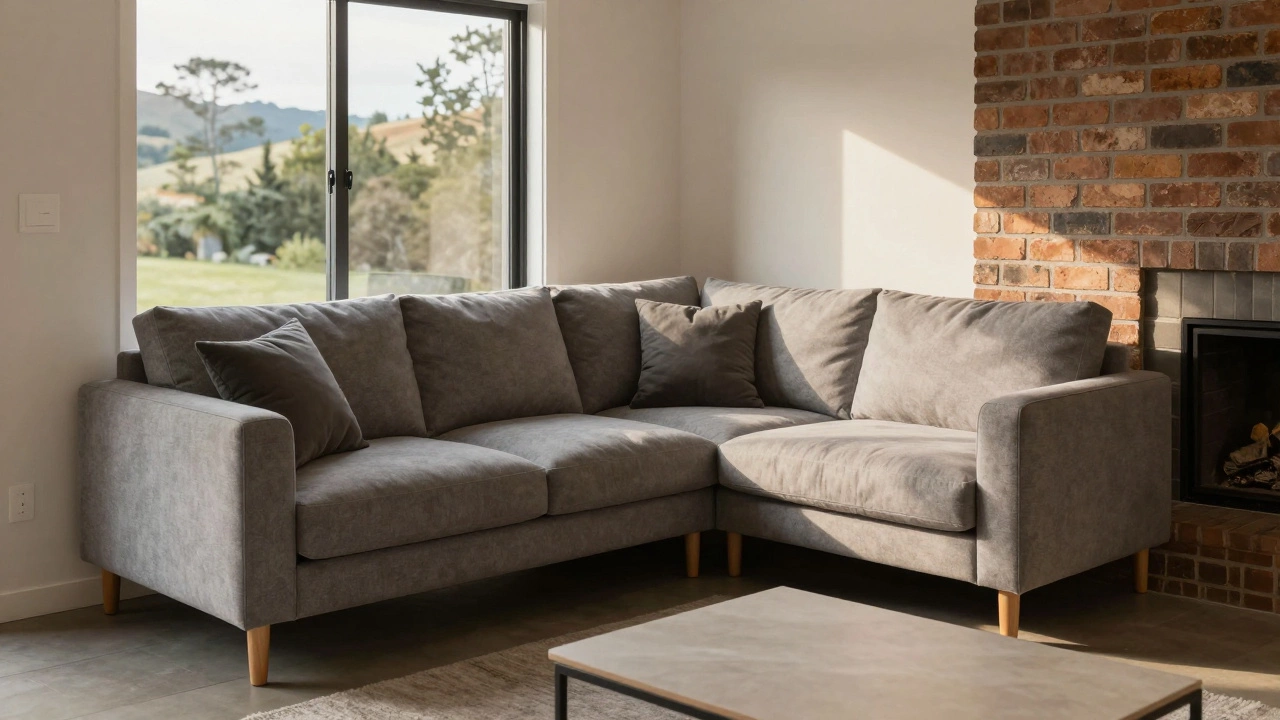
The most accurate term for what most people call a corner couch is an L-shaped sofa. This name describes its shape: two long sections meeting at a 90-degree angle, forming the letter L. It’s the standard term used by furniture brands like IKEA, Ashley, and Herman Miller. You’ll see it on websites, catalogs, and even in warranty documents. An L-shaped sofa usually has:- One long seat (typically 72-84 inches)
- One shorter seat (usually 50-60 inches)
- A fixed or reclining corner piece
- Often includes built-in storage or recliners
Sectional Sofa: The Bigger Cousin
Now, here’s where things get messy. Many people think ‘sectional’ and ‘L-shaped sofa’ are the same. They’re not. A sectional sofa is a broader category. It’s made of multiple separate pieces-called modules-that you can arrange in different ways. An L-shaped sofa is one possible arrangement of a sectional. But a sectional could also be U-shaped, curved, or even arranged in a straight line. Sectionals are modular. That means you can add or remove pieces. Maybe you start with just a left arm chaise and a corner unit. Later, you add a right-side loveseat or a recliner. Brands like Pottery Barn and Crate & Barrel sell sectionals this way. They’re ideal if you’re planning to rearrange your space often, or if you entertain large groups. If you see a sofa labeled ‘sectional,’ check the product details. Is it one solid piece? Then it’s probably an L-shaped sofa. Is it made of 3-5 separate units? Then it’s a true sectional.Corner Sofa: The Regional Twist
In the UK, Australia, and New Zealand, you’ll often hear the term corner sofa. It’s used almost interchangeably with L-shaped sofa. But here’s the catch: in some places, ‘corner sofa’ implies a more compact, fixed design. It’s not modular. It’s one unit. No separating. No adding pieces. Just a single, solid piece that turns a corner. In Auckland, you’ll see this term used mostly in online listings for secondhand furniture. A ‘corner sofa’ on Trade Me usually means it’s a single-piece L-shaped unit, not something you can reconfigure. If you’re buying used, this distinction matters. A true sectional will have visible seams, zippers, or bolts connecting the pieces. A corner sofa won’t.
Modular Sofa: The Custom Option
If you want total control, go for a modular sofa. This is the high-end version of the sectional. Each piece-armrests, corner units, ottomans, chaises-can be mixed and matched. You pick the fabric, the depth, the leg style, even the cushion firmness. Brands like West Elm, Roche Bobois, and local New Zealand makers like Kowhai & Co. offer modular systems. Modular sofas are expensive, but they’re built to last. You can reconfigure them every few years as your space or needs change. One customer in Ōtāhuhu replaced her chaise with two armless seats when her kids grew up. Another in Ponsonby added an ottoman for naps after her baby was born. That flexibility is the whole point.What About ‘Chaise Lounge’?
You might hear ‘chaise lounge’ thrown into the mix. That’s not the same thing. A chaise lounge is a single long seat, usually for one person, designed for reclining. It’s often part of a sectional or corner sofa-but by itself, it’s not a corner couch. If you’re looking for a full seating solution, you need more than just a chaise.How to Pick the Right One
Here’s how to cut through the naming confusion:- Measure your space. Corner couches need at least 7 feet of wall space on two sides. If your room is smaller, go for a compact L-shape or a 2-seater with an ottoman.
- Check if it’s one piece or modular. Look for seams, zippers, or bolts. If it’s all one unit, it’s an L-shaped sofa or corner sofa. If it breaks apart, it’s a sectional or modular.
- Think about your lifestyle. Kids? Pets? Frequent guests? A modular system lets you replace a worn-out section without buying a whole new sofa.
- Ask for the technical name. Instead of saying ‘corner couch,’ say ‘I need an L-shaped sofa with a fixed corner.’ You’ll get better service.
Common Mistakes to Avoid
- Buying too big. A 12-foot L-shaped sofa looks amazing in a showroom. In a 10x12 ft living room? It’ll block your TV and doorways.What to Look For in Quality
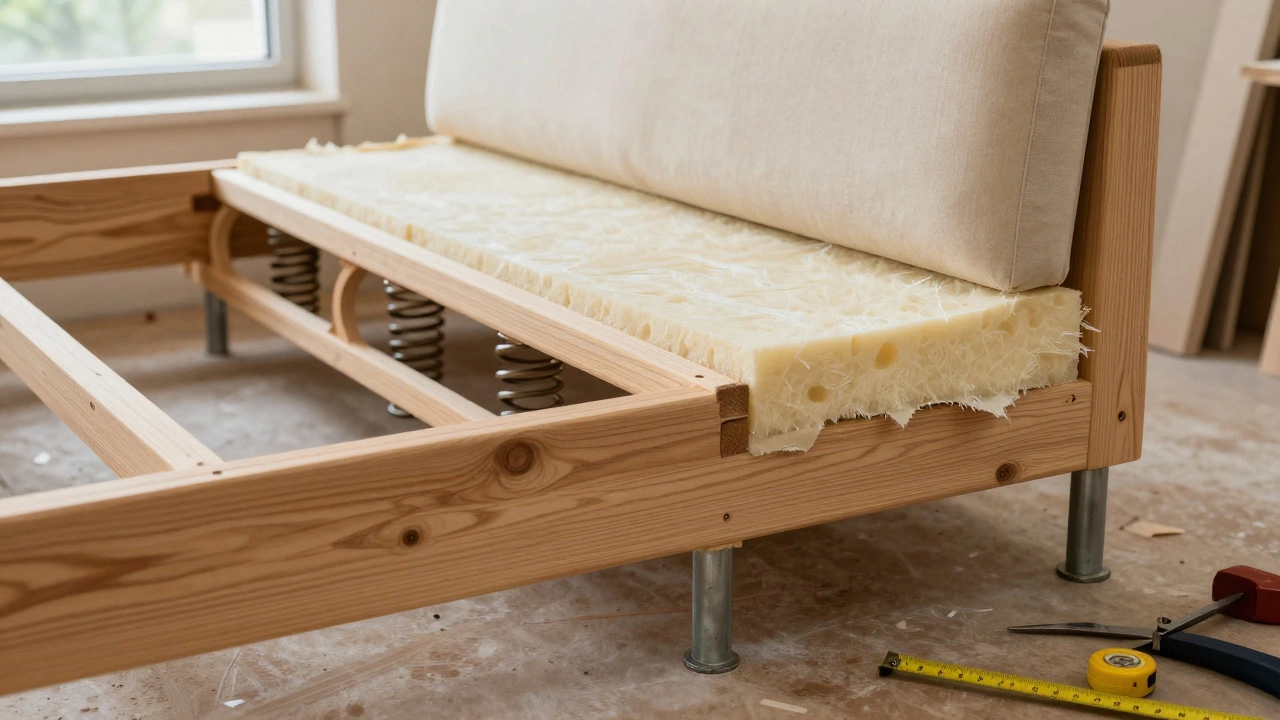
A good L-shaped sofa or corner sofa should have:- Frame: Hardwood (like beech or oak), not particleboard or plywood.
- Cushions: High-density foam (at least 2.5 lb density) wrapped in polyester fiber, not just polyester fill.
- Spring system: Sinuous springs or eight-way hand-tied springs, not just elastic webbing.
- Upholstery: Performance fabric (like Crypton or Sunbrella) if you have pets or kids. Linen or cotton works if you’re low-maintenance.
- Legs: Solid wood or metal. Avoid plastic or flimsy plastic-coated legs.
Final Tip: Ask for the Product Code
When you find a sofa you like, ask for the manufacturer’s product code. Then search it online. You’ll find the exact specs, dimensions, and materials. No salesperson can mislead you if you’ve got the real name and code.So next time someone asks, ‘What’s a corner couch called?’ you’ll know: it’s usually an L-shaped sofa. But if it’s made of separate pieces? That’s a sectional. And if you can rearrange it? Then it’s modular. Get the name right, and you’ll get the right sofa.
Is a corner couch the same as a sectional sofa?
Not exactly. A corner couch is usually a single, fixed L-shaped unit. A sectional sofa is made of multiple separate pieces that can be arranged in different shapes-including L-shape. So all corner couches can be part of a sectional, but not all sectionals are corner couches.
What’s the difference between a corner sofa and an L-shaped sofa?
In most cases, there’s no real difference. ‘Corner sofa’ is a common term used in New Zealand and the UK to describe an L-shaped sofa. But sometimes, ‘corner sofa’ refers to a compact, non-modular version, while ‘L-shaped sofa’ is the technical term used by manufacturers.
Can I turn a regular sofa into a corner couch?
Not easily. A regular sofa doesn’t have the angled structure needed to fit into a corner properly. You can place two sofas at a right angle, but they won’t look seamless or feel stable. For a true corner couch, you need a single unit designed with a fixed corner piece.
Are corner couches good for small spaces?
Yes, they’re one of the best options. By filling the corner, they maximize seating without blocking walkways. A compact L-shaped sofa (under 9 feet total) works well in small apartments, especially in Auckland’s older homes where space is tight.
How do I clean a corner couch with fabric upholstery?
Check the care label. Most modern fabrics are labeled with codes: W (water-based cleaner), S (solvent-based), or SW (either). Vacuum weekly with a brush attachment. For stains, spot-clean with a damp cloth and mild soap. Avoid steam cleaners unless the label says it’s safe.