What Is a Basic Wardrobe Called? The Simple Storage Solution Everyone Needs
Wardrobe Selection Calculator
Recommended Wardrobe Type
When you think of storing clothes, you might picture a huge walk-in closet or a fancy custom closet system. But not everyone has the space-or the budget-for that. So what’s the simplest, most common way to store clothes in a bedroom? It’s called a wardrobe. And no, it’s not just a fancy word for a closet. A basic wardrobe is its own piece of furniture, designed to hang and store clothes in one compact unit.
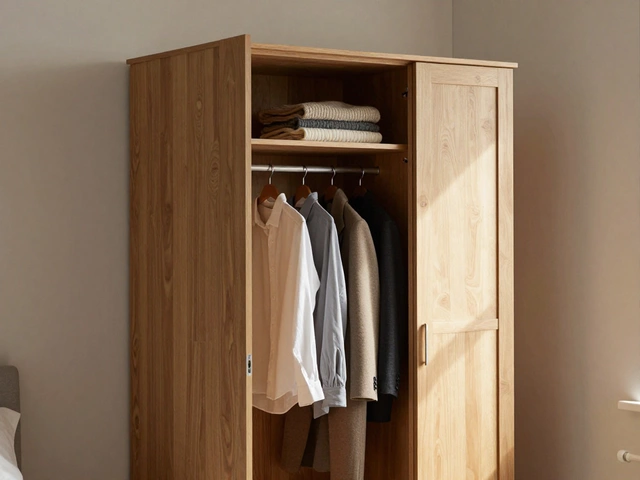
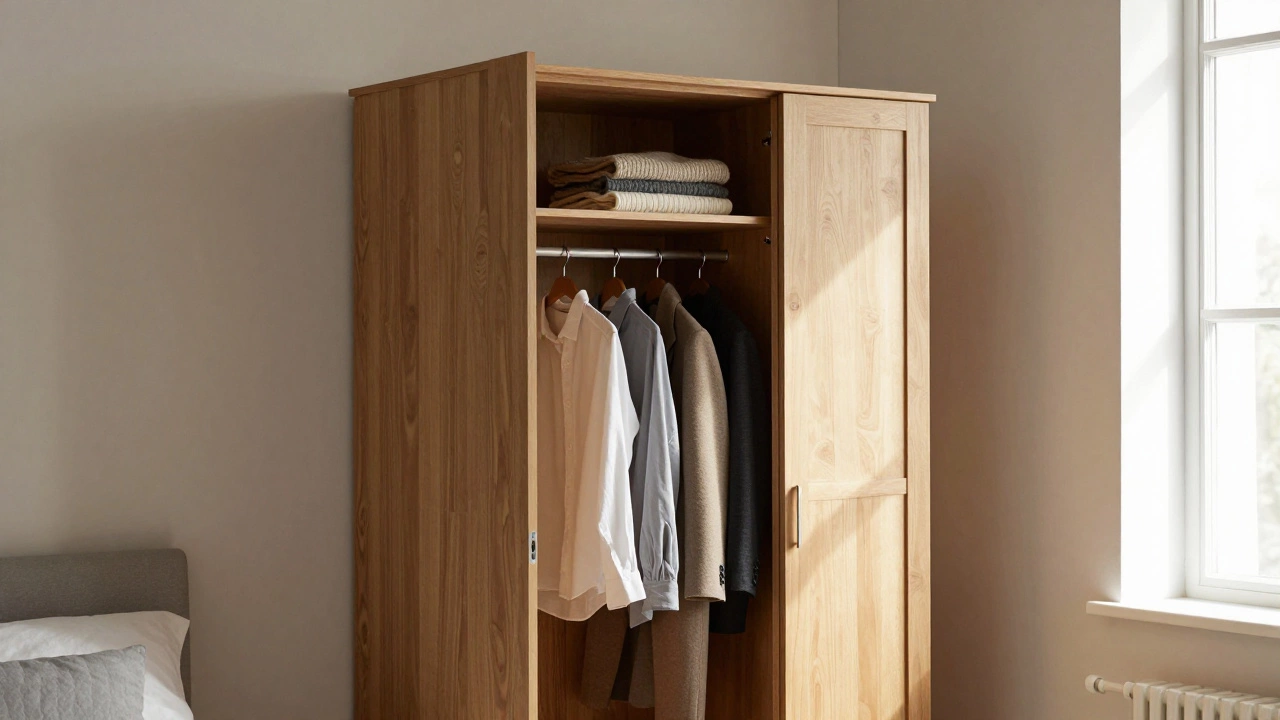
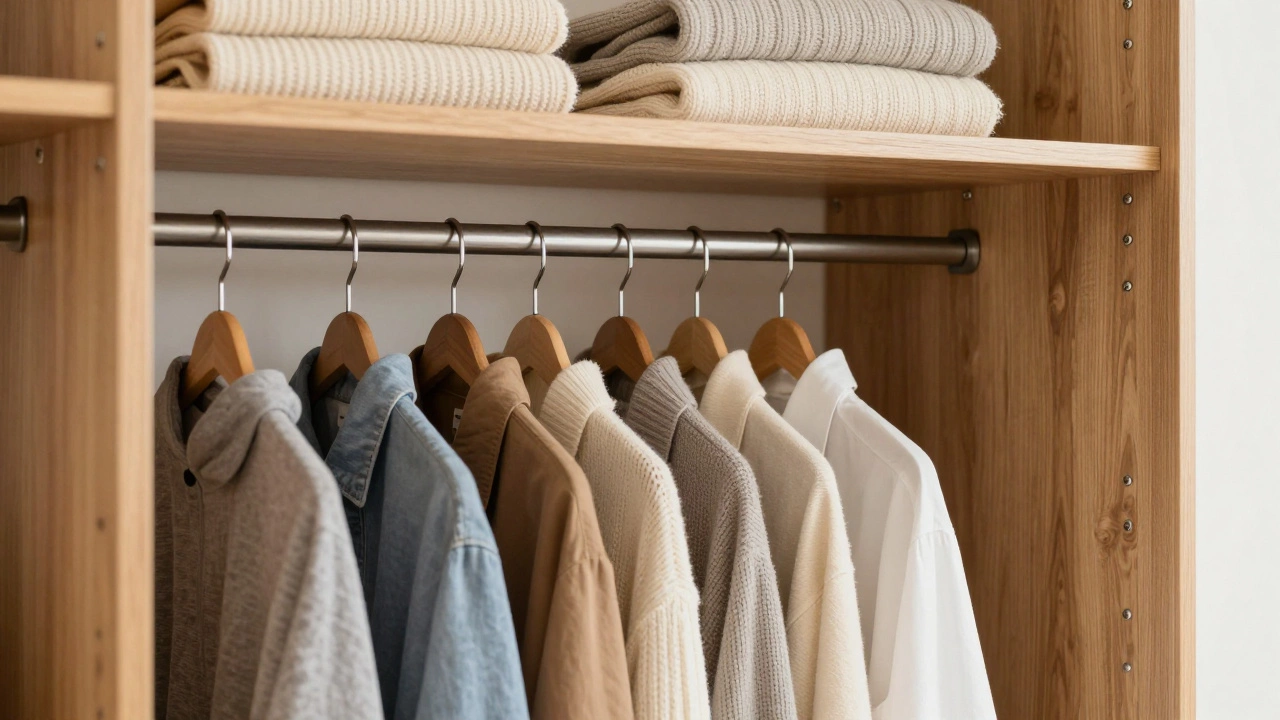
You’ve seen it before. It’s the tall, freestanding cabinet with doors, usually made of wood or engineered material, that sits in the corner of a bedroom. Inside, there’s a hanging rod for shirts, dresses, and coats. Sometimes there’s a shelf on top for folded sweaters or bins below for shoes and accessories. It doesn’t need electricity, mirrors, or built-in lighting. It just works.
Why the Basic Wardrobe Still Matters
In a world full of smart home gadgets and modular storage systems, the basic wardrobe hasn’t gone out of style. In fact, it’s more relevant than ever. People are downsizing, moving into smaller apartments, or just simplifying their lives. A wardrobe gives you all the function of a closet without needing to build one into your walls.
It’s especially popular in places like Auckland, where older homes often lack built-in closets. Instead of ripping out walls to add a closet, homeowners just roll in a wardrobe. It’s movable, affordable, and doesn’t require permits or contractors. You can buy one at a local furniture store, online, or even secondhand and have it set up in under an hour.
What’s in a Basic Wardrobe?
A true basic wardrobe has just three essential parts:
- A hanging rod-usually one, sometimes two. The top rod is for long items like dresses and coats. A lower rod, if included, is for shirts and pants.
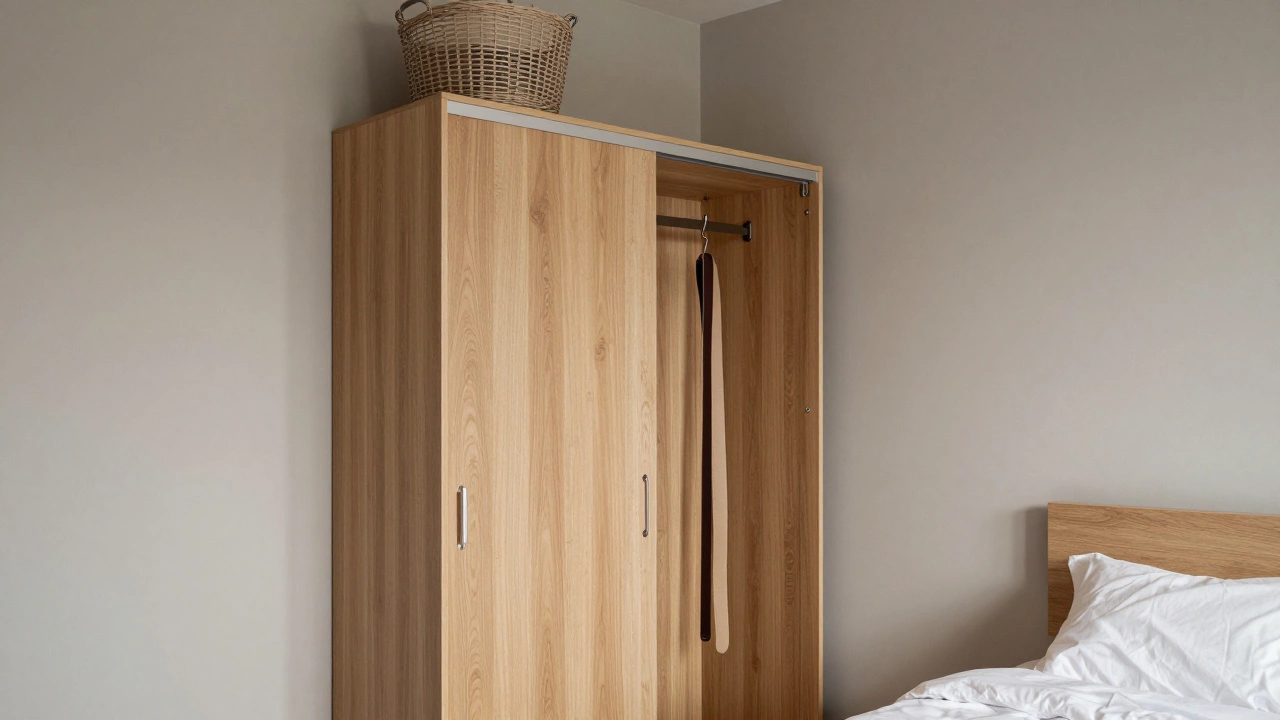
- Doors-sliding or hinged. Sliding doors save space in tight rooms. Hinged doors give you full access but need room to swing open.
- Shelves or drawers-not always present, but common. Shelves are for folded clothes, hats, or belts. Drawers hold underwear, socks, or accessories.
That’s it. No mirrors, no lighting, no drawers with dividers. Just storage. Some people add a small shelf on top for bins or laundry baskets. Others hang a hook on the inside of the door for bags or belts. But those are extras. The core design hasn’t changed in over a century.
Wardrobe vs. Armoire vs. Closet
People mix up these terms all the time. Here’s how they’re different:
| Feature | Basic Wardrobe | Armoire | Built-in Closet |
|---|---|---|---|
| Structure | Freestanding cabinet | Freestanding, often ornate | Part of the wall |
| Installation | None-just place it | None | Requires construction |
| Customization | Limited | Low-fixed interior | High-can be fully designed |
| Cost | $100-$400 | $300-$1,500+ | $1,000-$5,000+ |
| Best for | Small spaces, renters, minimalists | Decorative storage, vintage style | Permanent homes with space |
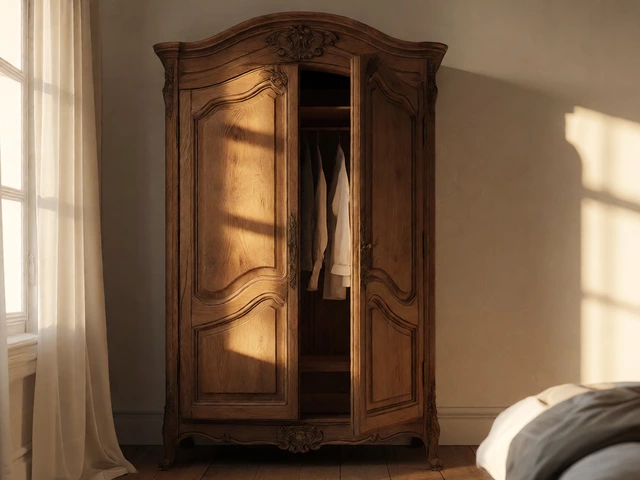
An armoire is a type of wardrobe, but it’s usually more decorative. Think carved wood, brass handles, and a heavier build. It’s often used as a statement piece, not just storage. A built-in closet, on the other hand, is part of the architecture. It’s permanent, requires walls and framing, and costs way more to install.
The basic wardrobe? It’s the middle ground. Functional, affordable, and flexible.
Who Uses a Basic Wardrobe Today?
You’d think this kind of storage would be outdated. But it’s actually trending again. Here’s who’s buying them right now:
- Renters-can’t drill holes or build into walls? A wardrobe is your best friend. No damage, no lease violations.
- Minimalists-they prefer one closed unit to keep clutter out of sight. It forces you to be intentional about what you own.
- Students-in dorms or small apartments, a wardrobe gives them more space than a dresser ever could.
- Older homes-in New Zealand, many houses built before the 1980s don’t have closets. A wardrobe is the standard solution.
- People moving frequently-if you pack up every 1-2 years, a wardrobe is easy to disassemble and move.
It’s not about nostalgia. It’s about practicality. A basic wardrobe solves real problems: limited space, tight budgets, and rental restrictions.
What to Look for When Buying One
If you’re thinking of getting one, here’s what actually matters:
- Material-solid wood lasts decades. MDF or particleboard is cheaper but can sag over time. Look for reinforced joints.
- Door type-sliding doors need less space but can get stuck. Hinged doors are more reliable but need 2-3 feet of clearance.
- Height-taller units (72-80 inches) give you more hanging space. Make sure it fits under your ceiling.
- Internal layout
- Weight-if you move often, pick one under 100 pounds. Heavier ones are harder to reposition.
Avoid ones with too many drawers. The point of a basic wardrobe is simplicity. Too many compartments turn it into a dresser with doors.
The Hidden Advantage: Mental Clarity
There’s something psychological about a wardrobe with doors. When the doors are closed, your clothes disappear. There’s no visual clutter. No mismatched hangers. No piles of shirts you forgot you owned.
Studies in behavioral psychology show that closed storage reduces decision fatigue. When you can’t see your clothes, you’re less likely to overbuy or keep things you don’t wear. It’s why capsule wardrobes work so well. The wardrobe isn’t just storage-it’s a tool for mindful living.
That’s why, even in 2026, the basic wardrobe isn’t going away. It’s not flashy. It doesn’t have a mobile app. But it works. Every day. For millions of people around the world.