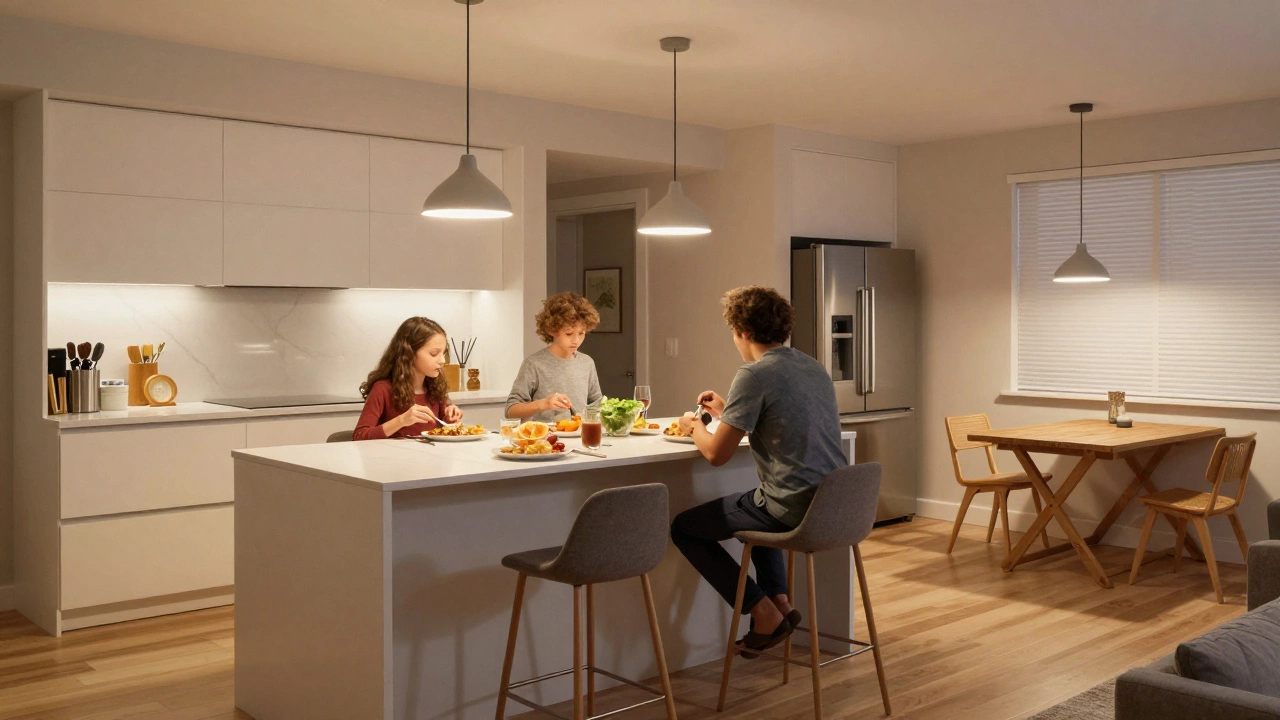
Dining rooms are disappearing as homes shift to open-plan layouts, smaller spaces, and flexible living. Families now eat at kitchen islands, and dining furniture is evolving to match modern lifestyles.
When you think about dining furniture, the tables and chairs you use every day for meals, gatherings, and even homework. Also known as kitchen furniture, it’s not just about looking good—it’s about lasting through years of use, spills, and family chaos. A good dining table isn’t just wood and legs. It’s the center of your home’s rhythm. And the chairs? They’re not just seats—they’re where people lean in, argue, laugh, and fall asleep after Thanksgiving dinner.
You don’t need a fancy set to make dining furniture work. Many UK homes use dining tables, a central piece that anchors the eating area and often doubles as a workspace or craft station. Also known as kitchen table, it’s the first thing you notice when you walk into a room. But not all tables are built the same. Solid wood lasts decades. MDF warps with moisture. Glass looks sleek but shows every fingerprint and scratch. And if your chairs squeak after two years, you paid for style, not substance. Real durability comes from joinery, not just price tags. Look for mortise-and-tenon joints, not just screws. Check if the legs are bolted or glued. Ask yourself: would this still be usable in 10 years, or will it look like it’s been through a war?
Dining chairs, the seats that match your table and support how you actually live. Also known as kitchen chairs, they’re often overlooked—but they make or break comfort. Upholstered chairs feel nice but stain easily. Wooden chairs are easy to clean but hard on the back after an hour. Foldable chairs? Great for small spaces, but they don’t last. And don’t forget scale. A giant table with tiny chairs looks awkward. A small table with oversized chairs feels cramped. The best sets balance proportion, function, and ease of maintenance. Think about how you use them: do you need chairs that tuck neatly under the table? Do you need ones that can handle kids’ crayons and dog paws?
What you’ll find below isn’t a list of the trendiest designs. It’s a collection of real advice from people who’ve lived with their dining furniture—good and bad. You’ll see what materials actually hold up in UK homes, how to pick sizes that fit tight spaces, and why some ‘must-have’ pieces end up gathering dust in the garage. No fluff. No overpriced trends. Just what works, what doesn’t, and how to make smart choices without wasting money.
Dining rooms are disappearing as homes shift to open-plan layouts, smaller spaces, and flexible living. Families now eat at kitchen islands, and dining furniture is evolving to match modern lifestyles.