Why Are Dining Rooms Disappearing From Homes?
Dining Room Need Calculator
Does Your Home Need a Dining Room?
Based on current home trends and family lifestyles, this tool helps determine if a dedicated dining room is practical for your home.
Twenty years ago, nearly every home had a dining room. It was the space where families gathered for Sunday roast, where holiday meals were served with fine china, and where kids learned to sit still and use a fork. Today? You’re more likely to find a fold-out table tucked beside the fridge or a small island with two stools in the kitchen. The dining room isn’t just shrinking-it’s vanishing.
The Open Plan Revolution
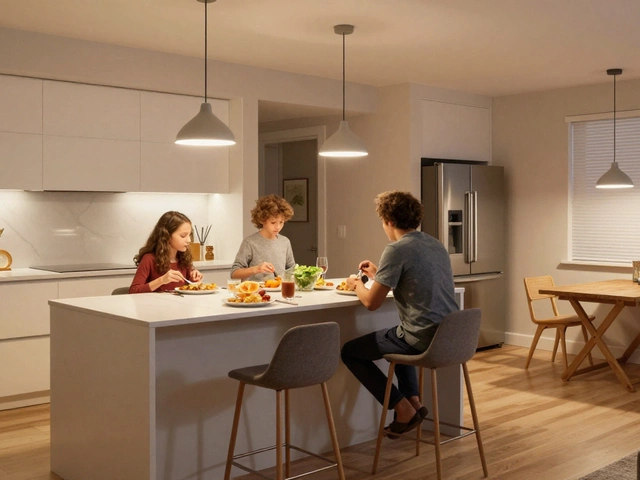
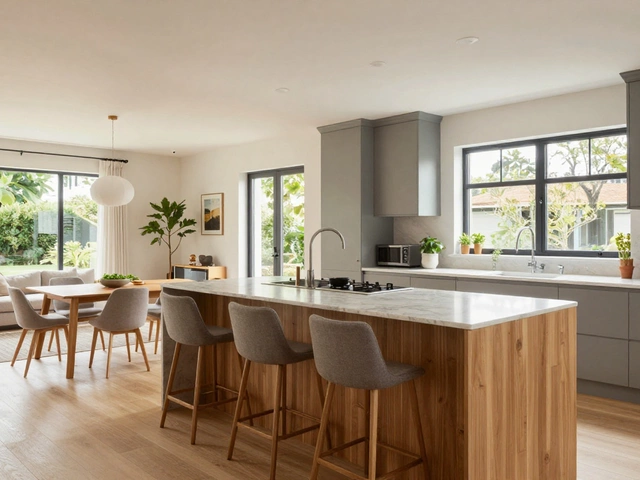
The biggest reason dining rooms are disappearing? Open-plan living. Builders and designers stopped drawing walls between the kitchen, living room, and dining area in the early 2010s, and by 2020, over 70% of new homes in the U.S. and New Zealand didn’t include a formal dining space. Why? Because people want flow. They want to cook while talking to someone on the couch. They want to keep an eye on kids while stirring pasta. A separate dining room feels like a waste of square footage when you can eat at the kitchen island and still be part of the action.It’s not just about space-it’s about how we live now. Families don’t sit down for a full meal five nights a week anymore. Takeout, snacks, quick breakfasts, and meal prep on the go have replaced the ritual of a seated dinner. The dining room, once a symbol of formality, became a room that sat empty most of the time.
Smaller Homes, Bigger Demands
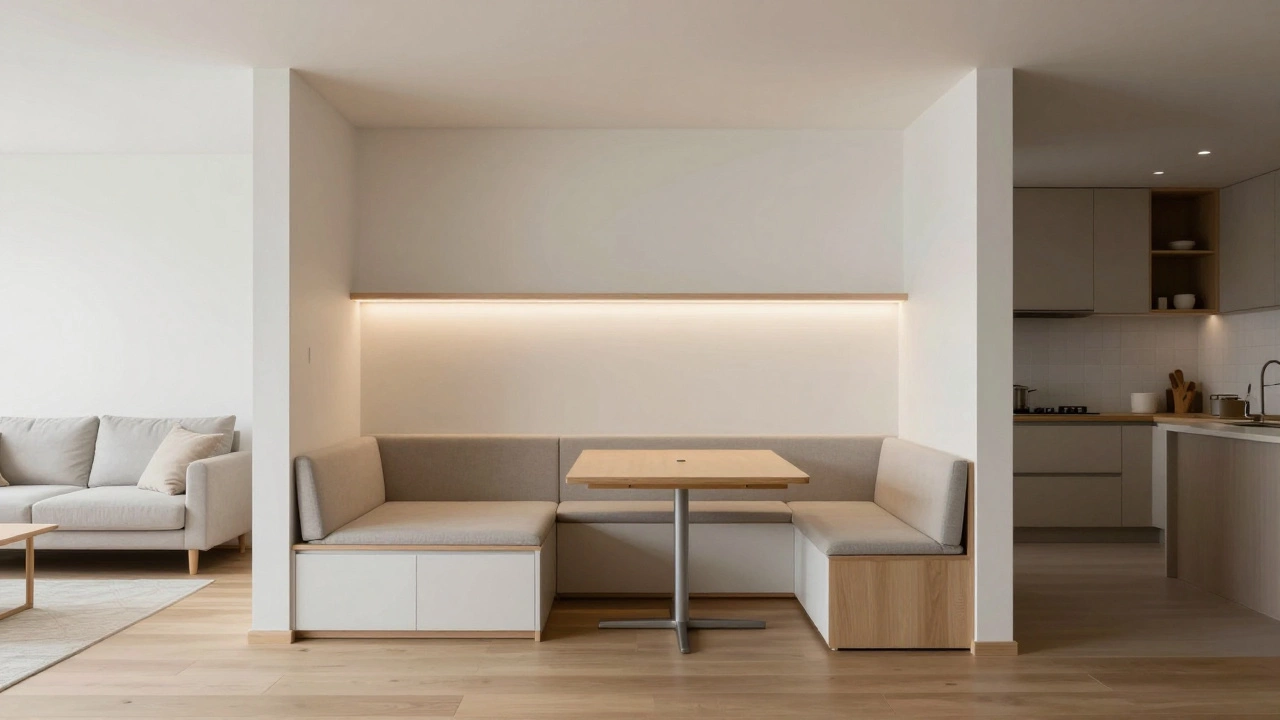
Homes are getting smaller. In Auckland, the average new home built in 2025 is about 180 square meters-down from 230 in 2010. With less space to work with, every room needs to pull double duty. A dining room that only gets used on holidays? That’s a luxury most buyers can’t justify. Instead, they opt for a kitchen island with bar seating, a fold-down table in the hallway, or even a small bistro set in the corner of the living room.Real estate agents say buyers now ask, “Where do we eat?” not “Where’s the dining room?” Developers respond by designing kitchens that are bigger, smarter, and built to host meals. Kitchen islands with extended counters, built-in banquettes, and hidden storage for tableware are now standard features-not extras.
Changing Family Rhythms
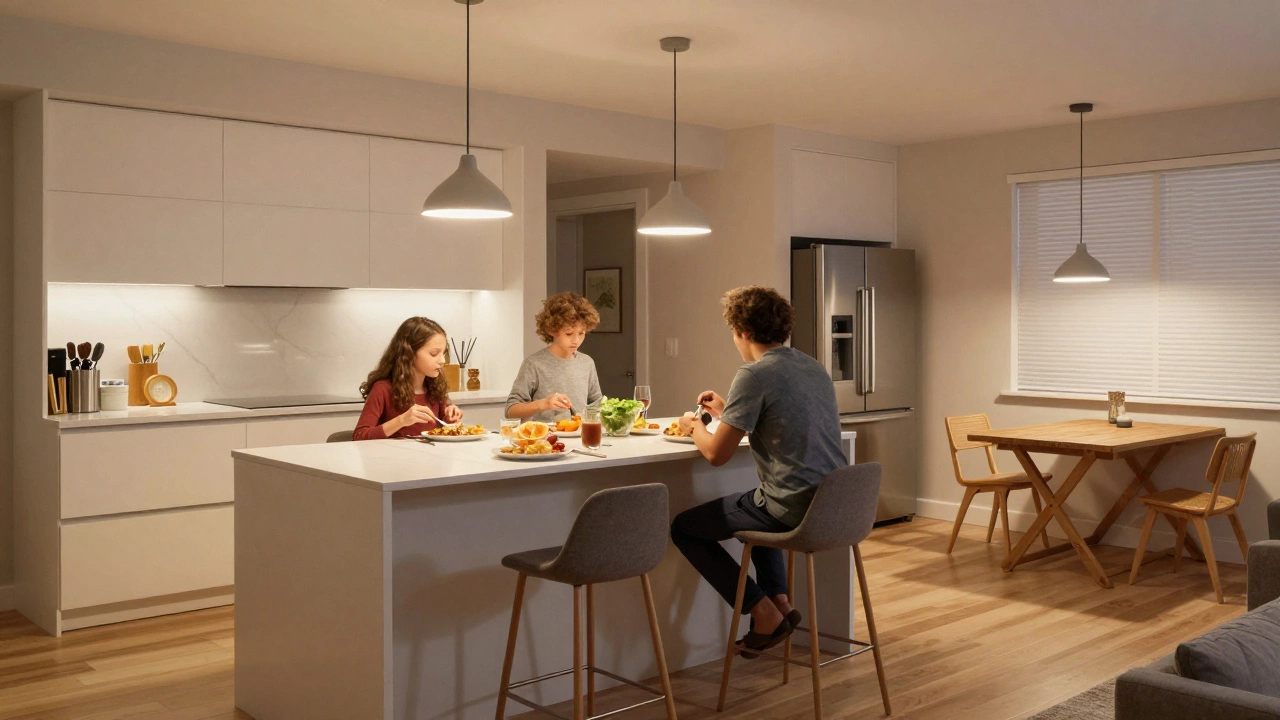
The traditional family dinner is fading. Two-income households, after-school activities, remote work, and streaming culture mean meals are scattered. One parent eats at 6 p.m., the kids at 7, and the other at 9. A formal dining table doesn’t fit that rhythm. A countertop with stools does. It’s quicker. It’s more flexible. It doesn’t require setting the table or clearing it afterward.Studies from the University of Auckland show that households with children under 12 now eat together at the kitchen table or counter 73% of the time. Only 12% use a separate dining room. For singles and couples, that number drops even lower. The dining room isn’t just unused-it’s become a relic of a lifestyle most people no longer live.
Furniture Is Changing Too
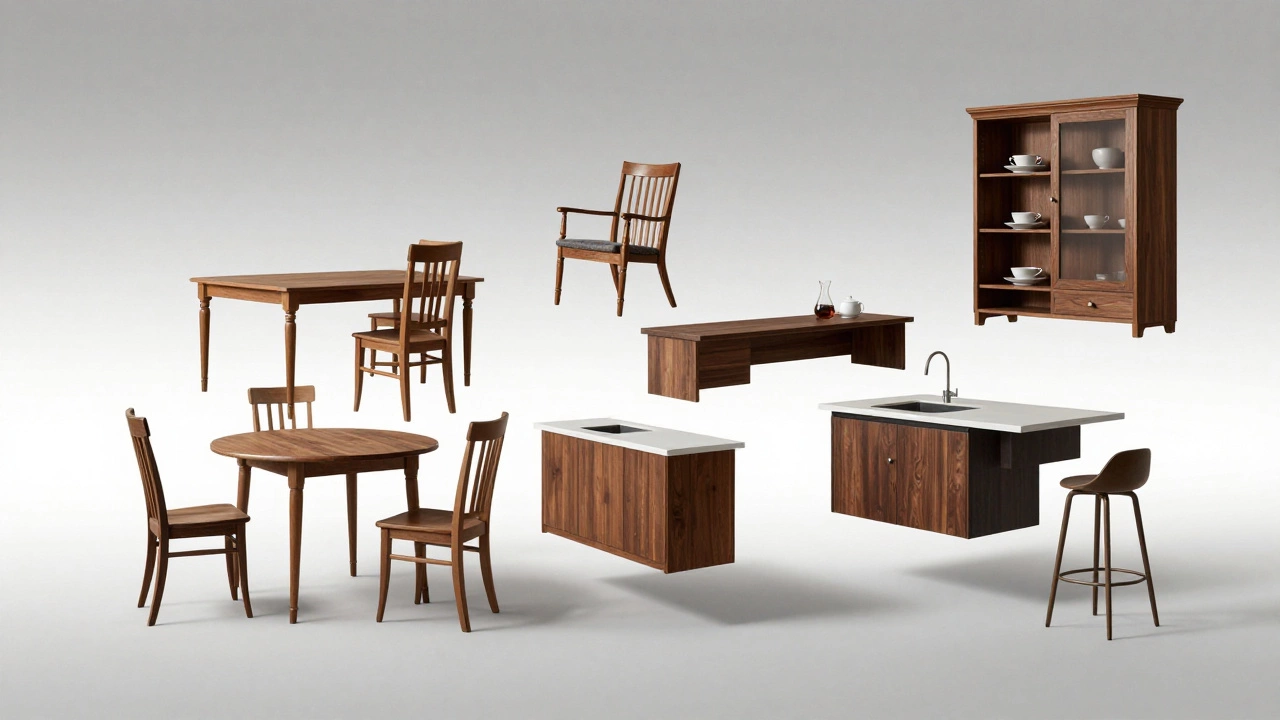
As the space disappears, so does the furniture. Dining tables used to be heavy, solid wood, and meant to seat eight. Now, manufacturers are making extendable tables that tuck under counters, round bistro sets for two, and wall-mounted drop-leaf tables that fold away when not in use. You can buy a dining set that fits in a closet. That’s not a trend-it’s a necessity.Companies like IKEA, Freedom, and local New Zealand brands like Kowhai & Co. now list “compact dining” as a top category. Sales of traditional 6- to 8-seat dining sets have dropped 45% since 2018. Meanwhile, bar-height counters with stools have seen a 60% rise in sales. The dining room chair? It’s becoming an endangered species.
What About Special Occasions?
People still host dinners. They just don’t need a room for it. Holiday meals happen on the kitchen island with extra chairs pulled in. Birthdays are celebrated on the patio with fold-out tables. Wedding receptions? They’re held at venues, not homes. The idea that you need a dedicated space to eat with guests is fading fast.Some homeowners keep a small table in a nook or convert a study into a dining spot for guests. But even that’s rare. Most people use their living room sofa as a makeshift dining zone with a tray. It’s not elegant, but it’s practical.
Is This Really Better?
There’s a cost to losing the dining room. Families report feeling less connected when meals are rushed and eaten in front of the TV. Kids don’t learn table manners the same way. The ritual of dressing up, setting the table, and sharing food face-to-face fades when everything happens on the run.But the trade-off is real: more space for a home office, a reading nook, a play area, or even a second bathroom. For many, the benefits outweigh the loss. The dining room isn’t gone because people stopped caring about meals-it’s gone because they’ve found better ways to have them.
The Future of Eating at Home
The future of home dining isn’t about rooms-it’s about surfaces. Countertops, islands, foldable tables, and multi-use furniture are replacing fixed dining spaces. Smart homes now come with built-in charging ports under tables, hidden lighting for evening meals, and storage drawers that hold everything from napkins to extra chairs.Some architects are even designing “meal zones” instead of dining rooms-areas that blend kitchen, living, and dining into one flexible zone, with movable partitions and modular seating. It’s not about having a room for eating anymore. It’s about having the right tools to eat, wherever you are.
So, if you’re wondering why your neighbor’s new house doesn’t have a dining room, the answer isn’t complicated: they don’t need one. And honestly? Neither do you.
Do I need a dining room if I’m building a new home?
No, you don’t need one. Most new homes built after 2020 don’t include a formal dining room. Instead, focus on a well-designed kitchen island with seating for 4-6 people. Add a fold-down table in a hallway or living area if you occasionally host larger groups. That’s more practical and adds more value than a rarely used dining room.
What should I do with my old dining room?
Turn it into something you use every day. Convert it into a home office, a reading nook, a playroom, or a second living area. If you have a large space, try a multi-functional setup: a desk that folds into a table, with storage for board games or extra chairs. The goal is to eliminate unused space.
Are dining tables becoming obsolete?
Not entirely, but traditional large dining tables are. The market has shifted toward compact, flexible options: extendable tables, wall-mounted drop-leaf designs, and bar-height counters with stools. If you still want a table, choose one that fits your actual usage-not what you think you should have.
Can I still have a formal dining experience at home?
Absolutely. You don’t need a dedicated room for a special meal. Set up your kitchen island with cloth napkins, candles, and good plates. Pull in extra chairs from another room. Use the living room floor with a large tray if you want to be cozy. The formality comes from how you set the moment-not the room it’s in.
Is this trend only happening in New Zealand?
No. This is a global shift. It’s strongest in cities like Auckland, Sydney, Toronto, and Portland, where housing is tight and lifestyles are fast-paced. But even in larger homes in the U.S. and Europe, the formal dining room is becoming optional, not expected.