What to Put in the Middle of a Round Coffee Table: Styling Ideas
Round Table Styling Simulator
1. Select Your Table Material
2. Add Decor Items
Click items to add them to your table. Click items in the table to remove them.
Key Takeaways for Round Table Decor
- Use a tray: It creates a 'virtual edge' and keeps small items from drifting.
- Vary the heights: Mix tall vases with flat books to create visual rhythm.
- Rule of Three: Group items in odd numbers for a more natural look.
- Leave breathing room: Don't cover more than 60% of the surface.
The Power of the Anchor Tray
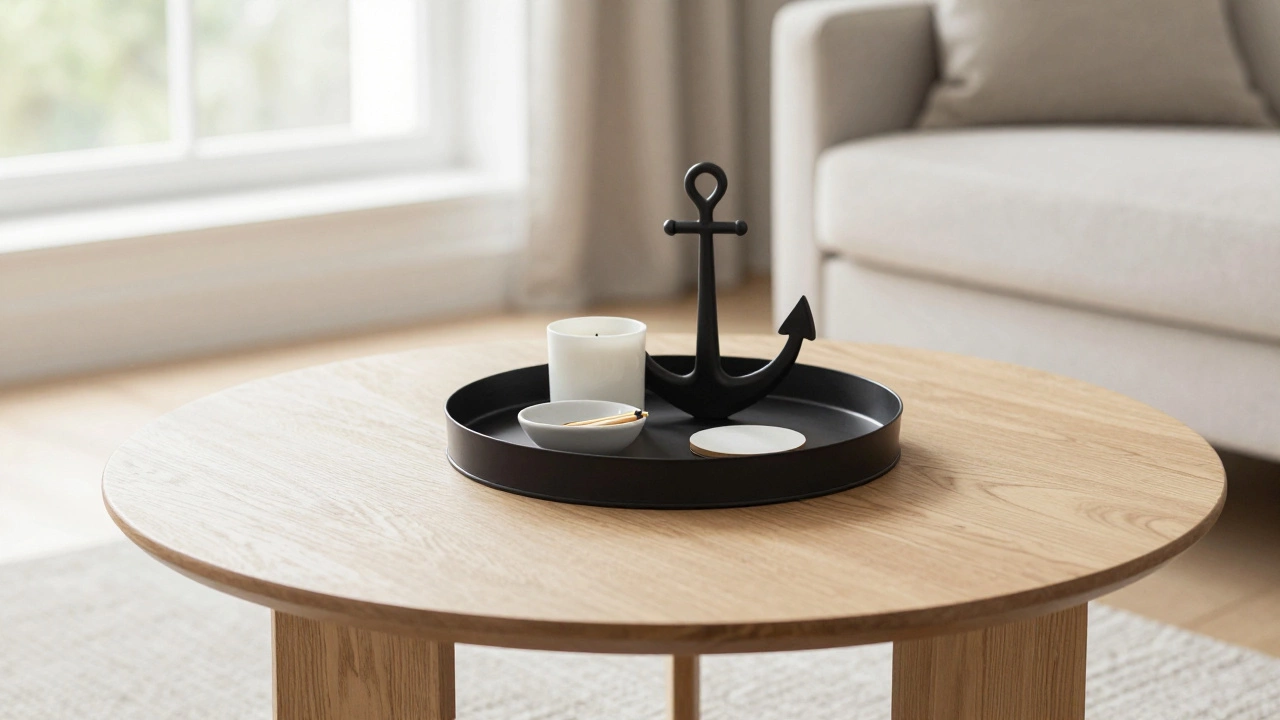
If you're struggling with where to start, grab a tray. Why? Because a Tray acts as a boundary. On a round table, items tend to 'float' or slide toward the edges. By placing a circular or rectangular tray in the center, you effectively turn a wide-open space into a curated display.
For a modern look, try a matte black metal tray on a light oak table. If you want something more organic, a woven seagrass or rattan tray adds texture and warmth. Once the tray is down, you can group your smaller essentials-like a candle, a small bowl for matches, and a coaster-inside it. This keeps the table organized and makes cleaning easier; you just lift the tray and wipe the table in one go.
Playing with Heights and Layers
One of the biggest mistakes people make is picking items that are all the same height. When everything is flat, the table looks two-dimensional. To fix this, you need to create a 'visual pyramid.'
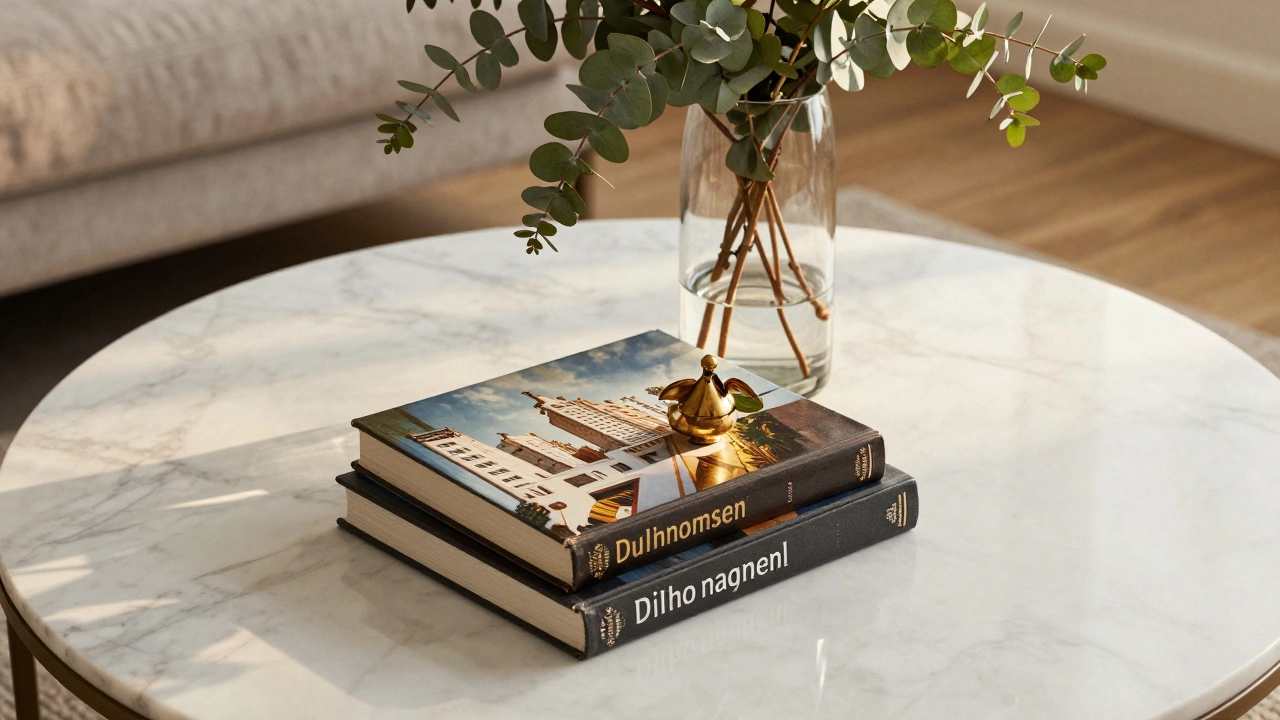
Start with a base of Coffee Table Books. These are thick, oversized hardcovers that provide a sturdy platform for other objects. Stack two or three books-perhaps one on architecture and one on travel-to create a pedestal. On top of that stack, place something smaller, like a brass figurine or a small crystal.
Next, add a vertical element. A tall vase with fresh greenery or dried eucalyptus brings the eye upward. The contrast between the low books and the high foliage creates a dynamic energy that keeps the room from feeling static. If you use a tall vase, place it slightly off-center to avoid a stiff, formal look.
| Table Material | Recommended Accents | Avoid This | Vibe Created |
|---|---|---|---|
| Marble/Stone | Wooden bowls, gold accents, greenery | Cold metals or white ceramics | Luxurious & Warm |
| Light Wood/Oak | Black metal, ceramic vases, linen | Too much unfinished wood | Scandi/Minimalist |
| Glass/Acrylic | Heavy books, textured trays, colorful art | Transparent items | Airy & Modern |
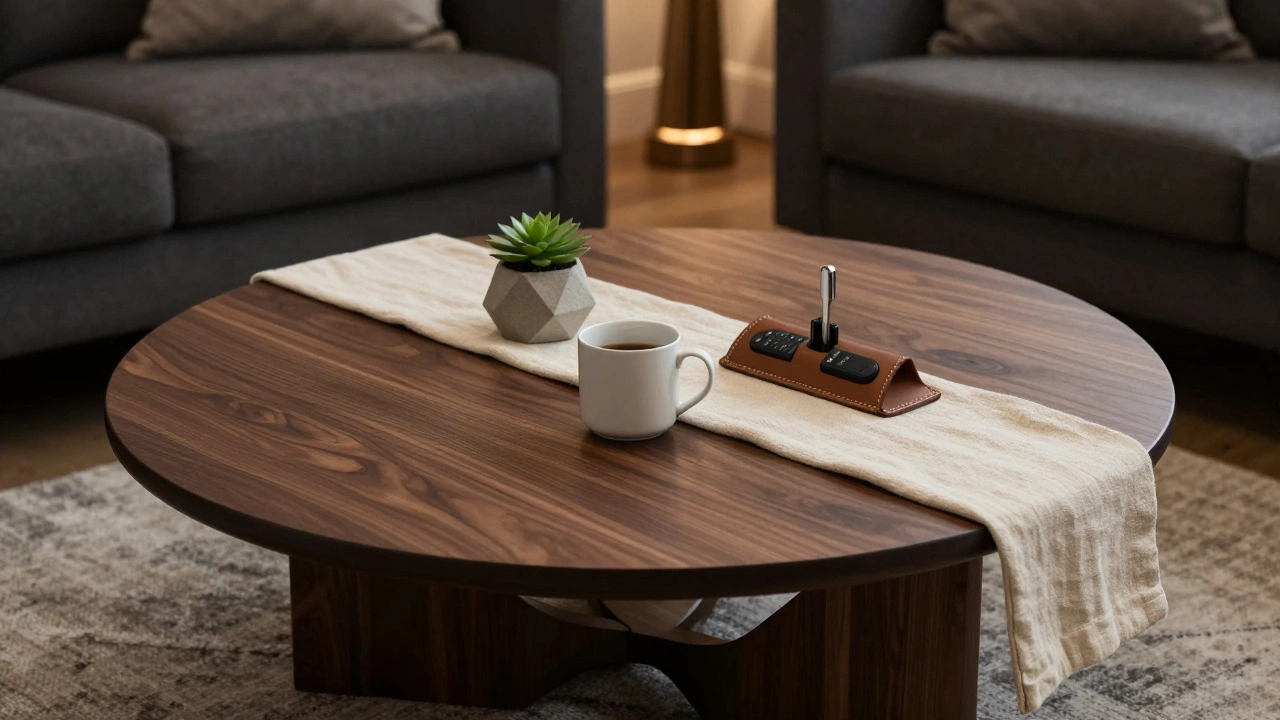
| Dark Walnut/Ebony | Bright whites, cream linens, silver | Dark brown accessories | Moody & Sophisticated |
Adding Life with Natural Elements
A room without something living often feels sterile. On a round coffee table, Biophilic Design-the practice of incorporating nature into the home-is the fastest way to make a space feel inviting.
Fresh flowers are the obvious choice, but if you don't have a green thumb, try a high-quality faux olive branch or a bowl of moss. If you want something more interactive, a small succulent arrangement in a geometric pot works well. The key is to pick a vessel that complements the table's shape. A round table pairs beautifully with a cylindrical vase or a soft, organic-shaped bowl.
Consider the scent too. A high-quality soy candle or a reed diffuser adds a sensory layer to the decor. Just be careful with placement; don't put a candle so close to the edge that a sleeve can knock it over, and ensure it's not directly under a low-hanging light fixture.
Balancing Function and Aesthetics
Your living room isn't a museum; it's where you actually live. The challenge is incorporating Functional Decor without making the table look like a junk drawer.
Coasters are a must, but instead of leaving them in a boring stack, place them in a small decorative dish. If you have a lot of remotes, find a stylish leather or felt organizer that blends in with your color palette. Even a small bowl of decorative beads or polished stones can serve as a 'catch-all' for small items like keys or jewelry while adding a pop of color.
If you use your table for dining or working, keep the center relatively clear. Use the 'C-shape' layout: place your decor in a crescent moon shape around the edge of the center, leaving a clear circular path in the middle for plates, laptops, or coffee mugs. This ensures you don't have to move three books and a vase every time you want to set down a snack.
Common Styling Pitfalls to Avoid
It's easy to overdo it. One common trap is the 'collection' look-putting ten small items of the same type (like ten small crystals) on the table. This creates visual noise and makes the table feel cluttered. Instead, group items by category but vary them by size.
Another mistake is ignoring the scale of the room. If you have a massive 48-inch round table in a small apartment, a tiny bud vase will look lost. You need a larger statement piece-like a wide wooden dough bowl filled with spheres-to match the table's scale. Conversely, on a small accent table, a giant vase will swallow the whole surface and make the room feel cramped.
Lastly, avoid symmetry. While symmetry is great for dining rooms, living rooms benefit from asymmetry. Placing everything perfectly centered can feel rigid. Shift your tray slightly to the left and your vase slightly to the right. This creates a relaxed, lived-in feel that encourages guests to actually sit down and get comfortable.
How many items should I put on a round coffee table?
The general rule is to use a group of three to five items. For example: a tray, a candle, a stack of books, and a small vase. This provides enough variety to be interesting without overwhelming the surface area.
Can I put a plant in the middle of a round table?
Absolutely. Plants are excellent for adding height and color. Just ensure the pot is stable and the plant's growth habit doesn't obstruct the view of people sitting across from each other.
What if my table is too small for a tray?
If a tray takes up too much space, skip it and use a single, larger 'anchor' item like a large decorative bowl or a chunky vase. This creates a central focal point without the need for a boundary.
Which colors work best for coffee table accessories?
Choose accessories that either complement your room's main color palette or provide a deliberate contrast. If your room is neutral, use a pop of color (like a deep blue vase). If your room is colorful, stick to neutrals (white, black, or wood) to balance the energy.
How do I keep a round table from looking cluttered?
Stick to the 60/40 rule: leave about 40% of the table surface empty. Use trays to group small items together and avoid placing items in a perfect circle around the edge, which can look like a ring of clutter.
Next Steps for Your Living Room
If you've mastered the coffee table, look at your side tables. Use similar textures-like bringing that same gold accent from your coffee table tray to a lamp on your end table-to create a cohesive flow through the room. If you find your round table is still feeling 'off,' try changing the height of your base layers; sometimes just adding one more book to a stack can fix the entire visual balance of the room.