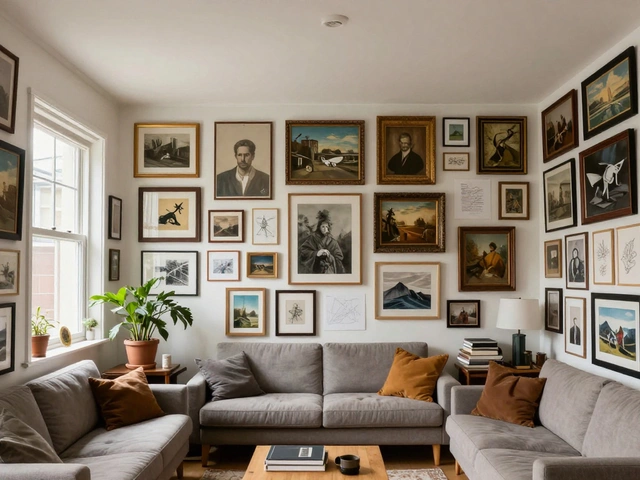
Can You Have Too Much Art on Your Walls? Finding Your Balance
Wall Art Balance Calculator
Your Design Guide
Quick Tips for Wall Art Balance
- Leave "white space" (negative space) to let your eyes rest.
- Group smaller pieces together to avoid a "scattered" look.
- Balance heavy frames with lighter elements or empty wall sections.
- Use a consistent color palette to tie diverse styles together.
- Ensure the scale of the art matches the size of the furniture below it.
The Psychology of Visual Overload
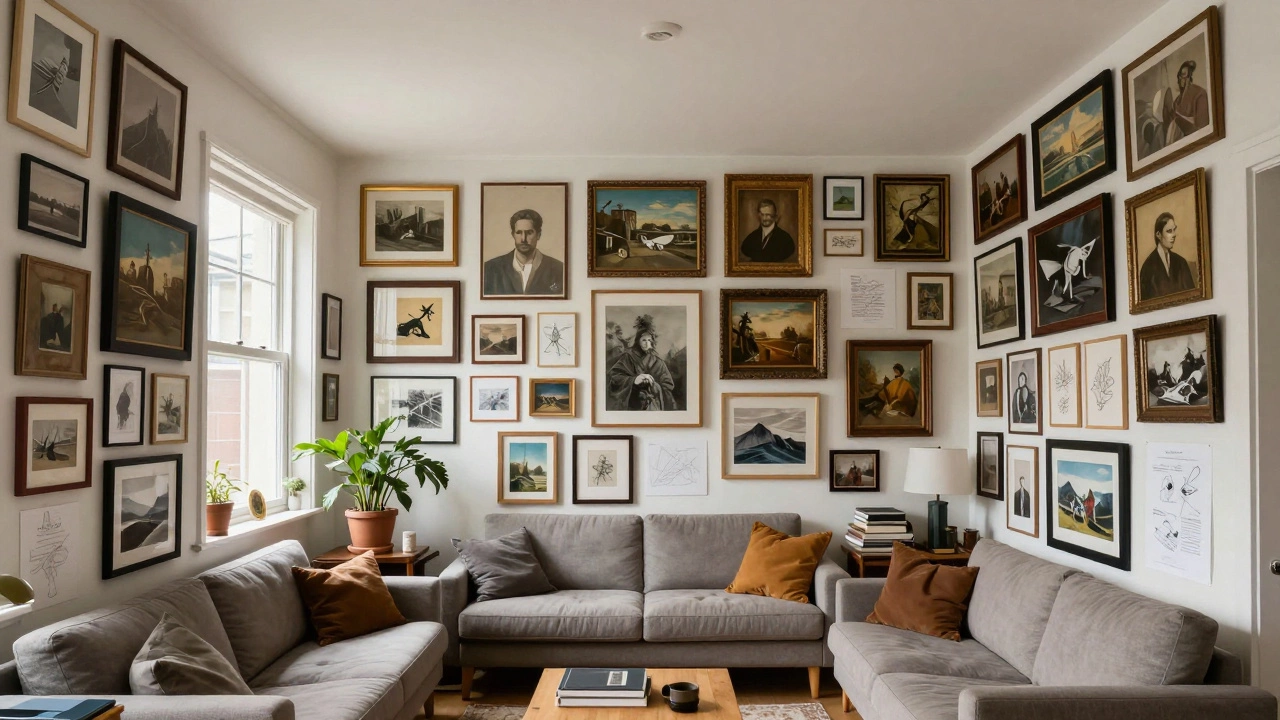
Our brains are wired to look for patterns and resting points. When every square inch of a wall is covered in frames, colors, and textures, the eye doesn't know where to land. This creates a subconscious feeling of anxiety or restlessness. In interior design, this is often referred to as "visual noise." If you find yourself avoiding a certain room because it feels "too much," you've likely hit the saturation point.
Interior Design is the art and science of enhancing the interior of a building to achieve a healthier and more aesthetically pleasing environment. One of its core tenets is balance. When you overdo the art, you disrupt the equilibrium between the objects in the room and the void around them. If the walls are screaming for attention, your furniture and lighting start to disappear into the background.
Maximalism vs. Clutter: Where is the Line?
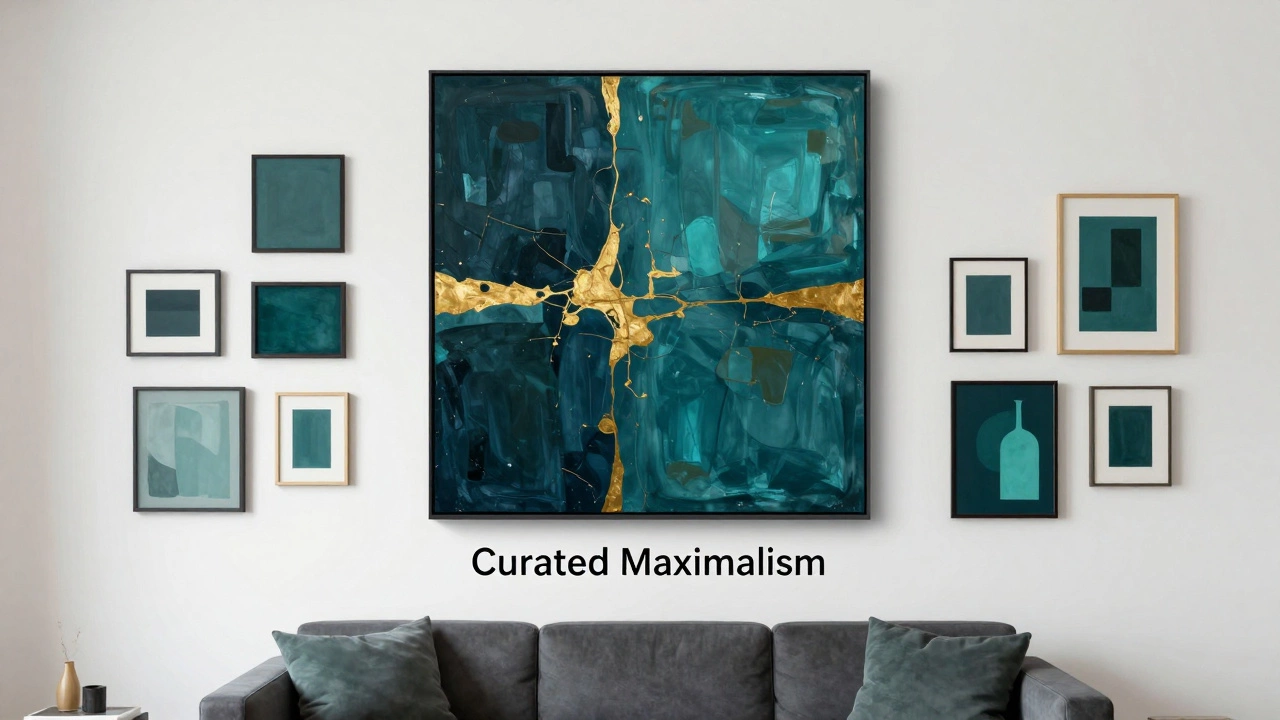
You might be thinking, "But I love the Maximalism look!" You're not alone. Maximalism is a legitimate design style that celebrates more-is-more, bold colors, and eclectic collections. However, there is a massive difference between a curated maximalist space and a cluttered one. A curated space has intention; a cluttered space has accumulation.
A successful maximalist wall uses a common thread to unify the chaos. Maybe it's a shared color, a similar frame style, or a consistent theme. If you have a neon pop-art piece next to a moody 19th-century oil painting, and then a random child's drawing in a plastic frame, you're drifting toward clutter. To keep it intentional, try the "anchor piece" method. Pick one large, dominant work of art and arrange smaller pieces around it. This gives the eye a primary destination before it explores the surrounding details.
| Feature | Curated Maximalism | Visual Clutter |
|---|---|---|
| Organization | Planned clusters or grids | Random placement |
| Color Palette | Cohesive or complementary | Clashing or random |
| Spacing | Intentional gaps (negative space) | Overcrowded edges |
| Sizing | Variety of scales (Large, Medium, Small) | All similar small sizes |
The Golden Rules of Art Placement
To avoid the "too much" feeling, you need a strategy for where things go. One of the biggest mistakes people make is hanging art too high. We call this "gallery drift," where art floats near the ceiling, leaving a giant, awkward gap between the sofa and the frame. The general rule of thumb is to hang art so the center is at eye level-roughly 57 to 60 inches from the floor.
Another critical factor is the relationship between the art and the furniture. If you have a massive Sofa, a tiny 8x10 print above it will look like a postage stamp on a billboard. Conversely, a massive canvas over a small accent chair can swallow the furniture whole. Aim for the art to occupy about 60% to 75% of the available wall space above a piece of furniture. This creates a visual connection and prevents the art from feeling like it's just "stuck on" the wall.
Consider the Gallery Wall approach. Instead of scattering five pieces across three different walls, group them into one high-impact zone. This leaves other walls empty, which provides the necessary "breathing room." When you leave a wall blank, you aren't wasting space; you're creating a frame for the rest of your home.
When to Edit Your Collection
How do you know when it's time to take something down? Try the "Fresh Eyes" test. Step out of the room, close the door, and then walk back in quickly. What is the first thing you notice? If your eye jumps frantically from one piece to another without settling, you have too much. If you feel a sense of overwhelm rather than inspiration, it's time to edit.
Editing doesn't mean getting rid of your favorite pieces. It means rotating them. Think of your walls like a museum exhibition. Museums don't show every piece they own at once; they curate a selection. Start a "vault" system where you store some of your art and swap them out every season. This keeps your home feeling fresh and prevents the decor from becoming invisible background noise.
Dealing with Small Spaces
In a small apartment or a narrow hallway, the risk of "too much" is much higher. In these areas, the scale of the art is your best friend. Instead of ten small frames, try one oversized piece of art. A single large mirror or a bold canvas can actually make a room feel larger by creating a focal point and reducing the number of visual "stops" the eye has to make.
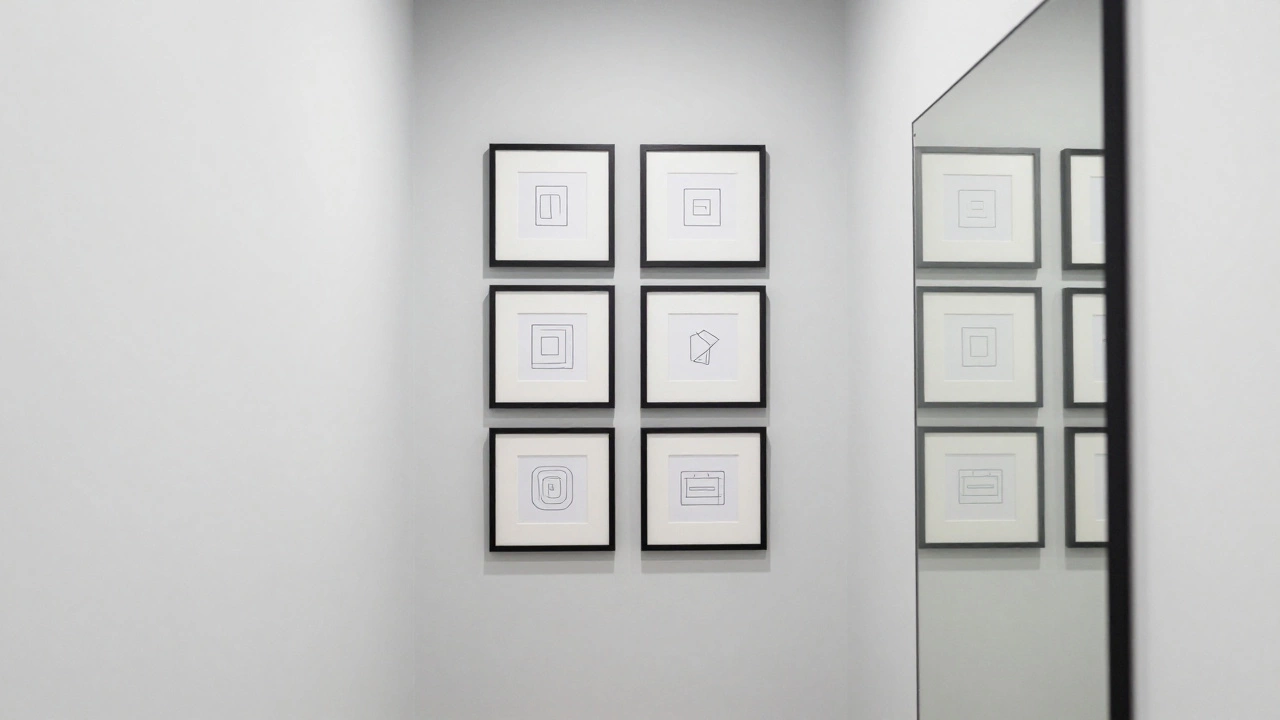
If you insist on a collection in a small space, use a tight grid. When frames are aligned perfectly in a square or rectangle, the brain perceives them as one single unit rather than twenty individual distractions. This trick uses Visual Symmetry to reduce the perceived clutter, allowing you to display more art without the room feeling cramped.
How much empty wall space should I leave?
While it varies by style, a good rule is the 30% rule. Try to leave about 30% of your wall surface unoccupied. This negative space acts as a visual palate cleanser, ensuring that the art you do display actually gets the attention it deserves.
Can I mix different frame styles on one wall?
Yes, but do it with purpose. If you mix gold, black, and wood frames, try to keep the art style consistent, or vice versa. If the art is eclectic, use matching frames to create a sense of order. Too much variety in both the art and the frames often leads to a cluttered look.
Is it okay to put art in the bathroom or kitchen?
Absolutely. Art makes every room feel finished. Just be mindful of the environment. Use sealed frames in bathrooms to prevent moisture damage, and avoid placing heavy art directly above a stove where grease can accumulate on the canvas.
What is the best way to plan a gallery wall without making holes?
The best method is to trace your frames onto brown craft paper, cut them out, and tape them to the wall using painter's tape. This allows you to move the "templates" around until the balance feels right before you ever pick up a hammer.
Does the color of the wall affect how much art I can hang?
Yes. Darker, moody walls (like navy or charcoal) absorb more light and can make a room feel smaller, which means art can feel more crowded. Lighter walls provide a neutral backdrop that can handle more pieces. If you have dark walls, stick to fewer, higher-contrast pieces to avoid a claustrophobic feel.
Next Steps for Your Space
If you're feeling overwhelmed right now, start with a simple audit. Take a photo of your room and look at it on your phone. For some reason, we see composition better in a photo than in real life. If the photo looks messy, start by removing the three smallest pieces. You'll be surprised how much a tiny bit of breathing room changes the whole vibe of the house.
For those who want to push the boundaries, explore the concept of "salon-style' hanging. This involves filling the wall from floor to ceiling, but it requires a very specific approach to balance and scale to work. If you're a beginner, stick to the focal point method first, then slowly expand your collection as you get a feel for the room's energy.