Is Commercial Construction More Expensive Than Residential?
Construction Cost Calculator
Estimate construction costs for residential or commercial projects based on New Zealand data from 2025. Compare costs for different project types to understand why commercial construction is more expensive.
When you hear someone say commercial construction is more expensive than residential, they’re usually right-but not for the reasons you might think. It’s not just about bigger buildings or more bricks. The real cost difference comes down to what’s required behind the walls, under the floor, and above the roof. If you’re comparing a small office building to a three-bedroom house, the answer is obvious. But even when you match square footage, commercial projects still cost more. Why? Let’s break it down.
Materials and Building Codes
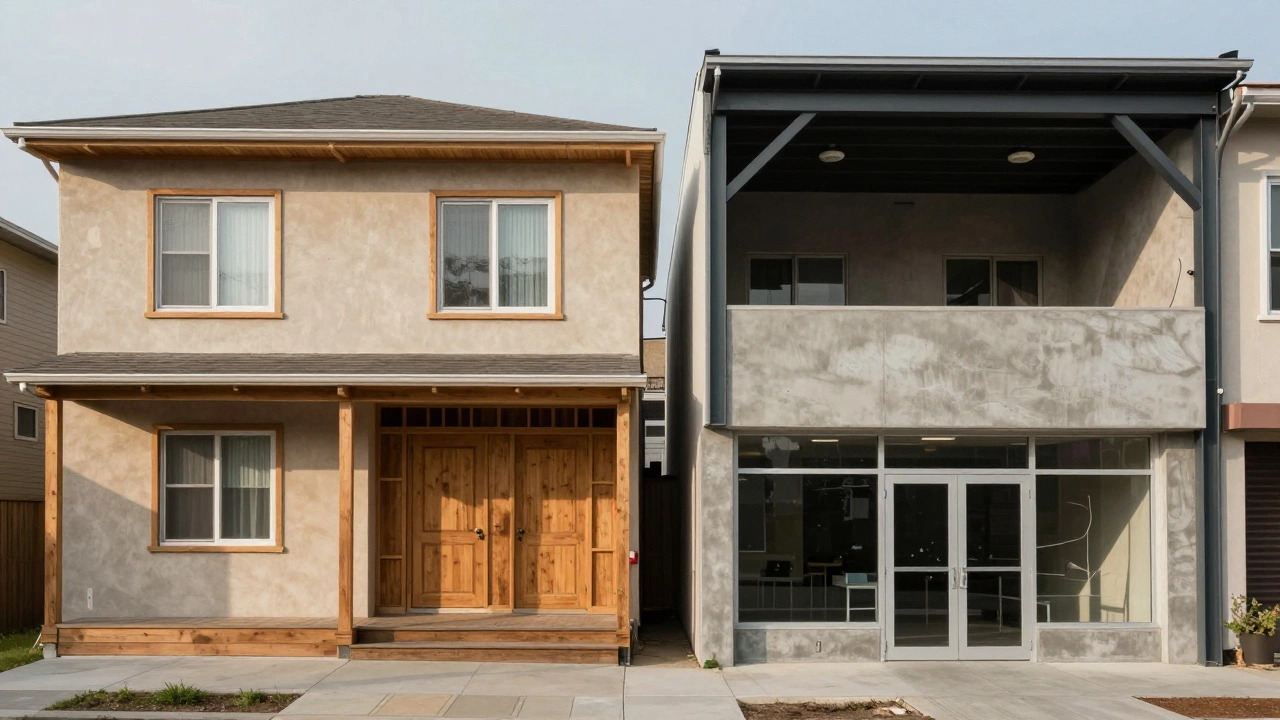
Residential buildings follow the International Residential Code (IRC), which is designed for homes. Commercial projects follow the International Building Code (IBC), and that difference alone adds cost. IBC requires heavier steel frames, fire-rated walls, sprinkler systems, and emergency exits you won’t find in a house. A typical commercial building might need 20% more structural steel than a house of the same size. Concrete slabs are thicker-up to 6 inches instead of 4-and reinforced with more rebar. Fireproofing isn’t optional; it’s mandatory. In New Zealand, commercial buildings must meet NZS 3604 for fire safety and accessibility, which pushes material costs higher.
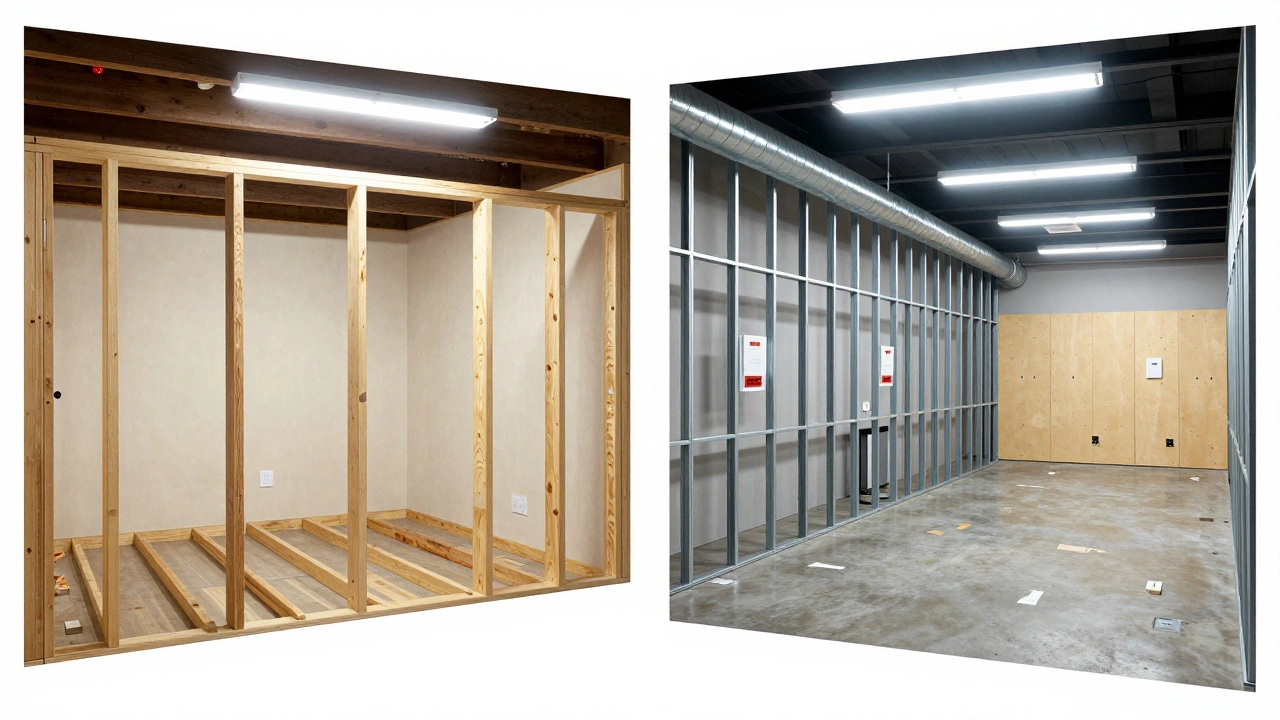
Think about a retail space versus a suburban home. Both might be 2,000 square feet. The house uses wood framing, standard drywall, and basic insulation. The retail space? Steel studs, gypsum board with fire ratings, commercial-grade insulation, and a vapor barrier that meets commercial HVAC standards. Even the flooring changes: vinyl tile in a home becomes epoxy-coated concrete or commercial-grade tile in a store. These aren’t upgrades-they’re legal requirements.
Labour and Specialized Skills
Residential crews are often generalists. A carpenter might do framing, roofing, and trim. In commercial work, you need specialists. Electricians don’t just wire outlets-they install emergency lighting, fire alarm systems, and complex HVAC controls. Plumbers handle grease traps, commercial drains, and backflow preventers. HVAC technicians size systems for 24/7 operation, not just seasonal use. Each of these trades charges more for commercial jobs because the work is more complex and carries higher liability.
In Auckland, a residential electrician might charge $80-$100 per hour. A commercial electrician working on a warehouse or medical clinic? $130-$160. Why? Because they’re dealing with 480-volt systems, emergency generators, and compliance inspections that can shut down a project if anything’s off. One mistake in a commercial building can mean a city-wide shutdown. That kind of risk doesn’t come cheap.
Permits, Inspections, and Delays
Getting a permit for a house is straightforward. You submit plans, pay a fee, and wait a couple of weeks. For a commercial building? It’s a process. You need structural, mechanical, electrical, and accessibility reviews. In New Zealand, you must get sign-off from the local council, the Building Code Compliance team, and sometimes WorkSafe NZ if heavy machinery is involved. Each review takes time. Delays aren’t rare-commercial projects often wait 6-12 weeks just for permits.
And inspections? Residential inspections are one or two visits. Commercial buildings get weekly checks during construction. Each inspection adds cost. If something fails, you fix it, then pay again to re-inspect. One client in Christchurch spent $14,000 extra on re-inspections alone because the fire sprinkler layout didn’t match the approved plans. That’s not a mistake-it’s standard.
Design and Engineering Complexity
Residential designs are often based on templates. You pick a floor plan, tweak a window, and you’re done. Commercial projects need full engineering packages: structural calculations, wind load analysis, seismic ratings, energy performance modeling, and accessibility audits. A small office building might require 50+ pages of engineering drawings. A house? Maybe 15.
Architects charge more for commercial work because the liability is higher. If a residential house collapses, it’s one family. If a commercial building fails, it’s dozens of people, insurance claims, lawsuits, and regulatory penalties. That’s why commercial architects often work with structural engineers, fire safety consultants, and acoustic specialists-all of whom bill by the hour. A $500,000 house might have $40,000 in design fees. A $1.2 million retail unit? $150,000.
Equipment and Logistics
Building a house? You use a small crane, a skid steer, and a dump truck. Building a two-story commercial space? You need a tower crane, concrete pumps, heavy-duty scaffolding, and temporary power systems. The equipment rental alone can add $20,000-$50,000 to the project. In Auckland, where space is tight and traffic is heavy, moving materials to a downtown commercial site costs more than delivering to a suburban lot. You pay for after-hours delivery, traffic control, and noise permits.
One builder in Wellington told me about a café fit-out on a busy street corner. They had to schedule concrete pours for 2 a.m. to avoid blocking traffic. That meant paying double overtime for the crew, plus $3,000 in traffic management fees. That’s not a one-off-it’s the norm for urban commercial builds.
Finishing Touches and Long-Term Costs
Residential finishes are about comfort and style. Commercial finishes are about durability and maintenance. A home might use painted drywall. A commercial space uses vinyl-wrapped panels that can be wiped down daily. Carpet in a home? Wool blend. In a retail space? Commercial-grade nylon with 10-year warranties. Light fixtures? LED bulbs in a house. In a warehouse? High-bay LEDs with motion sensors and 50,000-hour lifespans.
And don’t forget HVAC. A house has one system. A commercial building might have three: one for offices, one for retail, one for storage. Each needs separate zoning, filters, and maintenance schedules. Annual maintenance for a commercial HVAC system can cost $8,000-$15,000. For a house? $500-$800.
Real-World Cost Comparison
Let’s look at real numbers from 2025 Auckland data:
| Project Type | Cost per m² (NZD) | Notes |
|---|---|---|
| Residential Home (3-bedroom) | $3,200 | Standard finishes, wood frame, basic systems |
| Small Office Building (100 m²) | $5,800 | Steel frame, fire-rated walls, commercial HVAC |
| Retail Store (200 m²) | $6,500 | Concrete slab, epoxy floor, ADA-compliant entrances |
| Warehouse (500 m²) | $4,900 | Simple structure, high ceilings, minimal finishes |
Notice the warehouse is cheaper than the retail store? That’s because it’s function-driven, not customer-facing. But even the warehouse still costs 50% more than a home per square metre. And that’s before land costs, which are often higher for commercial zones.
When Commercial Isn’t More Expensive
There are exceptions. If you’re building a tiny office pod in your backyard-say, 20 square metres-it might cost less than a full home renovation. But that’s not a true commercial build; it’s a shed with a desk. True commercial construction, by definition, is built to serve the public or business operations. That means compliance, safety, and durability. Those aren’t optional.
Another exception: older homes being converted into shops. Sometimes, renovating an old building is cheaper than building new. But even then, you’re paying to bring the structure up to code-adding fire exits, upgrading wiring, installing sprinklers. The cost savings are rarely more than 15-20%.
What You’re Really Paying For
You’re not paying for more square footage. You’re paying for safety, reliability, and legal compliance. A commercial building has to last 50+ years with constant use. It has to handle 50 people walking through it every hour, 7 days a week. It has to survive earthquakes, storms, and heavy foot traffic. A house? It’s meant for one family, with occasional guests.
That’s why commercial construction costs more. It’s not greed. It’s physics, law, and responsibility.
Is it cheaper to convert a house into a business space than build new?
Usually not. While buying an existing house might seem cheaper, bringing it up to commercial code often costs more than building new. You’ll need to add fire exits, upgrade electrical systems, install sprinklers, and meet accessibility standards-all of which require structural changes. In many cases, the total cost ends up being 80-120% of what a new small commercial building would cost.
Why do commercial buildings need sprinklers if homes don’t?
Because commercial buildings house more people, more flammable materials (like retail stock or office equipment), and operate longer hours. A house fire might involve one family. A fire in a retail store could trap 20+ customers and staff. Building codes require sprinklers in commercial spaces to reduce the risk of mass casualties and property loss. Insurance companies also demand them-without sprinklers, premiums can double or triple.
Can I save money by using residential materials in a commercial project?
No. Using residential-grade materials in a commercial building violates building codes and voids insurance. Fire-rated drywall, commercial HVAC systems, and steel framing aren’t optional upgrades-they’re legal requirements. If you’re caught using non-compliant materials during an inspection, you’ll be forced to tear it out and rebuild. The cost of that mistake can be 3-5 times what you saved.
Do commercial buildings have higher ongoing costs?
Yes. Commercial buildings have higher energy bills, more frequent maintenance, mandatory inspections, and stricter cleaning standards. A typical commercial HVAC system needs servicing every 3 months. A residential one? Twice a year. Commercial lighting systems require monthly checks. Insurance, security, and waste removal are also more expensive. These costs add up to $10-$20 per square metre annually-something homeowners rarely face.
Is there a minimum size for commercial construction?
No official minimum size exists, but most councils classify any building used for business, retail, or public service as commercial-even if it’s just 15 square metres. A kiosk, a home-based studio that takes clients, or a converted garage used for repairs all fall under commercial codes. Size doesn’t matter; use does.
Final Thought
If you’re thinking about starting a business and wondering whether to build or buy, remember this: commercial construction isn’t just about space-it’s about safety, compliance, and long-term function. The higher cost isn’t a penalty. It’s the price of doing business where people gather, work, and spend money. You’re not paying for luxury. You’re paying for peace of mind-for your staff, your customers, and your future.