How Many Days Does It Take to Renovate a House? Real Timelines from New Zealand Homes
Renovation Timeline Calculator
Calculate Your Renovation Timeline
Estimated Timeline
Select your renovation scope and complications to see your estimated timeline.
There’s no single answer to how long a house renovation takes. It could be three weeks or six months, depending on what you’re doing. A simple paint job? Maybe a weekend. A full kitchen and bathroom overhaul? You’re looking at months. And if you’re dealing with hidden damage, permits, or supply delays? That timeline can stretch even longer. I’ve seen homes in Auckland go from dusty floors to move-in ready in under a month - and others stuck in limbo for over a year. Let’s cut through the guesswork.
Small Renovations: Under 3 Weeks
These are the quick wins. Things like repainting a room, swapping out light fixtures, or replacing cabinet hardware. If you’re only touching the surface, you’re not disrupting the structure. Most of these jobs don’t need permits. A full room repaint with new trim and flooring? That usually takes 10 to 14 days, assuming no major prep work. You’ll need to move furniture, sand walls, prime, paint, and let everything dry. Add in a day or two for cleanup. A bathroom refresh - new vanity, faucet, tiles on the floor - can be done in 10 to 12 days if the plumbing is already in good shape. No moving walls. No rewiring. Just updates.
Medium Renovations: 3 to 8 Weeks
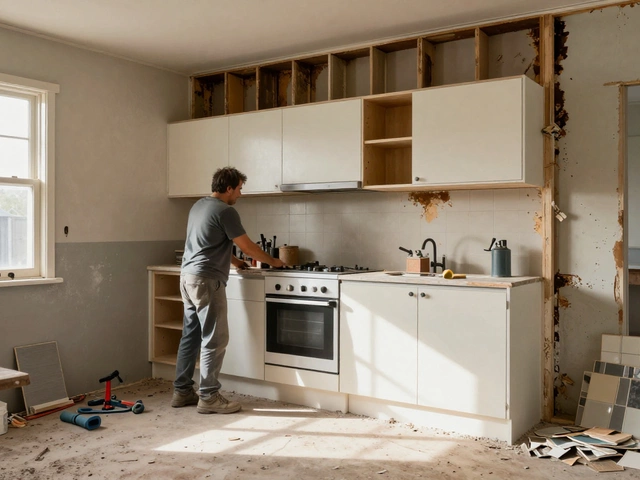
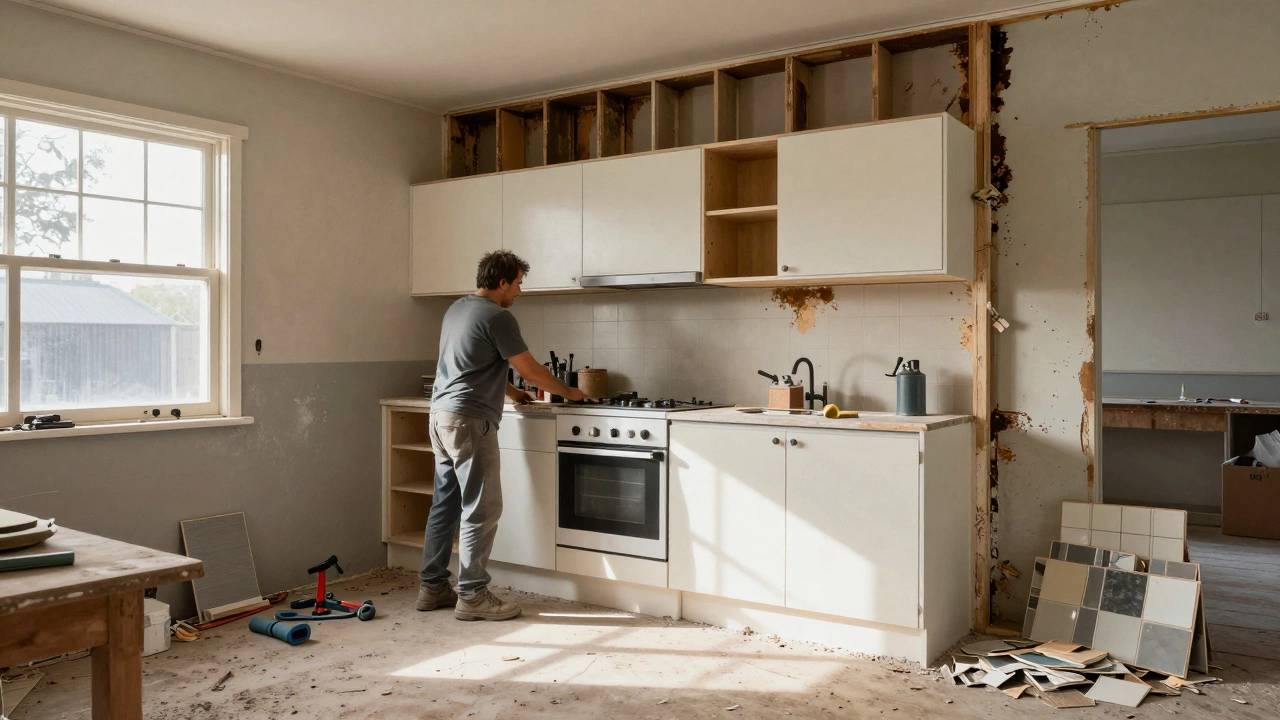
This is where most homeowners get surprised. A kitchen remodel that swaps out cabinets, countertops, and appliances? That’s usually 5 to 7 weeks. You’ll need to tear out old cabinets, move plumbing or electrical lines if you’re changing the layout, install new ones, and wait for custom parts. In New Zealand, delivery delays for quartz countertops or European-style cabinets can add 2 to 3 weeks on their own. A full bathroom reno - new shower, tiles, lighting, heating, and plumbing - takes 4 to 6 weeks. If you’re relocating the toilet or moving the shower, you’re adding structural work, which means more time for inspections and drying. And don’t forget: once the walls are open, you might find mold, outdated wiring, or rotting timber. That’s not a surprise - it’s a standard part of renovation.
Large Renovations: 2 to 6 Months
When you’re talking about adding a room, moving load-bearing walls, or gutting an entire floor, you’re in the long game. A full-house renovation in a 1970s bungalow in Mt Roskill? That’s typically 4 to 5 months. Why so long? Permits. Inspections. Weather. Delays. You need council approval for structural changes, and in Auckland, that can take 4 to 8 weeks just to get a response. Then there’s the ordering of materials - timber, windows, insulation - which can sit in a warehouse for weeks if there’s a supply backlog. Plumbing and electrical rough-ins take time. Insulation and drywall need to cure. Paint needs multiple coats and drying time between each. And if it rains? That’s two days lost on the exterior. One client I worked with thought they’d be done in 10 weeks. They ended up at 22 weeks because the roof trusses were damaged and had to be replaced. That’s not rare.
What Slows Things Down?
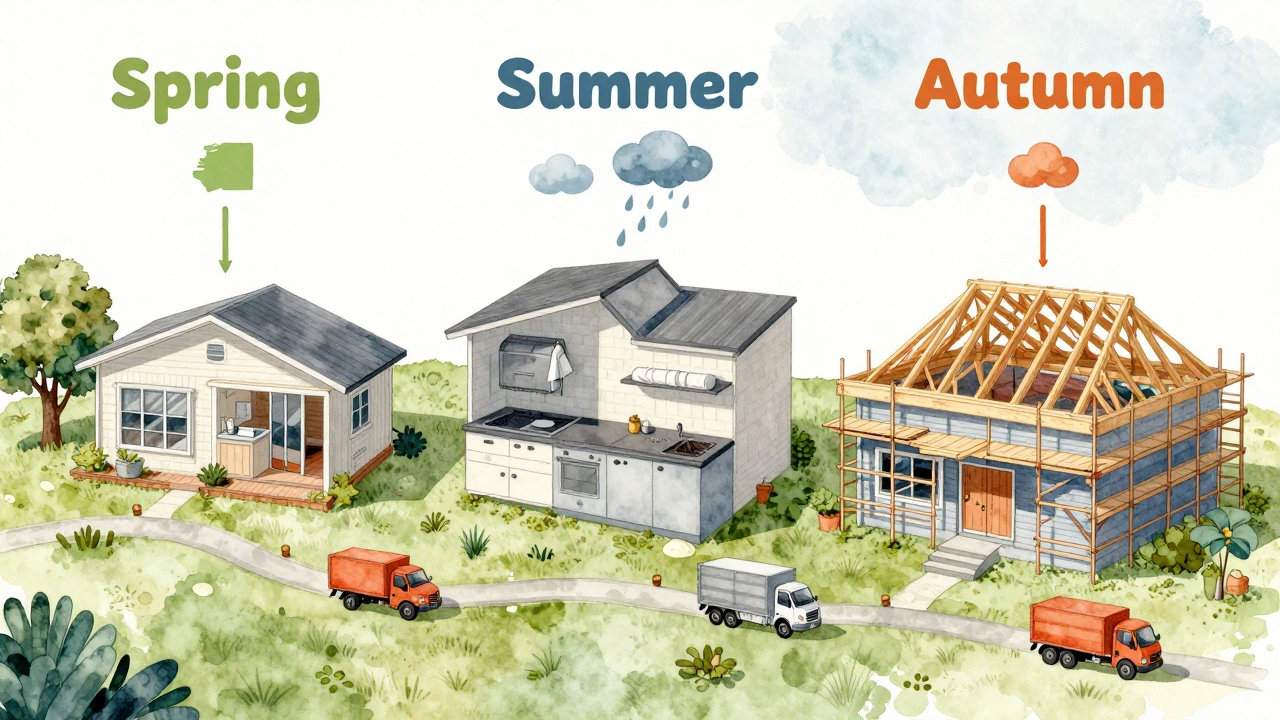
Most people assume the actual work is the slow part. It’s not. It’s the waiting. Here’s what actually eats up time:
- Permits - In Auckland, you need a building consent for almost anything that moves a wall, changes plumbing, or adds square footage. Processing times vary. Some councils take 10 days. Others take 6 weeks. Plan for 4 weeks.
- Material delays - A custom kitchen door from Europe? That’s 8 to 10 weeks. A specific tile from Italy? 6 weeks. Even local suppliers are struggling with backlogs. Don’t order last-minute.
- Weather - Rain delays exterior work. In Auckland, it rains 150+ days a year. If you’re replacing windows or siding, you’re at the mercy of the forecast.
- Hidden issues - Old houses have surprises. Asbestos insulation, rotting floor joists, outdated wiring. These aren’t rare. They’re expected. Budget 10% extra time for these.
- Contractor availability - Good tradespeople are booked out 3 to 6 months in advance. If you wait until March to start, you might not get a plumber until July.
How to Speed Things Up
You can’t eliminate delays - but you can reduce them.
- Get permits early - Submit your plans as soon as you have a design. Don’t wait until the day you want to start.
- Order materials before breaking ground - Order tiles, cabinetry, windows, and fixtures 60 days before you need them. Even if you’re not ready to install yet.
- Choose standard sizes - Custom everything = custom delays. Standard window sizes, pre-made cabinets, and off-the-shelf tiles are faster.
- Plan for weather - If you’re doing exterior work, schedule it for late spring or early autumn. Avoid winter.
- Have a contingency fund - Set aside 15% of your budget for surprises. Time and money.

Real Examples from Auckland Homes
Here’s what actual projects looked like last year:
- One-bedroom flat in Ponsonda - Repainted, new flooring, updated bathroom. Took 18 days. No structural changes.
- 1950s bungalow in Glen Eden - Full kitchen and bathroom reno, new insulation, rewiring. Took 14 weeks. Delayed 3 weeks due to a missing council inspection.
- Two-story house in Howick - Added a second bathroom, moved stairs, extended the living room. Took 22 weeks. The roof had to be replaced after the inspection found water damage.
Notice the pattern? The bigger the change, the more time it takes - but the hidden delays are what really stretch timelines.
What You Should Expect
Here’s a rough guide based on scope:
| Scope | Typical Duration | Common Delays |
|---|---|---|
| Painting + minor updates | 1-3 weeks | Drying time, furniture moving |
| Bathroom reno (no structural changes) | 4-6 weeks | Plumbing supply delays, tile curing |
| Kitchen reno (new cabinets, appliances) | 5-8 weeks | Custom cabinetry, countertop delivery |
| Full-house reno (one floor) | 3-5 months | Permits, hidden damage, weather |
| Full-house reno (entire home + extension) | 5-8 months | Structural engineering, council inspections |
These aren’t estimates. These are averages from actual projects in Auckland over the last 12 months. If your contractor says it’ll take 6 weeks for a full kitchen, ask: “What’s included? Are you factoring in permit time? What if the sink delivery is late?”
Final Reality Check
There’s no magic number. But there is a pattern: the more you change, the longer it takes - and the more things you can’t control. A bathroom reno isn’t just about installing a new tub. It’s about navigating permits, waiting for materials, and dealing with surprises behind the walls. If you’re planning a renovation, don’t just plan the work. Plan the waiting. Build in buffer time. Talk to your contractor about what’s likely to go sideways. And don’t assume your timeline is the same as your neighbor’s. Every house is different. Every job is unique. The best thing you can do? Start early. Order early. And expect the unexpected.
Can I live in my house while it’s being renovated?
Yes - but only if you’re doing small updates like painting or replacing fixtures. If you’re tearing out a kitchen or bathroom, you’ll lose access to water, electricity, or cooking facilities. Most homeowners move out for major renovations. If you stay, expect dust, noise, and limited access to rooms. In Auckland, many people rent a short-term apartment or stay with family during full reno phases.
Do I need a building consent for every renovation?
No - but you need one for anything that changes the structure, plumbing, electrical, or adds square footage. Painting, replacing flooring, or swapping out a faucet doesn’t need consent. Moving a wall, adding a window, or extending a bathroom does. Always check with your local council. In Auckland, failing to get consent can lead to fines or being forced to undo the work.
Why do renovations take longer in New Zealand than in other countries?
Several reasons: strict building codes, longer permit processing times, supply chain issues from overseas (especially for fixtures and tiles), and a shortage of skilled tradespeople. New Zealand also has high rainfall, which delays outdoor work. In Australia or the U.S., similar projects might take 20-30% less time. In New Zealand, you need to build in extra time for delays.
How do I avoid getting scammed by contractors who promise fast timelines?
Ask for a written schedule with milestones. A reputable contractor will break the job into phases: demolition, plumbing, electrical, insulation, drywall, painting, fixtures. They’ll also show you how long each phase takes. If they say “we’ll finish in 4 weeks” without details, walk away. Also, check their past work. Ask for 3 references from recent projects. If they can’t provide them, they’re likely overpromising.
What’s the most common mistake people make when planning a renovation?
They focus only on the work, not the waiting. They pick a start date based on when they want it done, not when they can actually get materials or permits. The biggest mistake? Not ordering materials early. Many homeowners think they can wait until demolition is done to pick tiles or cabinets. That adds 6 to 8 weeks. Plan everything - even the little things - before you start.