Commercial vs Residential Construction: Costs, Rules, and Which Fits Your Project
Construction Cost & Type Estimator
Project Details
Analysis Results
Enter your project details to see cost estimates and recommendations.
Imagine standing on a vacant lot. You want to build something there. Do you put up a cozy family home with a backyard, or do you erect a multi-story office block that houses fifty employees? The answer isn't just about what you like; it’s about two completely different worlds of engineering, law, and money. This is the core question behind "what is better commercial or residential?"
There is no single winner here. Commercial construction and residential construction serve different masters. One prioritizes human comfort and livability; the other prioritizes durability, efficiency, and return on investment. Choosing the wrong path can lead to massive budget overruns, legal nightmares, or a building that simply doesn't work for its intended purpose.
The Core Differences in Design and Purpose
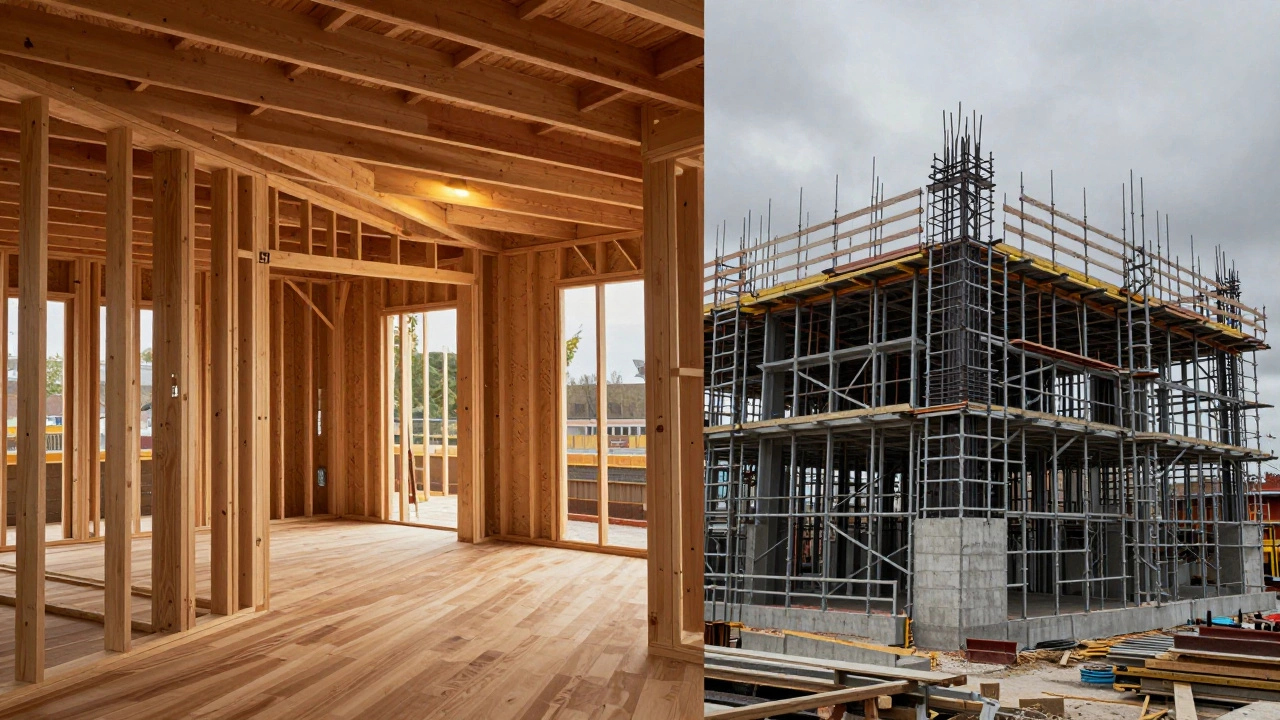
At their heart, Residential construction is the process of building structures intended for people to live in, such as single-family homes, apartments, and townhouses. The primary goal is comfort. You design around how humans sleep, cook, and relax. Walls are thinner because soundproofing needs are lower. Materials are chosen for warmth and aesthetics-think hardwood floors and soft lighting.
In contrast, Commercial construction is the development of buildings used for business activities, including offices, retail stores, warehouses, and industrial facilities. Here, the goal is function and longevity. A warehouse floor must withstand heavy forklifts. An office lobby needs to handle hundreds of footfalls an hour without wearing down. Durability beats decor. You see more concrete, steel, and glass-not because they look nicer, but because they last longer under heavy use.
Think of it this way: if you spill coffee in your kitchen, you wipe it up. If a thousand people walk through a commercial lobby every day, the flooring has to survive that traffic for decades without needing replacement. That fundamental difference drives every other decision in the project.
Building Codes and Regulatory Hurdles
This is where most beginners get tripped up. The rules for building a house are significantly simpler than the rules for building a store. In New Zealand, for example, residential projects often fall under specific council bylaws that are straightforward for homeowners to navigate. You need a consent, you hire a builder, and you build.
Commercial projects face a stricter beast. They must comply with complex international building codes focused on safety for large groups of people. Fire suppression systems, multiple emergency exits, ADA compliance (or local equivalents like accessibility standards), and rigorous ventilation requirements are mandatory. You aren't just protecting one family; you're protecting the public.
- Residential: Focuses on habitability, basic structural integrity, and energy efficiency for individual units.
- Commercial: Focuses on fire safety, crowd control, accessibility, and environmental impact on the surrounding area.
If you try to build a commercial space using residential codes, you will fail inspection. If you apply commercial codes to a small home, you will waste thousands of dollars on unnecessary infrastructure. Knowing which code applies is step one.
Cost Structures and Budgeting
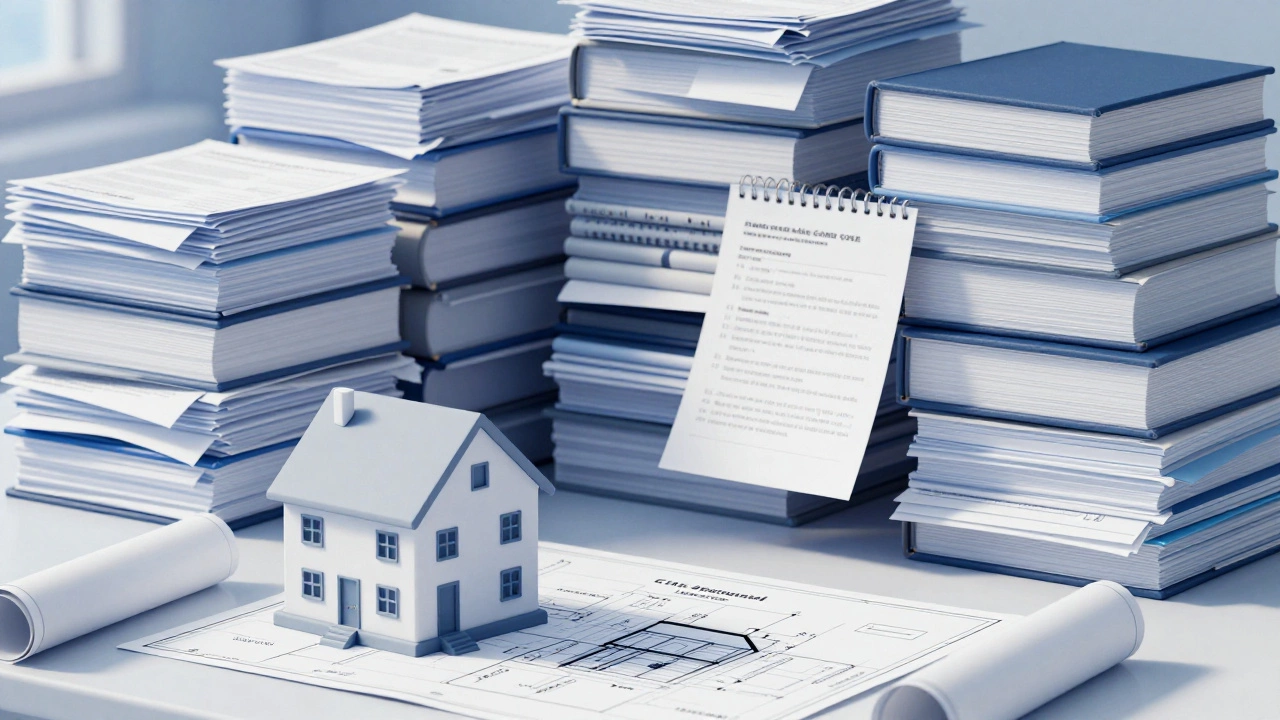
Money talks loud in construction. Generally speaking, commercial construction costs more per square meter than residential. Why? Because commercial buildings require higher-grade materials and more specialized labor. However, the cost structure looks different.
Residential budgets are often fixed. You have a set amount for the foundation, framing, roofing, and finishes. Changes mid-project are expensive because custom work is involved. Commercial budgets are often tied to long-term contracts with general contractors who manage subcontractors. While the upfront cost is higher, commercial projects can achieve economies of scale. Buying steel beams for a ten-story building is cheaper per unit than buying lumber for one house.
| Factor | Residential Construction | Commercial Construction |
|---|---|---|
| Average Cost per m² | Lower to Moderate | Moderate to High |
| Material Quality | Aesthetic-focused (wood, drywall) | Durability-focused (concrete, steel) |
| Labor Specialization | General carpenters, electricians | Specialized trades, union labor |
| Permitting Fees | Standard municipal fees | Higher fees due to complexity |
Don't forget hidden costs. Commercial projects often require environmental impact assessments, traffic studies, and zoning variances that residential projects rarely need. These soft costs can add tens of thousands to your budget before a single shovel hits the ground.
Timeline and Project Duration
Time is money, especially in business. Residential projects typically take longer relative to their size. A single-family home might take six to twelve months to complete. Why? Because residential builders often work on one job at a time, and weather delays affect exterior work heavily. Plus, homeowners often change their minds about tile colors or cabinet styles, causing pauses.
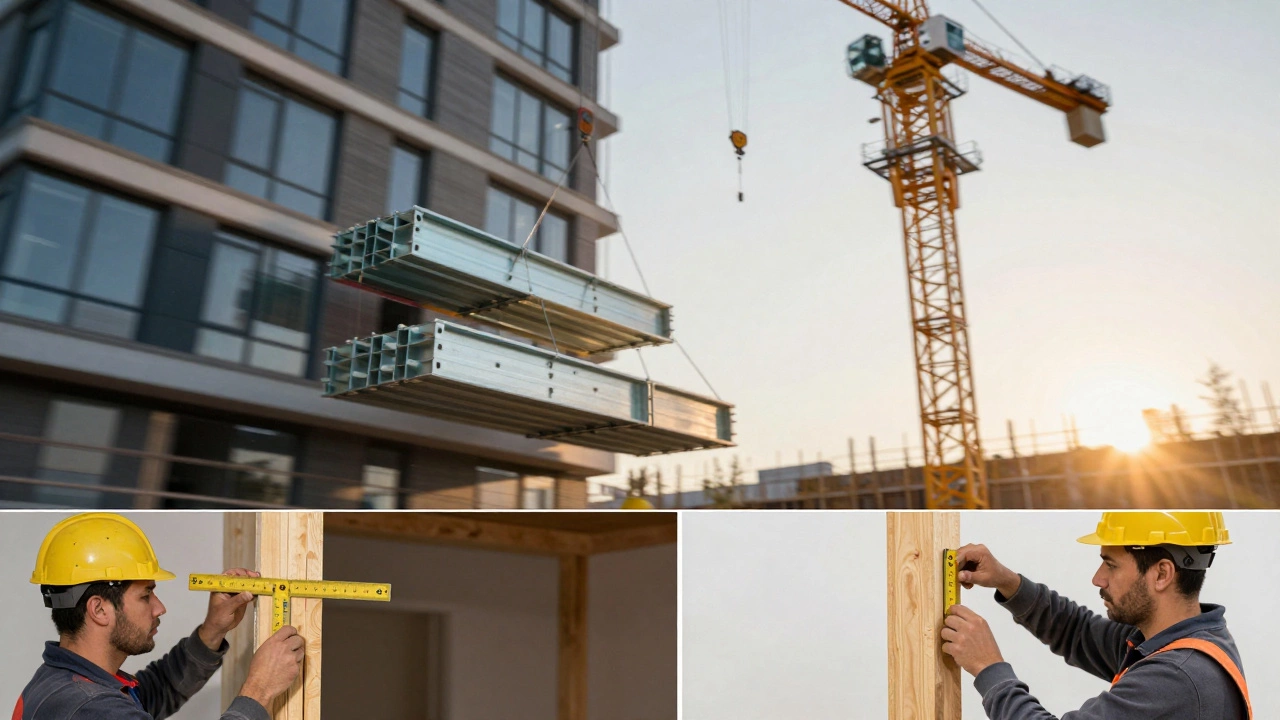
Commercial construction moves faster. Large firms use prefabricated components and parallel workflows. While the foundation is being poured, the steel frame might already be ordered. Electrical rough-ins happen simultaneously with plumbing. A medium-sized commercial building can be erected in three to six months. Speed is essential because businesses lose revenue for every day they aren't open.
If you need occupancy quickly, commercial methods win. If you want a bespoke, personalized living space, the slower residential pace allows for that attention to detail.
Which Is Better for You?
So, back to the original question: What is better? It depends entirely on your goals.
Choose residential construction if:
- You are building a place to live or sell to families.
- Your budget is tighter and requires standard materials.
- You value aesthetic customization and personal comfort.
- You are dealing with simpler zoning laws and fewer regulatory hurdles.
Choose commercial construction if:
- You are developing a revenue-generating asset (office, retail, hotel).
- You need high durability and low maintenance over decades.
- You require large, open floor plans for flexible use.
- You have the capital to handle higher upfront costs and complex permitting.
In Auckland, for instance, the boom in apartment living blurs these lines slightly. Multi-unit residential buildings often adopt commercial construction techniques for speed and safety, even though they are legally residential. Understanding this hybrid approach is key for modern investors.
Can I build a commercial space on residential land?
Generally, no. Zoning laws strictly separate commercial and residential uses. Building a store on a plot zoned for housing will result in denied permits and potential fines. Always check with your local council's planning department before purchasing land.
Is commercial construction more expensive than residential?
Yes, typically. Commercial projects involve higher material costs (steel vs. wood), more stringent safety codes, and specialized labor. However, the cost per square meter can sometimes be competitive due to economies of scale in larger projects.
How long does it take to build a commercial building?
A small commercial project like a retail shop might take 6-9 months. Larger office complexes or hotels can take 18-24 months. This is generally faster than comparable residential projects due to streamlined processes and prefabrication.
What are the biggest risks in commercial construction?
The biggest risks include regulatory delays, budget overruns due to material price fluctuations, and labor shortages. Unlike residential projects, commercial timelines are tight, so any delay directly impacts profitability.
Do I need a special license for residential construction?
In many regions, including New Zealand, you need a Licensed Building Practitioner (LBP) for certain critical work in residential construction. For commercial projects, licensing requirements are even more stringent, requiring certified engineers and project managers.