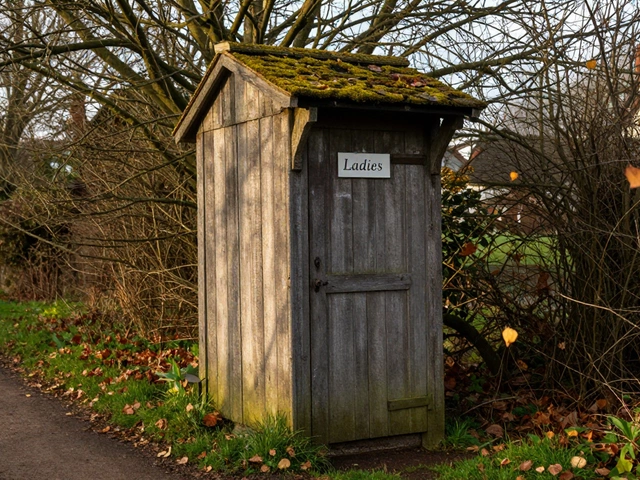
Why Do Old Houses Have Toilets Outside?
Outhouse vs. Indoor Toilet Cost Calculator
Compare the historical costs of maintaining an outhouse versus installing indoor plumbing based on household size.
Enter household size to see the comparison
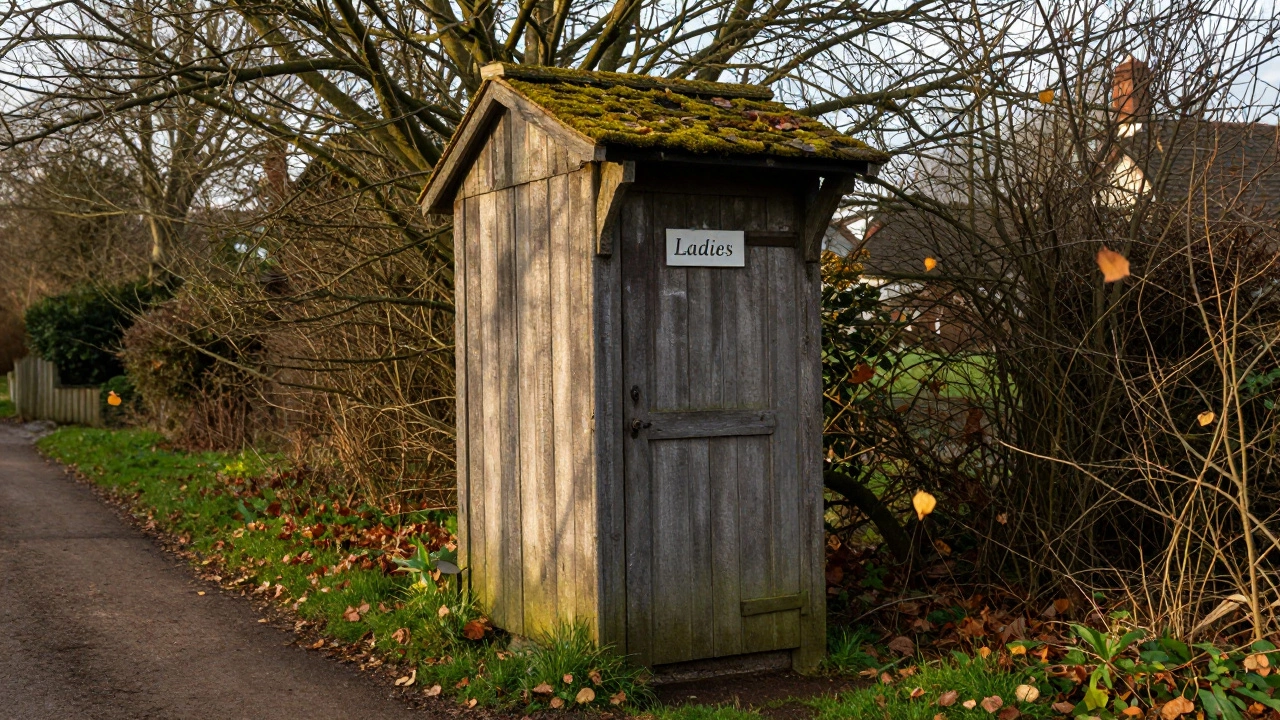
Walk through an old farmhouse in rural America, a cottage in the English countryside, or a pioneer cabin in New Zealand’s South Island, and you’ll likely find it: a small wooden shed tucked behind the house, with a hole in the ground and a sign that says "Ladies" or "Gentlemen." It’s not a storage shed. It’s not a tool shed. It’s an outhouse - and it was once the standard bathroom for millions of homes.
Why did people put toilets outside? It wasn’t because they didn’t care about comfort. It wasn’t because they were lazy. It was because they had no other choice.
The Real Reason: No Running Water, No Sewers
Before the 20th century, most homes didn’t have indoor plumbing. Water came from wells, pumps, or rain barrels. Waste didn’t go anywhere - it piled up. If you put a toilet inside, you’d be inviting a slow, stinking disaster.
Early indoor toilets, when they existed at all, were just holes in the floor that emptied into a cesspit below the house. Those pits filled up fast. Every few years, a "honey wagon" - a cart driven by men with buckets and shovels - would come to dig out the sludge. It was messy, dangerous, and smelled terrible. Even the wealthiest families avoided it.
Putting the toilet outside meant waste could be collected in a deep pit, far from living spaces. The smell drifted away. The risk of contamination dropped. And the pit could be filled and relocated when full. Simple. Practical. Necessary.
Design Features You Didn’t Know About
These weren’t just holes in the ground. Outhouses were built with surprising care.
- Two holes? One for adults, one smaller for children. Some even had a third for pets - yes, really.
- Wind direction mattered. Builders placed the door on the side away from the prevailing wind so smells didn’t blow into the house.
- Vent pipes. Some outhouses had a chimney-like vent to draw air up and out, reducing odor. This was common in wealthier homes.
- Seat shapes. Round seats were for adults. Narrow, elongated ones were for kids. The shape helped with comfort and hygiene.
- Decorative touches. In places like 19th-century New England, outhouses were painted white, had shutters, and even tiny windows. Some had wallpaper or hand-painted murals.
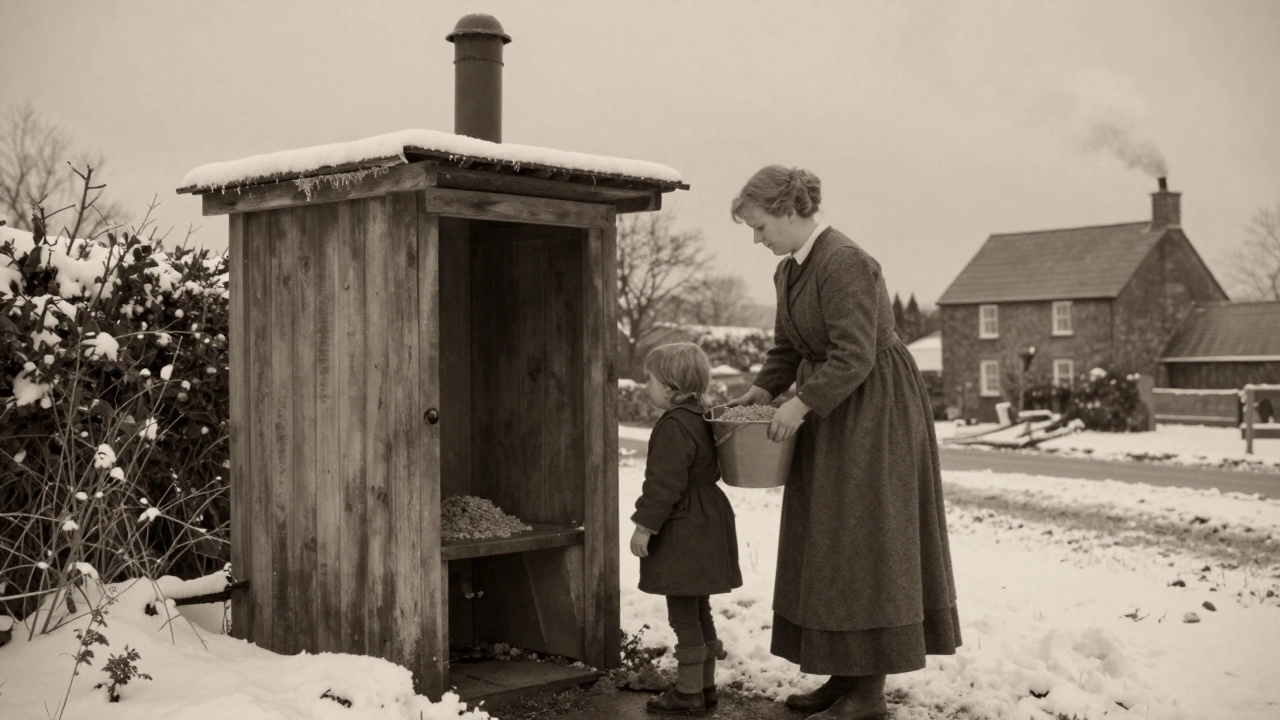
They weren’t just functional - they were part of daily life. People talked in them. They read newspapers. They wrote letters. In winter, they’d keep a bucket of sawdust or ash nearby to cover waste and reduce smell.
When Did Indoor Toilets Become Common?
The shift didn’t happen overnight. In the U.S., less than 10% of homes had indoor plumbing in 1900. By 1940, that number jumped to 70%. The turning point? Public health campaigns after World War I.
Doctors and engineers started linking disease - especially typhoid and cholera - to contaminated water and poorly managed waste. Cities began installing sewer systems. The federal government funded rural water projects in the 1930s under the New Deal. By the 1950s, indoor bathrooms were expected in new homes.
But in remote areas - mountain towns, logging camps, island communities - outhouses stuck around longer. In parts of rural New Zealand, some outhouses were still in use as late as the 1970s. One farmer near Queenstown told a local newspaper in 1972: "I’ve got a pump and a tub. Why would I spend thousands to dig up my yard?"
Why Did People Keep Them Even After Indoor Toilets Arrived?
Even when indoor bathrooms became possible, many kept the outhouse. Why?
- Cost. Installing plumbing meant digging trenches, laying pipes, connecting to a sewer - expensive for small farms.
- Reliability. Pipes froze in winter. Sewers backed up. Outhouses didn’t.
- Tradition. People had lived this way for generations. Why change?
- Soil type. In clay-heavy or rocky ground, digging a septic tank was nearly impossible. An outhouse pit was easier.
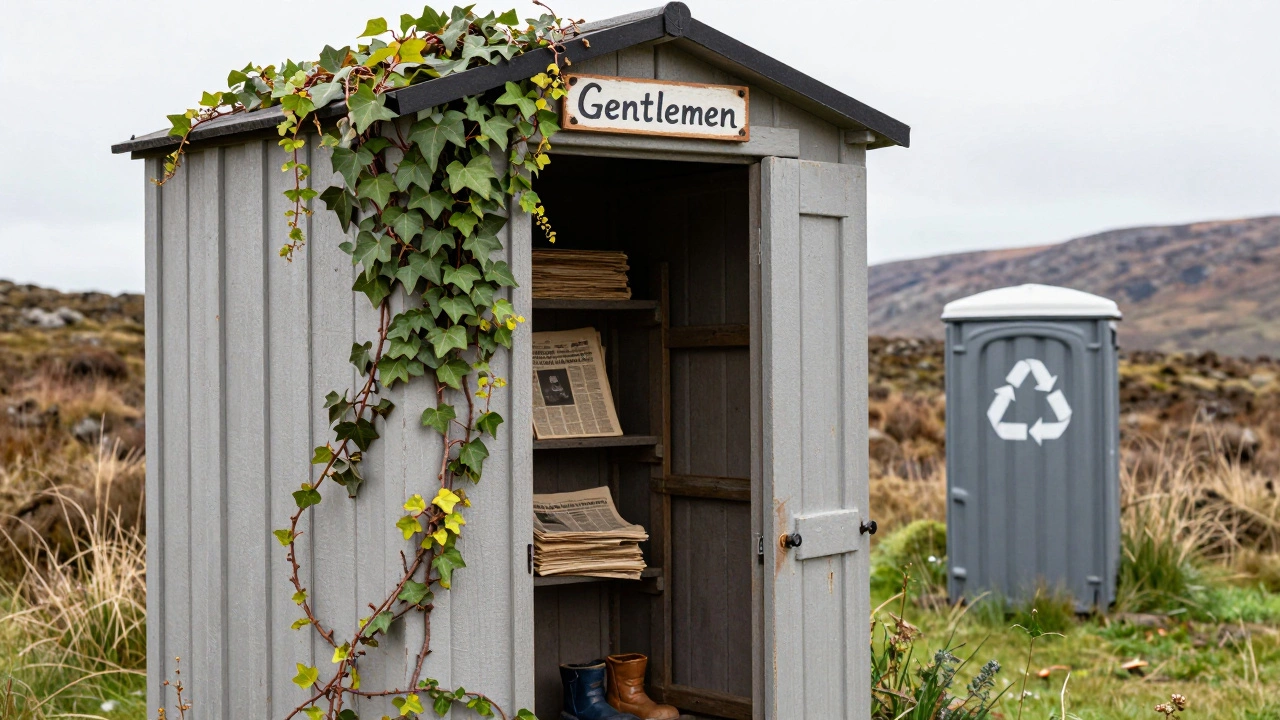
Some families used both: an indoor toilet for daily use, and the outhouse for guests, or during power outages. Others kept the outhouse as a storage shed - until someone cleaned it out and found a stack of 1920s newspapers and a child’s shoe.
What Happened to Them?
Most outhouses didn’t vanish. They were abandoned.
As homes were renovated, the outhouse was torn down. Sometimes, the pit was filled in. Other times, it was left to collapse. In places like Vermont or the Scottish Highlands, you can still find them - rotting, moss-covered, half-buried in the woods.
Some were repurposed. A few became chicken coops. Others turned into garden sheds. In New Zealand, a restored outhouse near Nelson now serves as a tourist attraction, complete with period-appropriate toilet paper made from corn husks.
Today, modern composting toilets are making a comeback - not because we’re going backward, but because we’re learning from the past. They’re odor-free, waterless, and turn waste into fertilizer. They’re not the same as old outhouses, but they carry the same smart idea: keep waste away from living spaces, and treat it properly.
They Weren’t Gross - They Were Smart
People didn’t live in filth. They lived with clever, practical solutions. The outdoor toilet wasn’t a sign of backwardness. It was a sign of adaptation.
Modern homes have flush toilets because we have the technology. But we also have problems our ancestors didn’t: water shortages, aging sewer systems, and environmental damage from sewage runoff.
Maybe we’re not so far from those old outhouses after all.