What Is the Rule of Thumb for Lighting? The Foot-Candle Guide
Lighting Foot-Candle & Bulb Calculator
Room Details
Enter your room details and click calculate to see your custom lighting plan.
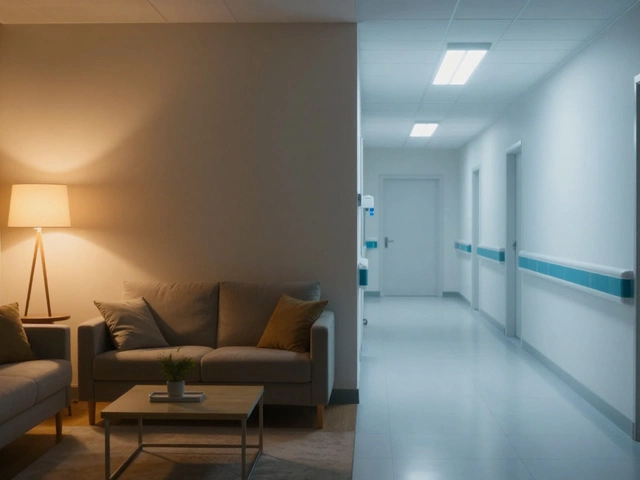
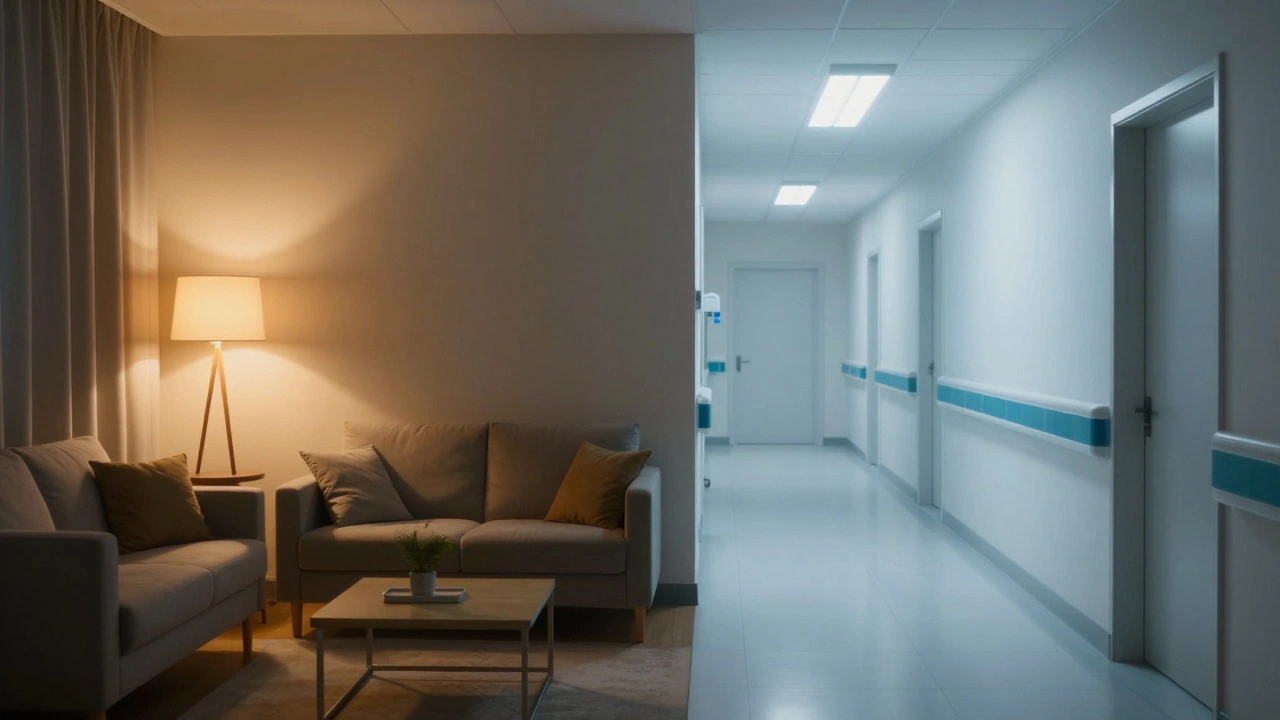
Walk into a restaurant that feels like a cozy lounge, then step into a hospital hallway. One makes you want to linger; the other makes you want to leave fast. The difference isn't just decor-it's light. Most people guess their way through home lighting, buying bulbs based on wattage (an outdated metric) or brightness they assume will "look good." The result is often rooms that are either glaringly bright like an operating theater or so dim you can't find your keys.
There is actually a science to this, but you don't need an engineering degree to apply it. The industry standard for measuring light intensity is the foot-candle. This is the core rule of thumb for lighting: every activity requires a specific amount of light falling on a surface. By knowing how many foot-candles you need and how much light your bulb provides, you can calculate exactly what you need without guessing.
The Core Metric: Understanding Foot-Candles
To get lighting right, you have to stop thinking in watts and start thinking in lumens and foot-candles. A watt measures energy consumption, not brightness. A lumen measures the total amount of visible light emitted by a source. But the most important number for you is the foot-candle.
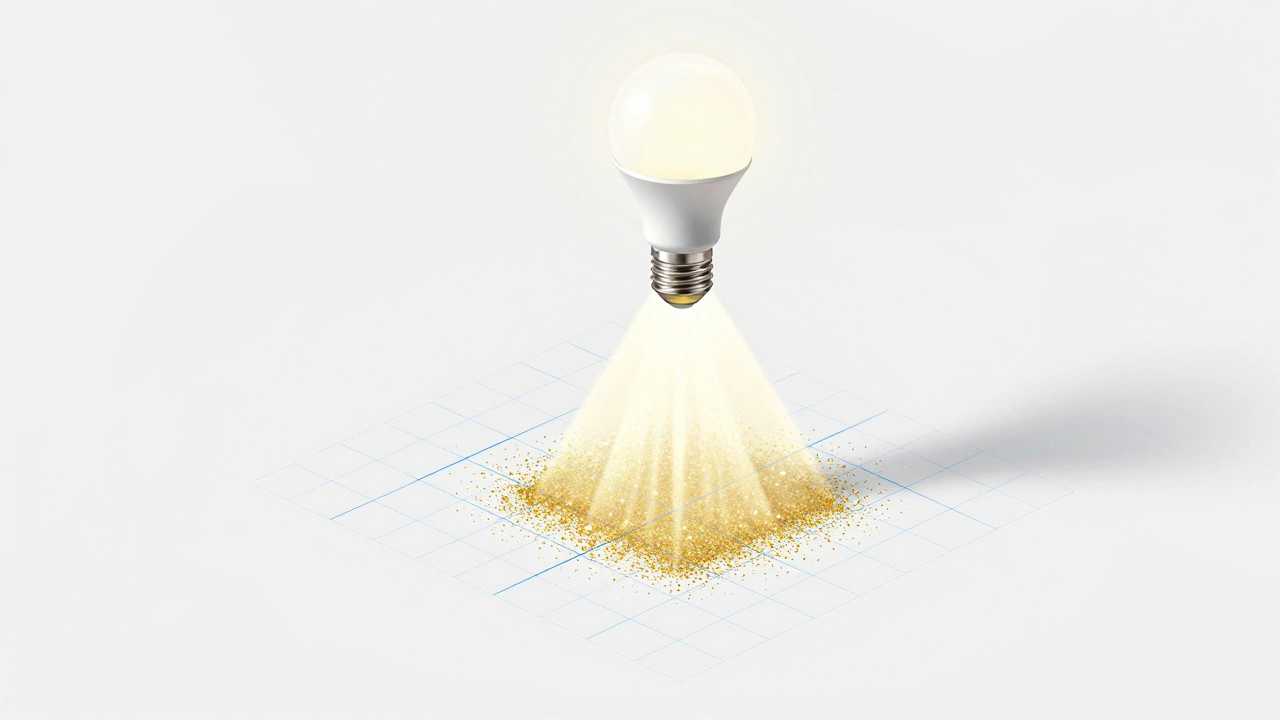
A foot-candle (fc) is defined as one lumen spread over one square foot. Imagine shining a flashlight directly onto the floor. If the beam covers one square foot and emits one lumen, that spot has one foot-candle of illumination. If you move the flashlight closer, the beam gets smaller and brighter (more foot-candles). Move it further away, and the light spreads out and dims (fewer foot-candles).
| Activity / Room Type | Recommended Foot-Candles (fc) | Typical Lumens Needed (per sq ft) |
|---|---|---|
| General Ambient Living | 10-30 fc | 10-30 lumens/sq ft |
| Reading & Detailed Hobbies | 30-50 fc | 30-50 lumens/sq ft |
| Kitchen Countertops (Task) | 50-70 fc | 50-70 lumens/sq ft |
| Bathroom Vanity (Grooming) | 70-80 fc | 70-80 lumens/sq ft |
| Detailed Craft/Workbench | 75-100+ fc | 75-100+ lumens/sq ft |
These numbers come from standards set by the Illuminating Engineering Society (IES), the authority on lighting practice. They aren't rigid laws, but they are the baseline for comfortable vision. If you aim for these targets, your eyes won't strain, and your space will feel intentional rather than accidental.
The Calculation: How Many Bulbs Do You Need?
Knowing the target foot-candles is only half the battle. You need to know how to hit that target. Here is the simple formula used by designers:
Total Lumens Required = Room Area (sq ft) × Desired Foot-Candles
Let’s say you have a 12x12 living room (144 square feet) and you want a cozy ambient level of 20 foot-candles.
- Calculate Total Lumens: 144 sq ft × 20 fc = 2,880 total lumens needed.
- Check Your Bulb Output: A standard modern LED bulb might produce 800 lumens.
- Divide to Find Quantity: 2,880 total lumens ÷ 800 lumens/bulb = 3.6 bulbs.
You would round up to four bulbs. However, there is a catch. Not all light from a bulb hits the surface where you need it. Light bounces off walls, ceilings, and furniture. Some is absorbed by dark paint or heavy drapes. To account for this loss, designers use a "Coefficient of Utilization" (CU). For a typical home with white or light-colored walls and ceiling, you can assume about 60-70% efficiency. This means you should increase your calculated lumens by roughly 30-40% to ensure the light actually reaches your eyes.
In our example, instead of 2,880 lumens, you’d aim for roughly 3,500-4,000 lumens total. That might mean five 800-lumen bulbs, or perhaps three 1,200-lumen bulbs if you prefer fewer fixtures.
Layering: Why One Number Isn't Enough
If you install five identical bulbs evenly spaced across your ceiling, you will achieve the correct foot-candle count, but the room will look flat and boring. Good lighting design relies on layers. Think of it like audio mixing: you need bass, mid-range, and treble. In lighting, you need ambient, task, and accent light.
- Ambient Light: This is the general illumination that allows you to walk around safely. It usually comes from ceiling-mounted fixtures, recessed cans, or track lighting. This layer handles the bulk of your foot-candle calculation.
- Task Light: This is focused light for specific activities. Reading a book, chopping vegetables, or applying makeup requires higher foot-candles (30-70+) right at the point of action. A table lamp or under-cabinet strip light provides this without having to blast the whole room with bright overheads.
- Accent Light: This adds drama and depth. Picture lights, wall washers, or uplights on plants create shadows and highlights. These don't contribute much to functional foot-candles, but they make the space feel expensive and curated.
When calculating your needs, determine the ambient requirement first using the formula above. Then, add task lights separately for high-demand zones. Don't try to do everything with the overhead lights. It leads to glare and eye fatigue.
Color Temperature: The Mood Factor
Brightness is only one dimension. The color of the light matters just as much. Measured in Kelvins (K), color temperature ranges from warm yellow to cool blue. Using the wrong temperature can ruin even the perfectly calculated foot-candle level.
For residential spaces, stick to two main ranges:
- 2700K - 3000K (Warm White): Ideal for living rooms, bedrooms, and dining areas. This mimics the glow of incandescent bulbs and candlelight. It promotes relaxation and feels inviting.
- 3500K - 4000K (Neutral/Cool White): Better for kitchens, bathrooms, and home offices. This light is crisper and closer to natural daylight. It helps with focus and reveals true colors, which is crucial when prepping food or checking your appearance.
Avoid going above 4000K in living spaces unless you have a very specific industrial aesthetic in mind. Higher temperatures can make a home feel sterile, like a clinic or a garage. Also, mix matching temperatures in the same room creates visual dissonance. Pick one temperature per zone and stick to it.
Common Pitfalls to Avoid
Even with the math right, mistakes happen. Here are the most common ways people mess up their lighting plans:
Ignoring Glare: High foot-candles are useless if the light source is directly in your line of sight. Recessed lights aimed straight down at a desk create harsh shadows and glare. Use fixtures with shades or diffusers to soften the light source. Position lights so they illuminate the task, not your eyes.
Dark Corners: Placing all lights in the center of the room leaves the perimeter dark. This shrinks the perceived size of the space. Push lighting toward the walls. Wall sconces or picture lights bounce light back into the room, making it feel larger and more open.
Over-reliance on Overheads: As mentioned, relying solely on ceiling fixtures creates a flat look. Add floor lamps and table lamps to bring light down to human scale. This creates pools of light that guide the eye and add warmth.
Wrong Dimmers: Not all dimmers work with all LEDs. Cheap dimmers can cause flickering, buzzing, or prevent the bulb from dimming all the way down. Invest in high-quality, LED-compatible dimmer switches. They smooth out the transition and extend the life of your bulbs.
Practical Application: Room-by-Room Breakdown
Let’s apply the rules to real-world scenarios. Remember, these are starting points. Adjust based on your personal preference and the specific layout of your home.
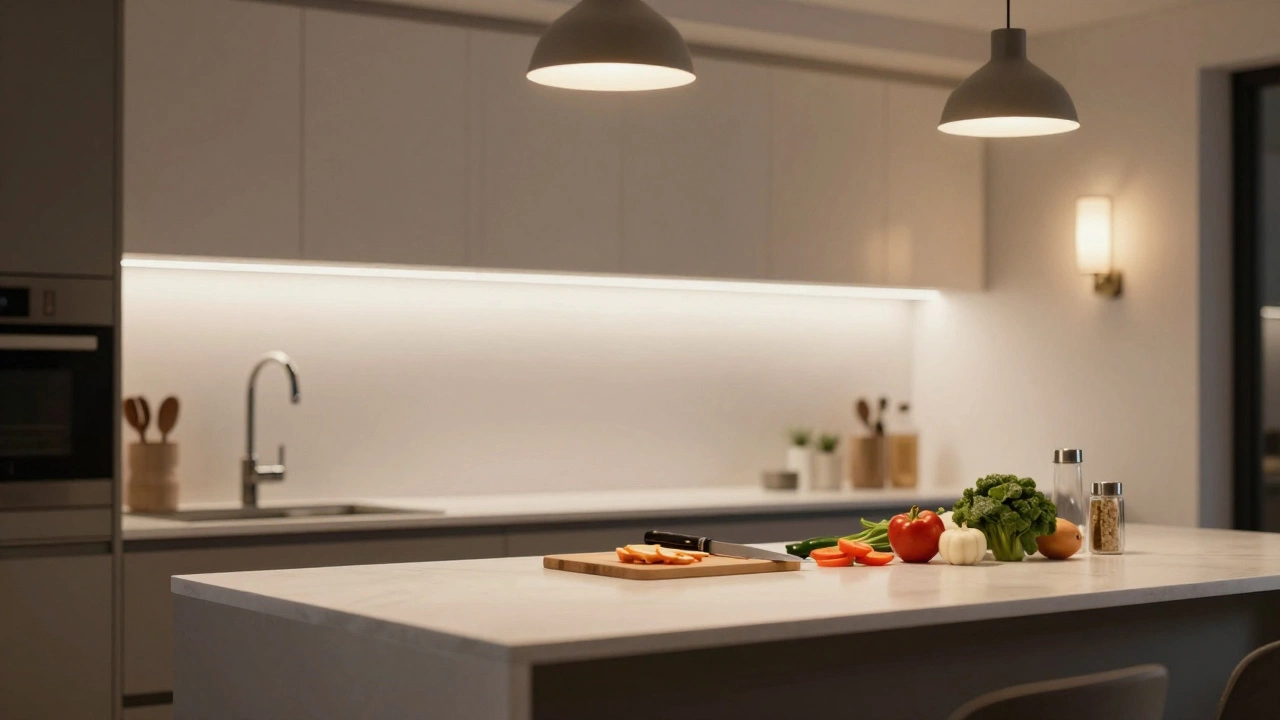
The Kitchen: This is a high-task area. You need 50-70 foot-candles on countertops. General ceiling lights alone rarely provide enough because cabinets block the light. Install under-cabinet LED strips or puck lights to hit the counter directly. Add pendants over the island for both task and ambient light. Aim for 4000K color temperature here for clarity.
The Bathroom: Grooming requires precision. You need 70-80 foot-candles at the mirror. Side-lighting (sconces on either side of the mirror) is superior to top-lighting (a vanity bar above the mirror) because it eliminates shadows under your eyes and nose. Ensure the bulbs are at eye level.
The Bedroom: This is a low-stress zone. 10-20 foot-candles is sufficient for general ambiance. Focus on bedside reading lights. Each side of the bed should have its own source-a wall sconce or table lamp-that provides 30-50 foot-candles for reading without disturbing a partner. Use 2700K bulbs to signal to your brain that it’s time to wind down.
The Home Office: Productivity depends on good light. You need 50 foot-candles across the entire workspace. Natural light is best, but supplement with overheads and a dedicated desk lamp. Position the desk perpendicular to windows to avoid screen glare. Use 3500K-4000K light to stay alert.
Tools and Technology
You don't need expensive equipment to measure light. Smartphone apps can estimate foot-candles using your phone's camera sensor. While not laboratory-grade precise, they are good enough for DIY projects to check if a corner is too dark or a desk is too bright. Look for apps specifically designed for lux/foot-candle measurement.
Smart lighting systems offer another advantage. Instead of hardwiring multiple circuits, you can use smart bulbs that allow you to adjust brightness and color temperature remotely. This lets you fine-tune your lighting after installation. Maybe you thought 3000K was right, but found it too yellow. With smart bulbs, you can shift to 3200K without buying new hardware.
How many lumens do I need for a 10x10 room?
A 10x10 room is 100 square feet. For general ambient lighting (20 foot-candles), you need 2,000 total lumens. Accounting for absorption, aim for roughly 2,500-2,800 lumens. If using 800-lumen bulbs, you would need about 3 to 4 bulbs.
What is the difference between lumens and foot-candles?
Lumens measure the total light output of a bulb. Foot-candles measure how much of that light actually lands on a specific surface. A high-lumen bulb placed far away will produce few foot-candles on the target area. Distance and direction matter for foot-candles.
Can I use the same lighting setup for my kitchen and living room?
Technically yes, but it won't feel right. Kitchens require higher foot-candles (50+) and cooler color temperatures (4000K) for safety and clarity. Living rooms benefit from lower foot-candles (10-30) and warmer tones (2700K) for relaxation. Mixing these functions causes visual discomfort.
Why does my room still look dark even with bright bulbs?
This is often due to poor placement or dark surfaces. If lights are centered on the ceiling, corners remain dark. Dark paint absorbs light, requiring more lumens to achieve the same foot-candle level as light-colored walls. Try adding wall-washing lights or switching to lighter wall colors.
Do I really need to calculate foot-candles?
You don't have to be exact, but understanding the concept prevents major mistakes. Guessing often leads to under-lighting task areas or over-lighting social spaces. Using the rough formula ensures you buy enough bulbs and place them correctly the first time, saving money and frustration.