What Chairs Are Bad for Posture? The Worst Office Chair Designs and Why They Hurt

Ergonomic Chair Assessment Tool
How Your Chair Affects Your Posture
Answer 5 simple questions to identify if your chair is hurting your posture. Based on research from the Journal of Occupational Rehabilitation.
Ever sat in a chair and felt your lower back scream by midday? You’re not imagining it. Many office chairs-especially the cheap, mass-produced ones-are designed to look sleek, not to support your body. The truth? Not all chairs are created equal. Some actively wreck your posture, and you might be sitting in one right now.
Why Chair Design Matters More Than You Think
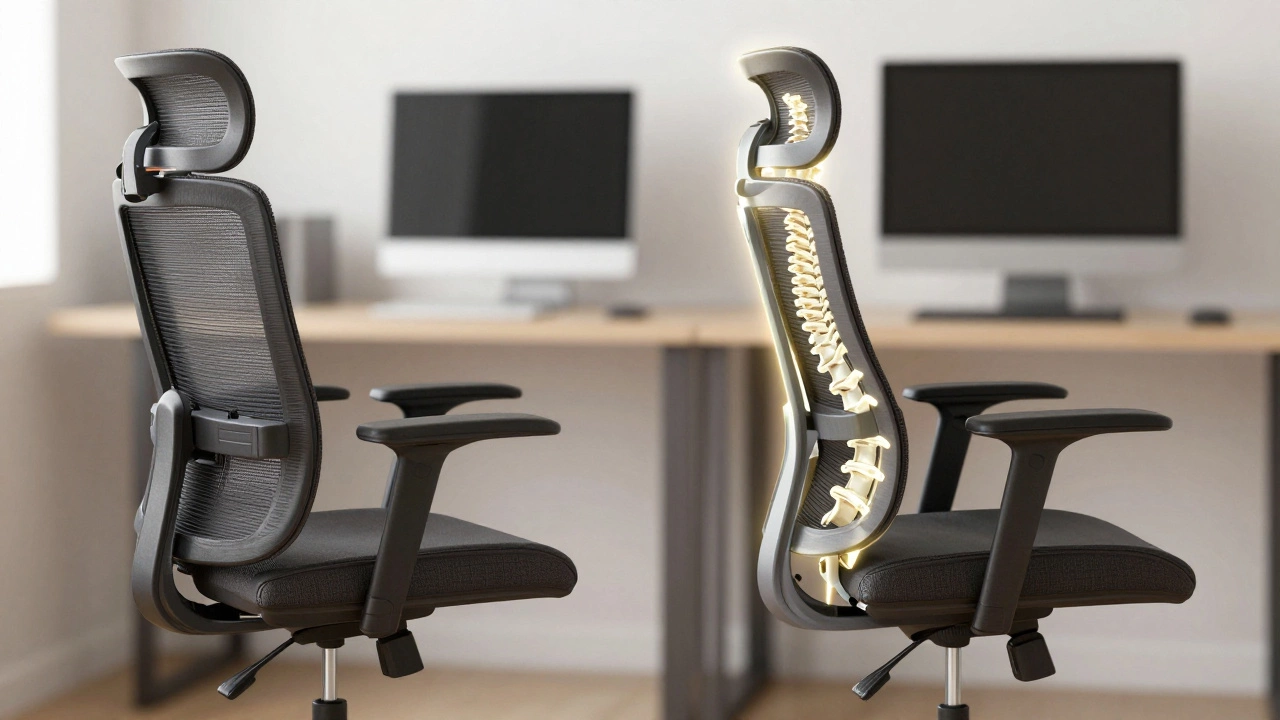
Your spine isn’t meant to slouch. It has three natural curves: neck, mid-back, and lower back. A good chair supports those curves. A bad one forces your body into positions that strain muscles, compress discs, and tighten hips. Studies from the Journal of Occupational Rehabilitation show that people using poorly designed chairs report 40% more lower back pain than those using ergonomically supported ones. And it’s not just pain-it’s reduced focus, slower productivity, and even long-term nerve damage.
Most people think comfort means soft cushions. Wrong. Comfort means stability. Support. Alignment. If your chair doesn’t hold you upright without effort, it’s working against you.
The 5 Worst Types of Chairs for Posture
- Barstools and Counter Stools-These have no back support or armrests. You end up leaning forward, hunching your shoulders, and squeezing your lower spine. They’re fine for quick coffee breaks, not 8-hour workdays.
- Mesh Chairs Without Lumbar Adjustment-Yes, they breathe. But if the lower back curve doesn’t match yours, that mesh just pushes your spine into a C-shape. Many come with a fixed lumbar pad that’s too high or too low. You end up slumping because the chair doesn’t fill the gap.
- Zero-Gravity or Reclining Lounge Chairs-They feel amazing at first. But reclining past 110 degrees removes all core engagement. Your hips tilt backward, your pelvis flattens, and your lower back loses its natural curve. These are for naps, not typing.
- Office Chairs With No Height Adjustment-If your feet don’t rest flat on the floor, your knees are either too high or too low. That throws off your entire alignment. Your shoulders hunch, your neck strains, and your wrists get compressed. A chair that doesn’t adjust to your body is a chair that ignores your body.
- Plastic Folding Chairs-Hard, narrow, no padding, no support. They’re the worst for your tailbone and hips. You’ll shift constantly, never settling into a neutral position. These are common in conference rooms and home offices. Don’t let them fool you.
What Makes a Chair Actually Bad? The Hidden Flaws
It’s not always about the style. Sometimes, it’s the details you overlook:
- No armrests or armrests that are too high-If your arms float in the air, your shoulders tense. If they’re too high, you’re shrugging. Either way, your neck and upper back pay the price.
- Seat depth that’s too shallow or too deep-If there’s less than 2 inches between the edge of the seat and the back of your knees, pressure builds on your thighs. Too deep, and you slide forward, losing back support.
- Fixed or non-tilting backrest-Your spine moves. A rigid backrest forces you to move your whole body just to shift positions. A good chair lets your backrest tilt slightly with you.
- Wheels that don’t match your floor-Hard wheels on carpet? You’ll drag your legs to move. Soft wheels on hardwood? You’ll slide uncontrollably. Both make you shift your weight constantly, breaking posture.
- Too much cushioning-A pillow-like seat sinks under you. Your pelvis tilts backward, flattening your lower back. This is why memory foam office chairs often cause more harm than good.
Real-World Examples: What People Are Sitting On
Take Sarah, a graphic designer. She bought a trendy $150 chair from a big-box store because it looked modern. It had a high back, mesh sides, and glowing LED lights. But no lumbar support. After six months, she developed chronic lower back pain. Her doctor said her pelvis had rotated backward from sitting without support. She switched to a chair with an adjustable lumbar pad-and the pain dropped 70% in three weeks.
Then there’s Mark, who uses a plastic folding chair from his garage in his home office. He’s 6’2”, but the chair is only 18 inches tall. His knees are higher than his hips. He leans forward to reach his keyboard. His neck is now permanently stiff. He didn’t realize his chair was the problem-until he tried a simple seat riser and an adjustable lumbar cushion.
These aren’t rare cases. A 2025 survey by the Global Ergonomics Institute found that 68% of remote workers use chairs that don’t meet basic ergonomic standards. Most don’t even know what those standards are.
How to Spot a Bad Chair in 30 Seconds
You don’t need a specialist to tell you if a chair is bad. Just ask yourself:
- Can I sit back and let my spine rest without tensing?
- Do my feet rest flat on the floor with knees at 90 degrees?
- Is there a curve in the backrest that fits the small of my back?
- Can I adjust the height and armrests without tools?
- Does the seat feel like it’s holding me up-or letting me sink?
If you answered “no” to two or more, you’re sitting in a posture killer.
What to Do Instead
Don’t panic. You don’t need to buy a $1,000 chair. Start with what you have:
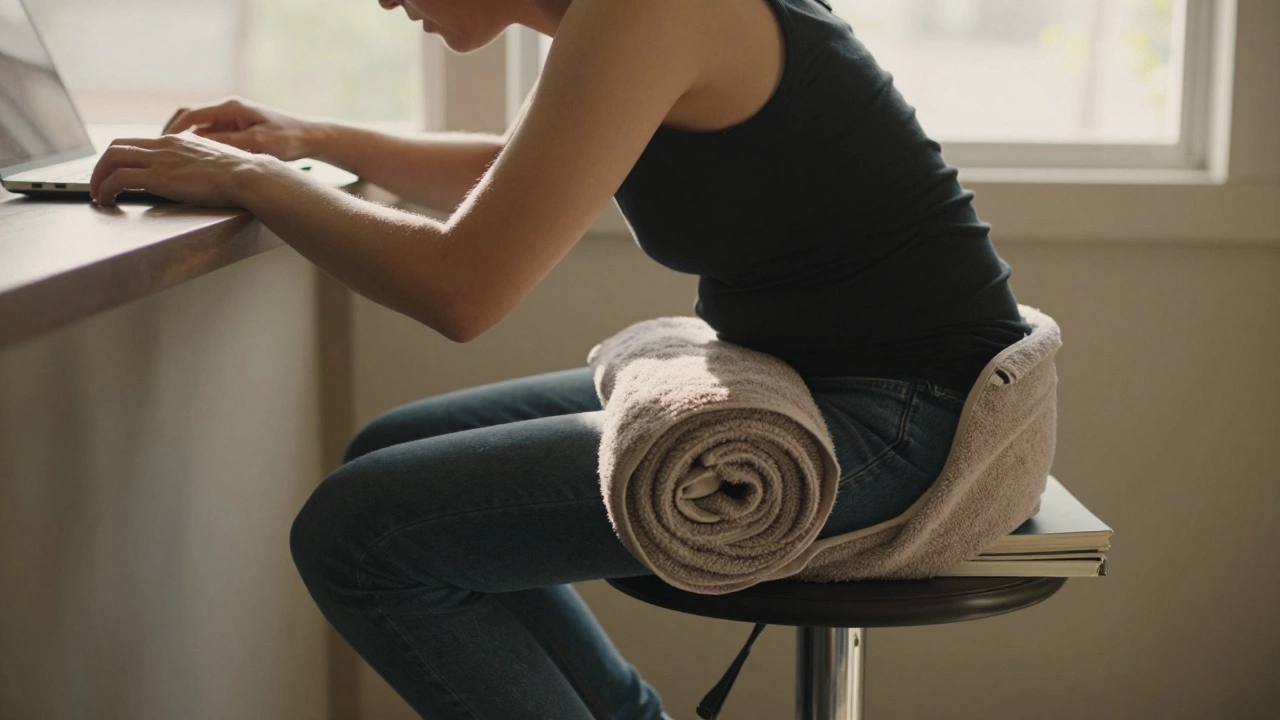
- Use a rolled-up towel or small pillow behind your lower back. It’s free and works better than many built-in lumbar pads.
- Get a footrest if your feet don’t touch the ground. Even a stack of books helps.
- Set your monitor at eye level. If you’re looking down, your neck bends forward. That’s a recipe for tension.
- Stand up every 30 minutes. Even a 20-second stretch resets your posture.
- If you’re buying new, look for chairs with: adjustable lumbar support, seat depth adjustment, and a tilt mechanism. Brands like Herman Miller, Steelcase, and even budget options like IKEA’s Markus have models that pass the test.
The goal isn’t perfection. It’s consistency. A chair that lets you sit without thinking about it is the best chair you can have.
Why You Can’t Just Ignore This
Sitting for hours in a bad chair isn’t just uncomfortable-it’s a slow injury. Over time, it changes your body:
- Flat lower back → herniated discs
- Slumped shoulders → pinched nerves in the neck
- Forward head posture → chronic headaches
- Restricted hips → reduced mobility and knee pain
These aren’t myths. MRI scans from the Spine Journal show clear degeneration in people who sit in unsupported chairs for over 4 hours daily. The damage builds silently. By the time you feel pain, your body has already adapted to the bad position.
Fixing your chair now is like brushing your teeth. You don’t wait until your tooth falls out.
Are gaming chairs bad for posture?
Some are, some aren’t. Many gaming chairs have tall, rigid backrests that push your lower back forward, creating a reverse curve. They often lack adjustable lumbar support and have overly soft seats that make you sink. But higher-end models like the Secretlab Titan Evo or Herman Miller x Logitech G have proper ergonomic adjustments. Always check for lumbar and seat depth controls before buying.
Can I fix a bad chair instead of replacing it?
Yes, for a few common issues. Add a lumbar cushion if the backrest doesn’t support your lower spine. Use a footrest if your feet dangle. Place a wedge under your seat if you’re sliding forward. But if the chair has no height adjustment, no armrests, or a broken mechanism, it’s not worth fixing. The structure itself is flawed.
Is a kneeling chair better for posture?
Kneeling chairs can help by tilting your pelvis forward, which supports the lower back. But they’re not for everyone. They put pressure on your shins and knees, and you can’t lean back. They’re best for short-term use, like 20-30 minutes at a time. Don’t use one as your main chair unless you’re alternating with a traditional one.
What’s the minimum I should spend on a good chair?
You can find a decent ergonomic chair for $200-$300. Brands like HON, Flash Furniture, and IKEA’s Markus offer adjustable features without the luxury markup. Avoid anything under $100 unless it’s a refurbished model from a reputable seller. Cheap chairs often use thin materials, fixed parts, and poor padding that breaks down in months.
Do office chairs really affect productivity?
Yes. A 2024 study from Stanford’s Workplace Health Lab found that workers using properly adjusted chairs reported 22% fewer distractions and 17% faster task completion. Pain and discomfort drain mental energy. When your body isn’t fighting discomfort, your brain can focus.
If you’ve been sitting in a chair that doesn’t support you, you’re not lazy-you’re just using the wrong tool. The right chair doesn’t cost a fortune. It just needs to fit you. And once it does, you’ll wonder how you ever worked without it.