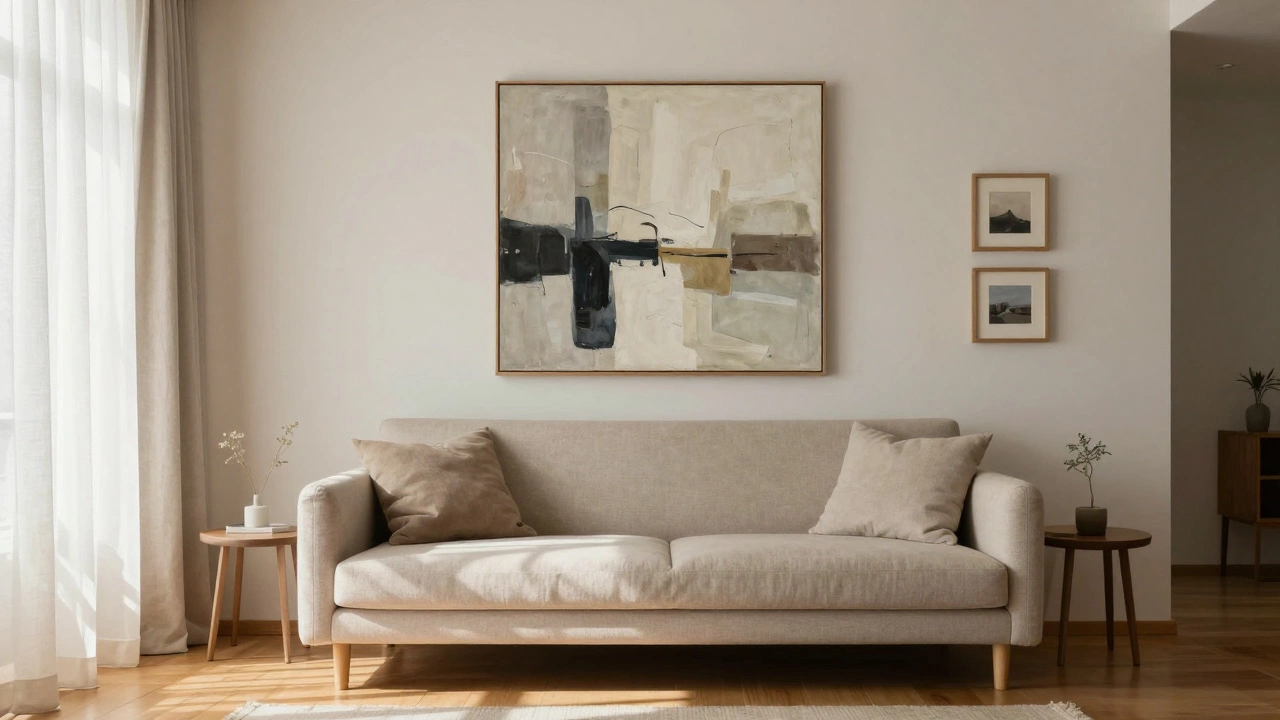
Having pictures on every wall can feel cluttered and overwhelming. Learn how to use wall art intentionally-when to fill space and when to leave it empty-for a calmer, more meaningful home.
When we talk about wall spacing, the distance between walls and other elements in a room, including furniture, fixtures, and walkways. Also known as clearance space, it's not just about leaving room—it's about making your home actually work for you. Too little and your space feels cramped. Too much and you waste square footage that could be used for storage, seating, or movement. The right wall spacing turns a room from a box into a living area that flows naturally.
Wall spacing connects directly to furniture placement, how you position sofas, beds, tables, and cabinets in relation to walls and each other. A sofa pushed right against the wall might look neat, but it kills airflow and makes the room feel smaller. Leaving 18 to 24 inches between the sofa and the wall gives room for walking, lighting, and even a small side table. The same goes for beds—keeping at least 24 inches on each side makes changing sheets and getting out of bed easier. It’s not decoration, it’s function.
It also ties into room layout, the overall arrangement of spaces within a home to maximize usability and comfort. Open-plan homes rely on wall spacing to define zones without physical barriers. A kitchen island needs clearance on all sides—not just for movement, but for opening cabinet doors and pulling out chairs. Even in small bathrooms, wall spacing affects whether a toilet fits comfortably or feels like it’s in your way. These aren’t suggestions from interior designers—they’re practical limits built into building codes and human movement patterns.
And don’t forget architectural clearance, the minimum space required around doors, windows, vents, and electrical outlets to meet safety and accessibility standards. You can’t just plop a cabinet in front of a breaker box or block a window that’s meant to be an emergency exit. These aren’t optional. They’re rules that keep you safe and your home legal.
What you’ll find in the posts below aren’t generic tips about decor. They’re real-world examples of how wall spacing impacts everything—from how big a couch can be in your living room, to whether your bathroom renovation stays on budget, to why your dining room disappeared in the first place. You’ll see how lighting, furniture choices, and even insurance claims tie back to how much space you actually leave between walls and what you put near them. No fluff. Just what works—and what doesn’t—when you’re trying to build or fix a space that feels right.
Having pictures on every wall can feel cluttered and overwhelming. Learn how to use wall art intentionally-when to fill space and when to leave it empty-for a calmer, more meaningful home.