Is It OK to Have Pictures on Every Wall? The Real Rules of Wall Art
Wall Art Space Calculator
Calculate the optimal percentage of wall space for art using the proven 60-30-10 rule from interior design experts. Based on the article: "Is It OK to Have Pictures on Every Wall?"
Your Optimal Art Space
60% Empty Space
30% Focal Art
10% Accent Art
Design Tip
Following the 60-30-10 rule creates breathing room. Too much art makes walls feel cluttered and reduces emotional impact. Your focal piece should be the first thing you see when entering the room.
You walk into a friend’s house and every wall is covered in pictures-family photos, framed prints, posters, mirrors, even a vintage bicycle mounted sideways. You pause. Is this bold? Or is it messy? The truth is, there’s no universal rule that says you can’t hang art on every wall. But there’s a big difference between wall art that feels alive and wall art that feels like a storage closet for old frames.
Why people fill every wall
Most of us start with one or two pictures. Then we get more. A gift. A souvenir. A print we saw online and couldn’t resist. Before you know it, you’ve got art on the hallway, the stairwell, the bathroom, even the laundry room. It’s not about decoration anymore-it’s about memory, identity, or just not wanting to waste space. But here’s what no one tells you: empty walls aren’t failures. They’re breathing room. A room with too much art feels crowded, like a closet stuffed with clothes you never wear. Your eyes don’t know where to rest. The art loses its power.What happens when every wall has art
Think of your walls like a conversation. If everyone talks at once, you can’t hear anyone. The same goes for wall art. When every surface is covered, no single piece stands out. A beautiful painting becomes just another square on the wall. A photo of your child? It blends in. The emotional impact vanishes. There’s also a practical side. Walls with too much art get harder to clean. Dust builds up around frames. You can’t rearrange furniture without moving five frames. And if you ever want to repaint? Good luck. You’ll spend hours taking everything down, patching holes, and putting it all back up. In New Zealand homes, where space can be tight and natural light limited, cluttered walls make rooms feel smaller. A 2023 study by the Auckland Interior Design Institute found that homes with intentional negative space-empty walls-were rated 40% more calming by residents than those with fully covered walls.When it works: the exceptions
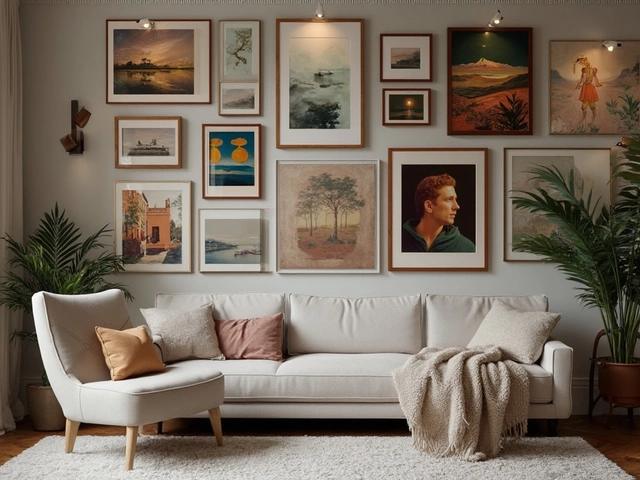
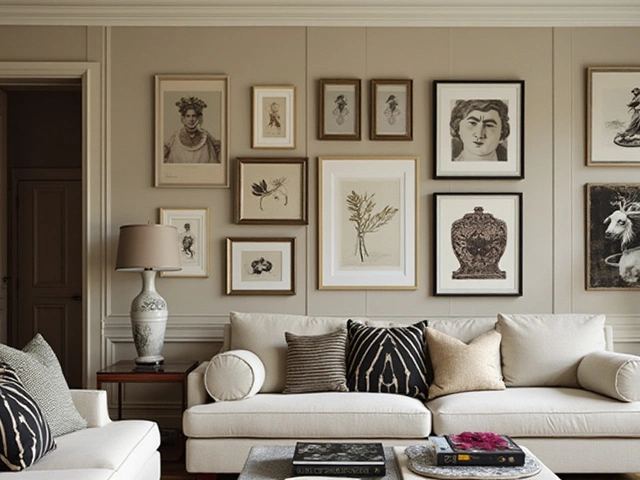
There are times when covering every wall feels right. Gallery walls, for example. But even then, it’s not about filling space-it’s about creating a curated composition. A gallery wall is one visual unit, like a single large painting. The frames are similar in style, the spacing is consistent, and the arrangement feels intentional. It’s a collage, not a collection. Another case? Feature walls. In a minimalist bedroom, one wall might be covered in vintage postcards. That’s not clutter-it’s a statement. The rest of the room stays calm, so the wall pops. The contrast makes it work. Some cultures naturally embrace full walls. Japanese homes often use shoji screens or calligraphy scrolls that cover entire surfaces, but they’re spaced with care and tied to ritual. Western homes don’t have the same cultural framework. Without that context, covering every wall looks accidental.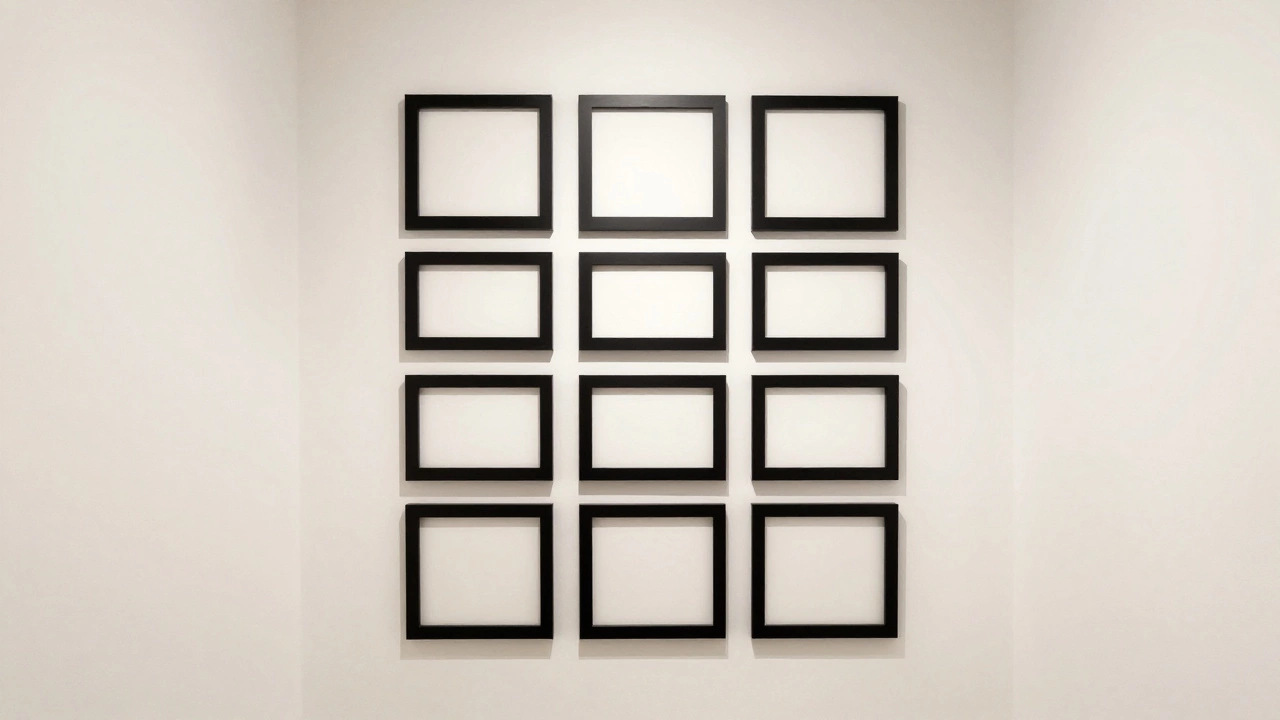
The 60-30-10 rule for wall art
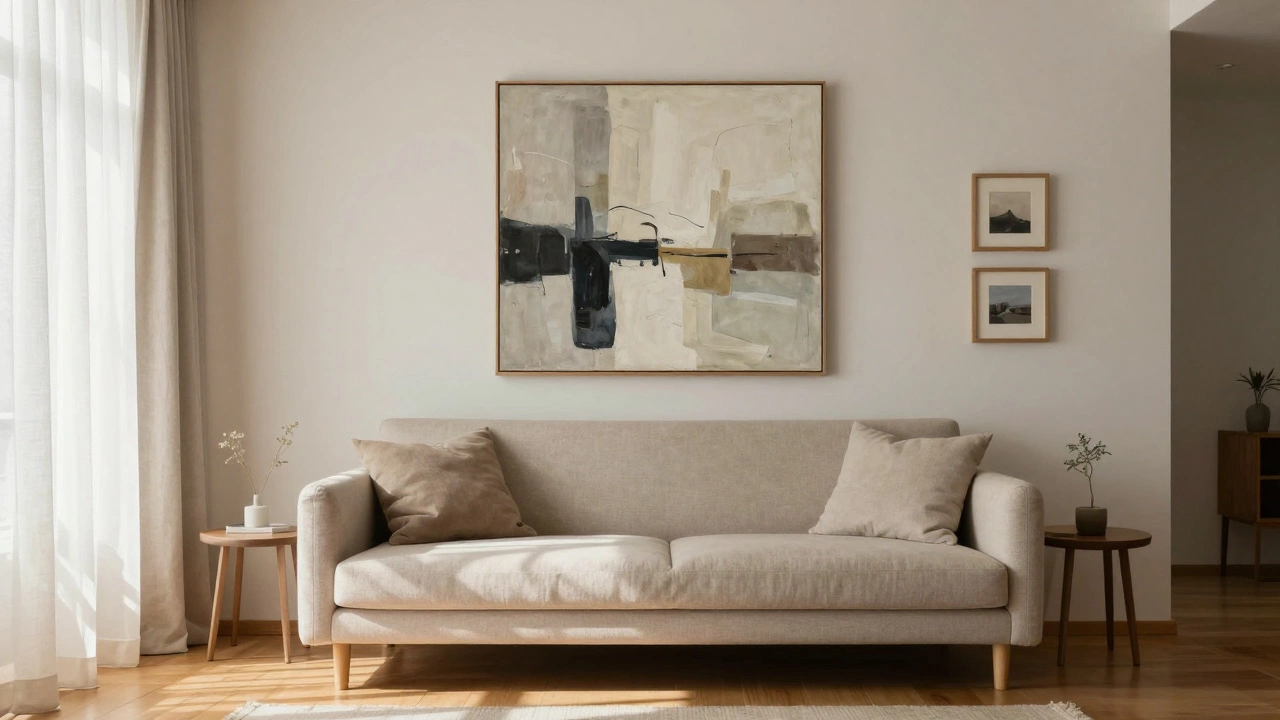
Interior designers use the 60-30-10 rule for color. You can adapt it for art:- 60% empty wall - The majority of your wall space should stay bare. This gives your eyes a place to rest.
- 30% focal art - One or two larger pieces that anchor the room. A big painting, a mirror, a sculptural shelf.
- 10% accent art - Smaller pieces, photos, or objects that add personality without overwhelming.
How to decide what stays and what goes
Try this simple test: stand in the middle of the room. Close your eyes. Open them slowly. What do you see first? That’s your focal point. Now, look around. Do other pieces compete for attention? If yes, they’re cluttering the space. Ask yourself:- Does this piece make me feel something? Or is it just there because I bought it?
- Would I miss it if it was gone?
- Does it connect to the room’s purpose? A serene bedroom doesn’t need a loud concert poster.
- Is it the same style as everything else? Mixing vintage, modern, and kids’ crayon drawings without a thread can feel chaotic.
What to do with the extras
You’ve got 20 frames you love but can’t hang. Don’t throw them out. Store them. Rotate them. Swap out one or two every season. In spring, hang your nature prints. In winter, switch to warm-toned portraits. It keeps your space feeling fresh without permanent clutter. You can also display art differently. Lean frames on shelves. Hang small ones on a clothesline with mini clips. Put them in a tray on a console table. Art doesn’t have to be on the wall to be seen.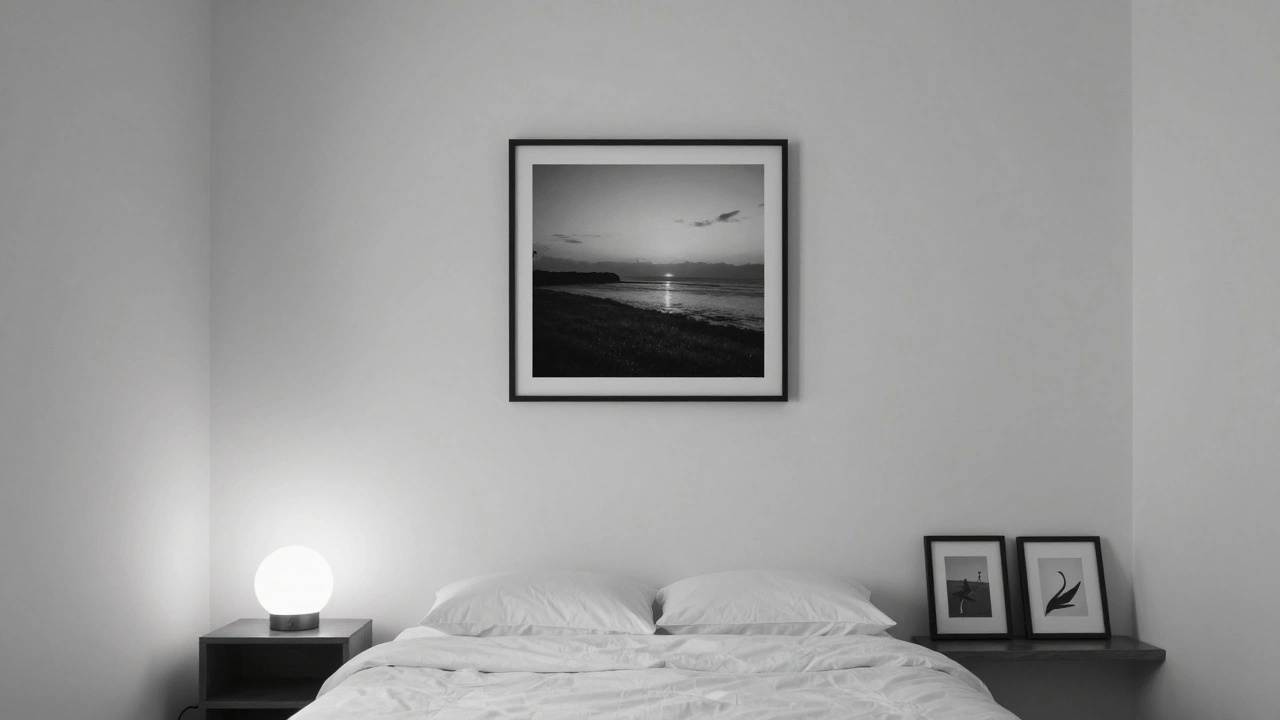
Room-by-room guide
Not every room needs the same approach.- Living room - One large piece above the sofa, maybe two smaller ones on side walls. Keep the rest clean. This is your main social space-don’t overwhelm guests.
- Bedroom - Calm is key. One or two pieces only. Avoid busy scenes or bright colors. A single black-and-white photo above the bed is enough.
- Hallway - This is where people rush through. Don’t make it feel like a maze. Use a single long horizontal line of small frames, evenly spaced. Or leave it empty.
- Kitchen - Functional art works here: a chalkboard, a framed recipe, a small print of food. Avoid heavy frames that collect grease.
- Bathroom - Moisture is the enemy. Use waterproof prints or framed photos behind glass. One small piece is plenty.
When to break the rules
Rules are there to help you, not trap you. If your home is a creative studio, and every wall is covered in sketches, mood boards, and inspiration, that’s not clutter-it’s your process. If you’re a collector of vintage movie posters and your living room is a 1970s time capsule, that’s your story. Art isn’t about perfection. It’s about meaning. The difference? Intention. If you chose every piece because it matters to you, and you’ve arranged it with care, it works-even if it looks like a museum exploded. But if you hung things because you thought you "should," or because you were afraid of empty space, it’ll feel heavy. And that’s the real problem-not the number of pictures, but the lack of thought behind them.Final thought: Less is more, but only if it’s meaningful
You don’t need to fill every wall. You need to fill your space with things that speak to you. One powerful piece, placed with care, will echo louder than ten random ones. A blank wall isn’t a mistake. It’s a pause. A breath. A chance for your favorite art to be seen-and felt.Is it bad to have pictures on every wall?
It’s not bad-it’s just often ineffective. Covering every wall can make a space feel cluttered, overwhelming, and harder to clean. Art loses its impact when there’s too much of it. The goal isn’t to fill space, but to create calm and focus.
How many pictures should I hang on one wall?
There’s no magic number. One large piece can be enough. Or you can group several smaller ones into a single visual unit, like a gallery wall. The key is spacing and balance. Keep at least 2-3 inches between frames, and make sure the whole group feels like one cohesive element.
Can I hang art in the bathroom or kitchen?
Yes, but with care. Moisture and grease can damage paper and wood. Use waterproof frames, glass-covered prints, or metal signs. Avoid heavy, ornate frames that collect dust. One small piece is usually enough in these high-use areas.
What if I love having lots of art but my space feels crowded?
Try rotating your collection. Store half and swap them every few months. You’ll still enjoy your art without overwhelming your space. Or move some pieces to shelves, tables, or display trays-art doesn’t have to be on the wall to be seen.
Do empty walls make a room look cheap?
No. Empty walls look intentional. They give your eye a place to rest and make the art you do have stand out. Many high-end interiors use minimal wall art to create a sense of calm and sophistication. It’s not about how much you hang-it’s about how thoughtfully you choose what to display.