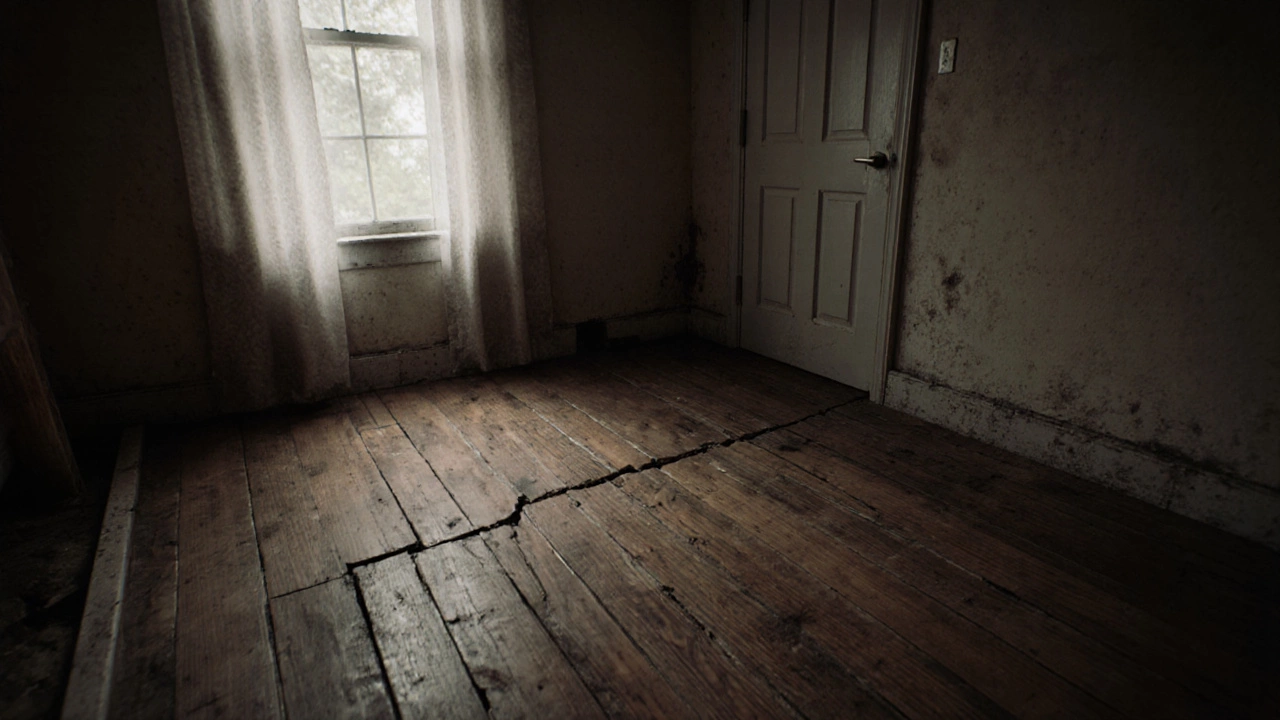
Most home insurance policies don't cover sagging floors unless caused by a sudden event like a storm or fire. Learn what actually triggers coverage and how to pay for repairs when insurance says no.
When your floor feels uneven or bouncy underfoot, you’re not just imagining it—sagging floors, a visible dip or slope in flooring that indicates structural weakness, often caused by failing support systems. Also known as floor settlement, it’s one of the most common signs of hidden damage in older homes. This isn’t a cosmetic issue. It’s a signal that something deeper—like weakened floor joists, horizontal wooden beams that support the floor structure and transfer weight to load-bearing walls or foundations—is failing. Left unchecked, it can lead to cracked walls, sticking doors, or even worse structural failure.
Sagging floors don’t happen overnight. They’re usually the result of long-term stress on the home’s foundation or support system. Common causes include foundation repair, the process of stabilizing or reinforcing a home’s base to prevent shifting or sinking that was never done, poor drainage soaking the soil under the house, or rotting wood from moisture leaks. Older homes, especially those built on piers or with inadequate support, are most at risk. You’ll often see this in homes with crawl spaces, where damp air and pests eat away at wood over time. If your floor slopes toward the center of the room, or if you notice gaps between the floor and baseboards, those aren’t just annoyances—they’re warning signs.
It’s not always about a full rebuild. Sometimes, adding new support posts, sistering joists, or installing crawl space piers can fix the problem without tearing out walls or floors. But you need to know what you’re dealing with. A professional inspection can tell you if it’s a minor settle or a major structural issue. Don’t wait until your tiles crack or your doors won’t close—by then, the damage is deeper and more expensive to fix. The posts below cover everything from how to spot early signs of trouble, to real-world repair costs, to what materials hold up best over time. Whether you’re dealing with a slight dip in your kitchen or a full-on slope in your hallway, you’ll find clear, no-fluff advice here—no jargon, just what actually works.
Most home insurance policies don't cover sagging floors unless caused by a sudden event like a storm or fire. Learn what actually triggers coverage and how to pay for repairs when insurance says no.