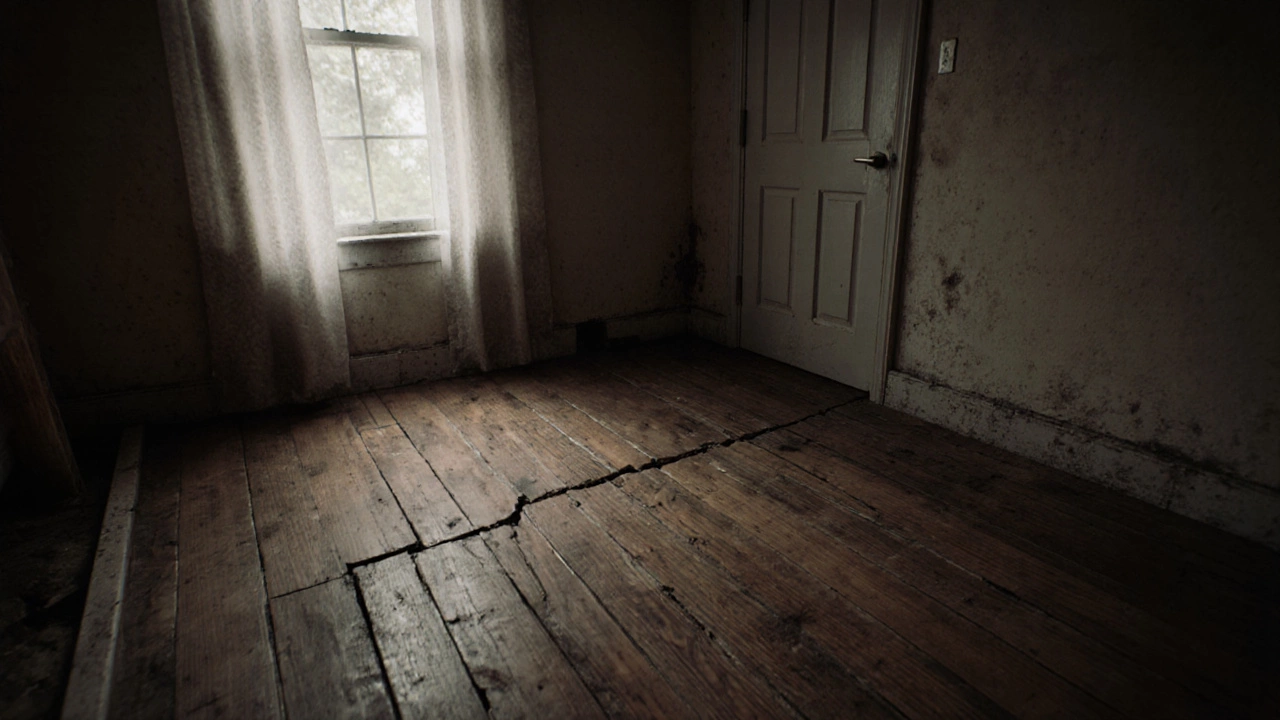
Most home insurance policies don't cover sagging floors unless caused by a sudden event like a storm or fire. Learn what actually triggers coverage and how to pay for repairs when insurance says no.
When your floor starts to sag, crack, or creak more than usual, it’s not just an annoyance—it’s a sign of floor damage, physical deterioration in flooring or the structure beneath it that can compromise safety and value. Also known as structural floor issues, this isn’t something you can ignore. Left unchecked, it often leads to bigger, costlier problems like wall cracks, sticking doors, or even foundation failure.
Floor damage doesn’t happen overnight. It’s usually tied to water damage, moisture that weakens wood, rotts subfloors, or shifts soil under foundations. Think leaky pipes, poor drainage, or even seasonal flooding. The same moisture that warps your kitchen tiles can also soften the joists underneath, making your whole floor unstable. Then there’s foundation repair, the process of stabilizing or replacing the base structure that supports your home. If your foundation is settling unevenly, your floors will follow. You might not see cracks in the walls yet, but uneven floors are one of the earliest red flags.
Not all floor damage is structural. Sometimes it’s just worn-out subflooring, poor installation, or termites eating away at wood from below. But if you notice gaps between floorboards, noticeable slopes, or cracks that run across multiple tiles or planks, that’s not normal wear and tear. Those are signs your home is under stress. Structural damage, a serious compromise to the load-bearing parts of a building can be expensive to fix—but it’s far cheaper than waiting until your ceiling collapses or your walls tilt.
The posts below cover real cases: how a small crack turned into a $12,000 repair, why watering your foundation sometimes makes things worse, and what materials actually last when you’re replacing damaged floors. You’ll find clear breakdowns of costs, signs you can spot yourself, and what pros actually do when they show up. No fluff. Just what works—and what doesn’t—when your floor is giving you trouble.
Most home insurance policies don't cover sagging floors unless caused by a sudden event like a storm or fire. Learn what actually triggers coverage and how to pay for repairs when insurance says no.