Should Curtains Match Floor or Sofa? A Practical Guide
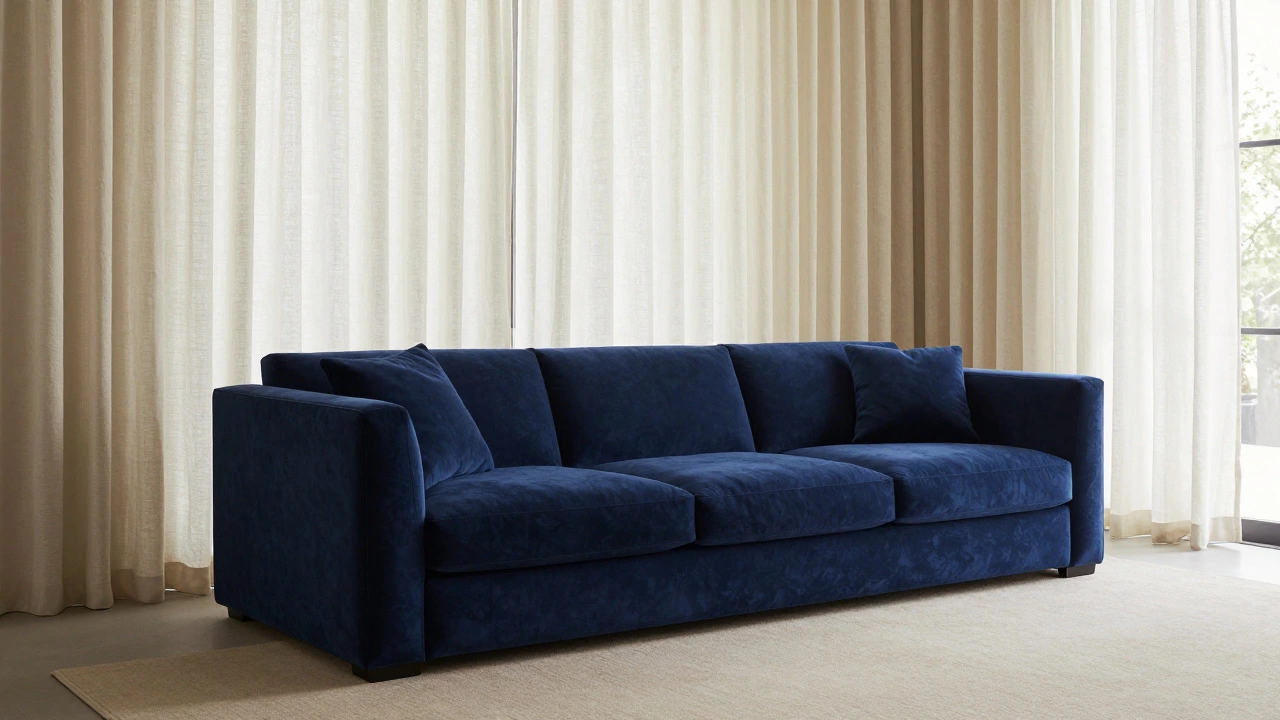
Curtain Harmony Checker
Pick your sofa and curtain options below. The tool scores how well they work together and explains why.
Walk into a room where the curtains scream for attention while the floor whispers in beige. Or maybe your sofa is a bold navy and the drapes are a chaotic mix of patterns that don't speak the same language. It’s a common headache: when you’re hanging new window treatments, do you align them with the carpet, the rug, or the big leather couch dominating the center? The short answer is neither. Curtain matching isn’t about finding an identical twin; it’s about creating a visual bridge that connects the vertical elements to the horizontal ones without locking the whole space into a uniform box.
If you’ve ever stood in front of a fabric store overwhelmed by swatches, you know the paralysis can be real. You want the room to feel cohesive, but you also don’t want it to look like a hotel lobby from the 1980s. The trick lies in understanding how color temperature, texture, and scale interact. Let’s break down why strict matching usually fails and what actually works to make a room feel balanced and intentional.
The Myth of Perfect Matching
Many people assume that if the curtain color is exactly the same as the sofa fabric, the room will look "put together." In practice, this often creates a monotonous block of color that lacks depth. When two large surfaces share the exact same hue and saturation, they compete for dominance rather than supporting each other. Your eye has nowhere to rest because everything shouts at the same volume.
Instead of matching, aim for harmony. Harmony means the colors sit well together on the color wheel and share similar undertones. For example, if your sofa is a warm gray with brownish undertones, a cool gray curtain with blue undertones will clash, even if they appear similar in brightness. This subtle mismatch creates a jarring effect that makes the room feel unfinished. To avoid this, check the undertones of both items under natural light. If one leans warm and the other leans cool, you need a third element-like a rug or artwork-to mediate the difference, or you should choose a neutral curtain tone that bridges the gap.
Why the Floor Is Usually the Wrong Anchor
Flooring is the foundation of a room, but it’s rarely the best reference point for soft furnishings. Hardwood floors, for instance, vary wildly in tone depending on the wood species, stain, and finish. A dark walnut floor might look rich next to white linen curtains, but pairing it with dark brown drapes can weigh the room down, making it feel smaller and darker than it is.
Rugs complicate things further. Since rugs change frequently based on season or style preferences, tying your permanent window treatments to a temporary textile is risky. If you replace the rug in six months, your carefully coordinated curtains might suddenly look out of place. Instead, use the floor only to determine the *scale* and *texture* of the curtains. A high-gloss tile floor calls for lighter, sheen fabrics to reflect light, while a plush carpet benefits from matte, heavier materials to absorb sound and add warmth. But for color? Look elsewhere.
The Sofa as Your Primary Color Partner
Your sofa is the anchor of the living space. It’s where you sit, where guests focus their attention, and the largest piece of furniture in most rooms. Because of its prominence, the curtains should relate to the sofa more closely than to anything else. However, "relate" doesn’t mean "match."
Here is a simple rule of thumb: pull a secondary color from the sofa’s pattern or texture for the curtains. If your sofa is solid charcoal, choose curtains in a complementary neutral like cream or light gray. If your sofa has a floral pattern with hints of sage green, incorporate that sage into the curtain fabric, perhaps as a subtle stripe or a solid background color. This creates a thread that ties the window to the seating area, guiding the eye across the room naturally.
Consider the material too. If your sofa is upholstered in velvet, which has a deep pile and high luster, pairing it with crisp cotton curtains creates a textural contrast that feels modern and dynamic. Conversely, if your sofa is in a rough-woven linen, smooth silk or satin curtains add a layer of refinement that balances the rusticness. Texture contrast is just as important as color harmony in achieving a polished look.
Navigating Patterns and Scales
Patterns are where most decorating decisions go wrong. Mixing a busy floral sofa with a geometrically printed curtain can create visual noise that tires the eye quickly. The key is to vary the scale. If the sofa has a small, intricate print, keep the curtains plain or with a very large, sparse motif. If the sofa is solid, you have more freedom to introduce patterned curtains, but ensure the pattern size doesn’t overwhelm the space.
In a standard living room, a medium-scale pattern on curtains works well with a solid-colored sofa. Think of stripes, checks, or subtle botanical prints. Avoid mixing two strong patterns unless you are confident in your design instincts. If you must mix patterns, link them through a shared color. For example, a blue and white striped curtain pairs well with a blue and white floral sofa because they share the primary hues, even if the motifs differ.
Practical Scenarios: What Works in Real Rooms
Let’s look at three common setups to see how these principles apply in practice.
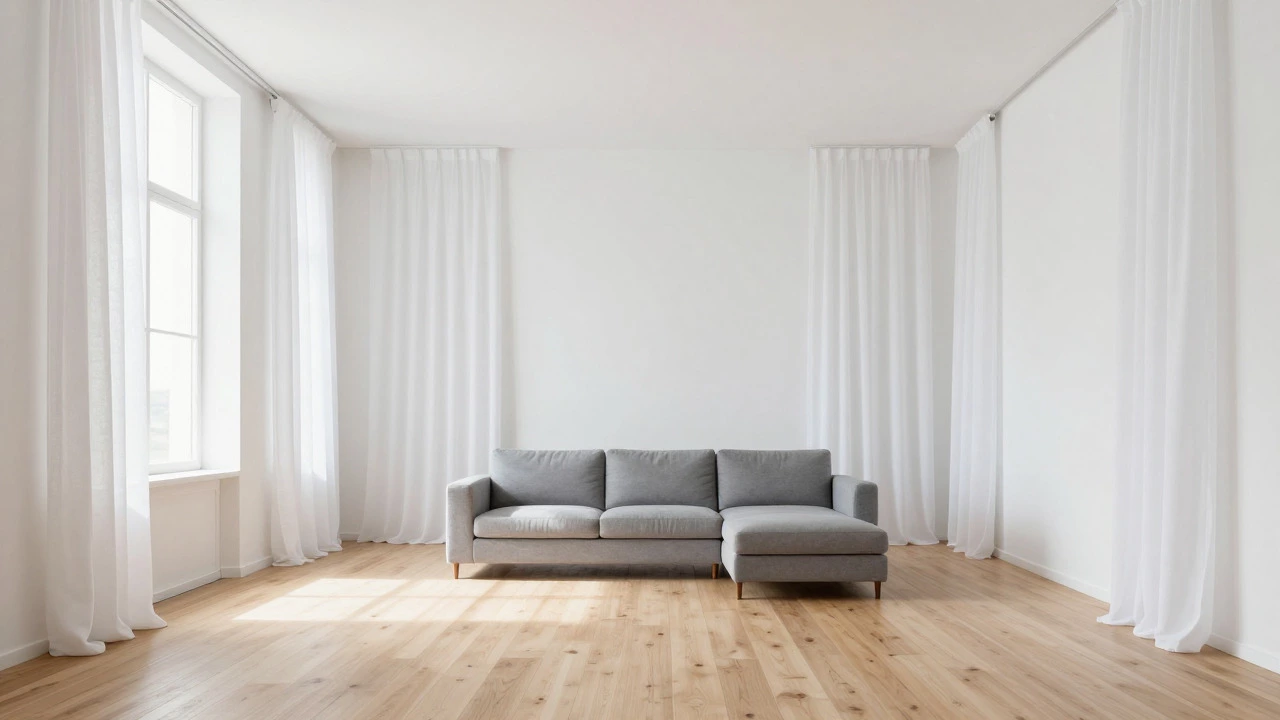
- The Minimalist Loft: White walls, light oak floors, and a gray sectional. Here, matching the floor would result in beige-on-beige monotony. Instead, choose white or off-white linen curtains. They match the walls, not the floor or sofa, creating a clean, airy frame around the windows. The gray sofa provides the necessary contrast against the bright backdrop.
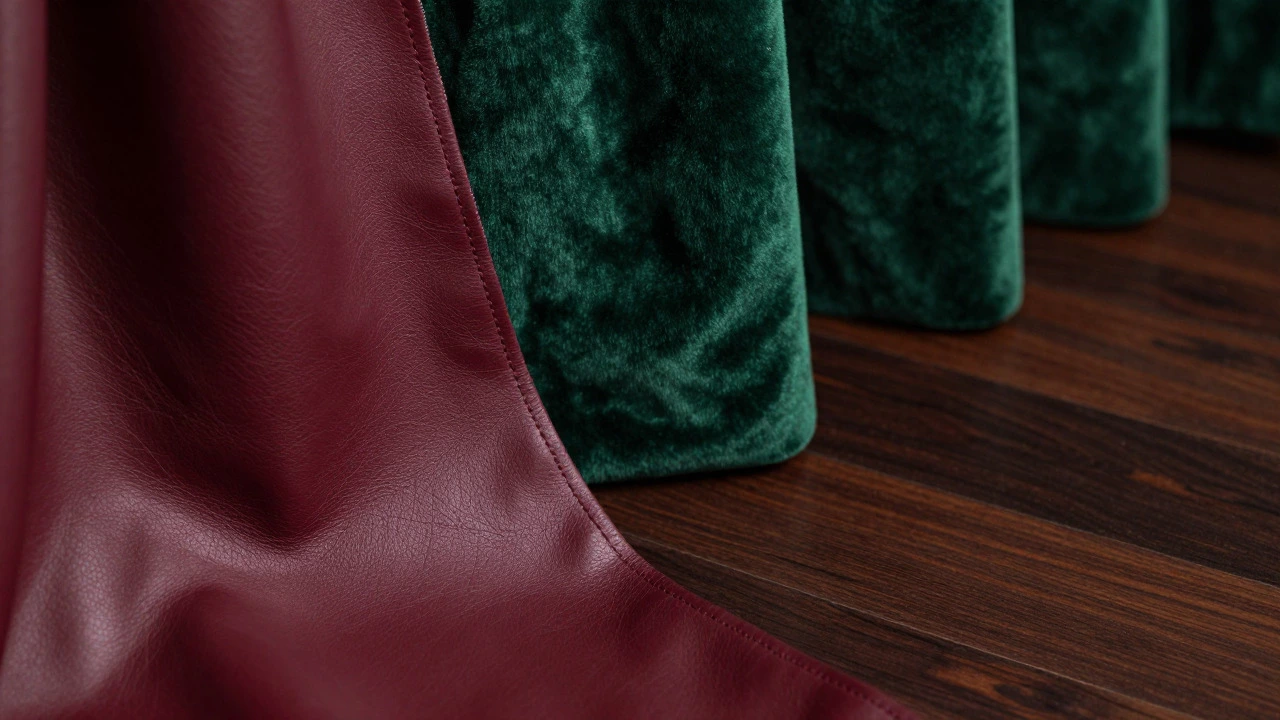
- The Traditional Study: Dark mahogany floors, a burgundy leather chair, and heavy drapery. Matching the floor with dark brown curtains would make the room feel cave-like. Instead, opt for deep green or navy velvet curtains. These colors complement the burgundy leather (analogous or triadic relationships) and provide a rich, layered look that honors the traditional aesthetic without being dull.
- The Modern Farmhouse: Shiplap walls, distressed wood floors, and a white slipcovered sofa. A common mistake here is using rustic burlap curtains that match the floor’s texture. While charming, it can look dated. Instead, try crisp white cotton or light blue gingham. The lightness of the fabric contrasts with the dark floor, keeping the room feeling open and fresh, while the blue adds a pop of color that echoes potential accents in pillows or art.
Lighting and Room Function Matter
Don’t ignore the role of light. North-facing rooms receive cooler, indirect light, so warm-toned curtains can help soften the chill. South-facing rooms get intense, direct sunlight, so lighter, cooler tones can prevent the space from feeling overheated. East and west rooms experience dramatic shifts in light direction throughout the day, so neutral tones are safest.
Also consider the function of the room. In a bedroom, where relaxation is key, softer textures and muted colors work best. In a living room, where entertainment happens, you have more leeway to experiment with bolder colors or heavier fabrics for acoustic control. The goal is always to support the activity happening in the space.
Quick Decision Checklist
Before you buy, run through this quick mental checklist to ensure your choice holds up:
- Check Undertones: Does the curtain color lean warm or cool? Does it match the sofa’s undertone?
- Assess Scale: Is the curtain pattern too busy for the sofa’s simplicity, or vice versa?
- Test Texture: Do the fabrics complement each other (e.g., smooth vs. rough)?
- Verify Lighting: How does the fabric look in the room’s specific light conditions at different times of day?
- Ignore the Floor: Unless the floor is a unique feature like stained concrete, treat it as a neutral base, not a color guide.
Ultimately, the best curtain choice is the one that makes the room feel calm and cohesive. It shouldn’t demand attention; it should frame the view and support the furniture. By focusing on the sofa as your primary partner and treating the floor as a neutral canvas, you’ll avoid the trap of over-matching and create a space that feels both stylish and livable.
Do curtains need to match the rug?
No, curtains do not need to match the rug. In fact, matching them can make the room look flat. Instead, pick a color from the rug that complements the sofa, or use a neutral curtain that ties the rug and sofa together without clashing.
What if my sofa is multi-colored?
If your sofa has multiple colors, choose a curtain color that matches the dominant background color of the upholstery. Alternatively, pick a neutral tone that works with all the accent colors in the sofa’s pattern to maintain balance.
Are sheer curtains better for matching colors?
Sheer curtains are forgiving because they let light pass through, reducing the impact of color mismatches. They work well in almost any room and can soften the transition between the window and the interior without demanding strict color coordination.
How high should I hang curtains relative to the floor?
Hang curtains close to the ceiling, ideally within 2-4 inches of the top of the window frame. For length, they should either skim the floor slightly or pool gently. This elongates the wall and makes the room feel taller, regardless of the color choice.
Can I mix different curtain panels?
Yes, mixing panels is a popular trend. Use a neutral panel on one side and a patterned or colored panel on the other. Ensure the neutral panel matches the walls or ceiling, and the colored panel picks up a hue from the sofa or accessories.