Is It Worth Buying Expensive Sofas? A Real-World Cost Analysis

Sofa Value Calculator: Budget vs. Premium
Stop looking at the sticker price. Use this tool to compare the daily cost of ownership for two different sofa options. Enter your details below to see which investment actually saves you money in the long run.
Option A: The Budget Find
Option B: The Investment
Enter prices and lifespans above,
then click "Calculate True Cost"
You stare at the price tag. $4,500 for a three-seater. Your gut says "no way," but your back remembers the sagging disaster from that $600 bargain bin find two years ago. This is the classic sofa dilemma. We all want a living room centerpiece that looks good in photos and feels like a cloud when we sink into it after work. But does dropping half a month's salary on a couch actually pay off, or are you just funding a fancy showroom?
The truth isn't black and white. It depends entirely on how you live, what you expect from your furniture, and whether you understand the hidden math behind furniture pricing. If you treat a sofa as a disposable item, expensive models are a waste of money. If you view it as infrastructure for your daily life, the equation changes completely.
Quick Summary / Key Takeaways
- Cost-per-use matters more than sticker price: A $3,000 sofa used daily for 10 years costs less per day than a $600 sofa replaced every 3 years.
- Construction quality dictates longevity: Hardwood frames and high-density foam last significantly longer than particleboard and low-grade polyfill.
- Reupholstering extends life: High-end frames can be re-covered multiple times, whereas cheap frames often break before the fabric wears out.
- Lifestyle fit is critical: Households with pets or children need durable performance fabrics, which drive up costs but save replacement headaches.
- Resale value exists: Brands like Cadence Furniture or high-end custom makers hold value better than generic big-box brands.
The Hidden Math of Sofa Pricing
Let's break down why one sofa costs $800 and another costs $5,000. It’s rarely about brand markup alone; it’s about materials and labor. Cheap sofas rely on shortcuts. They use softwoods like pine or engineered wood (particleboard/MDF) for the frame. These materials warp under stress and snap if you sit down too hard. The suspension system is usually webbing-elastic straps that stretch out over time, leading to that dreaded "hammock" effect.
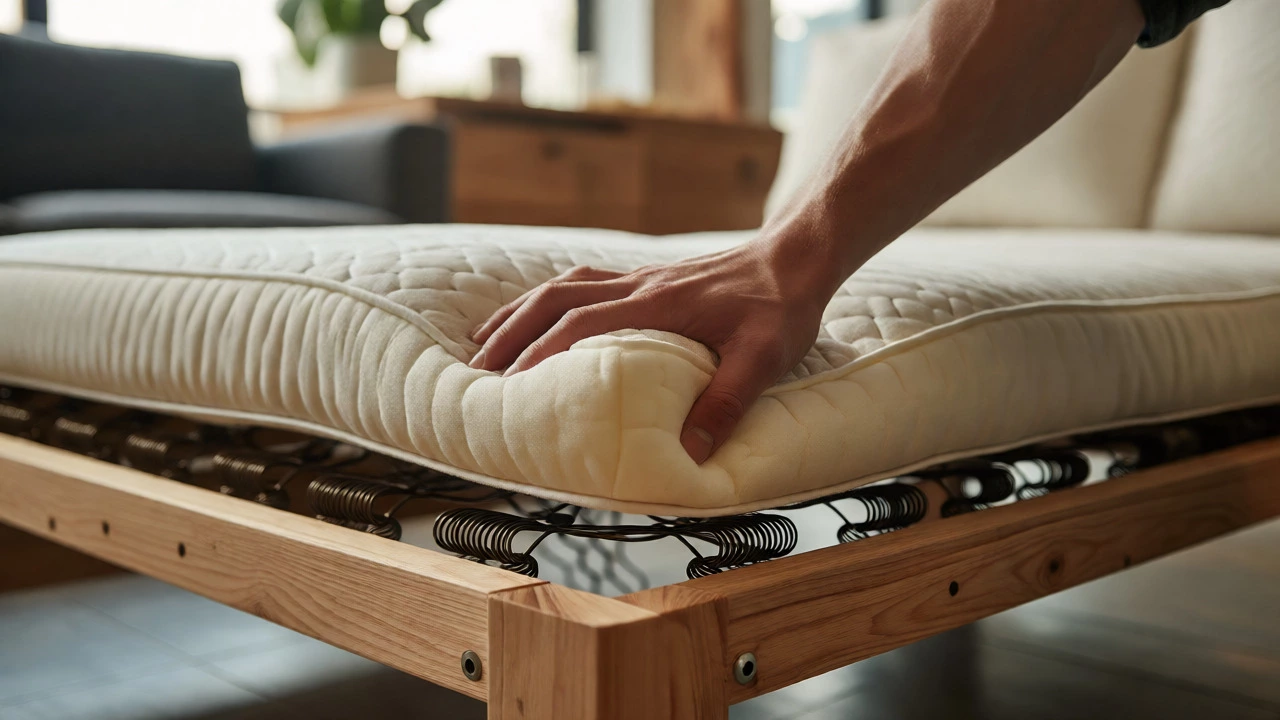
Expensive sofas use kiln-dried hardwood frames, typically oak, maple, or ash. Kiln-drying removes moisture, preventing warping and cracking. The joints are reinforced with corner blocks, dowels, and screws, not just staples and glue. Underneath, you’ll find eight-way hand-tied springs or sinuous steel springs, which provide consistent support for decades. The cushion core isn’t just loose foam; it’s high-resiliency (HR) foam wrapped in feathers or memory foam toppers. This combination maintains shape and comfort far longer.
| Component | Budget Sofa ($500-$900) | Premium Sofa ($2,500+) |
|---|---|---|
| Frame Material | Particleboard, Pine, Plywood | Kiln-Dried Hardwood (Oak, Maple) |
| Joinery | Staples, Glue, Nails | Mortise-and-Tenon, Dowels, Corner Blocks |
| Suspension | Elastic Webbing | Eight-Way Hand-Tied Springs or Sinuous Steel |
| Cushion Core | Low-Density Polyfoam | High-Resiliency Foam + Feather/Wrap |
| Fabric Grade | Basic Polyester/Cotton Blend | Performance Velvet, Top-Grain Leather, Heavy Linen |
Calculating Cost Per Use: The Only Metric That Matters
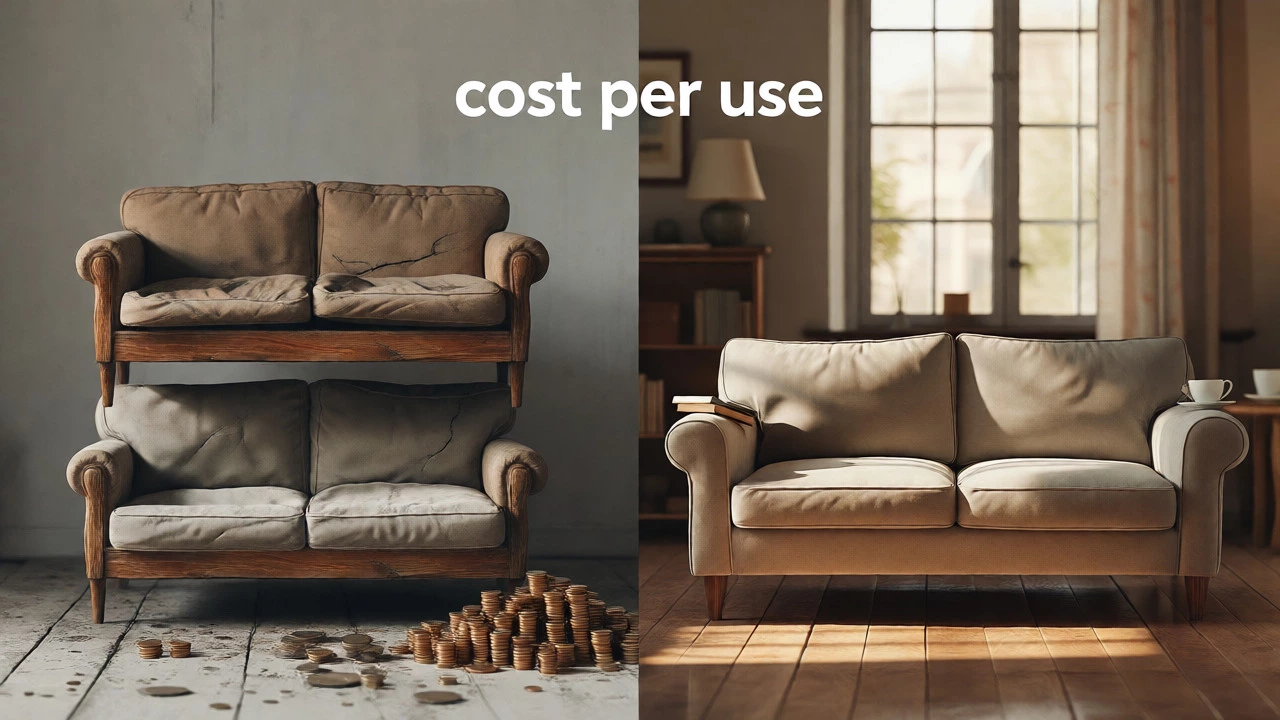
Stop looking at the upfront price. Start calculating cost per use. This is the single most effective tool for deciding if an expensive sofa is worth it. Here’s the formula: Total Price ÷ (Years of Expected Life × Days Used Per Year).
Let’s look at two scenarios based on real-world durability averages. Scenario A is a budget sofa from a discount retailer. You pay $700. It lasts three years before the cushions flatten and the frame wobbles. You sit on it every day. That’s $700 ÷ (3 years × 365 days) = $0.64 per day.
Scenario B is a premium sofa costing $3,500. With proper care, this construction lasts 15 years. You also sit on it daily. That’s $3,500 ÷ (15 years × 365 days) = $0.63 per day.
See the trick? The daily cost is nearly identical. But wait-the premium sofa offers superior comfort, better aesthetics, and no hassle of replacing furniture every few years. Now, factor in the "annoyance tax." Replacing a sofa involves measuring doors, hiring movers, disposing of the old unit, and shopping again. If you value your time and mental energy, the premium option wins hands down. However, if you move frequently (every 2-3 years), the premium sofa might not have enough time to amortize its cost, making the cheaper option smarter.
When Expensive Is Non-Negotiable
There are specific lifestyle factors where skimping on a sofa leads to regret. First, consider household size and activity. If you have toddlers jumping on the cushions or dogs scratching the arms, cheap fabric fails fast. Performance fabrics, which resist stains and abrasion, add cost but preserve appearance. A $400 sofa stained by red wine in month six is useless. A $2,500 sofa with stain-resistant treatment still looks new in year five.
Second, think about ergonomics. Back pain is a massive driver for premium purchases. Cheap sofas often lack lumbar support because they prioritize volume over structure. If you spend evenings reading or working from home, poor posture costs money in physical therapy later. Investing in a sofa with adjustable headrests or firm HR foam supports your spine. This is health spending disguised as furniture shopping.
Third, aesthetic permanence matters. Trends change, but quality doesn’t go out of style. A well-made neutral linen sofa fits modern, traditional, or eclectic interiors. A trendy velvet piece from a fast-furniture brand might look dated within two years. If you plan to keep your home layout stable for a decade, buy quality once. Changing upholstery is easier than changing a broken frame.
When Cheap Makes Perfect Sense
Don’t dismiss budget options entirely. There are valid reasons to buy inexpensive sofas. If you’re furnishing a rental property, a guest room, or a first apartment, you don’t need heirloom quality. These spaces see lower usage or shorter tenancy periods. A $500 sectional works fine for occasional movie nights.
Also, consider experimentation. Maybe you want a bold color or a unique shape but aren’t sure you’ll love it long-term. Buy a mid-range sofa ($800-$1,200) to test the vibe. If you hate it in a year, you haven’t lost thousands. If you love it, you’ve saved money compared to a custom order.
Finally, if you enjoy DIY repairs, budget sofas can be hacked. You can replace cushions easily on many flat-pack models. Just know that structural failures (broken legs, cracked frames) usually mean total loss for these units.
The Resale Reality Check
Here’s a secret: good sofas hold value. Bad sofas become landfill. When you list a used sofa online, buyers check the brand and condition. A vintage Ethan Allen or modern equivalent like Ligne Roset can sell for 40-60% of retail price if well-maintained. A generic box-store sofa sells for 10-20%, often requiring free pickup.
This resale potential lowers your net cost. If you buy a $3,000 sofa and sell it for $1,200 after seven years, your actual cost was $1,800. Compare that to buying three $600 sofas (total $1,800) that you threw away. The financial outcome is similar, but the experience was vastly different. Always research resale values before buying if you plan to upgrade in under a decade.
How to Spot Quality Before Buying
You don’t need to be an engineer to spot quality. Use these quick checks in the showroom:
- The Shake Test: Grab the armrest and shake the sofa vigorously. If it feels solid and heavy, the frame is good. If it rattles or feels light, it’s likely particleboard.
- Leg Inspection: Lift the sofa slightly. Legs should be screwed in, not glued. Wood legs are better than plastic.
- Cushion Zipper: Are the cushion covers removable? If yes, you can clean them or re-cover them later. This is a huge plus for longevity.
- Spring Sound: Sit firmly on the edge. Listen for squeaks. Silent operation indicates tight joinery.
- Density Check: Press your thumb into the seat cushion. It should spring back quickly. Slow recovery means low-density foam that will flatten soon.
Final Verdict: Is It Worth It?
Buying an expensive sofa is worth it if you value daily comfort, long-term savings via cost-per-use, and aesthetic stability. It’s a poor investment if you move often, have a tight budget for other essentials, or prefer changing styles frequently.
My advice? Aim for the "sweet spot." You don’t need a $10,000 designer piece unless you’re a collector. Look for sofas in the $1,500-$3,000 range from reputable manufacturers who offer warranties. These units often use 80% of the premium construction techniques at half the price. Avoid the absolute bottom tier and the extreme top tier unless you have specific needs. Buy the best you can afford today, because sitting comfortably shouldn’t feel like a luxury-it should feel like coming home.
How long should an expensive sofa last?
A high-quality sofa with a hardwood frame and high-density foam should last between 10 to 15 years with regular use. Factors like pet ownership and direct sunlight can reduce this lifespan, but the frame itself often survives much longer and can be reupholstered.
Is leather or fabric better for expensive sofas?
Leather is more durable and ages beautifully, making it ideal for households without sharp claws. Fabric, especially performance textiles, offers more color variety and softer comfort. For families with young children, dark-colored performance fabric is often more practical than leather, which can scratch.
Can I negotiate the price of an expensive sofa?
Yes, especially on floor models or during holiday sales events. Many retailers have a 10-20% margin flexibility on high-ticket items. Asking for free delivery or extended warranty coverage is also a common negotiation tactic that adds value without lowering the base price.
What is the biggest sign of a bad sofa?
The biggest warning sign is a lightweight frame combined with stapled joinery. If you can lift the sofa with one hand, it likely uses particleboard. Also, avoid sofas where the fabric pulls tight across corners, indicating thin material that will tear quickly.
Is it worth buying a sofa with a warranty?
Absolutely. Warranties on expensive sofas often cover structural defects for 5-10 years. This protects your investment against manufacturing flaws. Ensure the warranty covers both the frame and the suspension system, as these are the most costly components to repair.