How Serious Are Horizontal Foundation Cracks? A Homeowner's Guide
Foundation Crack Severity Estimator
Enter your observations below to estimate the urgency of repairs for horizontal foundation cracks.
Inspection Data
Assessment Result
Enter inspection data to receive a severity assessment and recommended actions.
Recommended Actions
You spot a crack running sideways across your basement wall and panic sets in. Is your house about to collapse? Should you call an engineer right now or wait it out? Here is the hard truth: horizontal foundation cracks are almost always more serious than vertical ones. While vertical cracks often result from concrete shrinking as it cures, horizontal cracks signal that external forces are pushing against your home’s structure. In Auckland, where clay soils swell with rain and shrink during dry spells, this pressure builds up fast.
This guide breaks down exactly what causes these cracks, how to measure their severity, and when you need professional help versus a simple patch job. We will look at real-world scenarios, specific width measurements, and the physics behind why your walls are moving.
The Physics of Pressure: Why Horizontal Means Danger
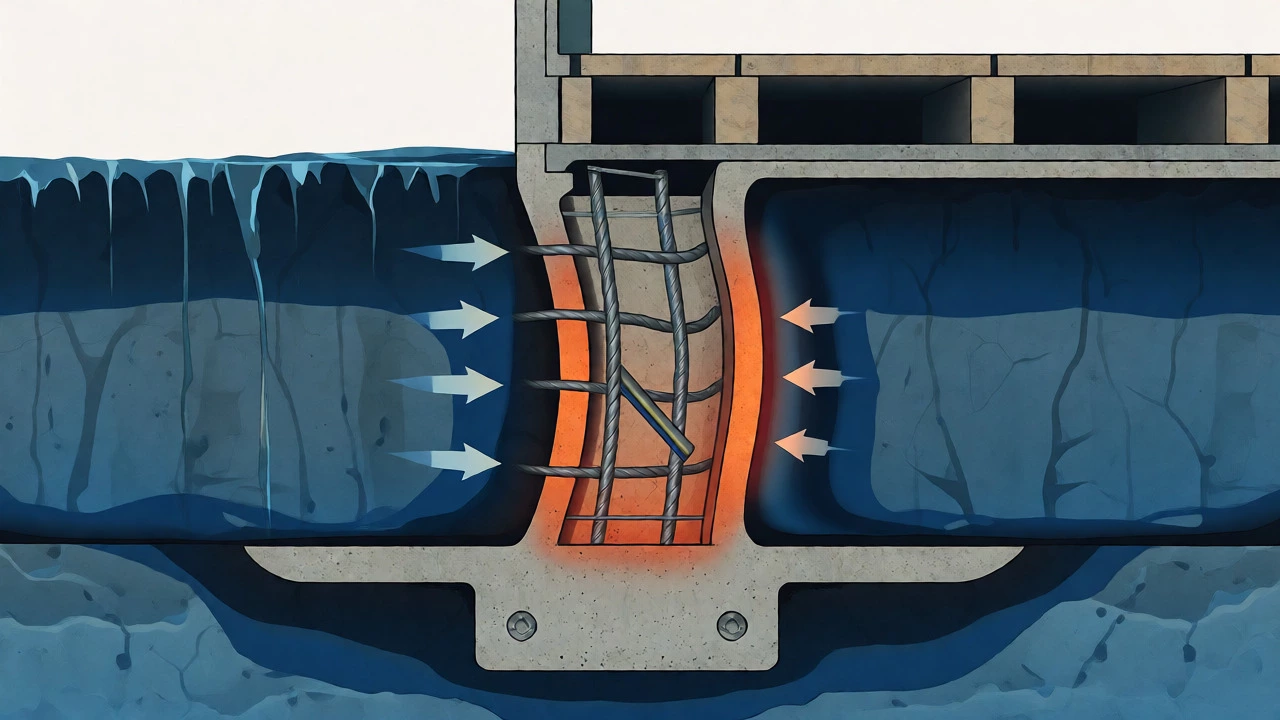
To understand the risk, you need to know how foundation walls work. Concrete is incredibly strong under compression (being pushed together) but weak under tension (being pulled apart). Most foundation walls are designed to hold back soil. When soil outside your home expands-due to water saturation or freezing-it pushes inward. This lateral earth pressure bends the wall slightly. If the force exceeds the concrete’s tensile strength, it cracks horizontally.
Think of it like bending a ruler. If you push on the sides, it bows. If you push too hard, it snaps. That snap is your horizontal crack. Vertical cracks usually happen because the concrete shrank while drying or settled unevenly. They rarely indicate active movement once cured. Horizontal cracks, however, often mean the wall is actively bowing or failing right now.
Categorizing Severity by Width and Movement
Not all horizontal cracks are emergencies. The width and whether the wall is bowing determine the urgency. Use this breakdown to assess your situation immediately.
| Width & Appearance | Potential Cause | Action Required |
|---|---|---|
| Hairline (<1mm) | Minor settling or temperature changes | Monitor monthly; seal if leaking |
| 1mm - 3mm | Moderate soil pressure | Professional inspection within 6 months |
| >3mm or Stair-step | Significant bowing or shear failure | Immediate structural engineer review |
| Crack + Visible Bow | Wall failure imminent | Emergency shoring and repair |
If you see a crack wider than 3 millimeters, do not ignore it. At this point, the steel reinforcement inside the concrete may be yielding. Steel stretches before it breaks, and once it yields, the wall loses its ability to resist further pressure. You might also see stair-step patterns in brick veneer above the crack. This indicates the entire wall section is shifting, not just the concrete block.
Common Causes in Different Climates
Why is the soil pushing so hard? The answer usually lies outside your house, not inside.
- Hydrostatic Pressure: This is the most common culprit. If your gutters overflow or downspouts dump water next to the foundation, the soil becomes saturated. Water adds weight and volume to clay soils. In Auckland, heavy winter rains can turn expansive clay into a hydraulic jack pressing against your walls.
- Frozen Soil: In colder climates, water in the soil freezes and expands by about 9%. This frost heave pushes walls inward. Even if you don’t live in a freeze zone, rapid temperature drops can cause similar stress in certain soil types.
- Backfill Issues: Builders sometimes use poor-quality soil to fill the trench around the foundation after construction. If they used organic matter or uncompacted dirt, it settles over time. Worse, if they placed large rocks near the wall, those rocks act as levers, concentrating pressure on small areas until the concrete cracks.
- Vehicle Traffic: Did a heavy truck park near your foundation recently? Construction equipment or delivery trucks driving close to the house can exert temporary but intense pressure. If the soil was already wet, one pass could create a permanent crack.
DIY Inspection Checklist
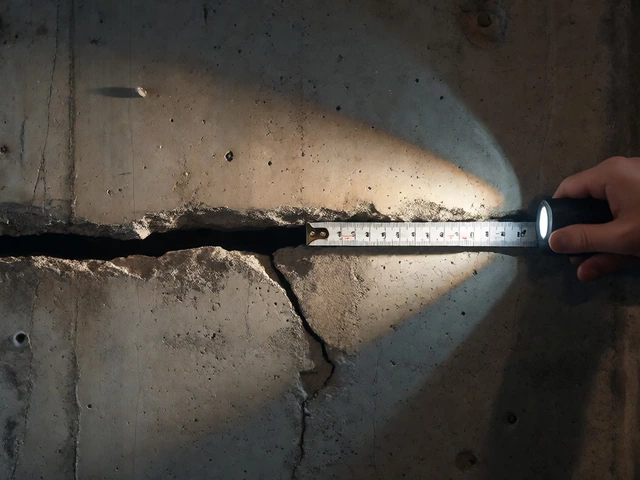
Before calling a contractor, gather data. Contractors give better quotes when you provide specifics. Grab a flashlight, a tape measure, and a piece of paper.
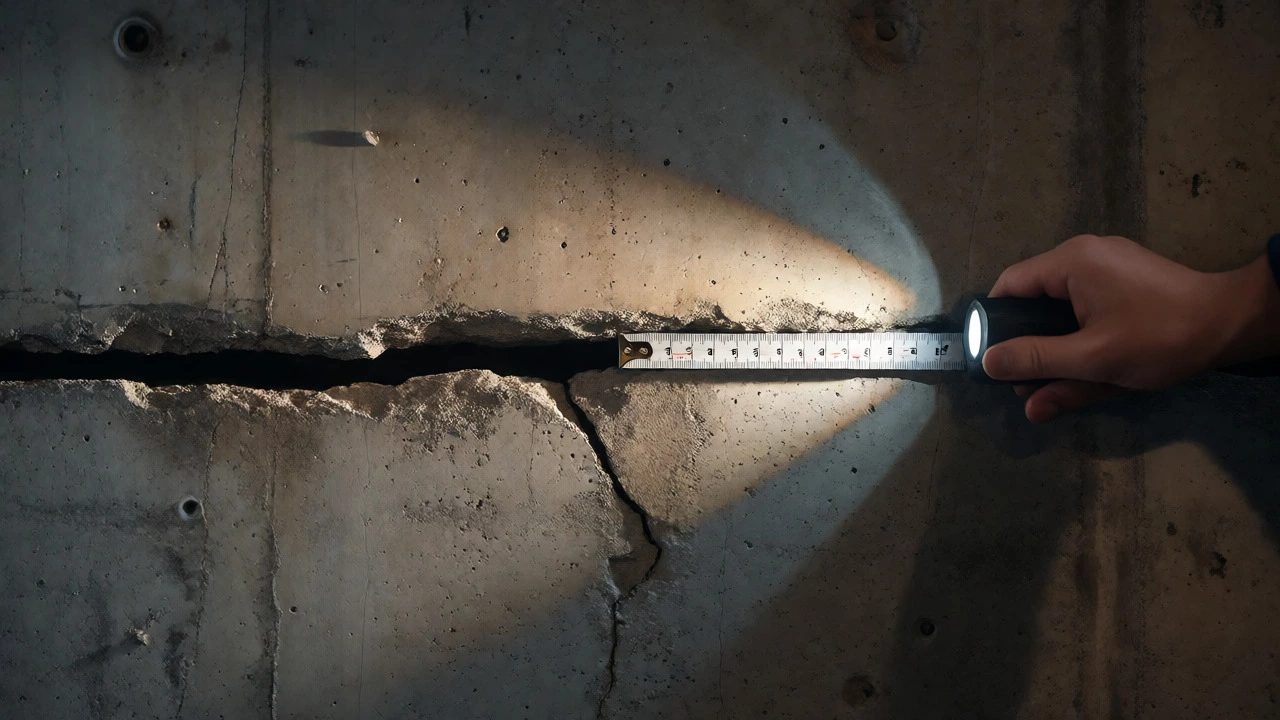
- Measure the Width: Use a coin for reference. A US penny is 1.52mm thick. If the crack swallows a penny, it’s significant. Measure at multiple points along the crack to see if it widens toward the center.
- Check for Leaks: Run your hand along the crack. Is it damp? Active water infiltration means the waterproofing membrane has failed. This accelerates corrosion of the rebar inside the concrete.
- Look for Bowing: Stand back and sight along the wall. Does it curve inward? Place a straight edge (like a long level or string line) against the wall. Measure the gap between the string and the wall at the midpoint. Any deflection greater than 10mm suggests serious structural compromise.
- Inspect Interior Finishes: Check drywall seams, tile grout, and door frames nearby. Do doors stick? Are tiles cracked? These interior signs confirm that the exterior movement is affecting the living space.
Repair Options: From Patching to Anchoring
Your repair strategy depends entirely on the diagnosis. Trying to fix a structural problem with cosmetic filler is like putting a band-aid on a broken leg.
Minor Cracks (<1mm)
If the wall is stable and the crack is hairline, you can seal it yourself. Use polyurethane injection kits available at hardware stores. These expand to fill the void and stop water leaks. Clean the crack thoroughly first; dust prevents adhesion. This is maintenance, not structural repair.
Moderate Cracks (1-3mm) with No Bowing
Epoxy injection is the standard here. Unlike polyurethane, epoxy bonds strongly to concrete and restores some tensile strength. However, it does not stop the wall from moving further. You must address the drainage issue outside. Install French drains or extend downspouts away from the house. Without fixing the water source, the epoxy will eventually crack again.
Severe Cracks (>3mm) or Bowing Walls
Injection alone won’t work. The wall needs support to counteract the soil pressure. Two main methods exist:
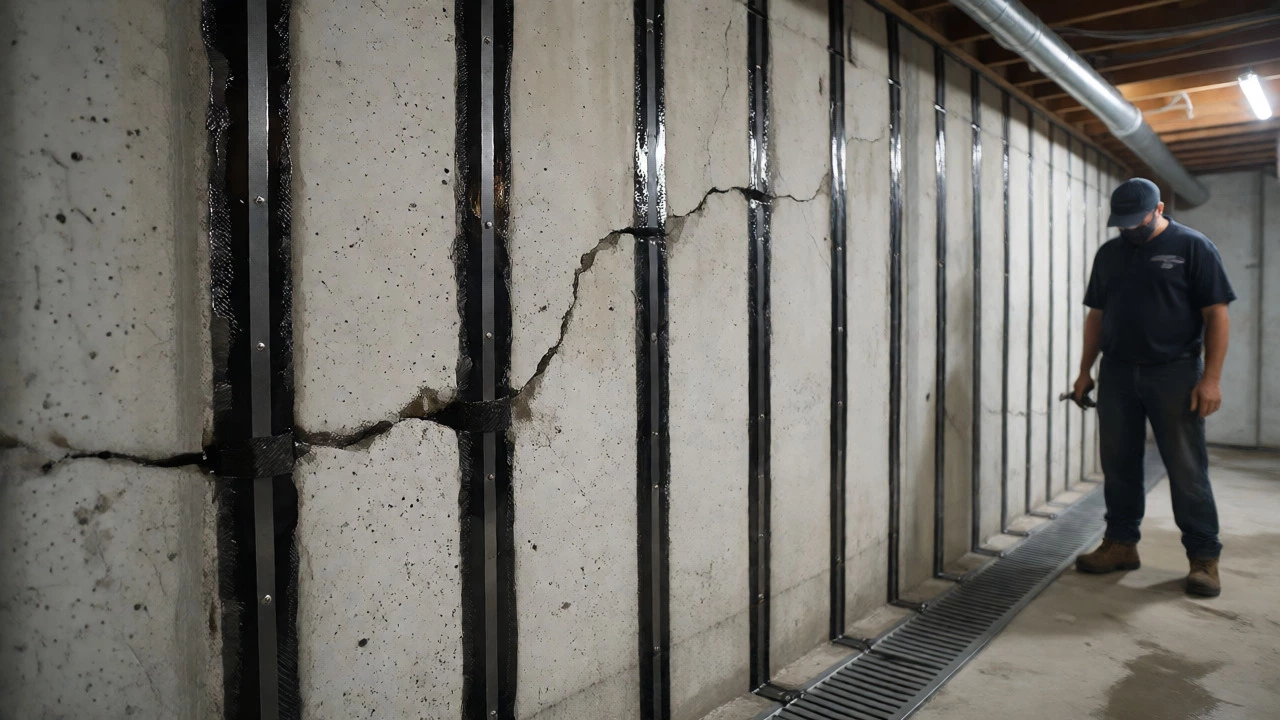
- Carbon Fiber Straps: High-strength carbon fiber strips are bonded vertically over the crack with epoxy. They act like seatbelts, holding the wall in place. This method is non-invasive and works well for moderate bowing (up to 1 inch). It stops movement but doesn’t straighten the wall.
- I-Beam Anchors: For severe cases, steel I-beams are installed horizontally across the wall. They anchor into the floor joists above and the footing below. This system physically holds the wall straight and can even pull it back slightly over time. It requires cutting into the drywall and is more expensive.
When to Call a Structural Engineer
Contractors sell repairs. Engineers diagnose problems. If you have any of these red flags, skip the sales pitch and hire an independent structural engineer first:
- The crack is widening month over month.
- You see visible bowing greater than 10mm.
- Doors and windows no longer latch properly.
- The crack extends through the brick veneer or siding above the foundation.
- You plan to finish the basement soon and want to ensure the investment is safe.
An engineer will charge a fee (typically $500-$1,500 depending on location), but their report carries legal weight. If you ever sell your home, having an engineer’s clearance letter reassures buyers. It also protects you from contractors who might upsell unnecessary systems.
Preventing Future Damage
Once repaired, prevention is key. Foundation issues are rarely isolated events; they stem from site conditions. Manage your water aggressively.
Ensure your landscape slopes away from the house at least 15cm over the first 3 meters. Clean gutters twice a year, especially before autumn rains. Consider installing splash blocks that direct water at least 2 meters away from the foundation. Avoid planting large trees within 3 meters of the house, as their roots can extract moisture from the soil, causing differential settlement, or conversely, retain too much water during droughts.
Horizontal foundation cracks are a warning light on your car’s dashboard. Ignoring them risks engine failure. Addressing them early saves thousands in potential reconstruction costs later. Measure, monitor, and manage the water. Your home’s stability depends on it.
Are horizontal foundation cracks always dangerous?
While not every hairline horizontal crack signals immediate collapse, they are inherently more concerning than vertical cracks. Vertical cracks often result from curing shrinkage, whereas horizontal cracks typically indicate lateral earth pressure. If the crack is wider than 1mm or shows signs of movement, it requires professional assessment to prevent progressive structural failure.
Can I fix horizontal foundation cracks myself?
You can seal minor, non-moving hairline cracks using polyurethane or epoxy kits. However, DIY methods cannot resolve the underlying soil pressure causing the crack. If the wall is bowing or the crack is widening, DIY sealing is only cosmetic. Structural repairs like carbon fiber strapping or wall anchors require specialized tools and engineering knowledge.
How much does it cost to repair a horizontal foundation crack?
Costs vary widely based on severity. Simple epoxy injection might cost $200-$500 per linear meter. Carbon fiber straps range from $400-$800 per strap. Steel I-beam systems can cost $1,000-$2,000 per beam. Full excavation and rebuilding are significantly higher. Always get multiple quotes and ensure the contractor includes a warranty on both labor and materials.
Do horizontal cracks affect home value?
Yes, unresolved structural issues can lower resale value. Buyers often request inspections, and visible horizontal cracks raise red flags. Documented repairs with warranties mitigate this impact. Having an engineer’s report confirming the repair was effective provides peace of mind to potential buyers and helps maintain market value.
What is hydrostatic pressure?
Hydrostatic pressure is the force exerted by standing water in the soil surrounding your foundation. When soil becomes saturated, it gains weight and volume, pushing against basement walls. This pressure increases with depth, making lower parts of the wall more susceptible to cracking and leakage. Proper drainage systems relieve this pressure.