What is a Small Wardrobe Called? Names, Types & Best Picks
Small Wardrobe Finder
Confused about what to call your small storage unit? Answer three simple questions below to find the specific term that matches your needs and space.
You are looking for a...
You’ve got that awkward corner in your bedroom. It’s too small for a full-sized built-in closet but way too big to leave empty. You need somewhere to hang your shirts and stash your sweaters, but you don’t want to buy a massive piece of furniture that dominates the room. So, what do you actually call this thing? Is it an armoire? A cabinet? A chifforobe? The confusion is real, and getting the name right matters because it changes what you search for and, ultimately, what you find.
Here’s the quick answer: there isn’t just one name. Depending on its shape, material, and function, a small wardrobe might be called an armoire, a chifforobe, a wardrobe cabinet, or simply a freestanding closet. Each term signals something different about size, style, and storage capacity. Knowing the difference saves you time when shopping and helps you pick the right piece for your space.
Why Naming Matters When Buying Small Storage
Search engines and store filters are literal. If you type "small wardrobe" into Amazon or Wayfair, you’ll get a mix of everything-some huge, some tiny, some made of particleboard that falls apart after six months. But if you know the specific term for what you need, you cut through the noise. For example, searching for an "armoire" usually brings up taller, more decorative pieces with hanging rods. Searching for a "chest of drawers" gets you horizontal storage without hangers. Understanding these distinctions prevents buyer’s remorse.
Think of it like ordering coffee. Saying "coffee" gets you whatever the barista thinks you mean. Saying "large oat milk latte" gets you exactly what you want. Same principle applies here. Let’s break down the actual names you’ll encounter.
The Armoire: Tall, Decorative, and Often Antique-Style
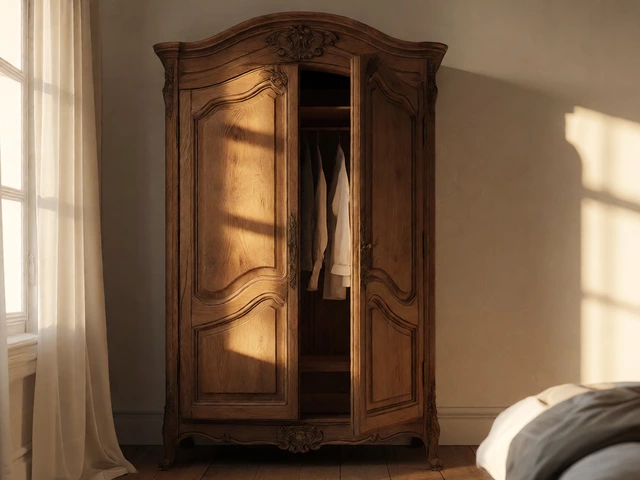
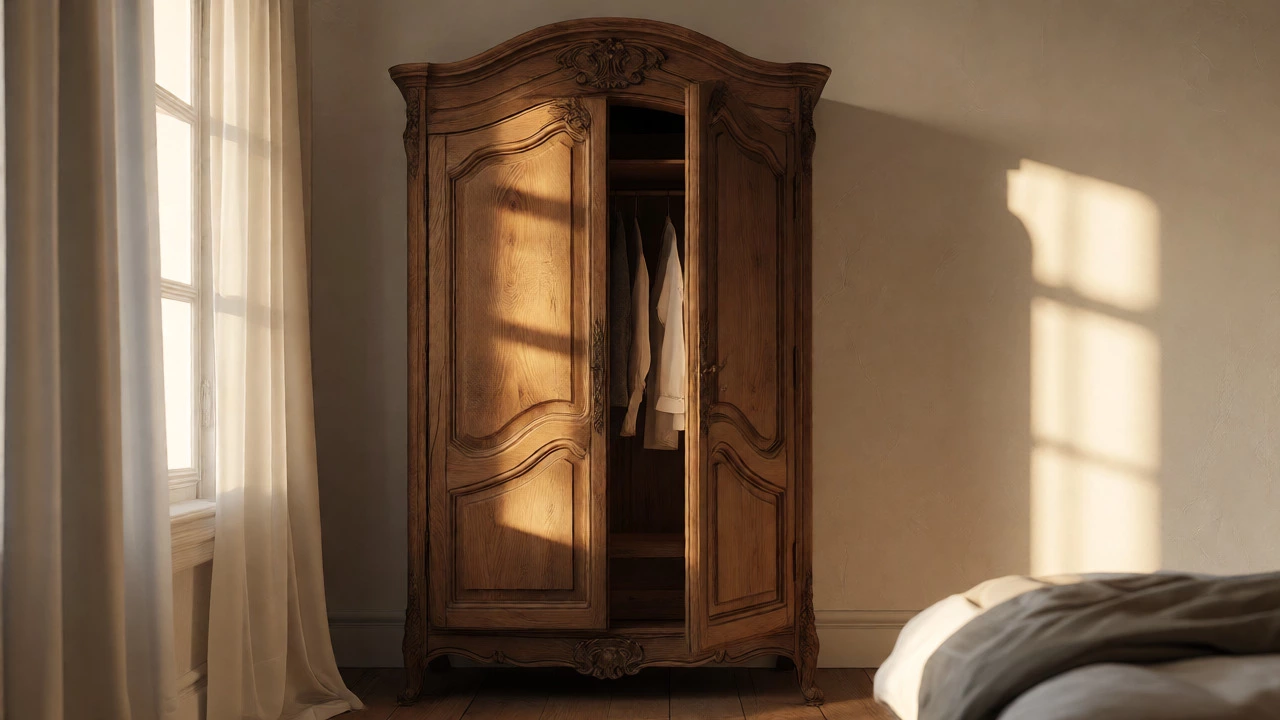
An armoire is a tall, freestanding cabinet, traditionally made of wood, used for storing clothes. Historically, armoires were large enough to hold entire wardrobes for couples, often featuring intricate carvings and doors that opened outward. Today, smaller versions exist, but they still retain that vertical emphasis.
| Feature | Armoire | Standard Wardrobe |
|---|---|---|
| Typical Height | 60-72 inches (150-180 cm) | 72+ inches (180+ cm) |
| Material | Solid wood, veneer, ornate details | MDF, particleboard, metal, glass |
| Doors | Usually two solid wood doors | Sliding, mirrored, or open shelving |
| Best For | Traditional decor, limited floor space | Modern bedrooms, high ceilings |
If you’re looking for something that looks like a piece of art rather than just storage, an armoire is your go-to. They’re perfect for rental apartments where you can’t install shelves, or for bedrooms with low ceilings where a tall modern wardrobe feels oppressive. Just check the interior layout-some armoires have fixed shelves that make hanging long dresses impossible.
The Chifforobe: The Hybrid Hero
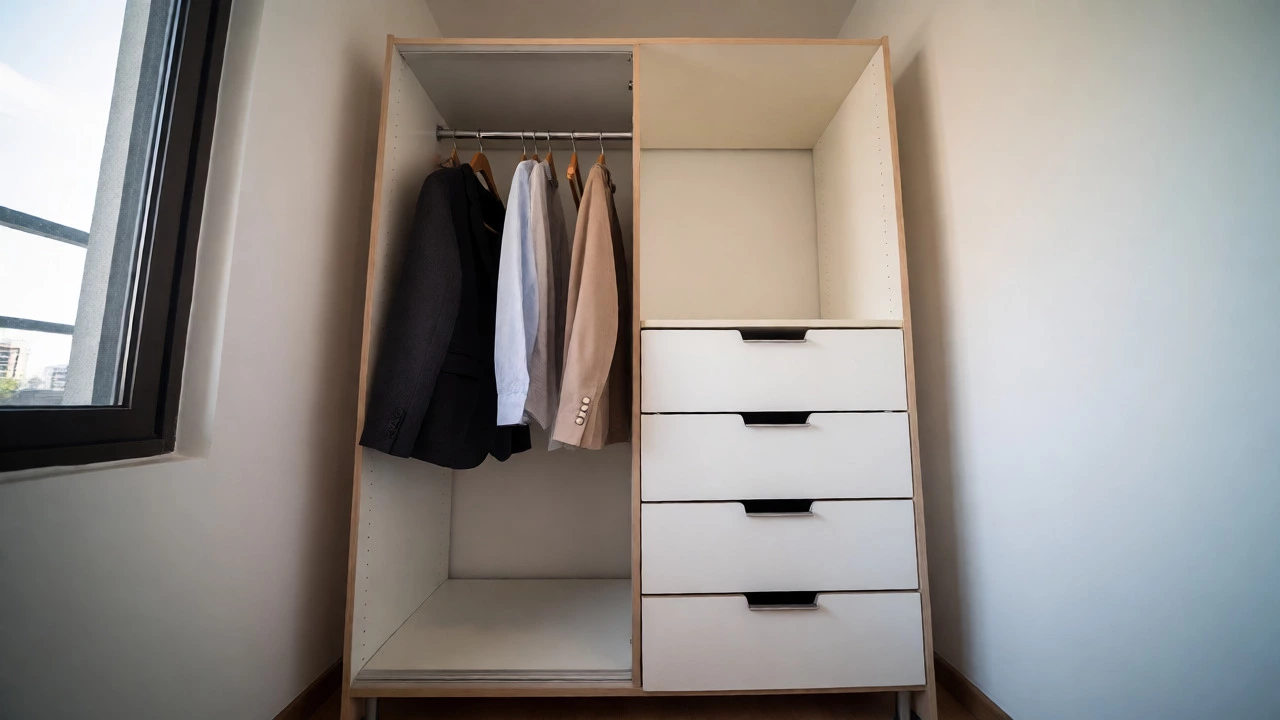
A chifforobe is a combination of a chest of drawers (chiffonier) and a wardrobe. It typically features a section with hanging rods on one side and stacked drawers on the other. This hybrid design makes it incredibly efficient for small spaces because you get both hanging and folded storage in one footprint.
Chifforobes are ideal if you have a mix of clothing types. Need to hang blazers? Use the rod section. Store socks and underwear? Toss them in the drawers. Because they’re wider than they are deep, they fit nicely against walls without protruding too far into the room. Look for models with adjustable shelves inside the hanging section-you’ll thank yourself when you try to fit winter coats versus summer dresses.
The Freestanding Closet: Modern and Modular
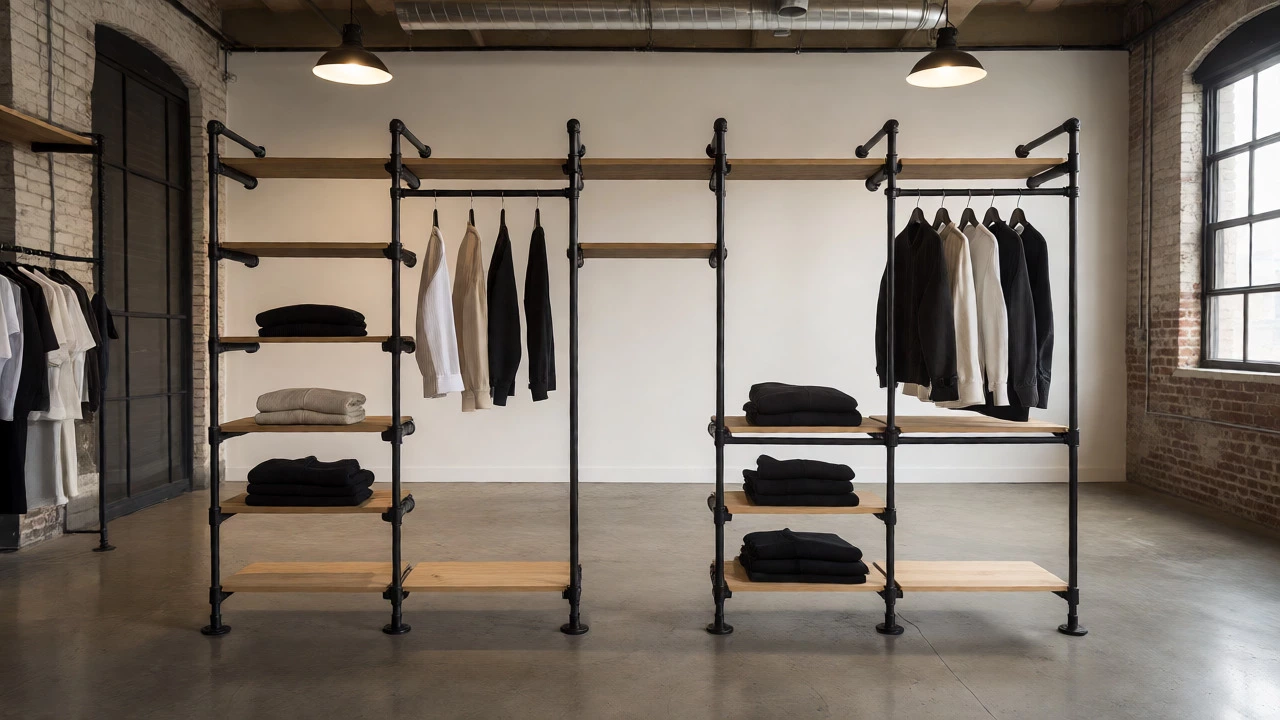
In contemporary homes, you’ll often see the term freestanding closet or closet system. These aren’t always enclosed cabinets. Some are open-frame structures made of metal pipes and wooden shelves, inspired by industrial lofts. Others are sleek, minimalist units with sliding doors.
These are great for people who hate dust collecting on open shelves but don’t want the bulk of traditional wood cabinets. Brands like IKEA (with their PAX series) offer modular systems where you customize width, height, and interior fittings. The key advantage? You can disassemble and move them easily. If you’re renting in Auckland or moving frequently, this flexibility is worth paying for.
Other Common Terms You Might Encounter
Beyond the big three, you’ll see several other terms pop up. Here’s how to decode them:
- Vanity Unit: Usually includes a mirror and shallow drawers, often placed near a bed. Not meant for hanging clothes, so avoid this if you need rod space.
- Cabinet Bed: A bed that folds into a wall-mounted cabinet. Great for studios, but not a standalone wardrobe solution.
- Hutch: Typically sits on top of a desk or dresser. Too small for full outfits, but good for accessories.
- Wardrobe Chest: Another name for a chifforobe, emphasizing the drawer component.
Be careful with terms like "mini wardrobe." Sellers use this loosely to describe anything under 4 feet wide. Always measure the internal hanging space, not just the external dimensions. A 3-foot-wide unit might only have 2.5 feet of usable rod length due to thick side panels.
How to Choose the Right Name (and Piece) for Your Space
Don’t start by browsing. Start by measuring. Grab a tape measure and note three things:
- Floor Space: How much width and depth do you have? Remember to account for door swing if you choose a hinged-door model.
- Clothing Mix: Do you mostly hang clothes, or do you fold? If you hang 80% of your wardrobe, prioritize rod length over drawer count.
- Ceiling Height: In older New Zealand villas, ceilings can be low. A 72-inch armoire might block natural light or feel cramped.
Once you have those numbers, match them to the definitions above. If you have narrow width but plenty of height, go for an armoire. If you have moderate width but need versatile storage, pick a chifforobe. If you want customization and ease of assembly, choose a modular freestanding closet.
Common Pitfalls to Avoid
I’ve seen buyers make the same mistakes repeatedly. First, ignoring ventilation. Enclosed cabinets trap moisture, leading to musty smells. Look for models with vented doors or add cedar blocks inside. Second, overlooking weight limits. Cheap particleboard shelves sag under heavy denim. Check the load rating per shelf-aim for at least 20 kg (44 lbs) per level.
Third, forgetting accessibility. If you’re short, a tall armoire with a rod at 60 inches will require a step stool daily. Adjustable rods solve this. Finally, don’t assume "antique" means "sturdy." Vintage armoires often have loose joinery. Inspect dovetail joints or ask about repair history before buying secondhand.
Related Concepts: Beyond the Basics
Understanding small wardrobes also means understanding adjacent concepts. For instance, built-in closets are permanent fixtures, usually custom-made during construction. They maximize space but lack mobility. Walk-in closets require significant square footage, making them impractical for most urban apartments.
Another related idea is capsule wardrobe planning. Smaller storage forces intentional curation. Many people find that owning a compact wardrobe actually simplifies life-they wear more of what they own because it’s visible and accessible. Tools like the KonMari method encourage this mindset shift, turning storage constraints into lifestyle benefits.
Is an armoire the same as a wardrobe?
Not exactly. While both store clothes, an armoire is typically freestanding, decorative, and made of wood, often with a historical aesthetic. A wardrobe is a broader term that can include built-ins, modern materials like metal or glass, and functional designs focused purely on storage efficiency.
What is the smallest size for a functional wardrobe?
The minimum practical width is about 24 inches (60 cm). Anything narrower makes hanging shirts difficult because sleeves bunch up. Depth should be at least 20 inches (50 cm) to accommodate standard hangers without doors bulging.
Can I paint a wooden armoire to match my decor?
Yes, most solid wood armoires take paint well. Sand lightly, apply a primer suitable for wood, then finish with your chosen color. Veneered surfaces may need special bonding primers. Test a small area first to ensure adhesion.
Are chifforobes better than separate dressers and wardrobes?
For small rooms, yes. Combining functions reduces the total footprint. However, separate pieces offer more layout flexibility. If you ever rearrange your room, moving one heavy chifforobe is harder than moving two lighter units.
What material lasts longest in humid climates?
Solid hardwoods like oak or maple resist warping better than particleboard or MDF in humid environments. Metal frames with powder-coating are also excellent choices for coastal areas like Auckland, as they won’t rust or swell.