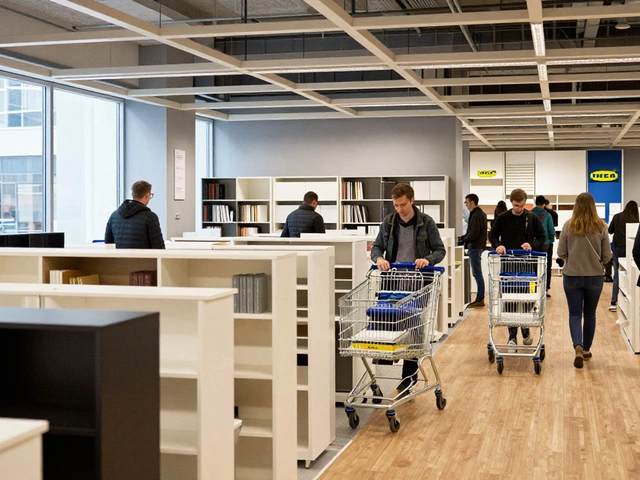
Where Is IKEA Sold Most? Top Countries and Why
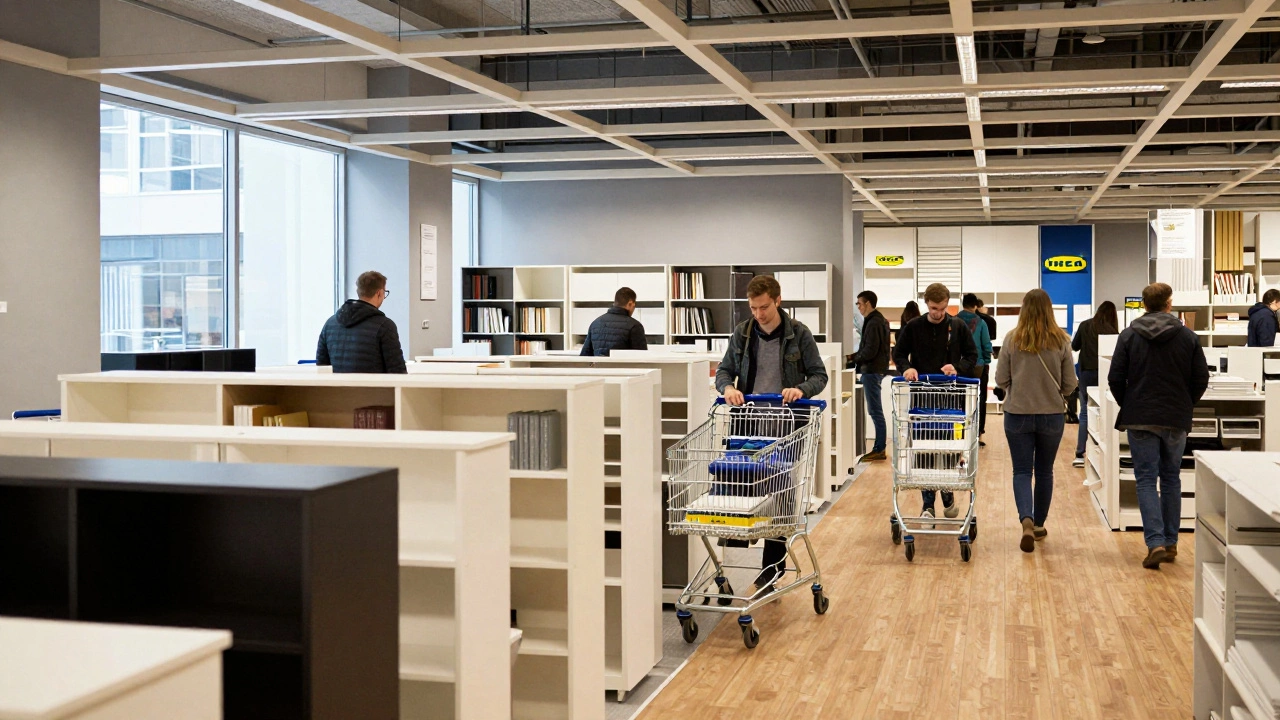
If you’ve ever walked into an IKEA store and felt like you’d stepped into a giant, flat-pack dream, you’re not alone. Millions do it every year. But where does IKEA sell the most? Not in Sweden, where it started. Not in the U.S., even though it’s huge there. The real answer might surprise you.
Germany Leads the Pack
Germany is IKEA’s biggest market by far. In 2025, German customers bought more IKEA products than any other country. That includes everything from the iconic BILLY bookcase to the KUNGSBACKA kitchen fronts. Why Germany? It’s not just about population. Germans value practical, affordable design. They live in smaller urban apartments, need smart storage, and don’t want to pay premium prices for good-looking furniture. IKEA fits perfectly.
The country has over 50 IKEA stores - more than any other nation outside of Sweden. Each one draws crowds on weekends, especially around new product launches. The BILLY bookcase alone sells over 2 million units annually in Germany. That’s more than the entire population of many European cities.
United States: Big Numbers, But Not #1
The U.S. has more IKEA stores than any other country - 53 as of early 2026. But total sales still trail Germany. Why? Americans spend more per visit, but they buy fewer items overall. Many buy just one or two pieces - a KALLAX shelf, a LACK table, maybe a POÄNG chair. They’re often decorating a single room, not furnishing an entire apartment.
Still, the U.S. is where IKEA’s brand awareness is strongest. Nearly 90% of Americans recognize the name. That’s why IKEA keeps opening new locations - in Texas, Florida, and even smaller cities like Boise and Knoxville. The goal isn’t just to sell more bookcases. It’s to make IKEA feel like a local fixture.
France and the UK: Quiet Powerhouses
France ranks third in total IKEA sales. French customers love the minimalist style, especially in Paris and Lyon where apartments are small and space is tight. The BILLY bookcase is a staple in French homes - often painted white or stained dark to match modern interiors. French shoppers also buy more lighting and textiles than other markets.
The UK is close behind. IKEA has been in the UK since 1987, and it’s woven into the fabric of British home life. Over 1.5 million BILLY bookcases have been sold there since 2020. British buyers are practical. They don’t buy for show. They buy because it holds books, records, and kids’ toys - and it costs less than half of what a similar unit from a local brand would.
Why the BILLY Bookcase Is the Key
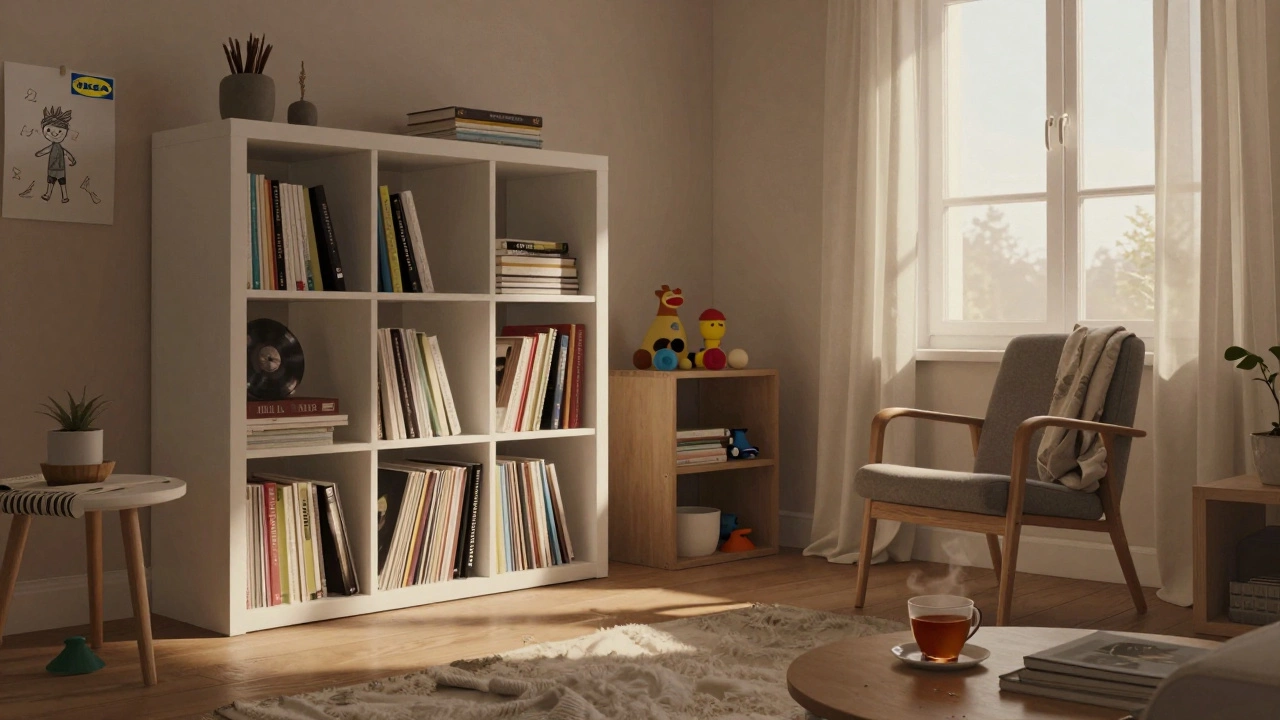
The BILLY bookcase isn’t just popular. It’s the engine behind IKEA’s global sales. Launched in 1979, it’s sold over 50 million units worldwide. That’s more than any other piece of furniture in history. It’s cheap, modular, and fits in almost any space. In Japan, it’s used as a room divider. In Brazil, it’s painted bright colors and used as a TV stand. In Germany, it’s stacked floor-to-ceiling in home offices.
Here’s the thing: IKEA doesn’t sell furniture. It sells storage solutions. The BILLY bookcase is the perfect example. It’s not about style. It’s about function. And that’s why it sells best in countries where space is limited, budgets are tight, and people need to make the most of what they have.
Emerging Markets: China and India
China is IKEA’s fastest-growing market. There are now 32 stores across the country, and sales have jumped 40% since 2023. Young urban professionals in Shanghai and Beijing are buying IKEA not because it’s cheap - but because it’s reliable. They’ve seen how Western brands fail after a year. IKEA lasts. The BILLY bookcase, in particular, is a symbol of stability in a fast-changing life.
India is different. IKEA opened its first store in 2018, and it’s still growing slowly. Why? Cultural differences. Indian homes often use open shelving, not closed cabinets. Many families prefer wood over particleboard. But IKEA is adapting. New products like the LAGAN storage box and the KUNGSBACKA kitchen units are designed with Indian kitchens in mind. Sales are rising, especially among middle-class families in Mumbai and Delhi.
What Countries Don’t Buy Much?
Not every country is a fit. In Russia, IKEA pulled out after 2022 due to sanctions. In Australia, sales are steady but small - only 7 stores serve a population of 26 million. That’s because Australians have strong local furniture brands and higher wages. They’re more likely to buy a solid timber bookcase than a particleboard one.
Even in Canada, IKEA struggles to match U.S. sales. Canadians buy less per visit, and delivery costs are high. The BILLY bookcase sells well, but not at the same volume as in Europe.
The Real Reason IKEA Sells Best in Europe
It’s not just about price. It’s about culture. European cities are old, dense, and full of small apartments. Storage is a daily problem. IKEA solves it without needing a renovation. In Germany, France, and the UK, people don’t wait for a big move to buy furniture. They buy when they need it - a shelf for books, a drawer for socks, a corner unit for a TV.
That’s why IKEA’s best-selling items are the ones you can assemble in an afternoon. The BILLY bookcase. The KALLAX cube. The FRAKTA bag. These aren’t luxury items. They’re tools. And in places where space is expensive and time is short, tools sell best.
What’s Next for IKEA?
IKEA is shifting focus. Instead of just selling more bookcases, it’s selling better storage. New products include modular wall systems, under-bed drawers, and smart cabinets with hidden charging ports. In Germany, they’re testing a rental program for furniture - perfect for people who move often.
They’re also pushing sustainability harder. The BILLY bookcase now uses 100% recycled cardboard in its packaging. The wood comes from certified forests. And in 2025, IKEA started offering free repair workshops in 15 countries. People are keeping their furniture longer. That’s good for the planet - and good for IKEA’s brand.
So where is IKEA sold most? Germany. But the real story isn’t about geography. It’s about need. IKEA thrives where people need smart, affordable storage - and where they’re willing to build it themselves.
Why does IKEA sell the most in Germany?
Germany has the highest IKEA sales because of its dense urban living, strong preference for affordable and functional design, and high demand for storage solutions in small apartments. The BILLY bookcase alone sells over 2 million units annually there. With over 50 stores, IKEA is deeply integrated into daily life.
Is the BILLY bookcase IKEA’s best-selling product?
Yes. Since its launch in 1979, over 50 million BILLY bookcases have been sold worldwide. It’s the most sold piece of furniture in history. Its simple design, low cost, and modularity make it ideal for small spaces and changing needs - which is why it dominates sales in Germany, the UK, and France.
Does IKEA sell more in the U.S. or in Europe?
Europe as a region outsells the U.S. in total IKEA revenue. While the U.S. has more stores, European customers buy more items per visit and prioritize storage over aesthetics. Germany, France, and the UK together account for nearly 40% of global IKEA sales.
Why doesn’t IKEA sell as well in Australia?
Australia has fewer IKEA stores and higher wages, which means people are more likely to buy locally made, solid-wood furniture. IKEA’s particleboard and flat-pack style doesn’t fit as well with Australian preferences for durability and craftsmanship. Sales are steady but not growing fast.
Is IKEA expanding in Asia?
Yes. China is IKEA’s fastest-growing market, with 32 stores as of 2026. Young urban professionals there value reliability and modern design. India is growing slower due to cultural differences - many prefer traditional wood furniture - but IKEA is adapting with localized products like the LAGAN storage box for Indian kitchens.