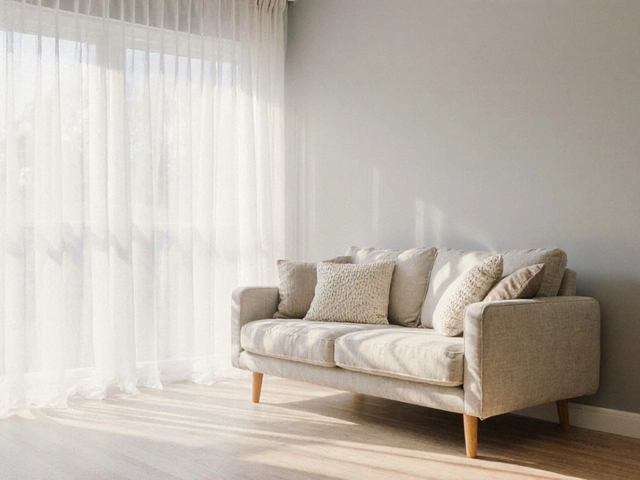
What Color Sofa Makes a Room Look Bigger? Best Shades for Small Spaces
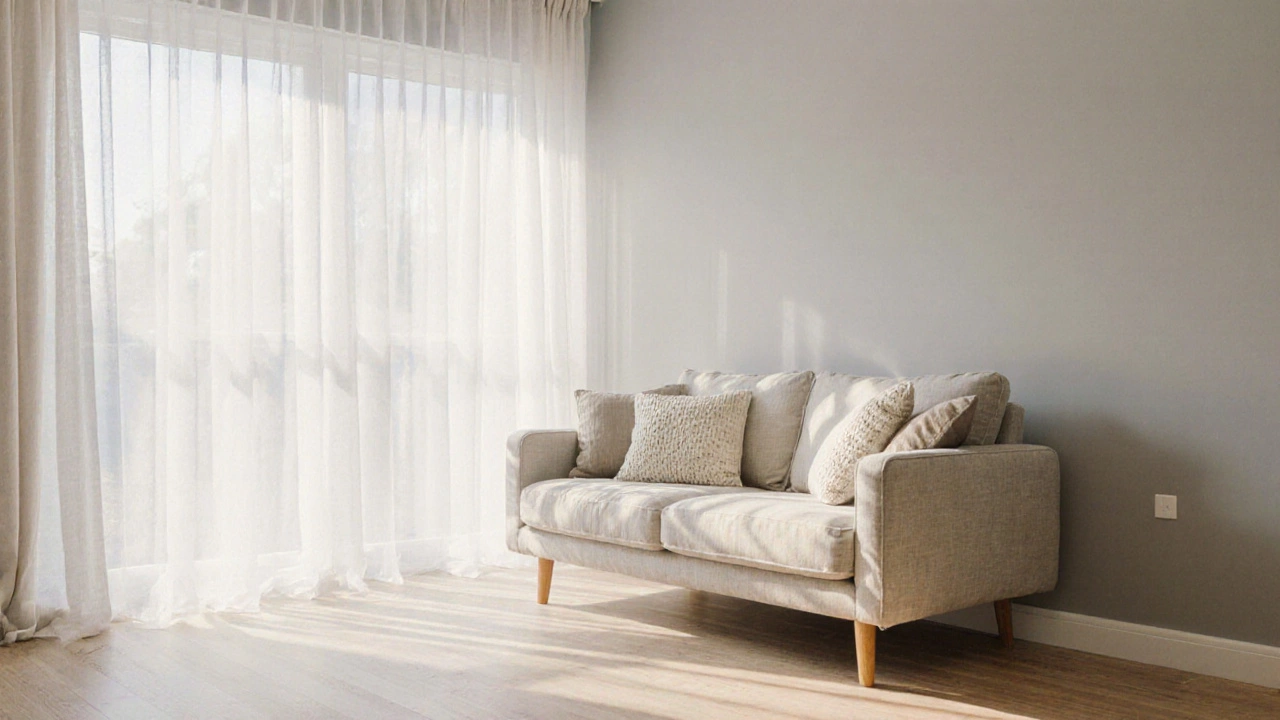
Sofa Color Space Simulator
See how sofa colors impact perceived room size. Select a color from the options below to see the visual effect.
Visual Effect: Select a color to see how it affects perceived space
Choose a color to see how it makes the room feel
If you’ve ever stared at your cramped living room and wondered why it feels like the walls are closing in, the answer might be sitting right in front of you-your sofa. The color of your sofa doesn’t just set the mood; it changes how big or small your room feels. A dark, heavy sofa can make a small space feel like a closet. A smartly chosen light color? It can make the same room feel airy, open, and unexpectedly spacious.
Why Color Changes How Big a Room Feels
It’s not magic. It’s physics. Light reflects off surfaces. Dark colors absorb light. Light colors bounce it back. In a small room, every bit of reflected light matters. A charcoal gray sofa soaks up the natural glow from your window. A soft white or pale gray sofa? It turns that same light into a gentle halo that spreads across the floor and walls. Your brain interprets that glow as more space.
Studies in environmental psychology show that people consistently rate light-colored interiors as more spacious-even when the actual square footage is identical. That’s why real estate agents always stage homes with white throw pillows and light-toned furniture. It’s not about being boring. It’s about making the space breathe.
Best Sofa Colors for Small Rooms
Not all light colors work the same. Some look cold. Others look washed out. Here’s what actually works in real homes, tested in spaces under 20 square meters:
- Off-white (like Benjamin Moore’s Chantilly Lace)-warmer than pure white, reflects light beautifully, and hides dust better than you’d think.
- Light gray (think Sherwin-Williams Repose Gray)-neutral enough to match any style, adds subtle depth without swallowing light.
- Soft beige (Benjamin Moore’s Simply White with a touch of warmth)-ideal if you want cozy without darkening the room.
- Very pale blue (like Farrow & Ball’s Setting Plaster)-adds a hint of calm without the heaviness of darker blues.
- Light taupe-a middle ground between beige and gray, perfect for modern or Scandinavian styles.
Avoid black, navy, dark green, or deep brown. These colors create visual weight. Even if the sofa is small, it anchors the room like a stone. In tight spaces, you want the opposite-something that floats.
What About Patterns?
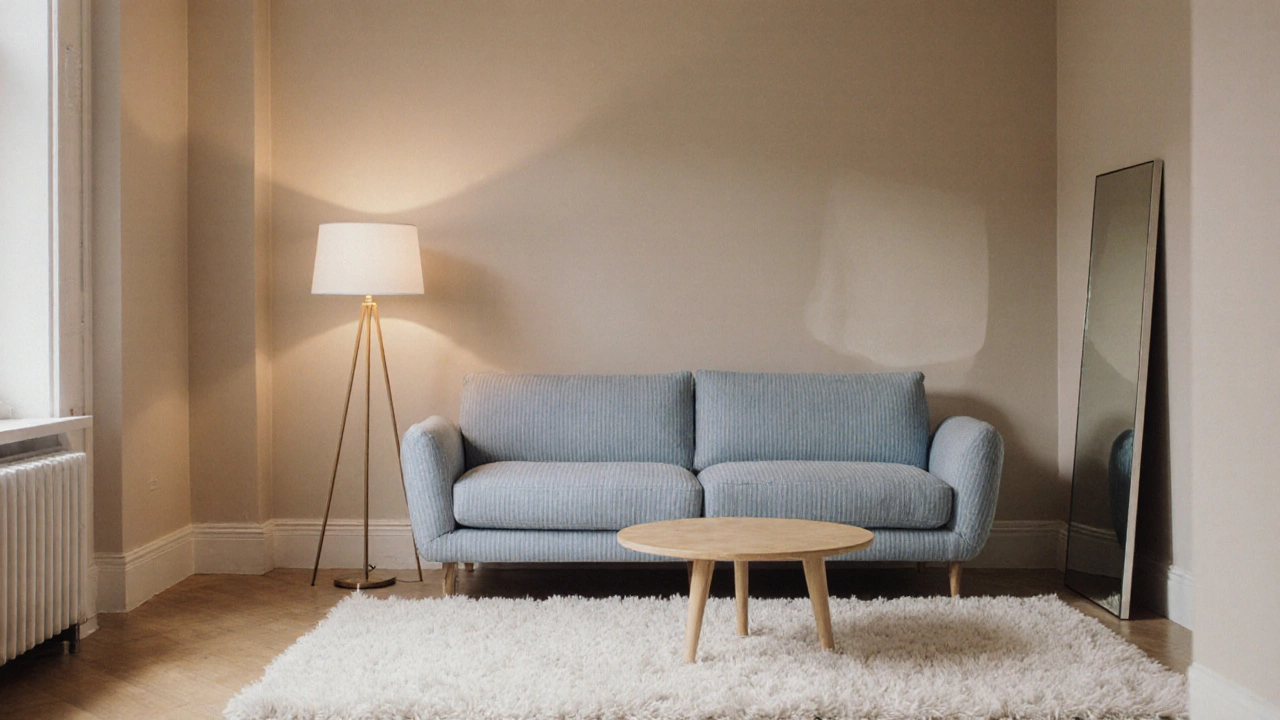
Patterns can work, but only if they’re subtle. A sofa with a faint linear stripe in the same color family as the walls? That’s fine. It adds texture without breaking the light flow. A bold floral or large geometric print? That’s a visual interrupter. It tells your eye to stop and focus, which makes the room feel smaller.
Here’s a simple rule: if you can’t tell the pattern from across the room, it’s safe. If you can see the design clearly from the doorway, it’s probably too busy.
Matching Sofa Color to Walls and Floors
Your sofa doesn’t live in a vacuum. It works with the walls, the floor, and the lighting. The trick is contrast-not contrast in color, but in tone.
If your walls are white, a light gray sofa creates just enough definition without cutting the room in half. If your walls are a warm cream, go for a beige sofa. If your floor is dark wood, a light sofa becomes a visual anchor that lifts the whole space. If your floor is light oak or laminate, you can even go with a sofa that’s the same tone-this creates a seamless flow that tricks the eye into seeing one big, open area.
One common mistake? Matching the sofa exactly to the wall color. That can make the sofa disappear, which sounds good but actually makes the room feel flat. You need a hint of contrast-just enough to define the piece without weighing it down.
Real-Life Examples from Auckland Homes
I’ve seen this play out in apartments in Ponsonby and Onehunga. One client had a 14-square-meter living room with a single window. She had a dark brown sectional that made the space feel like a cave. We swapped it for a light oatmeal linen sofa. The difference wasn’t just aesthetic-it changed how she used the room. She started sitting by the window more. Her kids played on the floor without feeling cramped. The room didn’t grow. But it felt like it did.
Another case: a studio in Freemans Bay with beige walls and a white floor. The owner wanted a pop of color, so she picked a pale sage green sofa. It was light enough to not overwhelm, but warm enough to feel inviting. The room felt like a boutique hotel-calm, open, and intentional.
What If You Love Dark Colors?
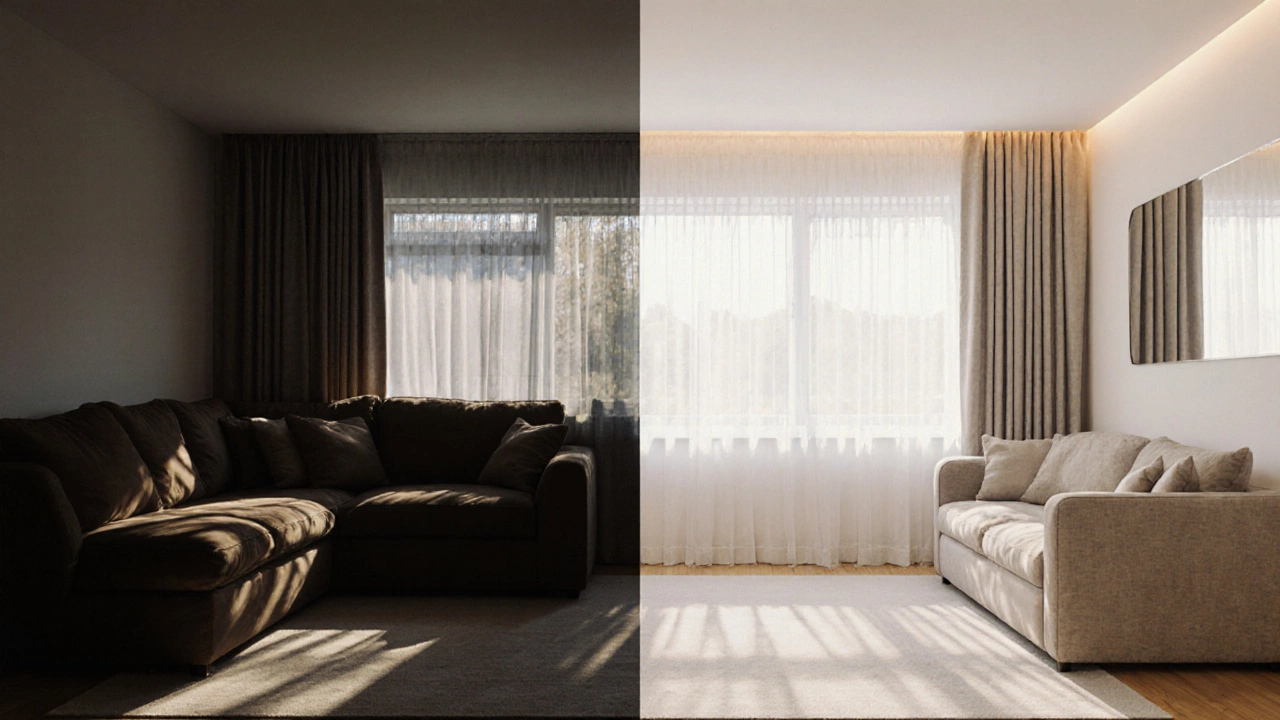
You don’t have to give up your favorite shade. But you need to balance it. If you’re set on a navy or charcoal sofa, make sure the rest of the room is lighter than you think it needs to be. White curtains. Light wood coffee table. A bright rug. Mirrors on the opposite wall. A few open shelves with white ceramics. The key is counterweight. The dark sofa becomes a focal point, not a wall.
Also, consider the shape. A slim, low-profile sofa in dark fabric takes up less visual space than a bulky, high-back one. Even in dark colors, form matters as much as hue.
Lighting Matters More Than You Think
A light sofa in a dark room still looks heavy. That’s why lighting is part of the color equation. Natural light is the best ally. Keep blinds open. Use sheer curtains. Avoid heavy drapes.
If your room lacks windows, artificial light steps in. Use warm white LEDs (2700K-3000K). Avoid cool white bulbs-they make light-colored fabrics look gray and flat. A floor lamp with a white shade near the sofa? That adds bounce. It’s like giving your sofa a spotlight that lifts the whole room.
What About Sofa Cushions?
Yes, cushions matter. If your sofa is light but you pile on navy, black, or deep red cushions, you’re undoing all the work. Stick to cushions in the same color family-cream, taupe, light gray. Or go monochrome: all cushions the same shade as the sofa, but in different textures. Linen, bouclé, cotton-vary the fabric, not the color.
One accent cushion in a muted pastel (like dusty rose or pale yellow) can add life without breaking the light illusion. But keep it to one. Two or more, and you’re back to visual clutter.
Common Mistakes to Avoid
- Choosing a sofa based on a swatch in a store. Lighting in showrooms is staged to make everything look good. Test colors in your own space at different times of day.
- Thinking white means high maintenance. Modern performance fabrics (like Crypton or Sunbrella) repel stains and are easy to clean. You don’t need to live in fear of coffee spills.
- Ignoring the ceiling. If your ceiling is painted white, keep the sofa light too. A dark sofa under a white ceiling creates a visual “trap”-it makes the ceiling feel lower.
- Buying a sofa that’s too big. No color can fix a sofa that’s 80% of the room’s width. Measure. Leave at least 60cm of walking space on all sides.
Final Tip: The 60-30-10 Rule for Color
This classic design rule works for small spaces too:
- 60%-walls, ceiling, floor (your base)
- 30%-sofa (your main furniture)
- 10%-accents (cushions, lamps, art)
If your sofa is 30%, make sure it’s light. Then let the 10% be where you add personality. That’s how you get style without clutter.
Choosing the right sofa color isn’t about trends. It’s about light, space, and how your brain sees it. A well-chosen light sofa doesn’t just fit in a small room-it helps the room expand around you.
Does a white sofa make a room look bigger?
Yes, a white sofa can make a room look bigger because it reflects light and creates a sense of openness. But it needs to be paired with other light elements-like walls, flooring, and curtains-to avoid looking stark. Off-white or cream tones often work better than pure white because they’re warmer and more forgiving in natural light.
What if my room has no natural light?
Without natural light, choose a light gray or soft beige sofa instead of pure white. These tones hold warmth under artificial lighting. Add layered lighting-floor lamps, table lamps, and wall sconces with warm bulbs (2700K-3000K). Mirrors across from light sources help bounce what little light you have.
Can I use a patterned sofa in a small room?
Only if the pattern is subtle and in the same color family as your walls. A fine stripe or tonal texture works. Avoid bold florals, large geometrics, or contrasting colors. If the pattern draws your eye, it makes the room feel smaller. When in doubt, go solid.
Do sofa cushions affect how big a room looks?
Absolutely. Dark or clashing cushions on a light sofa create visual noise and break the illusion of space. Keep cushions in the same light color family as the sofa, or use one accent color only. Texture matters more than color here-mix linen, cotton, and bouclé to add depth without adding visual weight.
Is a sectional okay in a small room?
Yes, if it’s low-profile and light-colored. A deep, bulky sectional in dark fabric will overwhelm. But a slim, light-toned sectional with exposed legs can define a seating area without blocking light flow. Always measure your space and leave at least 60cm of walkway around it.