Coffee Table Distance from TV: The Perfect Spacing Guide
Coffee Table & TV Spacing Calculator
Sofa to Coffee Table Gap:
Total Viewing Distance:
1. Sofa-to-Table Ergonomics
Enter measurements to analyze reach zone.
Ideal Range: 14–18 inches (35–45 cm)2. TV Viewing Comfort
Enter TV size and distance to analyze eye strain risk.
Ideal Range: 1.5x – 2.5x Screen DiagonalYou’re sitting on your sofa, trying to watch the game, but you keep bumping your knees against the coffee table. Or maybe you’re leaning forward just to reach your remote because the table is miles away. Both scenarios are annoying, and both stem from one simple mistake: getting the coffee table distance wrong relative to your TV setup.
It’s not just about aesthetics. It’s about ergonomics, flow, and actually enjoying your media without feeling cramped or stranded in a desert of carpet. So, how far should that table be? The short answer is usually between 14 and 18 inches from the front edge of your sofa. But the real answer depends on your body size, your TV size, and how you use the space. Let’s break down exactly how to measure it right so you never have to awkwardly stretch for a coaster again.
The Golden Rule: 14 to 18 Inches
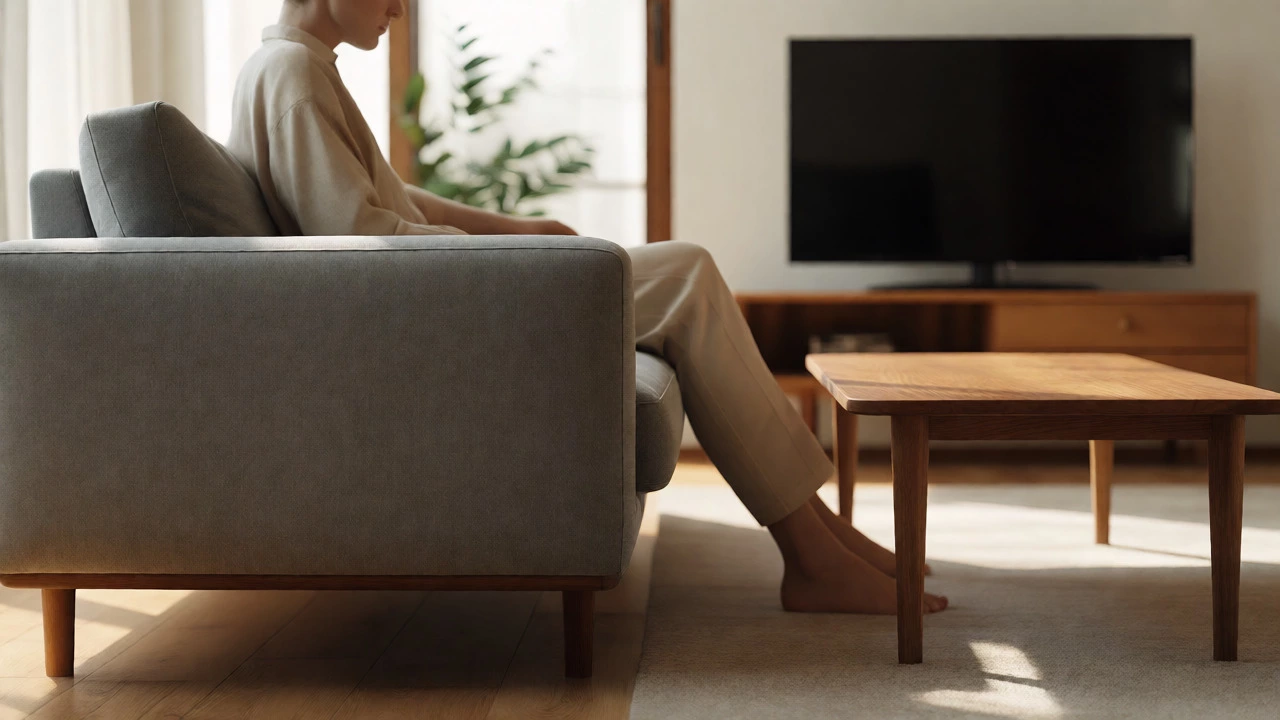
If you want a quick rule of thumb that works for 90% of living rooms, stick with 14 to 18 inches (35 to 45 cm) between the front edge of your sofa and the nearest edge of the coffee table. This gap is known as the "reach zone." Why this specific number? It’s based on average human arm length and legroom needs.
At 14 inches, you can easily reach a drink or a book without standing up. At 18 inches, you have enough knee clearance to sit comfortably even if you cross your legs or shift positions. Anything less than 14 inches feels claustrophobic; you’ll feel trapped between the couch cushions and the wood or glass. Anything more than 18 inches starts to feel disconnected. You’ll find yourself leaning forward, straining your back, or worse, leaving your snacks on the floor because they’re too far away.
This measurement applies specifically to the distance between the sofa and the table. It doesn’t directly dictate the distance between the table and the TV stand, but those two distances work together to define your entire viewing experience.
Why TV Size Changes Everything
Here’s where people get tripped up. They focus only on the sofa-to-table gap and ignore the TV. But your TV size dictates how far back you need to sit to see the screen clearly without pixelation or eye strain. If you have a massive 75-inch OLED, sitting too close makes you dizzy. Sitting too far makes you squint.
The general guideline for optimal viewing distance is roughly 1.5 to 2.5 times the diagonal size of the screen. For a standard 55-inch TV, you want to sit about 7 to 9 feet away from the screen. For a 65-inch TV, push that back to 8 to 10 feet. Your coffee table sits in the middle of this path.
If your room is small and you’re forced to sit closer than recommended, you might need to shrink your coffee table or choose a lower profile design. A bulky, high table will visually crowd the space when you’re already sitting close to the screen. Conversely, if you have a huge room and a small TV, you might need a larger table to anchor the seating area, but ensure it doesn’t block sightlines.
| TV Size (Diagonal) | Minimum Viewing Distance | Maximum Viewing Distance | Recommended Coffee Table Style |
|---|---|---|---|
| 40-43 inches | 5 feet | 7 feet | Small round or oval tables to save space |
| 50-55 inches | 6.5 feet | 8.5 feet | Standard rectangular or square tables |
| 60-65 inches | 8 feet | 10 feet | Larger surfaces for remotes and decor |
| 70+ inches | 9.5 feet | 12+ feet | Low-profile designs to maintain sightlines |
Measuring Your Space Correctly
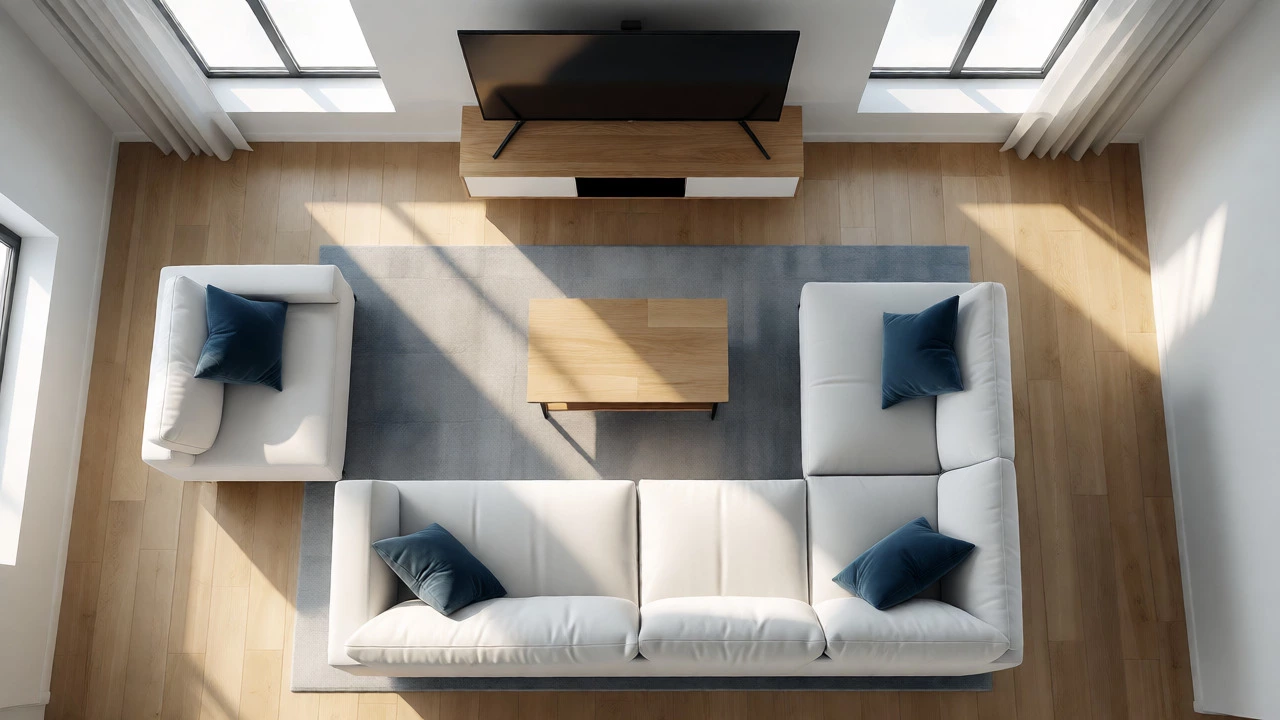
Don’t just eyeball it. Grab a tape measure. Start at the very front edge of your sofa cushion-not the backrest, not the armrest, but the part of the sofa that sticks out furthest into the room. Measure straight ahead to the closest point of the coffee table.
Now, check your legroom. Sit on the sofa and place your feet flat on the floor. Slide your heels back until they touch the base of the sofa. Now, try to slide your toes under the coffee table. If your knees hit the underside of the table, it’s too close or the table is too low. Standard coffee tables are 16 to 18 inches tall. If you’re taller than 6 feet, you might need a slightly higher table or more clearance.
Also, consider the walkway. Is there a path behind the sofa? If people need to walk between the sofa and the wall, leave at least 30 to 36 inches of clear space. If the coffee table blocks this path, you’ve prioritized convenience over flow. In tight apartments, sometimes skipping the coffee table entirely or using side tables is a smarter move than forcing a bad fit.
Height Matters More Than You Think
Distance isn’t just horizontal; it’s vertical. The height of your coffee table should match the seat height of your sofa. Ideally, the table top should be level with the sofa cushions or no more than 1-2 inches lower. If the table is significantly higher, you’ll feel like you’re working at a desk rather than relaxing. If it’s much lower, you’ll have to bend down every time you grab a magazine, which gets old fast.
Most modern sofas have seat heights around 17 to 19 inches. Therefore, look for coffee tables in the 16 to 18-inch range. Glass-top tables often appear smaller and lighter, making them a good choice if you’re worried about the visual weight of the table blocking your view of the TV. Solid wood tables feel heavier and can make a small room feel cluttered if placed too close to the seating.
Common Mistakes That Ruin Layouts
One major error is centering the coffee table perfectly between the sofa and the TV stand without considering the sofa position first. Always anchor your seating arrangement first. Place the sofa where it offers the best viewing angle, then place the table 14-18 inches in front of it. Then, adjust the TV stand position to meet the required viewing distance.
Another mistake is ignoring the rug. If your coffee table sits off the rug while the sofa legs are on it, the layout looks disjointed. Aim to have at least the front two legs of the sofa and all four legs of the coffee table on the rug. This ties the pieces together and defines the conversation area. If the rug is too small, the floating effect can make the distance between the table and TV feel wider than it actually is.
Finally, don’t forget about safety. If you have young children or pets, a sharp-edged coffee table placed just 14 inches away becomes a hazard. Consider rounded corners or soft materials. Also, ensure the table is stable. If you lean forward to grab something, the table shouldn’t wobble or tip. Weight matters here; lightweight hollow-core tables can shift unexpectedly when you reach across them.
Alternatives When Space Is Tight
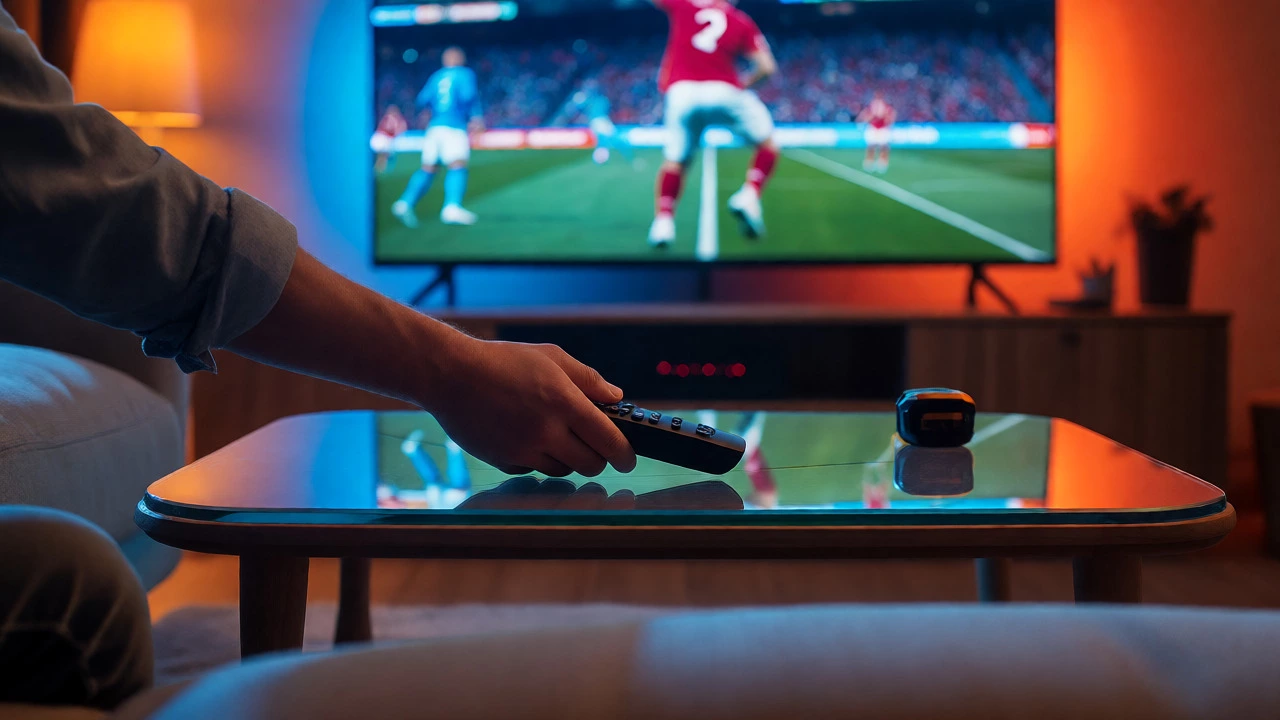
What if your room is too narrow for a traditional setup? Maybe your sofa is pushed against a wall, leaving only 6 feet to the TV. In this case, a large coffee table eats up valuable floor space. Try these swaps:
- Ottomans: Use a sturdy ottoman instead of a table. It provides surface area when needed but can be tucked under the sofa or moved aside when you need more legroom.
- Nesting Tables: These allow you to spread out when hosting guests and stack them compactly when watching TV alone.
- C-Tables: These slide under the sofa arm, giving you a surface right next to your hand without occupying any central floor space.
- Wall-Mounted Shelves: If you really want minimalism, skip the table and put shelves above the TV or beside the sofa for remotes and books.
Each of these options changes the dynamic of the room. They free up the central pathway, allowing you to place the sofa further from the TV if needed, or simply making the room feel larger. Test these layouts before buying permanent furniture. Move things around for a week and see what feels natural.
Frequently Asked Questions
Is 12 inches too close for a coffee table?
Yes, 12 inches is generally considered too close for most adults. While it maximizes reach, it restricts leg movement and can feel claustrophobic. Most designers recommend a minimum of 14 inches to allow for comfortable seating posture and easy access without bending excessively.
Does the type of flooring affect the distance?
Not directly, but rugs do. If you use a rug, ensure the coffee table legs are on it to prevent sliding and to define the space. Hardwood floors might require felt pads under table legs to prevent scratches, especially if you frequently move the table. The friction coefficient can change how easily the table moves when you lean on it, affecting perceived stability.
How does a recliner change the coffee table distance?
Recliners extend significantly when opened. You must measure the distance from the fully extended footrest, not the closed chair. Typically, you need an additional 6 to 10 inches of clearance compared to a standard sofa. If you plan to recline often, consider moving the coffee table further back or choosing a smaller, movable table.
Should the coffee table be centered on the TV?
Not necessarily. Center the coffee table on the seating arrangement (the sofa), not the TV. If your sofa is offset due to room architecture, the table should follow the sofa. Aligning it strictly with the TV might force the table into an awkward position relative to where people are actually sitting.
What if I have a sectional sofa?
With sectionals, distance rules apply to each seating segment. Ensure there is 14-18 inches of clearance from every seat that faces the table. Sometimes, a single large coffee table won't work for an L-shaped sectional. In these cases, two smaller tables or a mix of a main table and side tables often provide better accessibility and flow.