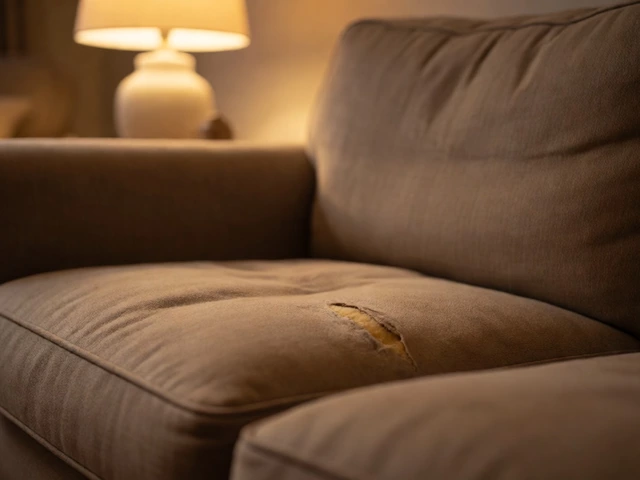
Can Couch Cushions Be Repaired? A Practical Guide to Saving Your Sofa
Sofa Cushion Repair Diagnostic Tool
Select the symptom that best matches your current situation to receive a tailored repair recommendation.
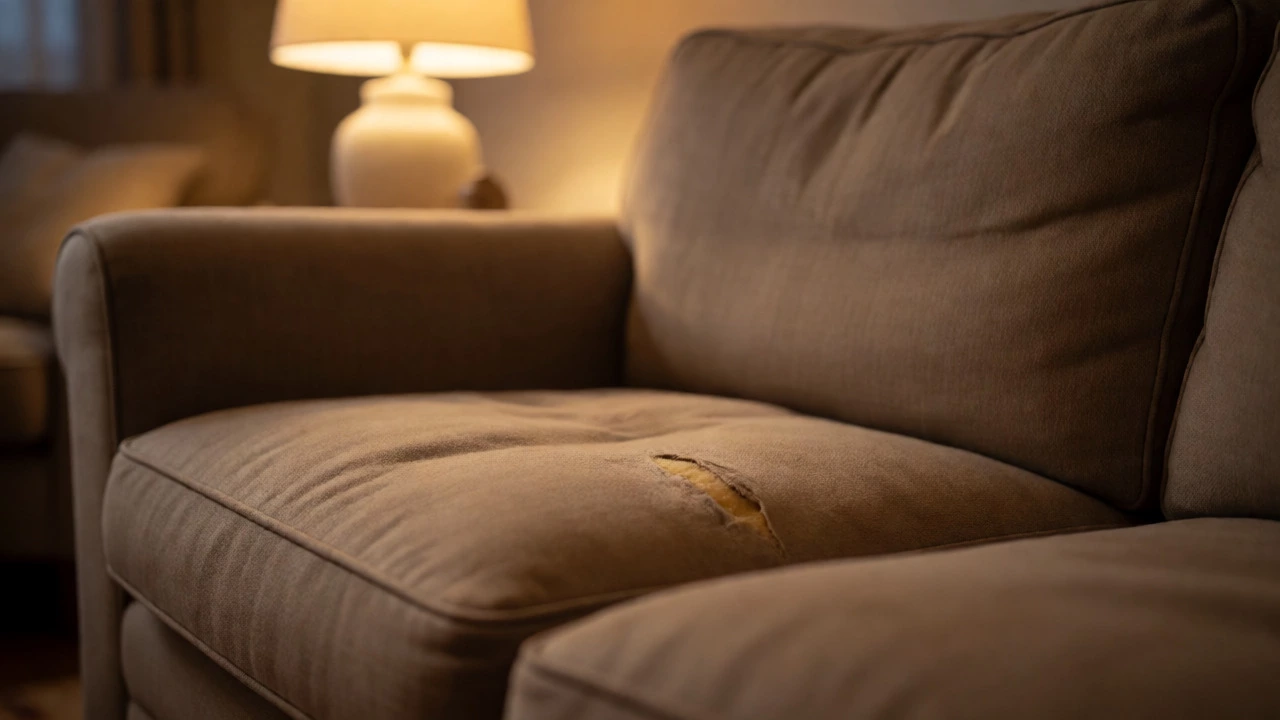
You’re sinking into your favorite spot on the couch after a long day, and something feels… off. The seat is lumpy, the backrest has collapsed to one side, or the fabric is tearing right where you always sit. Before you start browsing for a new $2,000 sofa, take a breath. In most cases, couch cushions are not disposable items; they are highly repairable components. Whether it’s a matter of refilling loose feathers, replacing degraded foam, or patching a small tear, fixing them yourself can save hundreds of dollars and extend the life of your furniture by years.
The Quick Fix Checklist
Before you grab a screwdriver or buy new materials, run through this quick diagnostic. This helps you decide if the repair is a ten-minute job or a weekend project.
- Is the fill flat but intact? If yes, you likely just need to fluff or rotate the inserts. No tools required.
- Is the foam crumbling or yellowed? You need to replace the core foam insert. Keep the old cover if possible.
- Is the zipper broken? You can replace the zipper tape or use heavy-duty Velcro as a workaround.
- Is there a hole in the fabric? Small holes (<1 inch) can be patched from the inside with fusible interfacing. Larger holes need reupholstery.
- Does the cushion smell bad? If washing doesn’t help, the internal fill (especially down or cheap polyester) may have mold or bacteria buildup. Replace the fill.
Diagnosing the Problem: Foam vs. Feather vs. Polyester
Not all cushions are created equal, and knowing what’s inside dictates how you fix it. Most modern sofas use one of three types of filling. Identifying yours is step one.
| Filling Type | Symptoms of Failure | Best Repair Strategy | Difficulty Level |
|---|---|---|---|
| High-Density Polyurethane Foam | Permanent dents, yellowing, crumbling when squeezed. | Cut new foam block to size and insert into existing cover. | Easy |
| Down or Feather Blend | Loss of loft, clumping, permanent flattening in seating area. | Add new feather/down stuffing or mix with polyester fiberfill. | Moderate |
| Polyester Fiberfill (Batting) | Matting, hardening, uneven surface texture. | Remove old batting, wash cover, stuff with fresh fiberfill rolls. | Easy |
| Memory Foam | Slow recovery time, cracking edges, heat retention issues. | Replace entire insert; difficult to refill partially. | Easy (but costly) |
How to Replace Degraded Foam Inserts
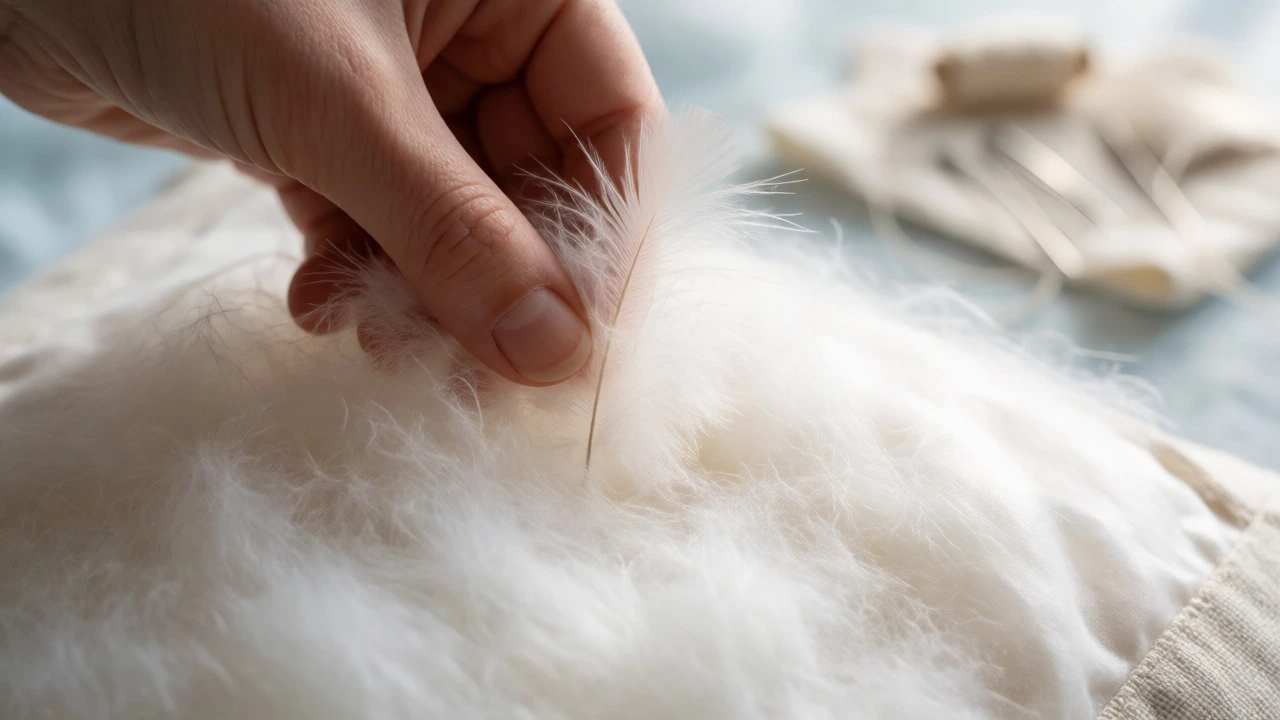
This is the most common repair for older sofas. Over time, polyurethane foam loses its resilience. It doesn’t bounce back anymore. It just stays squashed. Replacing the foam is surprisingly simple because most manufacturers make covers removable via zippers.
First, unzip the cushion cover carefully. Pull out the old foam block. Don’t throw it away yet! Use it as a template. Place it on a large sheet of cardboard or directly onto a piece of new foam purchased from an upholstery supply store or hardware shop. Trace around it with a marker.
Here’s a pro tip: Cut the new foam slightly larger than the trace-about 1/4 inch on all sides. Foam compresses. If you cut it exactly to size, you’ll get gaps at the corners, leading to that ugly “wrinkled” look. Use an electric carving knife (the kind used for turkey) or a long serrated bread knife to cut through the foam. Saw gently; don’t press down hard, or you’ll create angled cuts instead of straight lines.
Once cut, test fit the new foam into the cover. If it’s too tight, trim tiny shavings until it slides in smoothly but snugly. Zip it up, flip it over, and slap it like you’re trying to wake someone up. That distributes the foam evenly. Done.
Reviving Flat Down and Feather Cushions
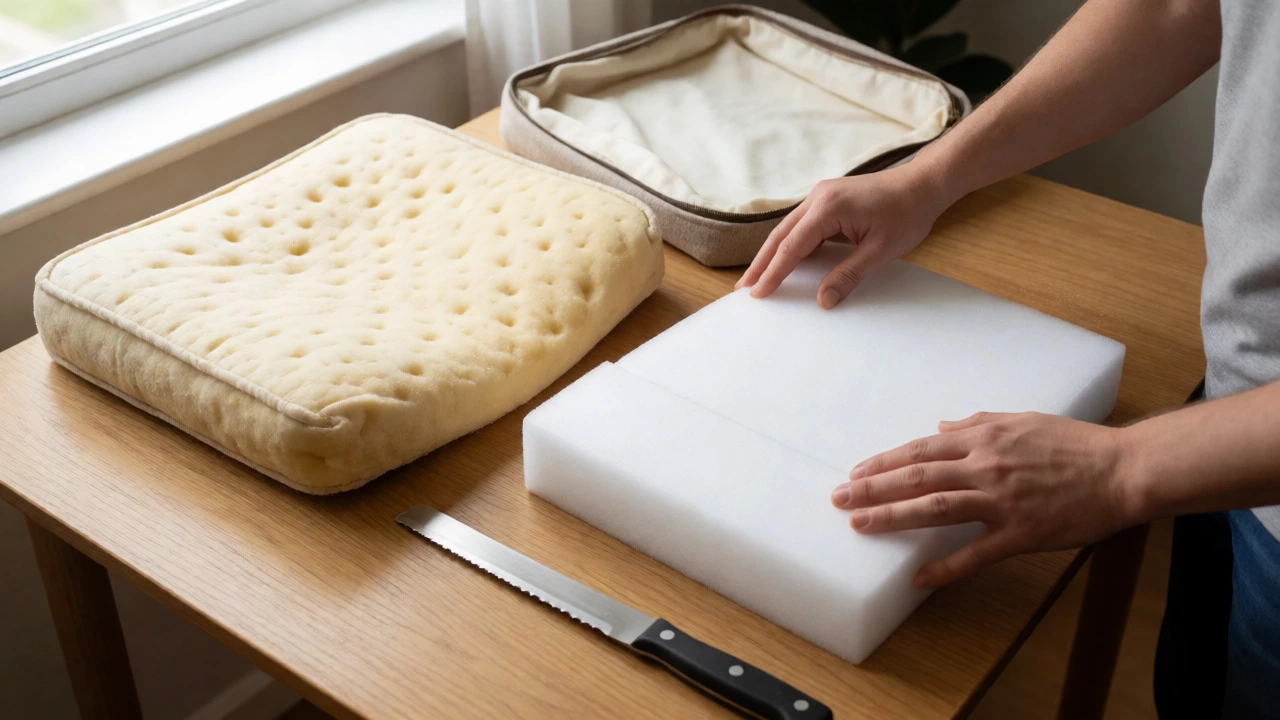
If your sofa has that luxurious, sink-in feel, it likely contains down or feathers. These are great for comfort but terrible for maintenance. They clump, migrate to the edges, and lose loft. You don’t necessarily need to replace the whole thing. You can often revive them.
Start by removing the inner liner (if there is one). Check for pinholes. Feathers poke through fabric easily. If you find holes, patch them first. Next, remove the old feathers. Weigh them. If you had two pounds of down originally, you might only have one pound left due to migration or breakage. Buy high-quality goose down or duck feather blend from a craft store. Mix the new fill with the old. This saves money while restoring volume.
Stuff the cover gradually. Do not dump it all in at once. Add a handful, shake it, add more. You want even distribution. If the cushion feels too firm, add more down. Too soft? Add some polyester fiberfill balls to give it structure without adding bulk. Remember, down needs air. Store these cushions upright when not in use to maintain their shape.
Patching Tears and Broken Zippers
Structural integrity matters as much as comfort. If the cover is torn, the foam will degrade faster. For small tears, avoid visible stitching if possible. Turn the cover inside out. Apply a piece of fusible interfacing (available at any fabric store) over the tear from the inside. Iron it on according to package instructions. This bonds the fabric fibers together invisibly from the outside.
For larger rips, you might need a patch. Cut a square of matching fabric (or contrasting fabric for a trendy look) slightly larger than the hole. Sew it behind the rip using a zigzag stitch. Then, reinforce the edges with pinking shears to prevent fraying.
Broken zippers are annoying but easy fixes. If the slider comes off, try pliers to reattach it. If the teeth are separated, rub a candle wax stick along the zipper track. It lubricates and helps close gaps. If the zipper tape itself is ripped from the seam, you’ll need to sew it back. Use a heavy-duty needle and upholstery thread. If you’re not confident with a sewing machine, hand-sew it using a whip stitch. It’s stronger than you’d think.
When to Give Up and Buy New
Repair isn’t always worth it. Here’s the math. If your sofa cost $500 and the repair materials (foam, fabric, thread) cost $80, that’s a good investment. But if you’re repairing a $150 budget sofa from a big-box store, the frame might be particleboard, not hardwood. Particleboard swells when exposed to moisture and breaks under stress. If the frame is failing, no amount of new foam will fix it.
Also, consider hygiene. If the cushion has been stained with pet urine or spilled wine, and professional cleaning didn’t work, the odor is trapped in the foam. Bacteria live there. No amount of baking soda will kill it permanently. At that point, replacement is healthier.
Pro Tips for Long-Term Maintenance
Prevention beats cure. Rotate your cushions weekly. Flip them upside down every month. This ensures even wear. Vacuum crevices regularly to remove dust mites and crumbs that accelerate fabric degradation. Keep direct sunlight away; UV rays break down synthetic fibers and cause fading within two years.
If you have pets, keep a lint roller handy. Pet hair embeds deep into velvet and microfiber, making them look dirty even when clean. Regular brushing preserves the texture.
How much does it cost to replace couch cushion foam?
The cost varies by density and thickness. On average, expect to pay between $15 and $40 per cushion insert if buying pre-cut blocks from a retail store. Buying a full sheet of high-density foam from an upholstery supplier and cutting it yourself can reduce costs to $5-$10 per cushion. Labor costs for professional reupholstery range from $50 to $150 per cushion, depending on complexity.
Can I wash my couch cushion covers?
Always check the care tag first. Look for "W" (water-based cleaners), "S" (solvent-only), or "WS" (both). Many cotton or linen blends are machine washable on gentle cycles with cold water. Air dry them completely before putting them back on the foam. Shrinking is the biggest risk. If the tag says "X," vacuum only; do not wet clean.
What is the best foam density for sofa cushions?
For seat cushions, choose high-resiliency (HR) foam with a density of at least 1.8 lbs per cubic foot. Lower densities (under 1.5) flatten quickly. For back cushions, medium-density foam (1.5-1.8 lbs) offers better comfort and softer support. Memory foam is popular but retains heat and lacks bounce, so many people prefer HR foam mixed with a thin layer of memory foam for the best of both worlds.
How do I stop my cushions from sliding?
Non-slip rug pads or silicone grip strips placed underneath the cushions work wonders. You can also sew small elastic loops on the bottom of the cover that hook onto buttons or nails attached to the sofa frame. Another trick is to use double-sided carpet tape, though it may leave residue over time.
Can I mix different types of foam in one cushion?
Yes, this is a common technique called "layering." For example, you can place a firm high-density foam core in the center for support and surround it with softer, lower-density foam or fiberfill for a plush outer feel. This creates a cushion that is supportive but still comfortable to sink into.