Lower Tier Contractors: What They Are and How They Work

Construction Hierarchy & Risk Simulator
Click on a contractor tier to see their role, who they get paid by, and the potential risks associated with that level.
Imagine you're building a house. You hire a big company to handle everything-the blueprints, the permits, the whole lot. But does that one company actually lay every single brick, install every pipe, and wire every socket? Almost never. Instead, they bring in specialists. Those specialists, and the people they hire in turn, are what we call lower tier contractors. If you're a homeowner or a small business owner, understanding who is actually on your job site is the difference between a smooth project and a legal nightmare.
Key Takeaways
- Lower tier contractors are subcontractors hired by other contractors, not directly by the property owner.
- They provide specialized skills (like electrical or HVAC) that the main contractor lacks.
- The "tier" refers to how far removed they are from the original client.
- Payment and liability usually flow down the chain, but legal gaps can occur.
Breaking Down the Construction Hierarchy
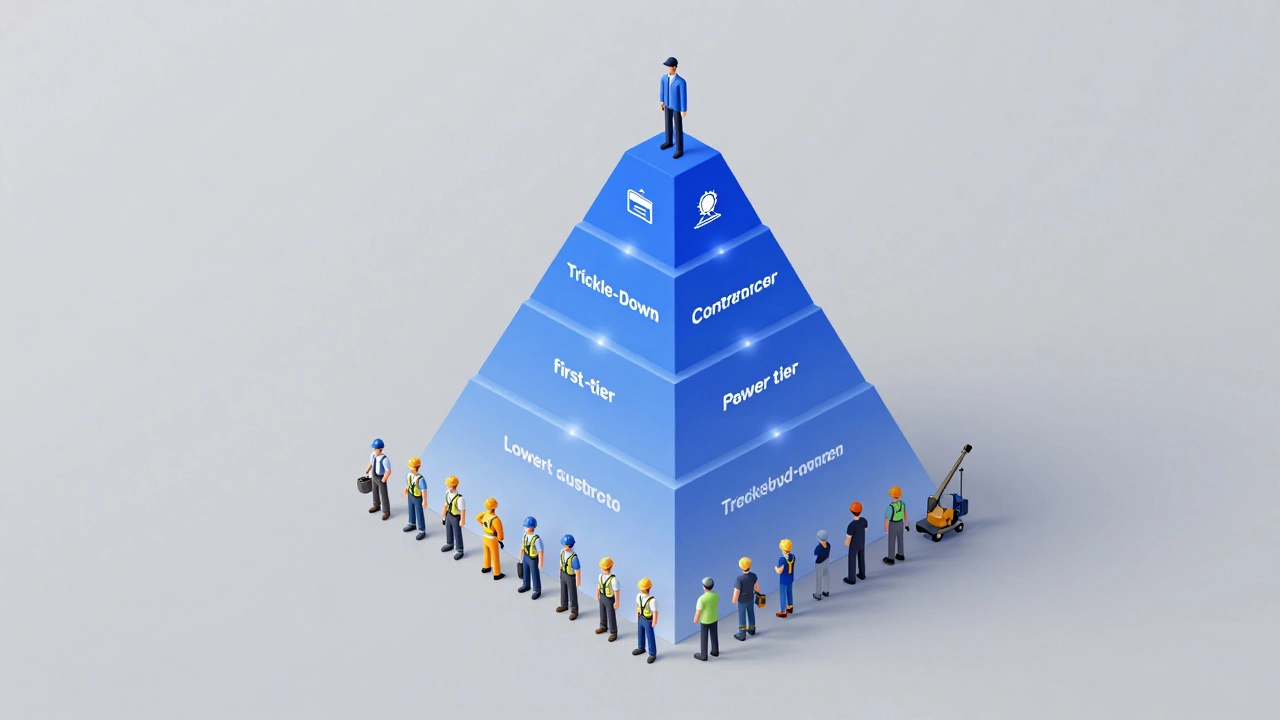
To understand a lower tier contractor is a professional or business entity that provides specialized labor or materials to a project but does not have a direct contract with the project owner, you have to look at the project like a pyramid. At the top is the owner (you). Below you is the General Contractor (GC). The GC is the one you pay and the one you call when things go wrong.
When the GC realizes they can't do everything themselves, they hire a Subcontractor. This person is a first-tier contractor. But what happens when that subcontractor is too busy or needs a specific tool? They might hire another specialist. That second person is a second-tier contractor. They are a "lower tier" because they are two steps removed from the person paying the bills. In massive projects, like building a stadium or a skyscraper, you might see four or five levels of these tiers.
Why the Tier System Exists
You might wonder why we don't just hire everyone directly. Why add all these middle layers? It comes down to risk and specialization. A General Contractor isn't an expert in everything; they are experts in managing experts. By using lower tier contractors, the GC can scale a project quickly. For example, if a project suddenly needs 50 more laborers for a weekend concrete pour, the GC doesn't hire 50 employees; they call a subcontractor who already has a crew of 50 ready to go.
This system also lets the owner avoid the headache of managing 20 different schedules. Instead of arguing with the plumber and the electrician at the same time, you deal with one point of contact. The GC handles the "trickle-down" management, ensuring the lower tier workers show up at the right time and follow the blueprints.
| Tier Level | Contract Relation | Primary Responsibility | Payment Source |
|---|---|---|---|
| General Contractor (GC) | Direct with Owner | Overall project delivery | Property Owner |
| 1st Tier (Subcontractor) | Direct with GC | Trade-specific installation | General Contractor |
| Lower Tier (2nd+) | Direct with Subcontractor | Niche tasks/labor supply | Subcontractor |
The Hidden Risks of Lower Tiers
While the system is efficient, it creates a "communication gap." The further down the tier a worker is, the less likely they are to see the original contract or the owner's specific wishes. This is where mistakes happen. A second-tier painter might be told to use "white paint," not knowing the owner specifically paid for a high-end, antimicrobial satin finish requested in the original contract.
The biggest danger, however, is the payment chain. In a perfect world, the owner pays the GC, the GC pays the subcontractor, and the subcontractor pays the lower tier contractor. But if the GC goes bust or holds onto the money, the lower tier workers aren't getting paid. This leads to a nasty legal situation called a Mechanic's Lien. This is a legal claim where a lower tier contractor can put a lien on your property-even if you paid the GC in full-because the worker wasn't paid for their labor.
How to Protect Yourself as a Project Owner
If you're running a project, you can't just trust that the money is moving down the chain. You need to implement a few safety checks to make sure your property doesn't become a legal battlefield. First, ask your GC for a list of all subcontractors and any lower tier firms they plan to use. Transparency is a sign of a professional operation.
Second, use Lien Waivers. This is a document signed by the contractor stating they have been paid and waive their right to file a lien. Don't just take the GC's word for it; ask to see the signed waivers from the lower tier specialists before you release the final payment. It sounds like a lot of paperwork, but it's a tiny price to pay to avoid a court date.

Common Examples of Lower Tier Work
To give you a concrete idea, let's look at a typical home renovation. You hire a design-build firm (GC). They hire a flooring company (Tier 1). The flooring company, however, doesn't have enough staff for a 5,000-square-foot job, so they hire a specialized sanding and polishing crew from another company (Tier 2). That polishing crew is a lower tier contractor.
Other common examples include:
- Labor Hire Firms: A plumbing subcontractor hiring general laborers from an agency to dig trenches.
- Specialty Consultants: An electrical subcontractor hiring a certified energy auditor to verify a specific system's efficiency.
- Equipment Rental with Operators: When a company provides the crane and the person to drive it, they often function as a lower tier entity in the project structure.
Can I hire a lower tier contractor directly?
Technically, yes, but it's a bad idea if you already have a contract with a General Contractor. Doing this usually violates the "prime contract" and can lead to disputes over who is responsible if the work is faulty. If you want to hire a specific specialist, do it before you sign with a GC, or ask the GC to bring them on as a first-tier subcontractor.
Who is responsible for the quality of work from a lower tier contractor?
Legally and contractually, the General Contractor is responsible for everything. If a second-tier electrician messes up the wiring, you don't chase the electrician; you hold the GC accountable. The GC then has to deal with the subcontractor who hired that electrician. This is why you pay a premium for a GC-they take on the liability.
Does a lower tier contractor need their own insurance?
Absolutely. Every entity on a job site should have their own general liability and worker's compensation insurance. If a lower tier worker gets hurt and isn't covered, the claim could potentially roll up to the property owner's insurance. Always ensure your GC verifies the insurance certificates for every tier involved.
What is the difference between a lower tier contractor and an employee?
An employee is on a company's payroll, receives a W-2, and is managed daily by that company. A lower tier contractor is an independent business entity with its own tax ID and a contract-based relationship. They provide a result, not just hours of labor, and they are responsible for their own taxes and equipment.
How do I know if my project has too many tiers?
If you notice that the people doing the work have no idea what the project goals are, or if the GC seems disconnected from the daily activities, you likely have too many layers. Excessive tiering leads to "margin stacking," where each layer adds a profit percentage, making the project more expensive without adding more value.
Next Steps for Project Owners
If you're currently in the middle of a build, take a walk through the site. Ask the people working there who they work for. If you find a crew that isn't listed in your GC's initial subcontractor list, it's time for a conversation. Ask for the updated list of firms and request the corresponding lien waivers. Whether you're doing a small bathroom flip or a commercial build-out, knowing the chain of command is the only way to protect your investment.