How to Position Bathroom Accessories for Style and Function
Bathroom Layout Simulator
Drag the accessories into the correct zones to maximize style and function. Aim for a high score by placing items in their ideal locations.
Drag items and click "Check My Layout" to see your score.
You walk into your bathroom, reach for a towel, and knock over a bottle of shampoo. Sound familiar? It’s not just bad luck; it’s bad positioning. Most people buy nice bathroom accessories and then shove them wherever there’s empty space. That’s the fastest way to make a small room feel chaotic.
Positioning bathroom accessories is the strategic placement of functional items like towel bars, soap dispensers, and shelving to maximize usability while maintaining visual balance. It’s about creating zones where things live so you don’t have to hunt for them when you’re half-asleep or dripping wet. Whether you are renovating or just trying to tidy up an existing setup, getting this right changes how the whole room feels.
Start With Your Daily Routine
Before you drill a single hole, stand in your bathroom and act out your morning routine. Where do you reach first? Usually, it’s the toothbrush holder or the towel. This flow dictates where things should go. If you hang your towel on the back of the door but your sink is across the room, you’re dripping water onto the floor every time you dry off.
Think about proximity. The goal is zero unnecessary steps. A soap dispenser should be within arm’s reach of the faucet handle. A hand towel ring needs to be close enough that you don’t have to stretch awkwardly after washing your hands. In my own place here in Auckland, I moved my main towel bar from the wall next to the toilet to the wall directly opposite the shower exit. It sounds minor, but it stopped me from tracking puddles across the tile.
- Wet Zone: Keep only what gets wet here (shower caddy, loofahs).
- Dry Zone: Towels, toiletries, and decor belong away from direct spray.
- Transition Zone: Hand towels and robe hooks sit between the two.
The Art of Vertical Space
Floor space in bathrooms is precious real estate. If you can put it on a wall, do it. But "on the wall" doesn't mean random heights. Standard mounting heights exist for a reason-they align with average human ergonomics.
For instance, a standard towel bar sits about 48 inches from the floor. Why? Because it keeps the bottom of the towel clear of splashes from the tub or sink. If you have tall family members, bump it up to 50 or 52 inches. Just make sure it doesn’t look too high relative to the mirror. Visual alignment matters more than strict rules if you want a custom look.
| Accessory Type | Recommended Height (from floor) | Placement Tip |
|---|---|---|
| Towel Bar (Full Size) | 48-52 inches | Center horizontally on the wall space available. |
| Hand Towel Ring | 40-44 inches | Place near the sink edge, not behind the faucet. |
| Toilet Paper Holder | 26 inches | 8-12 inches in front of the toilet bowl center. |
| Robe Hook | 70 inches | Keep at least 9 inches from the door frame. |
Grouping Items for Visual Calm
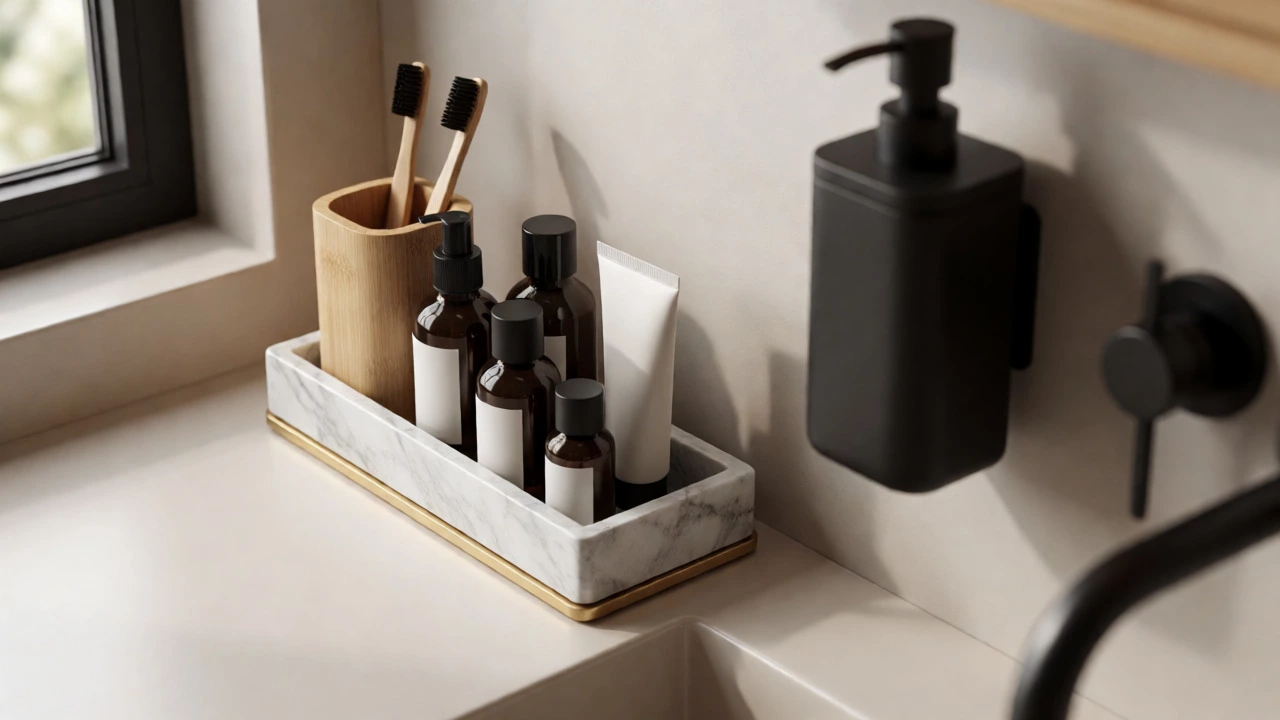
A cluttered countertop screams stress. To fix this, group similar items together. This is called "zoning." Put all skincare products on one tray. Put all hair tools on another. When you group things, the eye sees one object instead of ten scattered ones.
Use trays. They are the secret weapon of interior designers. A marble or wood tray on the vanity instantly organizes bottles and tubes. It also makes cleaning easier-you just lift the tray and wipe underneath. For the shower, use a corner caddy rather than multiple suction cups stuck to different walls. One cohesive unit looks intentional; five mismatched holders look like a mistake.
Consider color coordination too. If your shower curtain is white, stick to white or neutral-toned accessories. Mixing brushed nickel, chrome, and matte black hardware without a plan creates visual noise. Pick one finish and stick to it throughout the room.
Lighting and Mirror Placement
Your accessories interact with light. If you place a dark-colored soap dish in a shadowy corner, it disappears. Conversely, placing reflective metal items near a bright window can create glare. Position metallic accessories where they catch soft ambient light, not direct harsh beams.
Mirror placement affects how much counter space you have. A large medicine cabinet mounted above the sink eats into vertical space. If you need shelves for daily essentials, consider installing open shelving beside the mirror instead of above it. This keeps items accessible without blocking the view or requiring you to reach over the glass.
In smaller bathrooms, mirrors reflect light and make the room feel bigger. Position accessories so they aren’t blocked by the mirror’s reflection. For example, if you have a shelf on the left wall, ensure the mirror doesn’t visually crowd it. Leave at least 6 inches of breathing room between any accessory and the mirror frame.
Dealing with Awkward Corners and Niches
Every bathroom has weird spaces-the area above the toilet, the narrow strip beside the bathtub, or the recessed niche inside the shower. Don’t ignore these; utilize them.
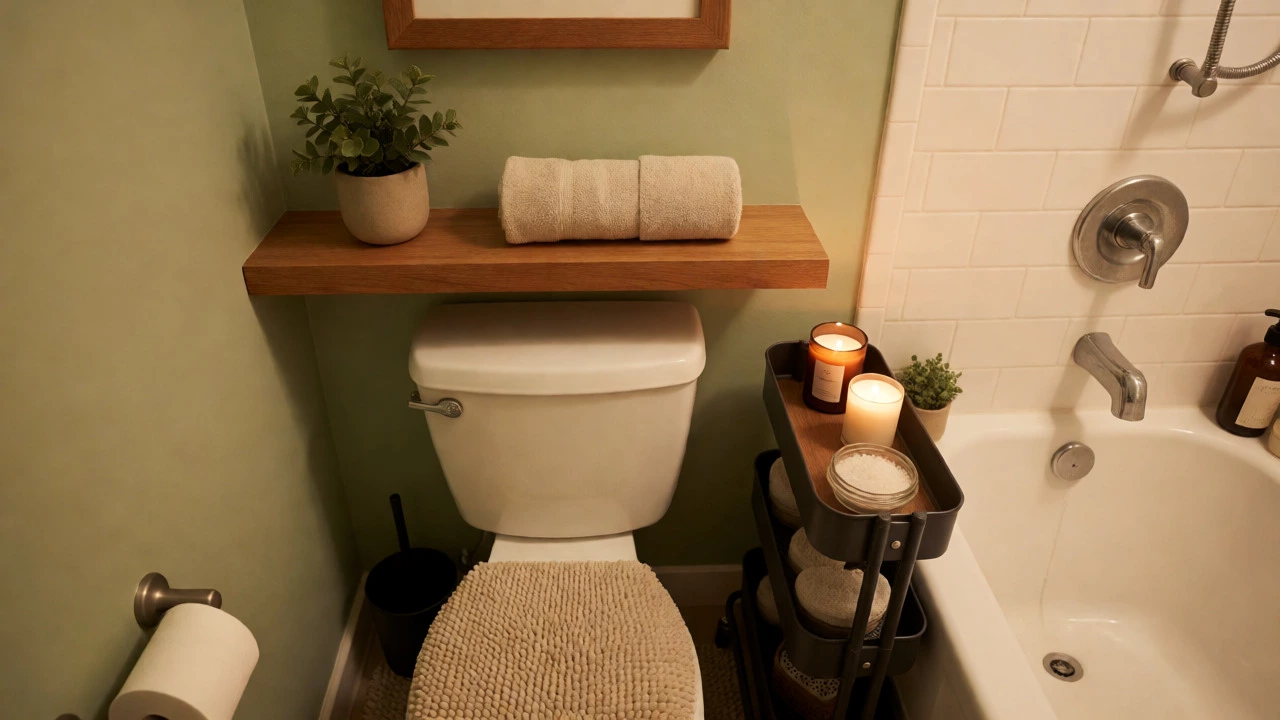
The space above the toilet is perfect for a floating shelf. Use it for extra towels or decorative plants. Just ensure the shelf is sturdy enough to hold weight. For the side of the bathtub, a slim rolling cart can store bath salts and candles. It’s mobile, so you can pull it out when needed and tuck it away when guests arrive.
Shower niches are built-in storage goldmines. If you don’t have one, install a tension rod with hanging baskets. This avoids drilling into tile, which is risky if you’re renting or worried about cracking ceramic. Place heavier items on lower shelves to prevent tipping.
Common Mistakes to Avoid
Even with good intentions, people often mess up accessory placement. Here are the big ones:
- Ignoring Door Swing: Placing a hook or shelf where the door hits when opened. Always check clearance before mounting.
- Overcrowding: Too many items on one surface. Less is more. Remove anything you haven’t used in three months.
- Poor Ventilation Proximity: Storing cotton swabs or makeup right next to the shower steam source causes them to degrade faster.
- Wrong Anchor Type: Using plastic anchors in hollow drywall for heavy shelves. Use toggle bolts or find a stud.
Also, think about future-proofing. If you plan to age in place, avoid placing essential items too high or too low. Knee-height storage is often more accessible than floor-level cabinets for older adults or those with mobility issues.
Final Touches: Texture and Warmth
Bathrooms are often cold, hard surfaces-tile, glass, porcelain. Soften them with textile-based accessories. A plush bath mat isn’t just functional; it defines the zone. Place it centered in front of the sink or tub. Make sure it’s non-slip. Safety first.
Add warmth with wooden accents. A teak stool in the shower doubles as seating and adds organic texture. A bamboo toothbrush holder breaks up the sterility of white ceramic. These natural materials contrast beautifully with modern fixtures and make the space feel inviting rather than clinical.
Finally, step back and look. Stand in the doorway. Does everything feel balanced? Is there symmetry? Not necessarily identical sides, but visual weight distributed evenly. If one side feels heavy, move a plant or swap a dark towel for a light one. Adjust until it feels right to you.
How high should I mount a towel bar?
The standard height is 48 inches from the floor to the center of the bar. However, adjust this based on user height. Taller households may prefer 50-52 inches to keep towel bottoms off the ground. Ensure it is at least 3 inches away from adjacent walls to allow easy access.
Where is the best place for a toilet paper holder?
Mount it 26 inches from the floor and 8 to 12 inches in front of the center of the toilet bowl. This places it within easy reach without forcing you to twist excessively. Side-mounted holders are common, but freestanding ones offer flexibility in tight spaces.
Can I install bathroom accessories without drilling?
Yes, using adhesive strips, suction cups, or tension rods. These work well for lightweight items like soap dishes or small shelves. However, they may fail in humid environments or with heavy loads. For long-term stability, especially for towel bars, drilling into studs or using proper tile anchors is recommended.
How do I organize small bathroom counters?
Use vertical space and grouping. Install wall-mounted dispensers for soap and lotion to free up counter area. Group remaining items on a tray or in a drawer organizer. Limit visible items to daily essentials and store extras in cabinets or under-sink bins.
What is the ideal spacing between towel hooks?
Leave at least 9 inches between hooks to prevent towels from touching each other. This allows air circulation, helping towels dry faster and reducing mildew risk. If space is limited, stagger hooks vertically or use double hooks.