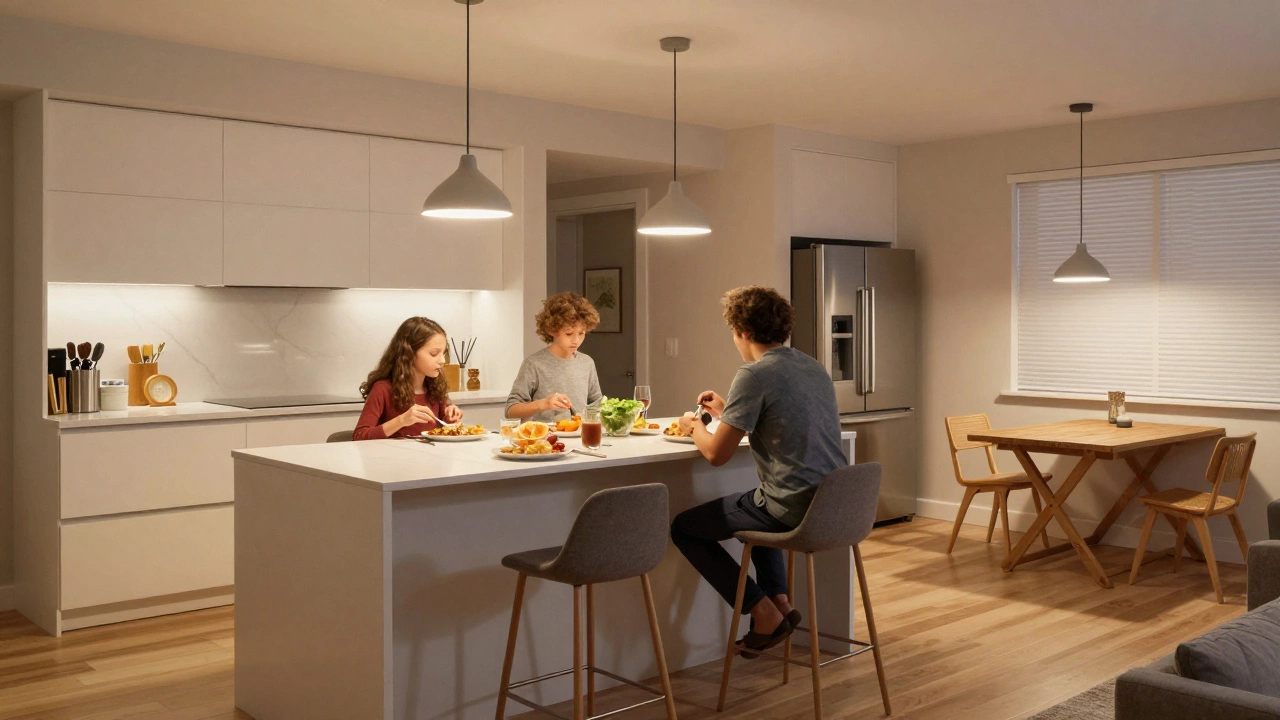
Dining rooms are disappearing as homes shift to open-plan layouts, smaller spaces, and flexible living. Families now eat at kitchen islands, and dining furniture is evolving to match modern lifestyles.
When you hear open plan living, a design style that combines living, dining, and kitchen areas into one continuous space without walls or doors. Also known as open floor plan, it’s become the default for modern homes because it makes small spaces feel bigger and lets families stay connected while doing different things. But it’s not just about knocking down a wall—it’s about how light moves, how sound travels, and how furniture fits in a space that doesn’t have clear boundaries.
Think about your kitchen. In a traditional layout, it’s tucked away, separate from the living room. In open plan living, a design approach that merges functional zones to improve flow and social interaction, your kitchen becomes part of the main living area. That means you can cook while talking to someone on the sofa, or keep an eye on kids playing nearby. But it also means smells, noise, and clutter don’t stay hidden. That’s why smart storage, good lighting, and careful furniture placement matter more here than in a divided home. The same goes for living room layout, the arrangement of furniture and features in a shared space to maximize comfort and movement. If your couch faces the wrong way, or your dining table blocks the path to the kitchen, your open space will feel messy, not spacious.
People love open plan living because it feels airy and modern. But what works in a magazine photo doesn’t always work in a real home with pets, kids, or messy mornings. You need to plan for traffic flow—where people walk, where they sit, where they eat. You need to think about acoustics—how loud the TV sounds when you’re in the bedroom. And you need to consider materials—hard floors reflect sound, so rugs help. Soft furnishings absorb noise. Even the color of your sofa can change how big the room feels. That’s why kitchen dining area, the combined zone where food is prepared and eaten in an open layout needs its own identity, even without walls. A change in flooring, a different ceiling height, or a pendant light over the table can define the space without closing it off.
Open plan living isn’t for everyone. Some people need quiet corners. Some need privacy. But if you like to entertain, have a busy household, or just want your home to feel bigger without adding square footage, it’s one of the smartest choices you can make. The posts below show you exactly what works—and what doesn’t—when you’re working with an open layout. From choosing the right sofa to hiding clutter in plain sight, you’ll find real advice from people who’ve done it, made mistakes, and figured it out.
Dining rooms are disappearing as homes shift to open-plan layouts, smaller spaces, and flexible living. Families now eat at kitchen islands, and dining furniture is evolving to match modern lifestyles.