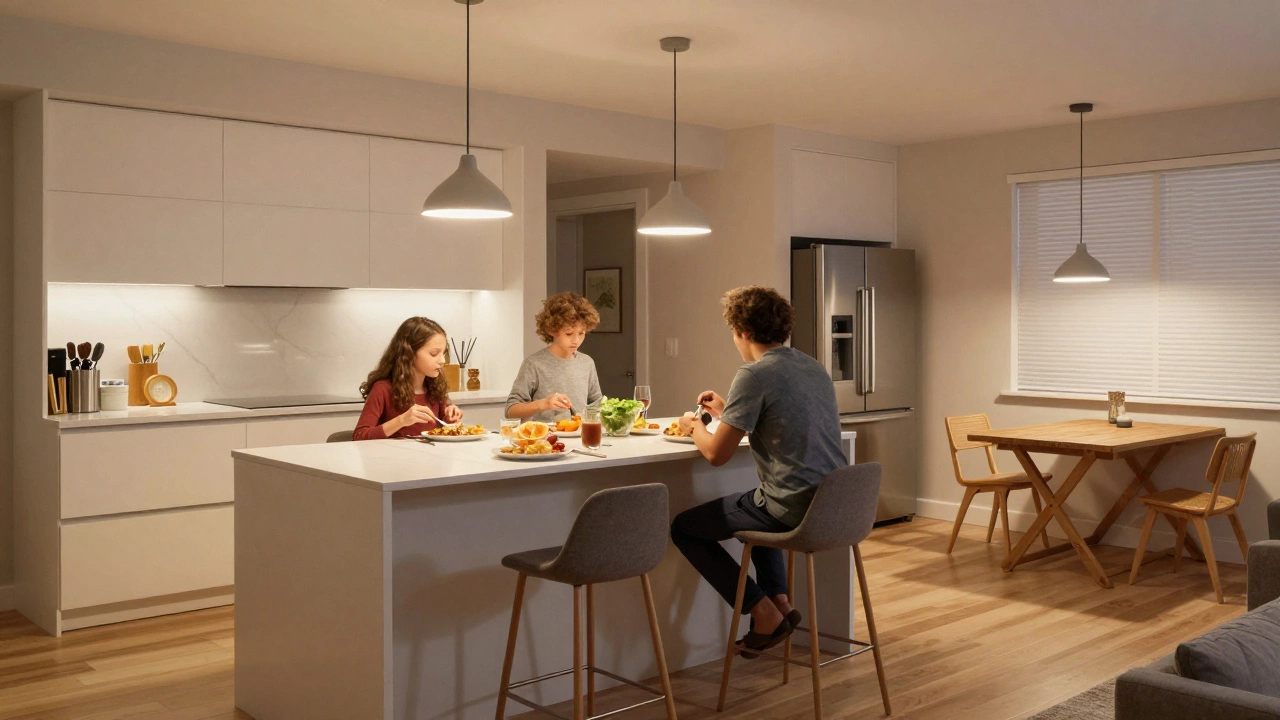
Dining rooms are disappearing as homes shift to open-plan layouts, smaller spaces, and flexible living. Families now eat at kitchen islands, and dining furniture is evolving to match modern lifestyles.
When your dining room feels like it never existed, you’re not alone. This isn’t about bad design—it’s about how homes have changed. The dining room disappearance, the trend where formal dining areas are removed, repurposed, or ignored in modern homes. Also known as open floor plan evolution, it’s not a flaw—it’s a response to how people actually live now. Most homes built after 2000 don’t have a separate dining room because families eat at counters, on couches, or in the kitchen. What was once a formal space for Sunday roast is now a catch-all for mail, coats, or extra storage. The result? A room that’s there in blueprints but gone in practice.
This shift didn’t happen overnight. It’s tied to three bigger changes: how we use space, what we value in furniture, and how we connect with our homes. The open floor plan, a design that removes walls between kitchen, living, and dining areas to create one flowing space. Also known as great room, it’s become the default because it makes small homes feel bigger and lets people stay connected while cooking or cleaning. But here’s the catch: when you remove the dining room, you don’t remove the need to eat. You just move it. That’s why so many people end up eating at their kitchen islands, on coffee tables, or even on the floor. And if you’ve got kids, pets, or messy meals, that’s not sustainable long-term.
Then there’s the furniture problem. A full dining set—table, six chairs, a sideboard—takes up a lot of room. In a 1,200-square-foot home, that’s 80 to 100 square feet tied up in something used maybe three times a week. So people swap it out for fold-down tables, bar stools, or just skip it entirely. The furniture layout, how pieces are arranged to maximize function and flow in a room. Also known as space planning, it’s the real key to fixing a disappearing dining area. You don’t need a formal room. You need smart placement. A narrow table against a wall, a round table in a corner, or even a foldable counter by the window can bring back meals without stealing space.
And it’s not just about size. It’s about intention. If you don’t use the dining room, you stop caring about it. Dust builds up. Chairs get moved to the garage. The table becomes a landing strip for bags. Before you know it, the room feels abandoned—even if it’s still there. The fix isn’t always renovation. Sometimes it’s just rethinking what that space can be. Can it double as a workspace? A reading nook? A place for coffee in the morning? The dining room didn’t disappear because of bad design. It disappeared because we stopped giving it a reason to exist.
Below, you’ll find real examples of how people are bringing back meals without walls, choosing furniture that fits tight spaces, and turning forgotten rooms into something useful again. No grand renovations. No expensive remodels. Just smart, simple changes that make eating at home feel normal again.
Dining rooms are disappearing as homes shift to open-plan layouts, smaller spaces, and flexible living. Families now eat at kitchen islands, and dining furniture is evolving to match modern lifestyles.