Should Built-In Bookshelves Go to the Ceiling?
Bookshelf Height Calculator
Your Optimal Shelf Height
Remaining space above:
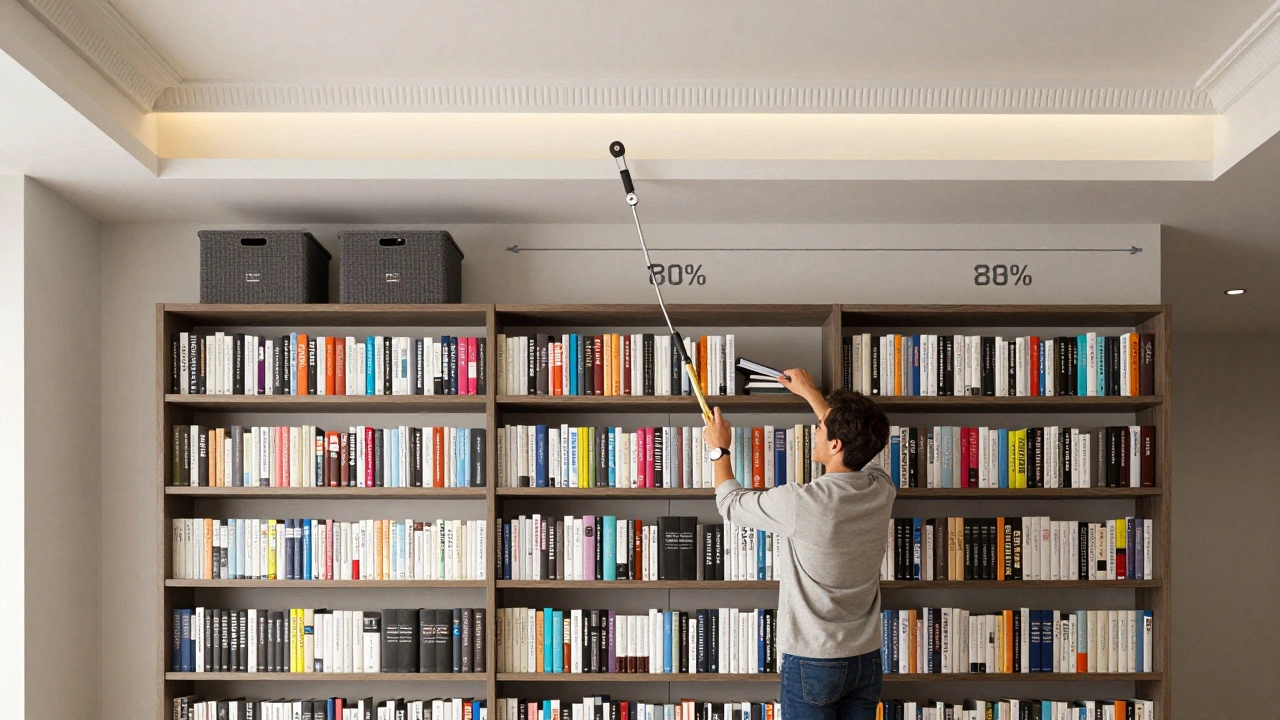
The 80% rule creates a professional gap for lighting, molding, or decorative elements while maintaining easy access to books.
Pro Tip: For most Auckland homes with 2.4-2.7m ceilings, stopping 15-20cm below the ceiling provides ideal access and design flexibility.
When you’re designing built-in bookshelves, one of the biggest decisions isn’t about wood type or paint color-it’s whether to take them all the way to the ceiling. It seems like a simple choice: more space = more books. But the reality is messier. And in homes across Auckland, where space is tight and ceilings are often high, this question comes up again and again.
Why Going to the Ceiling Feels Right
Most people assume taller shelves = better use of space. And they’re not wrong. In a room with 2.7-meter ceilings, leaving even 30 centimeters of empty space above your shelves means wasting nearly a full shelf’s worth of storage. That’s roughly 15-20 hardcovers you could’ve fit, depending on shelf depth. Plus, ceiling-height shelves create a sense of grandeur. They draw the eye upward, making rooms feel larger. In older homes with crown molding or decorative plaster, a full-height bookcase frames those details beautifully. You’re not just storing books-you’re turning a wall into a feature. And yes, it does help with dust. The top shelf becomes a natural barrier, keeping dust from settling on the books below. It’s not a cleaning win, but it’s a visual one. Less clutter at eye level means a cleaner look.The Hidden Downsides
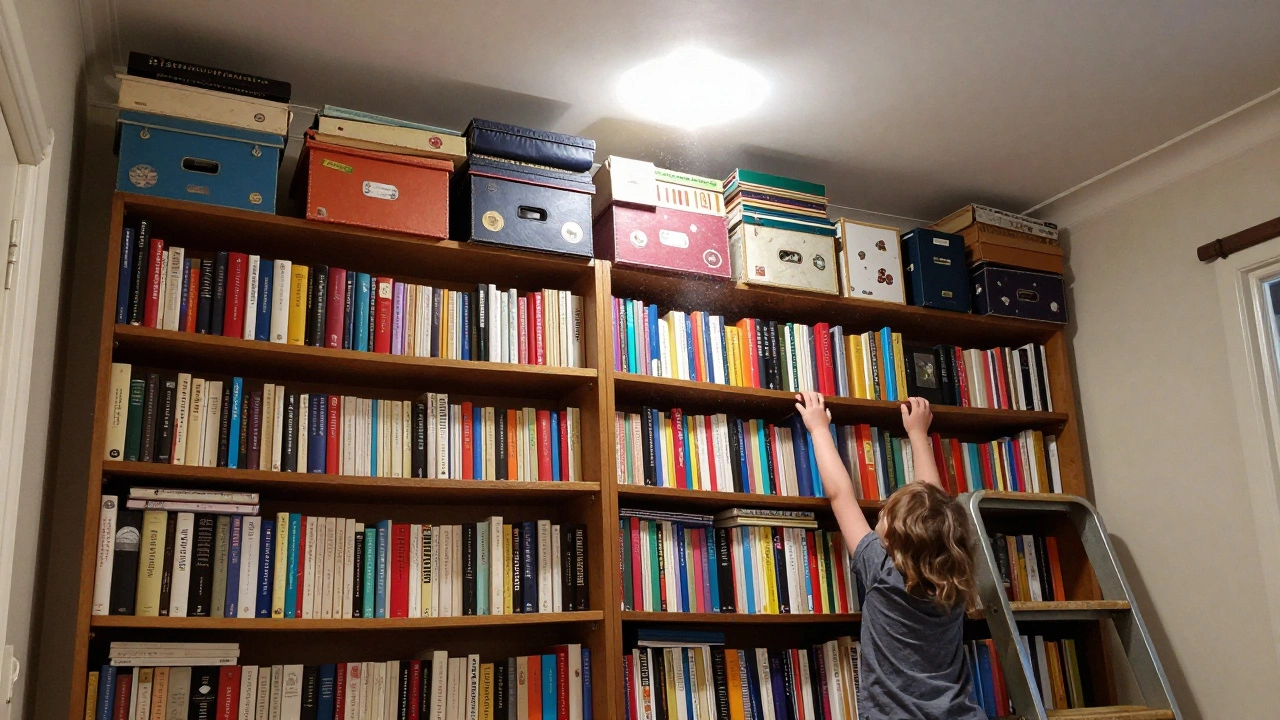
But here’s what no one tells you: ceiling-height shelves are a pain to use. If you’re under 1.8 meters tall (and most people are), reaching the top shelf means a step stool. Not a ladder. Not a chair. A proper step stool-stable, non-slip, preferably with a handrail. That’s inconvenient if you grab a book every morning before coffee. It’s dangerous if you’re over 60, or if you have kids or pets around. I’ve seen homes where the top shelf became a storage dump for things no one ever touches: old photo albums, unused holiday decorations, boxes of paperwork. The books you actually want? They’re buried under five layers of stuff you forgot you had. And then there’s installation. Building shelves to the ceiling means working around pipes, vents, and electrical wiring. In older homes, ceilings aren’t flat-they’re warped. Even a 10mm gap at the top looks sloppy. Professionals charge more to finish those last few centimeters. And if you’re doing it yourself? You’ll spend hours scribing, cutting, and sanding just to make it fit.What the Experts Do
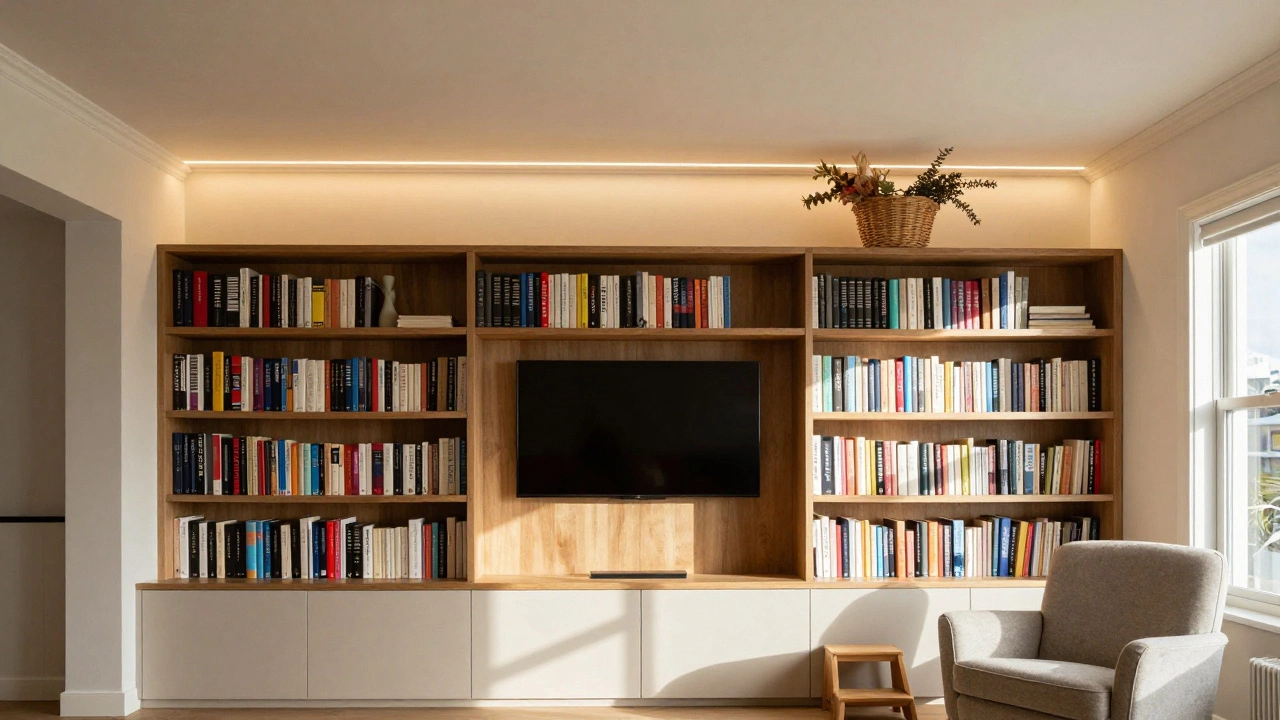
Interior designers in New Zealand don’t go full ceiling unless the room is over 3 meters tall. In Auckland apartments and bungalows, where ceilings are typically 2.4-2.7 meters, they often stop 15-20 cm short. Why? Because they know what works. They leave space for:- A decorative cornice or molding to cap the shelf
- Easy access to the top shelf with a small step stool
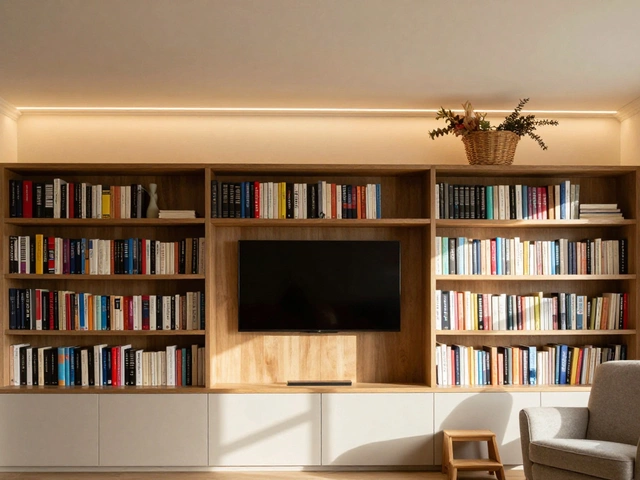
- Room for lighting-LED strips or wall sconces mounted above the shelves
- Flexibility if you ever want to change the layout
When Ceiling Height Makes Sense
There are cases where going all the way up is smart:- You have a dedicated library room with 3+ meter ceilings
- You’re not storing everyday books-just collectibles, rare editions, or decorative items
- You’re building floor-to-ceiling shelves as part of a built-in media unit or storage wall
- You have a second, lower shelf for daily use, and the top is purely for storage
The Middle Ground: The 80% Rule
Here’s a practical trick that works in 9 out of 10 homes: build your shelves to 80% of the ceiling height. That means:- For 2.4m ceilings: shelves stop at 1.9m
- For 2.7m ceilings: shelves stop at 2.1m
- For 3.0m ceilings: shelves stop at 2.4m
What About Dust?
Some say ceiling shelves keep dust away. But dust doesn’t care how high your shelves are. It settles everywhere. And if you’re not cleaning the top shelf regularly, it just builds up into a thick layer that falls onto your books when you open the door. The real solution? Use glass doors or closed cabinets for your most valuable books. Open shelves? Clean them every few months with a microfiber duster. Height doesn’t help. Consistency does.Final Advice: Think Like a User, Not a Designer
Ask yourself: How often will I use the top shelf? If the answer is "once a year," don’t build it. If it’s "every day," reconsider your layout. Maybe you need more shelves at eye level instead. Built-in bookshelves are meant to make your life easier-not harder. They should help you find your favorite novel in three seconds, not force you to grab a ladder after dinner. In Auckland homes, where space is limited and time is precious, the smartest choice isn’t the tallest one. It’s the one that actually works.Do built-in bookshelves have to go to the ceiling to look professional?
No. Many high-end interiors stop 15-20 cm below the ceiling to allow for lighting, molding, or decorative elements. What looks professional isn’t height-it’s clean lines, consistent spacing, and functional access. A well-designed shelf that’s easy to use always looks better than one that’s just tall.
Can I add a ladder or step stool to make ceiling-height shelves work?
You can, but it’s not practical. A ladder takes up space, looks out of place, and becomes a safety hazard if you have kids, pets, or mobility issues. A step stool is better, but even then, it’s an extra step every time you want a book. If you’re willing to do that, you probably don’t need ceiling-height shelves at all.
Is it cheaper to build shelves to the ceiling?
Not usually. Building to the ceiling requires more materials, more labor, and more precision. You’ll need to account for uneven ceilings, hidden pipes, and tricky cuts. In most cases, stopping 15-20 cm short saves money and reduces installation time without sacrificing storage.
What if I want to store seasonal items on top?
Use closed bins or baskets on the top shelf instead of open shelves. Label them clearly and keep them lightweight. This way, you’re not trying to reach heavy books every time you need your holiday decorations. It’s storage, not a library.
Do ceiling-height shelves increase home value?
Not significantly. Buyers notice well-used, accessible storage-not how high the shelves go. A bookshelf that’s hard to use feels like a design flaw. A functional, easy-to-reach shelf with good lighting and clean lines is what adds value.