How to Protect Your Sofa in Storage: A Complete Guide to Preventing Damage
Sofa Storage Protection Planner
Configure Your Scenario
Your Customized Action Plan
Select your options and click "Generate Protection Plan" to see specific steps.
You’ve just moved out, or maybe you’re renovating your living room. Either way, that heavy sofa isn’t coming with you right now. You drop it off at a self-storage unit, pay the monthly fee, and breathe a sigh of relief. But six months later, when you go to retrieve it, you open the door to a nightmare: mildew stains, crushed cushions, or worse-a colony of silverfish feasting on the foam.
Storing a sofa is not like stacking boxes. It’s a large, porous object made of wood, metal, fabric, and foam, all of which react differently to temperature, humidity, and pressure. If you treat it like a generic item, you risk ruining a piece of furniture that might cost thousands to replace. The goal here is simple: get your sofa into storage today and pull it out tomorrow looking exactly the same as when you put it in.
Preparation: Clean Before You Cover
The biggest mistake people make is wrapping their sofa immediately after dragging it out of the house. That seems efficient, but it traps dirt, oils, and moisture against the fabric. Over time, this creates a breeding ground for mold and attracts pests who love organic residue.
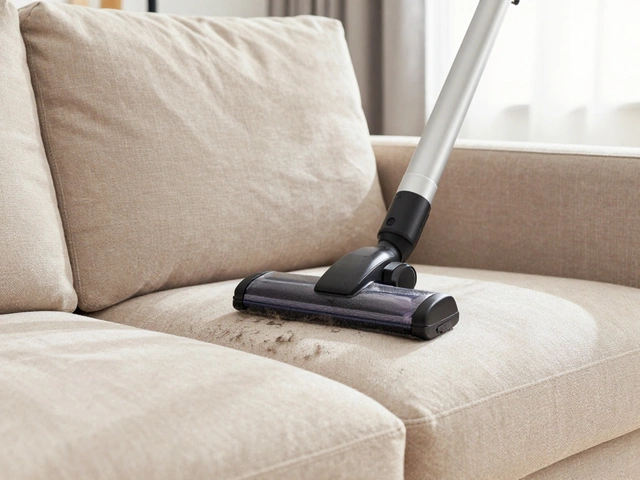
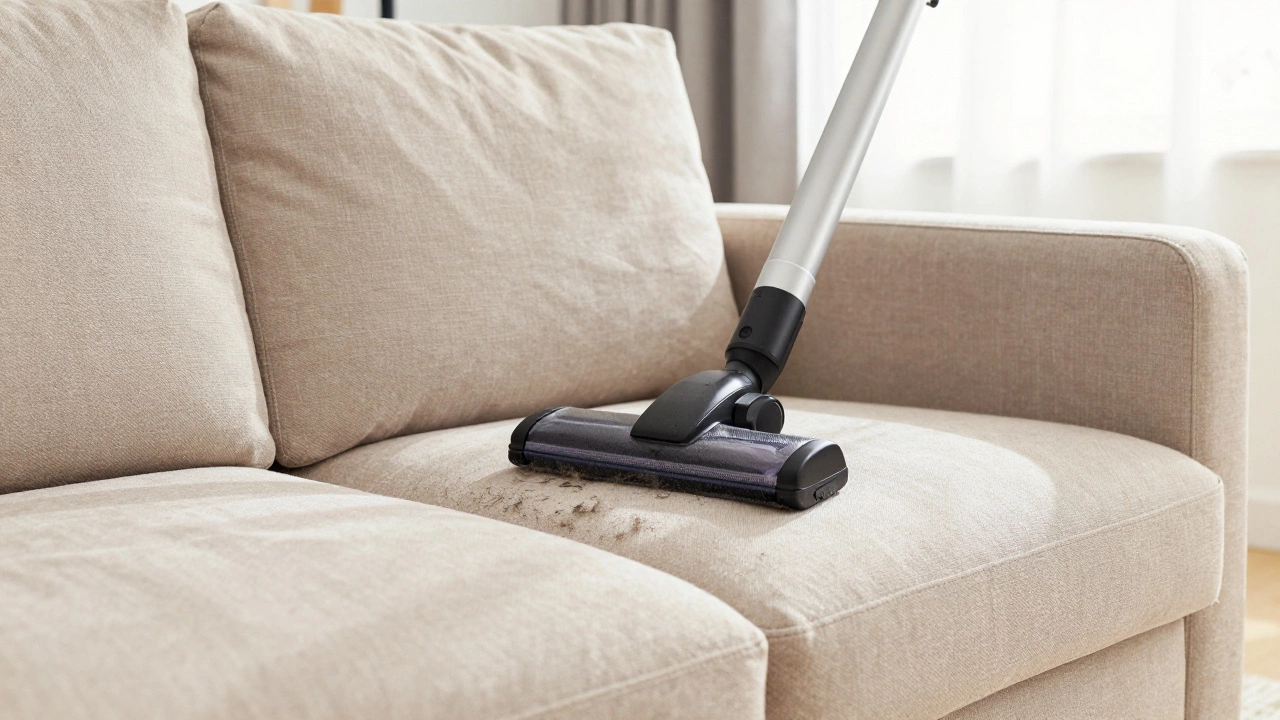
Start by vacuuming every inch of the sofa. Use the upholstery attachment to get deep into the crevices between cushions and along the seams. Don’t skip the underside-dust bunnies and pet hair accumulate there quickly. If you have removable cushion covers, take them off and wash them according to the manufacturer’s label. Let them dry completely before storing. Damp fabric is the enemy number one in any storage environment.
If your sofa has stains, treat them now. Once the sofa is wrapped up for months, those stains will set permanently. For leather sofas, apply a conditioner to keep the hide supple. Dry leather cracks easily, especially if the storage unit fluctuates in temperature. Think of cleaning as the foundation of your protection strategy. Without it, no amount of plastic wrap will save you from odors or decay.
Disassembly and Structural Protection
Most modern sofas are bulky because they include legs, arms, and sometimes detachable chaise sections. Leaving these attached makes the sofa harder to move and more prone to damage during transit. More importantly, tight corners and joints can trap moisture.
Check if your sofa legs can be unscrewed. Most wooden or metal legs come off with an Allen key or screwdriver. Remove them and store them separately in a small box labeled “Sofa Legs.” This reduces the overall height and prevents the legs from getting scratched or bent while maneuvering through narrow storage doors.
If your sofa has a modular design, separate the pieces. Store them flat if possible, but never stack heavy items on top of seat cushions. Foam compresses over time, and once it loses its resilience, it doesn’t bounce back. Keep seat cushions upright or flat on top of each other only if they are light and supported by a solid base. Avoid leaning the entire sofa against a wall for long periods; this can warp the frame and cause the springs to sag on one side.
Choosing the Right Wrapping Materials
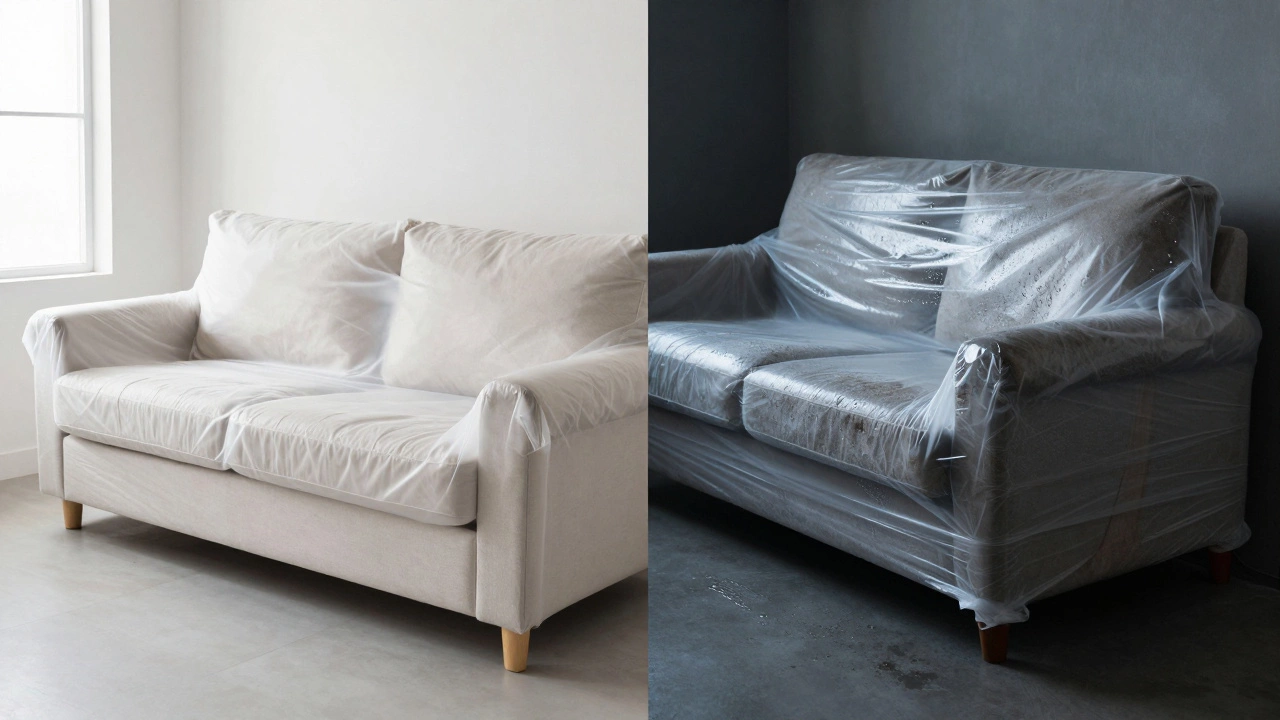
Plastic sheeting is cheap and widely available, but it’s also dangerous for furniture if used incorrectly. Plastic creates a sealed environment that traps humidity. If even a tiny bit of moisture remains in the fabric or wood, it will condense inside the plastic wrap, leading to mold growth within weeks. This is known as the greenhouse effect, and it destroys upholstery faster than exposure to air ever would.
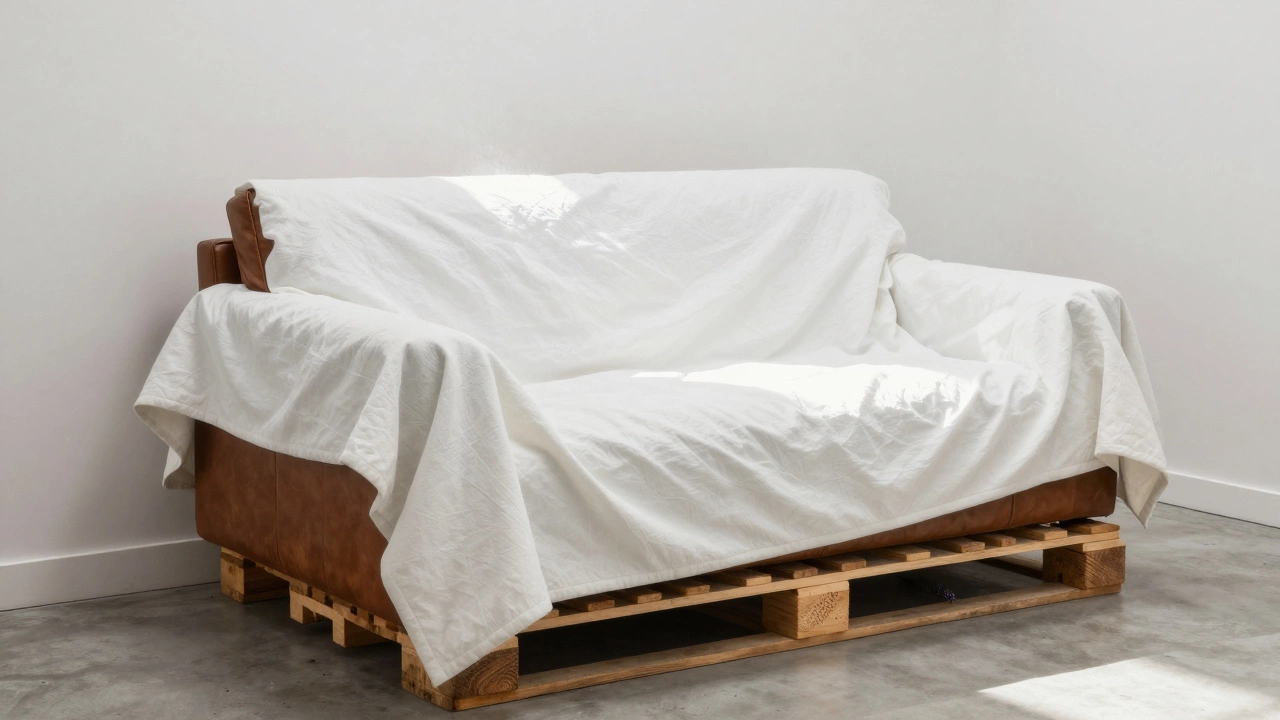
Instead of relying solely on plastic, use breathable materials. Cotton moving blankets are ideal because they allow air circulation while protecting against dust and scratches. Wrap the sofa tightly in these blankets first. Then, if you need extra protection against water leaks (common in older storage facilities), add a thin layer of plastic over the cotton, but leave gaps at the top and bottom to let air escape. Never seal the sofa in airtight plastic bags unless you’ve added silica gel packets to absorb moisture.
For high-end fabrics like velvet or silk, consider using acid-free tissue paper between folds to prevent creasing. These materials are sensitive to pressure and can develop permanent lines if folded sharply. Smooth out any wrinkles before wrapping to ensure the fabric lies flat.
Pest Control: Keeping Bugs Out
Insects don’t care about your decor. They care about food sources, shelter, and warmth. A stored sofa offers all three. Silverfish, carpet beetles, and moths are common culprits that feed on natural fibers like wool, cotton, and linen. Even synthetic fabrics aren’t safe if they contain residual body oils or food crumbs.
To deter pests, place cedar blocks or lavender sachets around the sofa. Cedar contains natural oils that repel many insects without leaving a strong chemical smell. Lavender works similarly and adds a pleasant scent. Avoid mothballs-they release toxic fumes that can permeate fabric and leave an odor that takes months to remove. Plus, they’re harmful to humans and pets.
Before placing the sofa in storage, inspect the unit for signs of infestation. Look for droppings, webbing, or dead insects in corners. If you suspect a problem, contact the facility manager immediately. Some units offer fumigation services, but prevention is always better than cure. Keep the area around the sofa clean and free of cardboard boxes, which attract rodents and insects alike.
Environmental Factors: Temperature and Humidity
Where you store your sofa matters just as much as how you wrap it. Self-storage units vary greatly in climate control. Non-climate-controlled units can swing from freezing cold to sweltering hot depending on the season. In Auckland, where humidity levels often exceed 70%, this variation accelerates deterioration.
If your budget allows, choose a climate-controlled unit. These maintain consistent temperatures (usually between 18-22°C) and relative humidity (around 40-50%). This stability prevents wood frames from expanding and contracting, which can loosen joints and crack finishes. It also inhibits mold growth by keeping moisture levels low.
If climate control isn’t an option, mitigate risks yourself. Place the sofa on pallets or plastic sheets to keep it off concrete floors, which radiate dampness. Elevate it slightly to allow airflow underneath. Avoid placing it directly against exterior walls, which are colder and more prone to condensation. Position it toward the center of the unit if space permits.
Long-Term Storage Considerations
How long do you plan to keep the sofa? If it’s less than three months, basic wrapping and careful placement may suffice. But for longer durations, you need a proactive approach. Check on the sofa every two to three months. Unwrap it partially, vacuum again, and re-wrap with fresh materials if needed. This routine helps catch early signs of mold, pests, or structural issues before they become irreversible.
Consider rotating the sofa if possible. Turning it end-to-end ensures even wear on the frame and prevents one side from bearing constant weight. If you’re storing multiple pieces of furniture, arrange them so nothing rests heavily on the sofa. Weight distribution is critical-foam and springs degrade under sustained pressure.
Finally, document the condition of your sofa before storage. Take photos from multiple angles, focusing on seams, corners, and any existing imperfections. This record protects you if damage occurs due to facility negligence or environmental factors beyond your control.
| Method | Pros | Cons | Best For |
|---|---|---|---|
| Cotton Moving Blankets | Breathable, scratch-resistant | No water resistance | Dry, indoor units |
| Plastic Sheeting Only | Cheap, waterproof | Traps moisture, causes mold | Short-term emergency cover |
| Cotton + Plastic Combo | Balanced protection | Requires ventilation gaps | Medium-term storage |
| Acid-Free Tissue Paper | Prevents creases | Fragile, expensive | Luxury fabrics (velvet, silk) |
Can I store my sofa outside?
No, outdoor storage exposes your sofa to rain, UV rays, and extreme temperature changes. Even covered patios aren’t safe unless fully enclosed. Indoor, climate-controlled units are strongly recommended to prevent warping, fading, and mold.
Should I remove the cushions before storing?
Yes, if they’re removable. Wash and dry them thoroughly, then store them separately in breathable bags. This prevents compression damage and allows air to circulate around both the frame and cushions.
What’s the best way to protect leather sofas in storage?
Clean and condition the leather before wrapping. Use cotton blankets instead of plastic to avoid trapping heat. Store away from direct sunlight and heat sources to prevent cracking and discoloration.
How often should I check on my stored sofa?
Every 2-3 months for long-term storage. Inspect for mold, pests, and structural shifts. Re-vacuum and adjust wrapping as needed to maintain optimal conditions.
Is it worth paying extra for climate-controlled storage?
Absolutely, especially in humid climates like Auckland. Climate control stabilizes temperature and humidity, reducing the risk of mold, warping, and pest infestations. The cost difference is minimal compared to replacement expenses.