Civil vs. Commercial Construction: Key Differences Explained
Construction Project Classifier Tool
Project Type Classifier
Select the characteristics of your project to see which sector it belongs to.
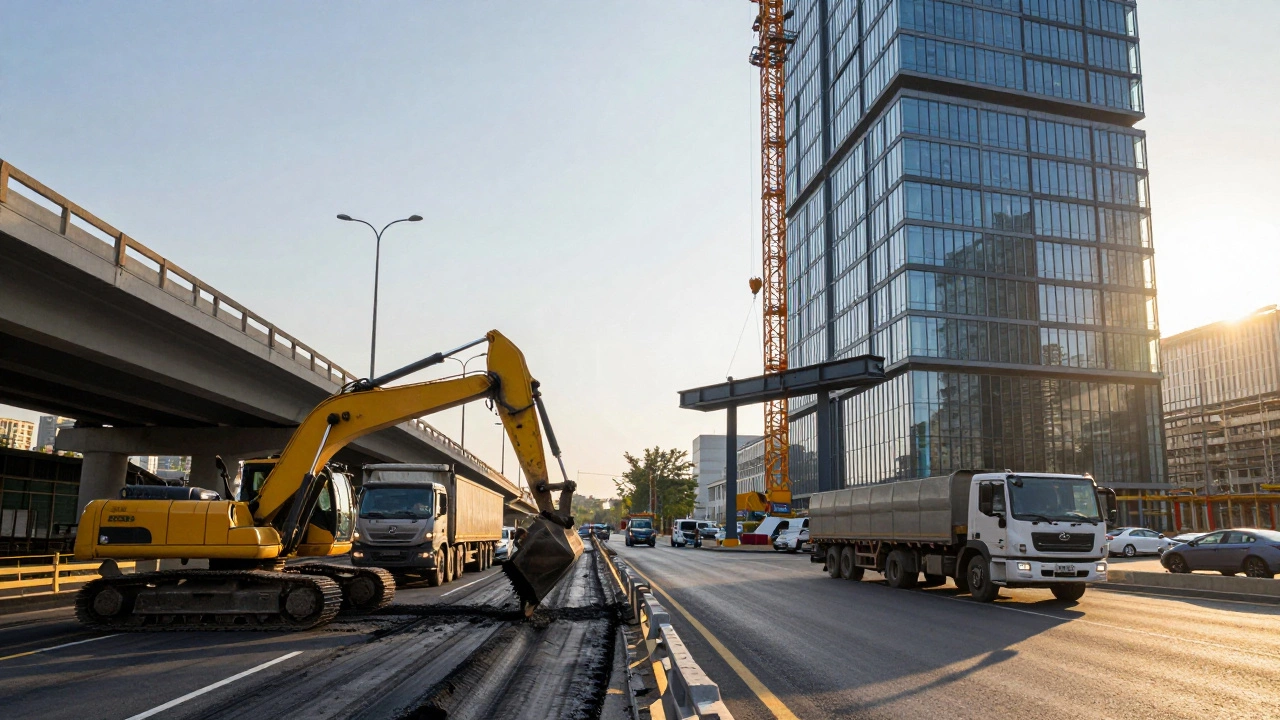
Imagine standing at a busy intersection. On one side, a crew is pouring concrete for a new highway overpass. On the other, workers are hoisting steel beams to build a five-story office tower. Both involve heavy machinery, skilled labor, and massive budgets. Yet, if you asked a contractor which job falls under civil construction and which is commercial construction, they would point to different teams with different rulebooks.
The confusion is understandable. To the average person, both sectors look like big trucks, hard hats, and loud noises. But in the industry, the distinction is sharp. It dictates who pays, who regulates, how long the project lasts, and what happens when things go wrong. Understanding this split isn't just academic trivia; it matters if you're hiring a builder, investing in real estate, or planning a career in the built environment.
The Core Definition: Public Good vs. Private Profit
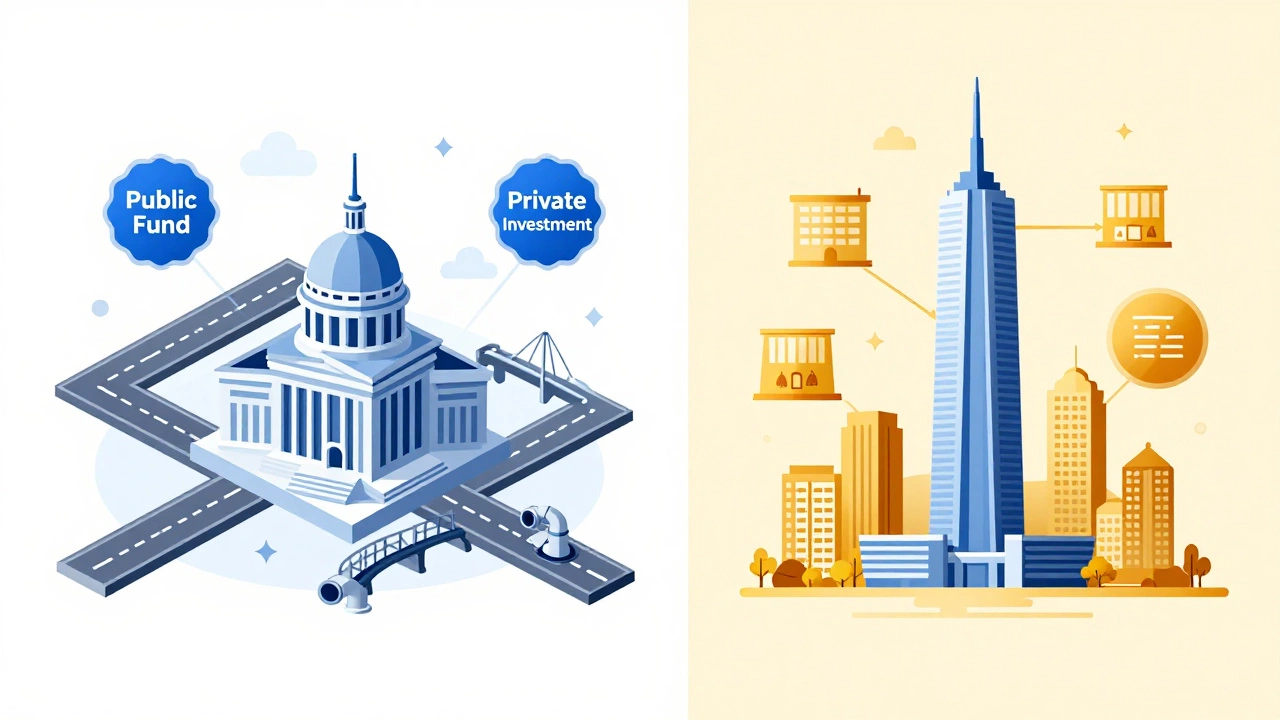
At its heart, the difference lies in the purpose of the structure. Civil construction is the building of public infrastructure and government-funded projects that serve the general population. Think roads, bridges, tunnels, dams, water treatment plants, and sewage systems. These are assets owned by the public (usually via local, state, or federal governments) and designed to facilitate movement, safety, or utility for everyone.
In contrast, Commercial construction is the development of private buildings intended for business use, profit generation, or housing. This category includes office towers, shopping malls, hotels, hospitals, schools (often publicly funded but privately operated), and multi-family residential complexes like apartment buildings. The primary goal here is usually economic return-either through rental income, sales, or operational efficiency for a business owner.
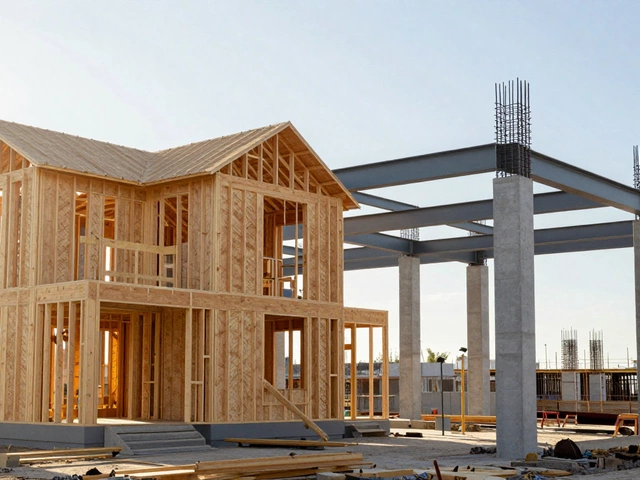
This fundamental split creates two entirely different ecosystems. Civil construction builds the stage; commercial construction builds the sets on top of it.
Who Pays the Bill? Funding and Contracts
Money talks, and in construction, it screams. The source of funding drives almost every other decision in a project.
Civil Construction: Projects are typically funded by taxpayer money, municipal bonds, or federal grants. Because public funds are involved, the bidding process is strictly regulated. In many jurisdictions, especially in the United States, these projects must be awarded to the lowest responsible bidder through a sealed-bid process. Transparency is paramount. You can often find bid documents posted on city websites months before ground is broken. The contract type is frequently "design-bid-build," where the government designs the project, bids it out, and hires a contractor to execute exactly what was drawn.
Commercial Construction: Funding comes from private investors, banks, corporate balance sheets, or developers. There is no requirement to pick the cheapest bidder. A developer might choose a slightly more expensive contractor because of their speed, reputation, or ability to handle complex logistics. Contract structures are more flexible. You’ll see design-build models (where one entity handles both design and construction), integrated project delivery, or cost-plus contracts. The focus is less on procedural transparency and more on risk management and timeline adherence.
The Rulebook: Regulations and Compliance
If civil construction is a marathon with strict lane markers, commercial construction is a sprint with obstacles. The regulatory environments differ significantly.
Civil projects face intense scrutiny from multiple layers of government. A highway expansion isn’t just about engineering; it requires environmental impact studies, historic preservation reviews, and community hearings. Agencies like the Department of Transportation (DOT) or the Environmental Protection Agency (EPA) set rigid standards. For example, the Federal Highway Administration mandates specific materials and testing protocols for interstate roads. Deviating from these specs can result in rejected work, fines, or even criminal liability for fraud against the government.
Commercial projects still have to follow laws, but the framework is different. They must adhere to local zoning ordinances, building codes (like the International Building Code or IBC), fire safety regulations, and accessibility standards (ADA). However, there is often room for negotiation. If a developer wants to build taller than the standard limit, they might pay for density bonuses or community benefits to get a variance approved. The relationship between the builder and the regulator is often more collaborative, albeit still adversarial at times.
| Attribute | Civil Construction | Commercial Construction |
|---|---|---|
| Primary Owner | Government / Public Entity | Private Developer / Business |
| Funding Source | Taxpayer Money / Bonds | Private Capital / Loans |
| Bidding Process | Mandatory Public Bids (Lowest Price) | Negotiated / Best Value Selection |
| Key Regulations | Environmental Laws, DOT Standards | Zoning, Building Codes, ADA |
| Typical Timeline | Years (Planning + Construction) | Months to Few Years |
| Risk Profile | High Regulatory / Political Risk | High Market / Financial Risk |
Materials and Methods: What Goes Into the Ground vs. What Rises Up
The physical nature of the work also diverges. While there is overlap (both use concrete, steel, and excavation equipment), the emphasis shifts.
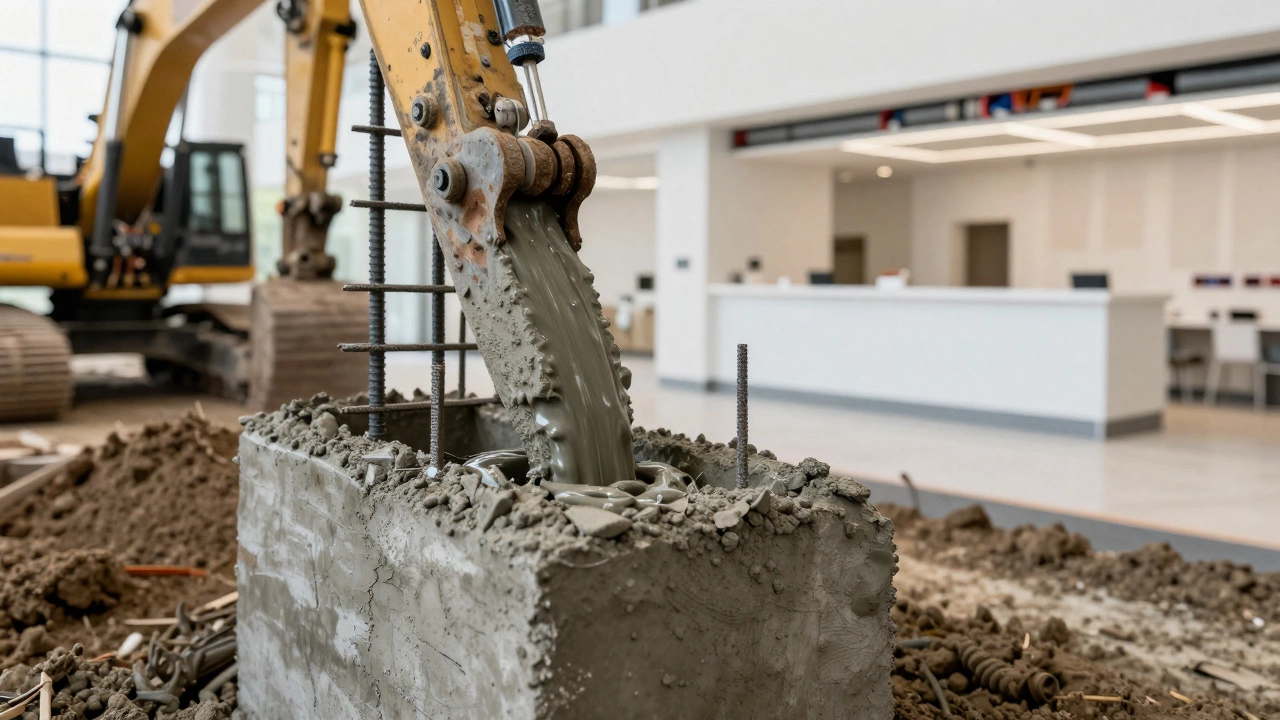
Civil construction is heavily focused on earthwork and durability against natural forces. You’re fighting gravity, water, and weather. A bridge pier needs to withstand decades of river currents and freeze-thaw cycles. Materials are chosen for longevity and load-bearing capacity rather than aesthetics. Concrete mixes are engineered for specific compressive strengths and chemical resistance. Asphalt paving requires precise temperature controls during laying. The scale is vast; a single civil project might move millions of cubic yards of dirt.
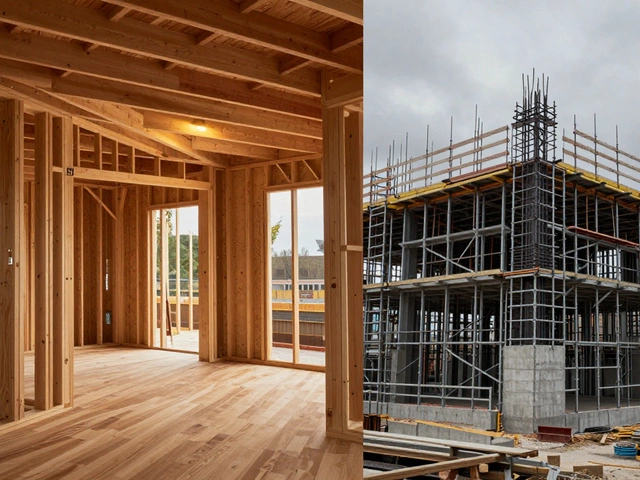
Commercial construction prioritizes function, finish, and speed. Once the foundation is poured, the focus shifts to the envelope (walls, windows, roof) and the interior. Drywall, electrical wiring, plumbing fixtures, HVAC systems, and elevators become the stars. Aesthetic details matter-a lobby needs to impress tenants. The pace is faster because time equals money. Every day a building sits empty costs the developer rent-free revenue. Prefabrication is common; wall panels and bathroom pods are often built off-site and installed quickly on-site to reduce labor hours.
Workforce and Specialization
Do the same people do both jobs? Sometimes, but rarely exclusively. The skills required are distinct enough that contractors usually specialize.
A civil contractor needs experts in geotechnical engineering, surveying, and heavy equipment operation. Their crews include operators for excavators, bulldozers, and cranes that lift hundreds of tons. Safety protocols focus on trench collapse prevention, traffic control, and working near live utilities. The workforce is often unionized, especially in large municipal projects, leading to strict wage scales and benefit packages.
Commercial contractors rely on a broader range of tradespeople: carpenters, electricians, plumbers, glaziers, and painters. Coordination is key. You can’t hang drywall until the electrical rough-in is inspected and passed. Project managers spend most of their time juggling subcontractors, ensuring materials arrive just-in-time, and keeping the schedule tight. The culture is often more entrepreneurial, with smaller firms competing fiercely for niche markets like healthcare or hospitality builds.
Why Does This Distinction Matter to You?
You might not be a contractor, but knowing the difference helps you navigate the world around you.
If you’re an investor, understanding civil construction timelines helps you predict when new infrastructure will boost property values. A planned subway extension (civil) can double the value of nearby apartments (commercial) years before the first train runs. Conversely, if you’re a homeowner dealing with a pothole or a leaking sewer line, you now know why your city’s response might seem slow-it’s bound by bureaucratic procurement processes, not inefficiency alone.
For job seekers, the choice defines your daily life. Civil construction offers stability and long-term projects but can be physically demanding and exposed to the elements year-round. Commercial construction offers variety and indoor work opportunities but may come with higher pressure to meet tight deadlines and budget constraints.
Finally, for anyone interested in urban development, recognizing this split clarifies how cities grow. Infrastructure leads; development follows. Without civil construction clearing the land and laying the pipes, commercial construction has nowhere to stand.
Can a company do both civil and commercial construction?
Yes, some large general contractors have divisions for both. However, most firms specialize because the expertise, equipment, and licensing requirements differ significantly. A firm known for building skyscrapers might lack the heavy earthmoving fleet needed for highway projects.
Which type of construction pays better?
It varies by role and location. Civil construction often offers higher base salaries due to union wages and hazardous duty pay. Commercial construction can offer higher bonuses tied to project completion and profitability. Executive roles in commercial development tend to have higher earning potential due to equity stakes in projects.
Is civil construction safer than commercial construction?
Not necessarily. Civil construction involves high risks like trench collapses, working near traffic, and operating massive machinery. Commercial construction has risks related to working at heights, handling hazardous materials like asbestos in renovations, and electrical hazards. Both industries have strict OSHA regulations, but the types of accidents differ.
How long does it take to complete a typical project in each sector?
A small commercial building might take 6-18 months from permit to occupancy. A large civil project, like a bridge or highway interchange, can take 3-7 years, including extensive planning, environmental review, and bidding phases before construction even begins.
What happens if a civil construction project goes over budget?
Overruns in civil projects are politically sensitive since they involve taxpayer money. Contractors may face penalties or absorb the costs depending on the contract type (e.g., fixed-price vs. cost-plus). Governments may need to seek additional appropriations or delay phases of the project.